high grade bovine leather material
CN → US| HS编码 | 关税税率 | 原产国 | 目的国 | 文档 |
|---|---|---|---|---|
| 4107111020 | 35.0% | CN | US | 官方文档 |
| 4107113000 | 13.6% | CN | US | 官方文档 |
| 4101201010 | 17.5% | CN | US | 官方文档 |
| 4101501010 | 17.5% | CN | US | 官方文档 |
| 4205008000 | 35.0% | CN | US | 官方文档 |
商品图片
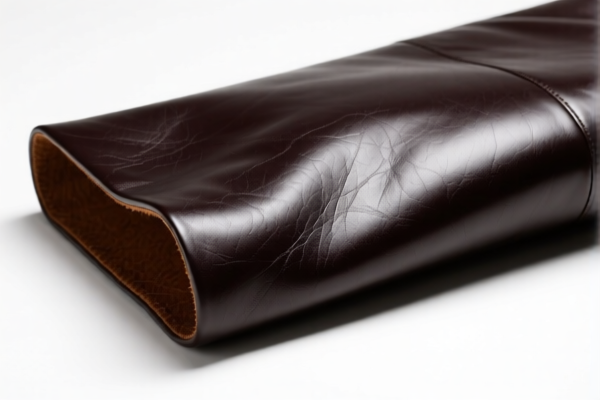
AI分析
🐄 High Grade Bovine Leather Material (优质牛皮材料)
🌐 HS Code Reference & Customs Clearance Guide | 2026 Latest Tariff Analysis | Professional Clearance Strategy
📌 I. Product Definition & Classification: Do You Really Understand "Bovine Leather"?
High-grade bovine leather is a versatile raw material used in footwear, luggage, furniture, and automotive interiors. In international trade, it is strictly categorized based on its processing stage (tanned vs. untanned) and form (whole hide vs. split/sheet). Misclassification here is the #1 cause of customs delays and tariff shocks, especially for imports from China to the US.
Key Distinction Criteria:
- Untanned/Raw (Chapter 41.01): Fresh or salted hides, minimally processed. Low base duty, but high "Section 301" & "122 Clause" penalties.
- Tanned & Prepared (Chapter 41.07): Finished leather, split into sheets. High base duty potential, but complex tax stacking.
- Articles of Leather (Chapter 42.05): Semi-finished leather products (strips, blanks) ready for manufacturing. Highest risk of double taxation.
⚠️ Critical Warning:
- "Whole Hide" vs. "Split": If the leather is split (layered), it often falls under different subheadings with vastly different tax rates.
- "Raw" vs. "Tanned": Raw hides (unprocessed) are taxed differently than tanned hides.
- "Sheet" vs. "Whole": Sheets are often treated as "articles" or semi-finished goods, attracting higher additional tariffs.
📦 II. HS Code Classification Matrix (2026 Latest Tariff Authority)
| HS Code | Product Description | Processing Stage | Key Characteristics |
|---|---|---|---|
4101.20.10.10 |
Bovine raw materials (Untanned/Primary) | Untanned | Raw hide, salted, or lightly prepared. Not yet tanned. |
4101.50.10.10 |
Bovine raw materials (Pre-tanning) | Untanned | Pre-tanned or partially processed but not fully finished. |
4107.11.30.00 |
High-grade Bovine Leather Sheets (Full Grain) | Tanned | Whole hide, unsplit, full grain character. Best Rate Option. |
4107.11.10.20 |
High-grade Bovine Leather Sheets (Split) | Tanned | Split leather, layered form. High Penalty Risk. |
4205.00.80.00 |
Leather Craft Material Sheets (Other) | Semi-Finished | Leather blanks/strips not elsewhere specified. |
4205.00.40.00 |
Leather Craft Material Sheets (Belts/Strips) | Semi-Finished | Leather strips, belting stock, or specific leather articles. |
🔍 Key Insight:
-4107.11.30.00is the sweet spot for finished leather sheets (lowest total tax).
-4107.11.10.20and4205.00.80.00carry extreme penalties due to being split/semi-finished.
- Raw hides (4101.xx) have low base duties but still suffer from US retaliatory tariffs.
💰 III. 2026 Latest Tariff Rate Breakdown (Including Add-ons)
✅ Applicable Country: United States (US)
✅ Origin: China (CN)
✅ Effective Date: Current trade war policies (Section 301 + 122 Clause)
🎯 1. 4107.11.30.00 —— High-Grade Full Grain Bovine Leather Sheets (UNITSPLIT)
| Item | Details |
|---|---|
| Base Duty | 3.6% (Ad Valorem) |
| Section 301 Add-on | 0% (Exempt from 25% tariff) |
| Section 122 Clause | +10% (Specific China-related penalty) |
| Total Effective Rate | 13.6% |
| Tax Calculation | CIF Value × 13.6% |
| De Minimis Exemption | ❌ Not Applicable (B2B imports only) |
| Legal Path | HTSUS:4107.11.30.00 → USITC:122_Clauses |
📌 Why This is the Best Option:
- Only 13.6% total duty.
- Avoids the 25% Section 301 tariff entirely.
- Requires proving the leather is full grain and unsplit.
🎯 2. 4101.20.10.10 & 4101.50.10.10 —— Raw/Pre-Tanned Bovine Hides
| Item | Details |
|---|---|
| Base Duty | 0% (Ad Valorem) |
| Section 301 Add-on | +7.5% |
| Section 122 Clause | +10% |
| Total Effective Rate | 17.5% |
| Tax Calculation | CIF Value × 17.5% |
| De Minimis Exemption | ❌ Not Applicable |
| Legal Path | HTSUS:4101.xx → USITC:7.5%_301 → 122_Clauses |
📌 Why This is Risky:
- Even with 0% base duty, the 17.5% total is higher than the best tanned option.
- Raw hides often face stricter sanitary/phytosanitary checks.
- Misclassification Alert: If these are actually tanned, you could face fraud penalties.
🎯 3. 4107.11.10.20 —— Split Bovine Leather Sheets (HIGH PENALTY)
| Item | Details |
|---|---|
| Base Duty | 0% |
| Section 301 Add-on | +25% |
| Section 122 Clause | +10% |
| Total Effective Rate | 35.0% |
| Tax Calculation | CIF Value × 35.0% |
| De Minimis Exemption | ❌ Not Applicable |
| Legal Path | HTSUS:4107.11.10.20 → USITC:25%_301 → 122_Clauses |
📌 Why This is Expensive:
- 35% total duty is nearly double the full-grain rate.
- Split leather is often targeted for protectionism.
- Critical: Must clearly describe as "Split" or "Split Leather" to avoid misclassification claims.
🎯 4. 4205.00.80.00 & 4205.00.40.00 —— Semi-Finished Leather Articles (HIGHEST PENALTY)
| Item | Details |
|---|---|
| Base Duty | 0% (80.00) or 1.8% (40.00) |
| Section 301 Add-on | +25% |
| Section 122 Clause | +10% |
| Total Effective Rate | 35.0% (80.00) or 36.8% (40.00) |
| Tax Calculation | CIF Value × 35-36.8% |
| De Minimis Exemption | ❌ Not Applicable |
| Legal Path | HTSUS:4205.00 → USITC:25%_301 → 122_Clauses |
📌 Why This is Dangerous:
- Chapter 42 items are often viewed as "manufactured goods," attracting higher scrutiny.
- 36.8% is the worst-case scenario.
- Common Mistake: Importers incorrectly classify leather blanks as "leather sheets" to avoid higher duties, leading to audits.
🛠️ IV. Customs Clearance Practical Advice (Real-World Pitfall Avoidance)
✅ 1. Documentation Checklist (Non-Negotiable)
| Document | Required? | Notes |
|---|---|---|
| Commercial Invoice | ✔️ | Must specify: "High Grade Bovine Leather," "Full Grain" or "Split," "Tanned/Untanned." |
| Product Specification Sheet | ✔️ | Detail grain type, thickness, treatment (vegetable/chrome), and whether it’s split. |
| Sample Swatch | ✔️ | Provide a physical sample for customs verification if requested. |
| Manufacturing Process Description | ✔️ | Explain tanning process to prove Chapter 41 vs. 42. |
| Certificate of Origin | ✔️ | Essential for proving CN origin to apply correct 122/301 rates. |
✅ 2. Declaration Tactics (Key Mantra)
🔥 “Full Grain is King, Split is Costly, Raw is Neutral, Chapter 42 is Trap!”
| Scenario | Correct HS Code | Wrong Classification | Consequence |
|---|---|---|---|
| Full Grain, Tanned, Unsplit | 4107.11.30.00 |
4107.11.10.20 |
Save 21.4% (13.6% vs 35%) |
| Split Leather | 4107.11.10.20 |
4107.11.30.00 |
Pay 35% instead of 13.6% |
| Raw Hide | 4101.20.10.10 |
4107.11.30.00 |
Overpay (17.5% vs 13.6%) |
| Leather Blanks/Strips | 4205.00.80.00 |
4107.11.30.00 |
Pay 35% instead of 13.6% |
📌 Pro Tip:
- If your leather is tanned but unsplit, aggressively push for4107.11.30.00.
- If it is split, do not try to disguise it as full grain. The penalty for misclassification (fraud) is far worse than the 35% duty.
- Chapter 42 items (belts, strips) are often misclassified as "leather sheets." Ensure your description matches the HS definition.
✅ 3. Special Case Handling
| Case | Strategy |
|---|---|
| Mixed Shipments | Separate full grain and split leather into different line items on the invoice. |
| Customs Audit Risk | Keep retainers (samples) for 5 years to prove grain structure. |
| 122 Clause Application | Ensure the "122" tariff is correctly applied to all entries, as it’s automatic for CN origin. |
| Duty Drawback | If leather is re-exported, consider duty drawback programs (though limited for leather). |
🌍 V. Global Market Comparison (2026)
| Region | Recommended HS Code | Total Duty (CN Origin) | Notes |
|---|---|---|---|
| 🇺🇸 USA | 4107.11.30.00 |
13.6% | Best rate for full grain. Split/Chapter 42 = 35%+ |
| 🇨🇳 China | 4107.11.30.00 |
~10% | Lower base duty, no Section 301/122 |
| 🇪🇺 EU | 4107.11.30.00 |
~4.5% | No Section 301/122. Slightly lower than US. |
| 🇬🇧 UK | 4107.11.30.00 |
~4.5% | Post-Brexit tariff structure similar to EU. |
📌 Conclusion:
- The US market is the most expensive due to Section 301 and 122 clauses.
- Optimization is key: Ensure your leather is classified as Full Grain, Unsplit (4107.11.30.00) to save 21.4% vs. split/semi-finished goods.
- Avoid Chapter 42 unless absolutely necessary; the duty hit is severe.
📌 VI. Common Errors & Pitfalls (Blood & Tears Lessons)
❌ Error 1: Calling "Split Leather" "Full Grain"
👉 Consequence: Customs inspection reveals split layers → Fine + Back Taxes + Delay.
❌ Error 2: Classifying Leather Blanks as "Articles of Leather" (Ch 42)
👉 Consequence: 35-36.8% duty instead of potential 13.6% if misclassified as raw hides.
❌ Error 3: Ignoring the 122 Clause
👉 Consequence: Underpayment by 10% → Automated Penalties and potential audit flag.
❌ Error 4: Not specifying "Tanned" or "Untanned"
👉 Consequence: Customs rejects declaration → Holdup for weeks while they request more info.
✅ Correct Practice:
"High Grade Tanned Bovine Leather, Full Grain, Unsplit, Chrome Tanned, Sheets, Model XYZ, CN Origin"
🎯 VII. Conclusion: Precision Saves Money!
🎯 Remember the Mantra:
🔹 "Full Grain Unsplit = 13.6% (Best!)”
🔹 "Split or Raw = 17.5-35% (Expensive)”
🔹 "Chapter 42 = 35-36.8% (Trap!)"
🔹 "Misclassification = Fraud!”
📌 Pro Tip:
If you have large volumes, consider Advance Rulings with US Customs to pre-approve your HS Code. This provides legal certainty and avoids surprises at the border.
📣 Immediate Action:
📞 Contact a Customs Broker + Provide Sample Photos + Verify Grain Type
🚀 Optimize Your HS Code to save up to 23% in duties!
✨ Professional Clearance Starts with Accurate Classification!
💼 Every percentage point saved is pure profit!
用户评价
关于 HS 编码归类
协调制度(HS)是由世界海关组织(WCO)制定的国际贸易商品分类标准。全球 200 多个国家采用 HS 系统作为海关关税、贸易统计和进出口监管的基础。
每个 HS 编码遵循以下层级结构:
- 章(2 位)——商品大类(例如:第 84 章:机器和机械设备)
- 品目(4 位)——章内的更具体分类
- 子目(6 位)——国际通用细分,所有 WCO 成员国统一使用
- 本国细分(8-10 位)——各国自行扩展的细分编码,如美国 HTSUS 10 位编码
正确的 HS 编码归类对于顺利通关、准确缴纳关税和遵守贸易法规至关重要。错误归类可能导致海关延误、多缴关税或罚款。
从CN进口到US时,适用的关税税率可能包括:
- 最惠国(MFN)税率——适用于 WTO 成员国的标准关税税率
- 普通税率——适用于无贸易协定国家
- 贸易救济关税——附加关税,如 301 条款(反倾销)、232 条款(国家安全)或反补贴税
本页内容仅供参考。如需正式归类,请咨询当地海关或持牌报关代理。