high performance resin matrix
CN → US| HS编码 | 关税税率 | 原产国 | 目的国 | 文档 |
|---|---|---|---|---|
| 3913905000 | 41.5% | CN | US | 官方文档 |
| 3907995050 | 41.5% | CN | US | 官方文档 |
| 3907290000 | 41.5% | CN | US | 官方文档 |
| 3913902090 | 40.8% | CN | US | 官方文档 |
| 3901905501 | 41.5% | CN | US | 官方文档 |
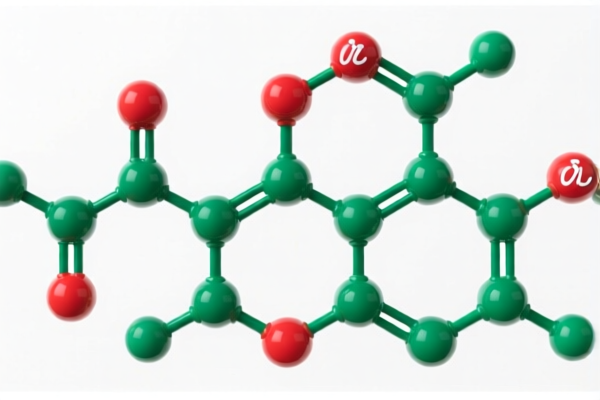
商品图片



AI分析
🧪 High Performance Resin Matrix (HPRM)
🌐 HS Code Reference & Customs Clearance Guide | 2026 Latest Tariff Analysis | Professional-Level Clearance Strategy
📌 Part I: Product Definition & Classification: Do You Really Understand "High Performance Resin Matrix"?
High-performance resin matrices are advanced polymer materials used primarily as binders in composite materials (aerospace, automotive, electronics). In international trade, they are not a single HS code but are classified based on their chemical nature and physical form.
The key distinction lies in:
1. Chemical Structure: Is it a natural polymer, a polyester, an epoxy, or a polyether?
2. Physical Form: Is it in "primary form" (raw granules/powders) or "other forms" (blocks, sheets, pastes)?
⚠️ Critical Classification Point:
- If the resin is a modified natural polymer (e.g., modified cellulose, shellac derivatives) → Chapter 3913
- If the resin is a synthetic polymer (e.g., polyester, epoxy, polyether) → Chapter 3907 or 3901
- Form Matters: "Primary form" (raw materials) often has different tax rates than "other forms" (semi-finished goods).
📦 Part II: HS Code Classification Details (2026 Latest Tariff Authority Comparison)
Based on the provided data, here are the specific HS Codes for High Performance Resin Matrix, categorized by chemical type and form:
| HS Code | Product Description | Application Scenario | Tax Category | Total Tax Rate |
|---|---|---|---|---|
| 3913.90.50.00 | Natural polymers or modified natural polymers, other forms | Modified natural resins (non-primary form) | Other | 41.5% |
| 3907.99.50.50 | Polyester, epoxy resins, etc., other forms | Epoxy matrices, unsaturated polyester matrices | Other | 41.5% |
| 3907.29.00.00 | Other polyethers, primary forms | Raw polyether resins (granules/powders) | Primary | 41.5% |
| 3913.90.20.90 | Natural polymers or modified natural polymers, other forms | Variant: Lower base tariff for modified natural polymers | Other | 40.8% |
| 3901.90.55.01 | Polymers/copolymers, primary forms | Generic synthetic polymers (primary form) | Primary | 41.5% |
🔍 Key Reminder:
- 3913 applies to natural or modified natural polymers.
- 3907 applies to polyesters, epoxies, and polyethers (synthetic resins).
- 3901 applies to polymers of ethylene (primary forms).
- "Primary Form" means raw, unprocessed materials (powders, granules, liquids).
- "Other Forms" means semi-finished shapes (blocks, plates, non-primary shapes).
💰 Part III: 2026 Latest Tariff Rate Breakdown (Including Surcharges, Policy Add-ons)
✅ Applicable Country: United States (US)
✅ Origin: China (CN)
✅ Effective Time: 2025年11月10日起 (from Nov 10, 2025)
🎯 1. 3913.90.50.00 & 3907.99.50.50 & 3907.29.00.00 & 3901.90.55.01
| Item | Content |
|---|---|
| Base Tariff | 6.5% (ad valorem) |
| Section 301 Surcharge | +25.0% (USITC Footnote 9903.88.01 / 301 List) |
| Section 122 Tariff | +10.0% (Specific clause for certain Chinese goods) |
| Total Tariff | 41.5% |
| Calculation | CIF Value × 41.5% |
| De Minimis Exemption | ❌ Not Eligible (deny_de_minimis) |
| Legal Basis Path | Base: 6.5% → 301: 25.0% → Section 122: 10% |
📌 Explanation:
- The 6.5% is the standard Most Favored Nation (MFN) base rate.
- The 25% is the Section 301 tariff on Chinese-origin high-tech and industrial materials.
- The 10% is a specific "Section 122" tariff (often applied to specific categories of Chinese imports to protect domestic industries).
- Total 41.5% is extremely high. This is a high-cost import category.
🎯 2. 3913.90.20.90
| Item | Content |
|---|---|
| Base Tariff | 5.8% (ad valorem) |
| Section 301 Surcharge | +25.0% |
| Section 122 Tariff | +10.0% |
| Total Tariff | 40.8% |
| Calculation | CIF Value × 40.8% |
| De Minimis Exemption | ❌ Not Eligible |
| Legal Basis Path | Base: 5.8% → 301: 25.0% → Section 122: 10% |
📌 Note:
- This HS code applies to natural/modified natural polymers in "other forms."
- The base tariff is 0.7% lower than other codes (5.8% vs 6.5%), resulting in a total of 40.8%.
- While slightly cheaper, it is still a prohibitive tariff level.
🛠️ Part IV: Customs Clearance Practical Advice (Real-World Pitfall Avoidance Guide)
✅ 1. Required Documentation Checklist (Missing Items Will Cause Delays)
| Document | Required | Notes |
|---|---|---|
| ✅ Product Specification Sheet | ✔️ | Must detail chemical composition, molecular weight, and physical form (powder, liquid, solid). |
| ✅ Chemical Structure Diagram | ✔️ | Crucial to prove if it’s "natural" (3913) or "synthetic" (3907/3901). |
| ✅ Product Photos (Label & Container) | ✔️ | Show "Primary Form" or "Other Form" clearly. |
| ✅ Certificate of Origin (CO) | ✔️ | Essential for confirming Chinese origin to apply Section 301/122. |
| ✅ Commercial Invoice | ✔️ | Must explicitly state "High Performance Resin Matrix" and HS Code. |
| ✅ Packing List | ✔️ | Confirm weight, volume, and packaging type. |
✅ 2. Declaration Tips (Key Mnemonics)
🔥 "Form Determines Code, Chemistry Determines Chapter!"
| Scenario | Correct Declaration | Wrong Practice |
|---|---|---|
| Epoxy/Polyester in liquid/granule form | 3907.29.00.00 or 3907.99.50.50 |
Misdeclare as "Plastics" (higher risk) |
| Modified Natural Polymer in block form | 3913.90.50.00 or 3913.90.20.90 |
Misdeclare as "Natural Rubber" |
| Generic Synthetic Polymer (Primary Form) | 3901.90.55.01 |
Over-complicate with specific chemical names |
| Any of the above in "Other Forms" | Ensure "Other Form" is stated | Claiming "Primary Form" when it’s a block → Penalty |
✅ 3. Special Circumstances Handling
| Situation | Handling Advice |
|---|---|
| Isomer Mixtures | Provide detailed chemical breakdown to determine if it’s polyester, epoxy, or polyether. |
| Custom Blends | If it’s a mixture, the classification follows the principal component. Provide proof of composition. |
| Small Sample Imports | Even small samples are subject to 41.5% tax. De Minimis exemption does not apply. |
| OEM Custom Resin | Provide customer specifications and formula sheets to justify the specific HS Code. |
🌍 Part V: Global Market Comparison (2026 Latest)
| Country/Region | Recommended HS Code | Tariff (China Origin) | Certification Requirements | Notes |
|---|---|---|---|---|
| 🇺🇸 USA | 3907.99.50.50 etc. |
41.5% | None specific, but origin proof critical | Highest tariffs due to Section 301 & 122 |
| 🇨🇳 China | 3907.99.50.50 etc. |
6.5% - 7.5% | RoHS (if electronic) | No Section 301 surcharge |
| 🇪🇺 EU | 3907.99 etc. |
6.5% - 7.5% | REACH Registration | No Section 301, but REACH compliance costly |
| 🇮🇳 India | 3907.99 etc. |
7.5% - 10% | BIS Certification | Moderate tariffs |
📌 Conclusion:
- USA is the most challenging market for High Performance Resin Matrix from China, with 41.5% total tariff.
- Cost Impact: A $10,000 shipment incurs $4,150 in taxes alone.
- Strategy: Consider supply chain diversification (e.g., sourcing from Vietnam, Mexico, or EU) to avoid Section 301/122 tariffs.
📌 Part VI: Common Mistakes & Pitfall Guide (Lessons Learned)
❌ Mistake 1: Declaring "Resin" generically without specifying chemical type
👉 Consequence: Customs may classify it under a higher duty category or reject the declaration due to ambiguity.
❌ Mistake 2: Claiming "Natural Polymer" when it’s Synthetic
👉 Consequence: Misclassification penalty + back taxes + potential fraud charges.
❌ Mistake 3: Ignoring "Section 122" tariff
👉 Consequence: Unexpected 10% charge. Many importers only account for Base + Section 301.
❌ Mistake 4: Assuming De Minimis (de minimis exemption) applies to small shipments
👉 Consequence: All shipments are subject to 41.5% tax. No exemption for samples or small batches.
✅ Correct Practice:
"High Performance Epoxy Resin Matrix, Liquid Form, 100% Synthetic, Chemical Code [XXX], HS Code 3907.99.50.50, Origin: China"
🎯 Part VII: Conclusion: Professional Declaration, Cost Savings, Efficiency!
🎯 Remember the Mnemonic:
🔹 "Chemistry Defines Chapter, Form Defines Subheading, China Origin Means 41.5%!"
🔹 "Section 301 (25%) + Section 122 (10%) + Base (6.5%) = 41.5% Total Tax!"
📌 Pro Tip:
- If your resin is originally from Vietnam, Mexico, or Germany, you may avoid the 25%+10% surcharges, reducing tariffs to Base Rate (~6.5%).
- Apply for Advance Ruling from CBP (U.S. Customs) before shipping to confirm the exact HS Code and tariff liability.
- Consider Tariff Engineering: Can the resin be modified slightly to fall under a different HS code with a lower base rate? (Consult a customs broker.)
📣 Immediate Action:
📞 Contact a licensed customs broker + Provide Chemical Data Sheet + Apply for Advance Ruling
🚀 Ensure your High Performance Resin Matrix clears customs smoothly, avoiding 41.5% unexpected costs!
✨ Professional Clearance Starts with Accurate Classification!
💼 Every dollar of tax saved is pure profit!
用户评价
关于 HS 编码归类
协调制度(HS)是由世界海关组织(WCO)制定的国际贸易商品分类标准。全球 200 多个国家采用 HS 系统作为海关关税、贸易统计和进出口监管的基础。
每个 HS 编码遵循以下层级结构:
- 章(2 位)——商品大类(例如:第 84 章:机器和机械设备)
- 品目(4 位)——章内的更具体分类
- 子目(6 位)——国际通用细分,所有 WCO 成员国统一使用
- 本国细分(8-10 位)——各国自行扩展的细分编码,如美国 HTSUS 10 位编码
正确的 HS 编码归类对于顺利通关、准确缴纳关税和遵守贸易法规至关重要。错误归类可能导致海关延误、多缴关税或罚款。
从CN进口到US时,适用的关税税率可能包括:
- 最惠国(MFN)税率——适用于 WTO 成员国的标准关税税率
- 普通税率——适用于无贸易协定国家
- 贸易救济关税——附加关税,如 301 条款(反倾销)、232 条款(国家安全)或反补贴税
本页内容仅供参考。如需正式归类,请咨询当地海关或持牌报关代理。