high pressure hose
CN → US| HS编码 | 关税税率 | 原产国 | 目的国 | 文档 |
|---|---|---|---|---|
| 3917310000 | 38.1% | CN | US | 官方文档 |
| 3917390050 | 38.1% | CN | US | 官方文档 |
| 5909002000 | 38.3% | CN | US | 官方文档 |
| 3917390020 | 38.1% | CN | US | 官方文档 |
| 3917320010 | 38.1% | CN | US | 官方文档 |
| 4009220020 | 37.5% | CN | US | 官方文档 |
商品图片
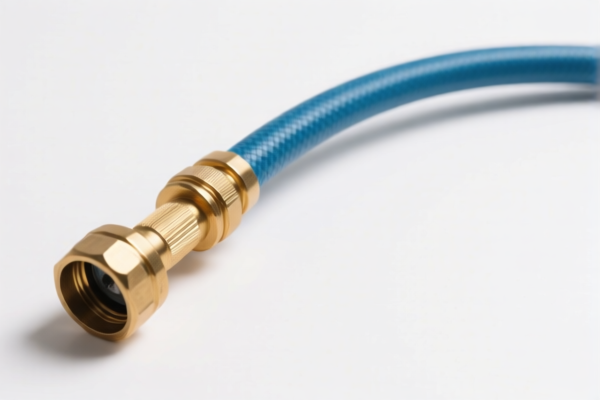
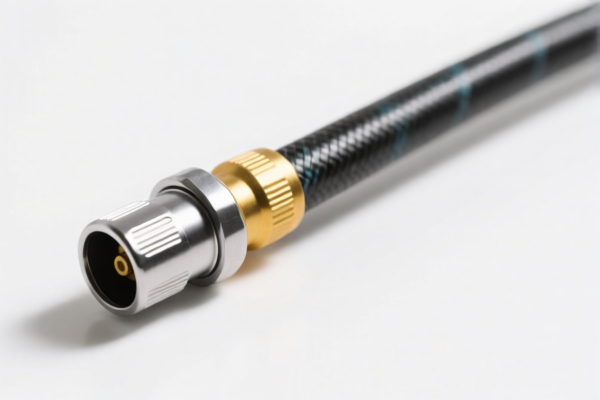
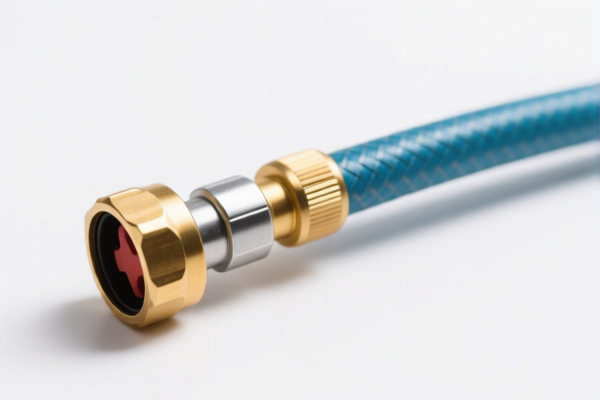
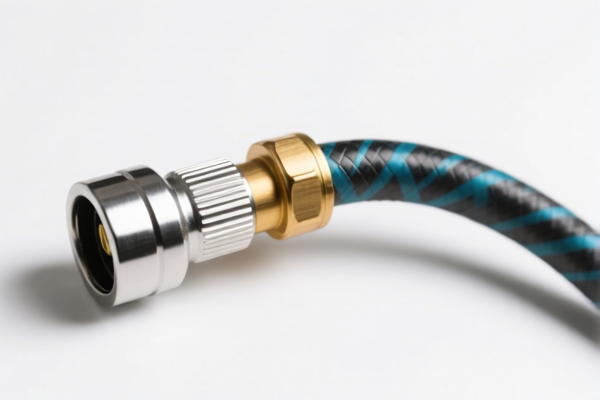
AI分析
🚀 High Pressure Hose (Industrial Piping Solutions)
🌐 HS Code Reference & Customs Clearance Guide | 2026 Latest Tariff Analysis | Professional Clearance Strategy
📌 I. Product Definition & Classification: What Exactly is a "High Pressure Hose"?
High pressure hoses are flexible conduits designed to transport fluids (liquids, gases, slurries) under high pressure conditions in industrial, automotive, and agricultural applications. Unlike low-pressure garden hoses, these require specialized material construction to withstand extreme pressures and harsh environments.
In international trade, they are strictly classified based on their material composition and structural integrity:
Plastic/Hose Assemblies (Chapter 39 & 59):
- Made primarily from plastics (PVC, PE, etc.) or reinforced with textile/other materials.
- Includes rigid or semi-rigid plastic hoses, including those reinforced with other materials.
- Key distinction: If the primary material is plastic, it falls under Chapter 39 (or 59 if coated/textile-reinforced).
Rubber Hoses (Chapter 40):
- Made primarily from rubber (natural or synthetic).
- Includes hoses reinforced with metal or other materials (e.g., steel wire braiding).
- Key distinction: If the core or significant structural component is rubber, it falls under Chapter 40.
⚠️ Critical Classification Point:
- "Plastic High Pressure Hose": Generally classified under 3917 (if plastic) or 5909 (if PVC-coated/reinforced).
- "Rubber High Pressure Hose": Classified under 4009 (if rubber).
- Material is King: The customs declaration must explicitly state the material (PVC, Rubber, Plastic) to determine the correct 8-digit HS Code.
📦 II. HS Code Classification Details (2026 Latest Tariff Reference)
Based on the provided data, here are the specific HS Codes applicable to high pressure hoses, categorized by material:
| HS Code | Product Description | Material | Form | Total Tax Rate |
|---|---|---|---|---|
3917.31.00.00 |
Plastic High Pressure Hose | Plastic | Hose | 38.1% |
3917.39.00.50 |
Plastic High Pressure Hose | Plastic | Hose | 38.1% |
3917.39.00.20 |
PVC High Pressure Hose | PVC | Hose | 38.1% |
3917.32.00.10 |
PVC High Pressure Hose | PVC | Hose | 38.1% |
5909.00.20.00 |
PVC High Pressure Hose | PVC | Hose | 38.3% |
4009.22.00.20 |
High Pressure Metal Joint Rubber Hose | Rubber | Hose | 37.5% |
🔍 Key Insight:
- Plastic/PVC Hoses: Most common category. HS Codes3917and5909apply. Rates are nearly identical (38.1% - 38.3%).
- Rubber Hoses: HS Code4009applies. Slightly lower total tax (37.5%) but still high due to surcharges.
- Metal Joints: If the hose includes significant metal joints or is primarily rubber with metal reinforcement, it may fall under4009.22.00.20.
💰 III. 2026 Latest Tariff Rate Breakdown (Including Surcharges)
✅ Applicable Country: United States (US)
✅ Country of Origin: China (CN)
✅ Effective Date: As of current trade policies (2025/2026)
🎯 1. Plastic & PVC Hoses (HS Codes: 3917.31, 3917.39, 3917.32, 5909.00)
| Item | Details |
|---|---|
| Base Tariff | 3.1% (for 3917 series) / 3.3% (for 5909.00.20.00) |
| Section 301 Surcharge | +25.0% |
| 122 Clause Surcharge | +10.0% |
| Total Effective Rate | 38.1% (for 3917 codes) / 38.3% (for 5909 code) |
| Calculation Basis | CIF Value × Total Rate |
| De Minimis Exemption | ❌ NOT APPLICABLE (High value threshold applies; small packages are still taxed) |
| Legal Reference Path | USITC:3917/5909 → Section 301: Footnote 9903.88.01 → 122 Clause |
📌 Explanation:
- Base Tariff: Standard MFN rate for plastic/rubber articles.
- Section 301 (25%): Imposed on Chinese goods under US Trade Act Section 301.
- 122 Clause (10%): Additional surcharge under specific US trade enforcement provisions.
- Total: ~38.1-38.3%. This is a high-cost category for importers.
🎯 2. Rubber High Pressure Hose with Metal Joints (HS Code: 4009.22.00.20)
| Item | Details |
|---|---|
| Base Tariff | 2.5% |
| Section 301 Surcharge | +25.0% |
| 122 Clause Surcharge | +10.0% |
| Total Effective Rate | 37.5% |
| Calculation Basis | CIF Value × Total Rate |
| De Minimis Exemption | ❌ NOT APPLICABLE |
| Legal Reference Path | USITC:4009 → Section 301 → 122 Clause |
📌 Explanation:
- Rubber hoses have a slightly lower base tariff (2.5% vs 3.1-3.3%) but are still subject to the same surcharges.
- Total Rate: 37.5%.
🛠️ IV. Customs Clearance Practical Advice (Avoid Pitfalls)
✅ 1. Documentation Checklist (Non-Negotiable)
| Document | Requirement | Notes |
|---|---|---|
| ✅ Commercial Invoice | Must specify material (PVC, Plastic, Rubber) | Do not use generic "Hose". Specify "PVC High Pressure Hose" or "Rubber High Pressure Hose". |
| ✅ Product Specifications | Pressure rating, diameter, length, material composition | Critical for correct HS Code classification. |
| ✅ Material Test Report | Certify primary material (e.g., PVC vs. Rubber) | Disputes often arise over material composition. |
| ✅ Photos of Product | Show hose ends, markings, and any metal fittings | Visual proof of structure. |
| ✅ Packing List | Itemize quantities, weights, and dimensions | Must match invoice. |
✅ 2. Declaration Tips (Key Mnemonics)
🔥 "Material First, Pressure Next, Joints Matter!"
| Scenario | Correct Declaration | Error to Avoid |
|---|---|---|
| PVC Hose | "PVC High Pressure Hose" → 3917.39.00.20 or 3917.32.00.10 |
Mislabeling as "Rubber" → Wrong HS Code, delays. |
| Plastic Hose | "Plastic High Pressure Hose" → 3917.31.00.00 |
Using vague "Plastic Tubing" → Potential misclassification. |
| Rubber Hose | "Rubber High Pressure Hose with Metal Joints" → 4009.22.00.20 |
Calling it "Plastic Hose" → Severe penalty for fraud. |
| Hose with Fittings | Declare as complete assembly if fittings are integral | Splitting hose and fittings into separate line items → Risk of "parts" classification errors. |
✅ 3. Special Cases
| Scenario | Handling Advice |
|---|---|
| Reinforced Hoses | If reinforced with textile, may fall under 5909 (PVC coated). Verify coating weight. |
| Metal Joint Hoses | If metal joints constitute significant value/structure, ensure 4009 is used correctly. |
| OEM/White Label | Provide customer design specs to prove material consistency. |
| Small Quantity Samples | Still subject to full tariffs if declared as commercial samples. Do not rely on de minimis for high-tariff goods. |
🌍 V. Global Market Comparison (2026)
| Country/Region | Recommended HS Code | Approx. Tariff (China Origin) | Notes |
|---|---|---|---|
| 🇺🇸 USA | 3917 / 5909 / 4009 |
37.5% - 38.3% | High due to Section 301 + 122 Clause. |
| 🇨🇳 China | 3917 / 5909 / 4009 |
~5-10% | Lower base rates, no surcharges. |
| 🇪🇺 EU | 3917 / 4009 |
0-3% | No Section 301 equivalent, but may have anti-dumping duties. |
| 🇨🇦 Canada | 3917 / 4009 |
~5-7% | Generally lower than US, but verify CUSMA rules. |
| 🇬🇧 UK | 3917 / 4009 |
~5-7% | Post-Brexit tariffs apply. |
📌 Conclusion:
- USA is the most expensive market for high pressure hoses due to Section 301 and 122 Clause surcharges.
- Consider supply chain diversification (e.g., sourcing from Vietnam or Mexico) if targeting the US market, as these countries may be exempt from certain surcharges.
- Pre-arrival clearance and Advance Rulings are highly recommended to avoid delays.
📌 VI. Common Mistakes & Pitfalls (Lessons Learned)
❌ Mistake 1: Declaring "Plastic Hose" when it is actually Rubber.
👉 Consequence: Wrong HS Code → Potential fraud penalty, back taxes, and shipment hold.
❌ Mistake 2: Ignoring 122 Clause applicability.
👉 Consequence: Underpayment of 10% → Customs audit and fine.
❌ Mistake 3: Using generic "Hose" without specifying material.
👉 Consequence: Customs may choose the highest duty rate or request additional information, causing delays.
❌ Mistake 4: Assuming de minimis exemption for small orders.
👉 Consequence: High-tariff goods (37-38%) are often excluded from de minimis thresholds in practice, or face strict scrutiny.
✅ Correct Approach:
"PVC High Pressure Hose, 2-inch diameter, rated 150 PSI, 100ft length, Model XYZ, Material: PVC"
🎯 VII. Conclusion: Precise Classification Saves Money!
🎯 Remember the Mantra:
🔹 "Material Defines HS, Surcharges Add 35%, Declare Exactly!"
🔹 "PVC/Rubber/Plastic – Know Your Code!"
📌 Pro Tip:
- If importing into the US, calculate the 38.1-38.3% cost into your pricing strategy.
- Consider pre-classification rulings from CBP for complex hoses (e.g., multi-material or reinforced).
- For volume imports, explore Bonded Warehouses or Foreign Trade Zones (FTZs) to defer duty payments.
📣 Take Action Now:
📞 Engage a licensed customs broker to verify HS Codes for your specific product.
📄 Prepare detailed specs to support your classification.
🚀 Plan your landed cost accurately to remain competitive in the US market.
✨ Professional Customs Clearance Starts with Accurate Classification!
💼 Every percentage point matters in high-tariff industries!
用户评价
关于 HS 编码归类
协调制度(HS)是由世界海关组织(WCO)制定的国际贸易商品分类标准。全球 200 多个国家采用 HS 系统作为海关关税、贸易统计和进出口监管的基础。
每个 HS 编码遵循以下层级结构:
- 章(2 位)——商品大类(例如:第 84 章:机器和机械设备)
- 品目(4 位)——章内的更具体分类
- 子目(6 位)——国际通用细分,所有 WCO 成员国统一使用
- 本国细分(8-10 位)——各国自行扩展的细分编码,如美国 HTSUS 10 位编码
正确的 HS 编码归类对于顺利通关、准确缴纳关税和遵守贸易法规至关重要。错误归类可能导致海关延误、多缴关税或罚款。
从CN进口到US时,适用的关税税率可能包括:
- 最惠国(MFN)税率——适用于 WTO 成员国的标准关税税率
- 普通税率——适用于无贸易协定国家
- 贸易救济关税——附加关税,如 301 条款(反倾销)、232 条款(国家安全)或反补贴税
本页内容仅供参考。如需正式归类,请咨询当地海关或持牌报关代理。