high temperature resistant aromatic resin
CN → US| HS编码 | 关税税率 | 原产国 | 目的国 | 文档 |
|---|---|---|---|---|
| 3907992000 | 35.0% | CN | US | 官方文档 |
| 3907995010 | 41.5% | CN | US | 官方文档 |
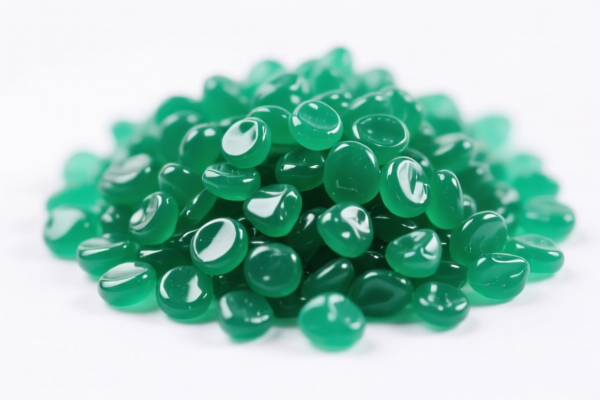
商品图片



AI分析
🧪 High Temperature Resistant Aromatic Resins & Liquid Crystal Polymers (LCP)
🌐 HS Code Reference & Customs Clearance Guide | 2026 Latest Tariff Analysis | Professional Clearance Strategy
📌 I. Product Definition & Classification: Do You Really Understand "Aromatic Resins"?
High-Temperature Resistant Aromatic Resins refer to a class of advanced engineering plastics characterized by aromatic rings in their polymer backbone. These materials are renowned for their exceptional thermal stability, chemical resistance, and mechanical strength. In international trade, they are primarily classified under Chapter 39 (Plastics and Articles Thereof), specifically within the subheading for Polyesters.
The key distinction lies in the chemical structure and physical state:
-
Thermoplastic Liquid Crystal Aromatic Polyester Copolymers (LCP):
- These are highly oriented polymers that form liquid crystalline phases in the melt.
- They offer extreme dimensional stability and are used in high-precision connectors, aerospace components, and micro-electronics.
- HS Code Focus:
3907.99.20.00
-
Other Polyesters (e.g., PBT - Polybutylene Terephthalate):
- These are standard semi-crystalline thermoplastics. While also "aromatic," they are distinct from Liquid Crystal Polymers (LCP).
- Commonly used in automotive parts, electrical housings, and consumer appliances.
- HS Code Focus:
3907.99.50.10
⚠️ Critical Distinction Point:
- If the material is a Liquid Crystal Polymer (LCP), it falls under 3907.99.20.00.
- If it is a standard aromatic polyester like PBT or PETG, it falls under 3907.99.50.10 (or other subheadings depending on the specific type).
- Do not confuse with general "epoxy resins" (3907.40) or "polycarbonates" (3907.60), which have different tax treatments.
📦 II. HS Code Classification Details (2026 Latest Tariff Authority Comparison)
| HS Code | Product Description | Application Scenario | Key Characteristic |
|---|---|---|---|
3907.99.20.00 |
Thermoplastic liquid crystal aromatic polyester copolymers | High-frequency connectors, 5G components, aerospace, precision gears | Liquid Crystal Structure (High Orientation) |
3907.99.50.10 |
Other Polybutylene terephthalate (PBT) | Automotive intake manifolds, electrical sockets, switch parts | Semi-Crystalline Polyester (Standard Engineering Plastic) |
🔍 Important Reminder:
- "Other Polyesters" is a broad category. Customs officers will scrutinize the MSDS (Material Safety Data Sheet) and chemical composition. - If you claim3907.99.20.00, you must prove the material is a Liquid Crystal Polymer (LCP). - If you claim3907.99.50.10, you must confirm it is Polybutylene Terephthalate (PBT). - Misclassification can lead to significant duty differences (0% vs. 6.5% base duty + additional taxes).
💰 III. 2026 Latest Tariff Rate Detailed Explanation (Including Additional Taxes & Policy Add-ons)
✅ Applicable Country: United States (US)
✅ Country of Origin: China (CN)
✅ Effective Date: From November 10, 2025 (and onwards)
🎯 1. 3907.99.20.00 —— Thermoplastic Liquid Crystal Aromatic Polyester Copolymers (LCP)
| Item | Content |
|---|---|
| Base Tariff Rate | 0% (ad valorem) |
| Section 301 Additional Tariff | +25.0% |
| Total Tax Rate | 25.0% |
| Tax Calculation | CIF Value × 25% |
| De Minimis Exemption | ❌ Not Available (deny_de_minimis) |
| Legal Basis Path | USITC:3907.99.20.00 → FOOTNOTE:301_3907 |
📌 Explanation:
- LCPs are considered high-tech engineering plastics. While the base MFN (Most Favored Nation) tariff is 0%, they are subject to the 25% Section 301 additional tariff due to their origin from China. - There is no base duty, so the total import tax is exactly 25%. - This makes LCPs more tax-efficient than standard PBT in some scenarios, provided the material is correctly identified as LCP.
🎯 2. 3907.99.50.10 —— Other Polybutylene Terephthalate (PBT)
| Item | Content |
|---|---|
| Base Tariff Rate | 6.5% (ad valorem) |
| Section 301 Additional Tariff | +25.0% |
| Total Tax Rate | 31.5% |
| Tax Calculation | CIF Value × 31.5% |
| De Minimis Exemption | ❌ Not Available (deny_de_minimis) |
| Legal Basis Path | USITC:3907.99.50.10 → FOOTNOTE:301_3907 |
📌 Explanation:
- PBT is a common engineering plastic. It carries a 6.5% base duty on top of the 25% Section 301 tariff. - Total Tax: 31.5%. - Cost Comparison: Importing LCP (3907.99.20.00) is 6.5% cheaper than importing PBT (3907.99.50.10) due to the lower base duty. - Crucial: Do not misdeclare PBT as LCP to save taxes. Customs may request chemical analysis, leading to delays and penalties if misclassified.
🛠️ IV. Customs Clearance Practical Advice (Battle-Tested Pitfall Avoidance Guide)
✅ 1. Preparation Checklist (Mandatory)
| Document | Required | Description |
|---|---|---|
| ✅ Product Specification Sheet | ✔️ | Must clearly state: Polymer type (LCP vs. PBT), molecular structure, melting point, viscosity. |
| ✅ MSDS (Material Safety Data Sheet) | ✔️ | Must confirm "No hazardous components" and provide chemical name. |
| ✅ Technical Data Sheet (TDS) | ✔️ | Proof of "Liquid Crystal" properties (if claiming 3907.99.20.00). |
| ✅ Commercial Invoice | ✔️ | Must use precise description: "Thermoplastic Liquid Crystal Aromatic Polyester Copolymers" or "Polybutylene Terephthalate (PBT)". Avoid generic terms like "Plastic Resin". |
| ✅ Packing List | ✔️ | Detail net/gross weight. Ensure bulk resin pellets are declared correctly. |
| ✅ Origin Certificate | ✔️ | Essential for proving Chinese origin and applying Section 301 tariffs correctly. |
✅ 2. Declaration Tips (Key Mnemonics)
🔥 “LCP is 0% Base, PBT is 6.5% Base; Don’t Mix Them Up or You’ll Pay Extra!”
| Scenario | Correct Declaration | Wrong Action | Consequence |
|---|---|---|---|
| Material is LCP | HS: 3907.99.20.00Desc: "Thermoplastic Liquid Crystal Aromatic Polyester Copolymers" |
Declare as "General Plastic" or "PBT" | Under-declaration → Penalty + Back Tax |
| Material is PBT | HS: 3907.99.50.10Desc: "Polybutylene Terephthalate (PBT)" |
Declare as "LCP" to save 6.5% | Misclassification → Seizure + Fine |
| Generic "Aromatic Resin" | Do Not Use This Term Alone | Vague description | Customs will audit → Delayed Release |
✅ 3. Special Situations Handling
| Situation | Handling Advice |
|---|---|
| Colorants/Compounds | If the resin is compounded with fillers (e.g., glass fiber), ensure the base polymer still qualifies for the HS code. If the additive changes the essential character, it might shift to a different subheading. |
| Sample Shipments | Even small samples are subject to the 25% or 31.5% duty. Do not use "De Minimis" for these HS codes. |
| Re-imports | If returning goods from the US, ensure the original classification matches to avoid re-entry duties. |
| Certifications | Ensure materials meet RoHS/REACH standards if entering other markets, though US customs focuses primarily on HTS and Origin. |
🌍 V. Global Market Comparison for Aromatic Resins (2026 Latest)
| Country/Region | Recommended HS Code | Base Duty | Additional Tax (CN Origin) | Total Tax | Certification |
|---|---|---|---|---|---|
| 🇺🇸 USA | 3907.99.20.00 (LCP) |
0% | +25% | 25% | No specific FDA for bulk resin |
| 🇺🇸 USA | 3907.99.50.10 (PBT) |
6.5% | +25% | 31.5% | No specific FDA for bulk resin |
| 🇪🇺 EU | 3907.99 (General) |
~2.5% | None | ~2.5% | REACH Registration Required |
| 🇨🇳 China | 3907.99 |
~2.5% | None | ~2.5% | CCC (if processed goods) |
| 🇯🇵 Japan | 3907.99 |
~3.0% | None | ~3.0% | JIS Standards |
📌 Conclusion:
- The US market is the most expensive for Chinese-origin aromatic resins due to the 25% Section 301 tariff. - LCP (3907.99.20.00) is more tax-efficient than PBT (3907.99.50.10) in the US, saving 6.5%. - For EU/Japan/China, tariffs are significantly lower, making non-US markets more cost-effective for these materials.
📌 VI. Common Errors & Pitfall Avoidance (Blood-and-Tears Lessons)
❌ Error 1: Using generic term "Plastic Pellets" on Invoice
👉 Consequence: Customs cannot classify → Holds shipment for inspection → Delays + Storage Fees.
❌ Error 2: Declaring PBT as LCP to save 6.5% duty
👉 Consequence: Customs requests chemical test → If fail, Penalty + Back Tax + Potential Fraud Charges.
❌ Error 3: Ignoring Section 301 Applicability
👉 Consequence: Failure to pay the 25% additional tariff → Seizure of goods at US border.
❌ Error 4: Confusing "Liquid Crystal" with "Crystalline"
👉 Consequence: PBT is crystalline, not liquid crystal. LCP has a distinct mesophase. Misuse leads to incorrect HS.
✅ Correct Practice:
“Thermoplastic Liquid Crystal Aromatic Polyester Copolymer, LCP Grade, Pellet Form, ASTM D5267 Compliant”
OR
“Polybutylene Terephthalate (PBT) Resin, Virgin, Pellet Form, NSF Certified”
🎯 VII. Conclusion: Precise Classification Saves Money!
🎯 Remember the Key Takeaways:
🔹 “LCP is 0% Base, PBT is 6.5% Base; Choose Wisely.”
🔹 “Section 301 Adds 25% to Both; No Escape for Chinese Origin.”
🔹 “Be Specific! ‘Plastic Resin’ Will Get You Stuck.”
📌 Pro Tip:
If you are importing LCP, ensure your supplier provides a Certificate of Analysis (COA) confirming the Liquid Crystal structure. This document is your best defense during customs audits.
For PBT, ensure the product name explicitly states Polybutylene Terephthalate to avoid being misclassified into higher-tariff "Other Polyesters" (3907.99.90).
📣 Immediate Action:
📞 Contact your customs broker before shipping.
📄 Prepare TDS, MSDS, and COA.
🚀 Clear your aromatic resins smoothly, avoid costly delays, and protect your margins!
✨ Professional Clearance Starts with Accurate Classification!
💼 Every Percent of Duty Counts in High-Tech Materials!
用户评价
关于 HS 编码归类
协调制度(HS)是由世界海关组织(WCO)制定的国际贸易商品分类标准。全球 200 多个国家采用 HS 系统作为海关关税、贸易统计和进出口监管的基础。
每个 HS 编码遵循以下层级结构:
- 章(2 位)——商品大类(例如:第 84 章:机器和机械设备)
- 品目(4 位)——章内的更具体分类
- 子目(6 位)——国际通用细分,所有 WCO 成员国统一使用
- 本国细分(8-10 位)——各国自行扩展的细分编码,如美国 HTSUS 10 位编码
正确的 HS 编码归类对于顺利通关、准确缴纳关税和遵守贸易法规至关重要。错误归类可能导致海关延误、多缴关税或罚款。
从CN进口到US时,适用的关税税率可能包括:
- 最惠国(MFN)税率——适用于 WTO 成员国的标准关税税率
- 普通税率——适用于无贸易协定国家
- 贸易救济关税——附加关税,如 301 条款(反倾销)、232 条款(国家安全)或反补贴税
本页内容仅供参考。如需正式归类,请咨询当地海关或持牌报关代理。