high viscosity refractory mortar
CN → US| HS编码 | 关税税率 | 原产国 | 目的国 | 文档 |
|---|---|---|---|---|
| 3816002010 | 38.0% | CN | US | 官方文档 |
| 3816002050 | 38.0% | CN | US | 官方文档 |
商品图片
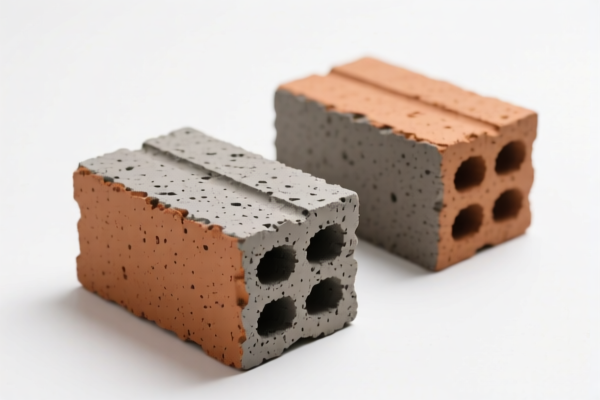
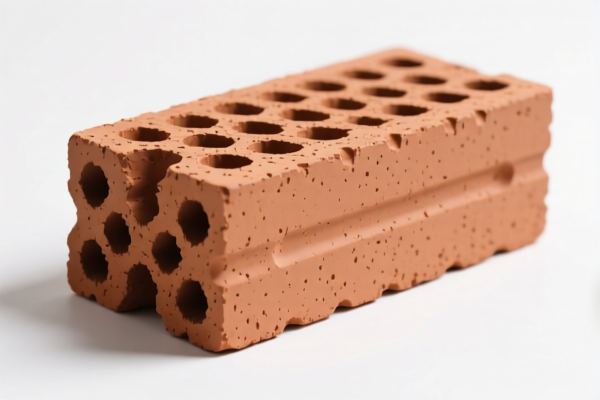
AI分析
🏭 High Viscosity Refractory Mortar
🌐 HS Code Reference & Customs Clearance Guide | 2026 Latest Tariff Analysis | Professional Clearance Strategy
📌 I. Product Definition & Classification: What Exactly is "High Viscosity Refractory Mortar"?
Refractory Mortars are specialized building materials used in high-temperature industrial applications (such as blast furnaces, kilns, and boilers). They are designed to bond refractory bricks together or line the interior of furnaces with a seamless, heat-resistant layer.
In international trade, "High Viscosity" refers to the physical consistency of the mortar (thick, paste-like, often ready-to-use or requiring minimal mixing water), distinguishing it from dry powders or low-viscosity slurries. However, for HS Code classification purposes, the physical state (viscosity) is less critical than the chemical composition and exclusions.
⚠️ Key Distinction Point:
- If the product contains dolomite ramming mix or specific clay-based refractory compositions NOT covered under Heading 3801, it falls under Chapter 3816.
- It is explicitly NOT a product of Heading 3801 (e.g., prepared binders for foundry molds).
- The classification hinges on whether it is "Other" (standard refractory cement/mortar) vs. specific excluded categories.
📦 II. HS Code Classification Details (2026 Latest Tariff Authority Comparison)
Based on the provided DATA, there are two primary HS Codes for this product category, differentiated by specific sub-descriptions under Heading 3816.
| HS Code | Product Description | Applicable Scenario | Tax Rate (US/CN) |
|---|---|---|---|
3816.00.20.10 |
Refractory cements, mortars, concretes and similar compositions, including dolomite ramming mix, other than products of heading 3801: Other Clay | Standard refractory mortars based on clay or similar non-specialized refractory bases. | 0.0% |
3816.00.20.50 |
Refractory cements, mortars, concretes and similar compositions, including dolomite ramming mix, other than products of heading 3801: Other Other | "Other" refractory materials not falling under "Other Clay." This often includes high-alumina, magnesia-chrome, or specialized high-viscosity mortars that do not fit the "Clay" descriptor. | 28.0% |
🔍 Critical Insight:
- The term "High Viscosity" itself does not automatically determine the HS code.
- You must determine the base material. If the mortar is primarily clay-based, it likely falls under3816.00.20.10.
- If it is a specialized refractory composition (e.g., high-alumina, zirconia, or other ceramic binders) that does not fit the "Clay" definition, it falls under3816.00.20.50.
- Misclassification Risk: Declaring a high-alumina mortar as "Clay" (3816.00.20.10) to save taxes will result in heavy penalties if audited.
💰 III. 2026 Latest Tariff Rate Breakdown (Detailed Tax Clauses)
✅ Applicable Country: United States (US)
✅ Origin: China (CN)
✅ Validity: Current rates as per provided DATA
🎯 1. HS Code 3816.00.20.10 —— Refractory Mortars (Other Clay)
| Item | Content |
|---|---|
| Base Tariff | 0.0% |
| Additional Tariff | 0.0% |
| Total Tariff Rate | 0.0% |
| Tax Calculation | CIF Value × 0% = $0 |
| De Minimis Eligibility | ✅ Yes (Generally, low-value shipments may qualify, but industrial bulk shipments require full declaration) |
| Legal Basis Path | HTSUS:3816.00.20.10 → Base Rate: 0% |
📌 Explanation:
- This code benefits from a 0% tariff rate, making it highly competitive for clay-based refractory products.
- No Section 301 tariffs or IEEPA surcharges are listed for this specific sub-code in the provided data.
- Recommendation: If your product is indeed clay-based, ensure your Certificate of Analysis (CoA) clearly states the clay content to justify this 0% rate.
🎯 2. HS Code 3816.00.20.50 —— Refractory Mortars (Other Other)
| Item | Content |
|---|---|
| Base Tariff | 3.0% |
| Additional Tariff | 25.0% |
| Total Tariff Rate | 28.0% |
| Tax Calculation | CIF Value × 28% |
| De Minimis Eligibility | ❌ No (High-value industrial goods; de minimis exemption does not apply) |
| Legal Basis Path | HTSUS:3816.00.20.50 → Base: 3.0% + Section 301: 25.0% |
📌 Explanation:
- The 25.0% additional tariff is typically attributed to Section 301 duties on Chinese goods.
- The 3.0% base tariff is the standard Most Favored Nation (MFN) rate.
- Combined Total: 28.0%. This is a significant cost factor.
- Warning: This code applies to refractory materials that are NOT classified under "Other Clay." If you use this code for a clay-based product, you may be overpaying. If you use3816.00.20.10for a non-clay product, you face fraud risks.
🛠️ IV. Customs Clearance Practical Advice (Avoiding Pitfalls)
✅ 1. Document Checklist (Non-Negotiable)
| Document | Required | Notes |
|---|---|---|
| ✅ Product Specification Sheet | ✔️ | Must detail chemical composition (e.g., % Al2O3, % SiO2, Clay content) |
| ✅ Material Safety Data Sheet (MSDS) | ✔️ | Required for handling and classification |
| ✅ Commercial Invoice | ✔️ | Must clearly state: "High Viscosity Refractory Mortar for Industrial Furnaces" |
| ✅ Certificate of Analysis (CoA) | ✔️ | Crucial: Proves the material composition (Clay vs. Other) to support HS Code selection |
| ✅ Packing List | ✔️ | Net weight/Gross weight, number of bags/containers |
| ✅ Brand/Model Number | ✔️ | Helps customs verify the product identity |
✅ 2. Declaration Tips (Key Mnemonic)
🔥 “Viscosity is physical, Composition is King. Clay = 0%, Other = 28%!”
| Scenario | Correct Declaration | Incorrect Declaration | Consequence |
|---|---|---|---|
| Clay-based mortar | 3816.00.20.10 |
3816.00.20.50 |
Overpayment of 28% |
| High-Alumina/Zirconia mortar | 3816.00.20.50 |
3816.00.20.10 |
Fraud/Penalty + Back Taxes + Interest |
| Dry Powder Mortar | Check Heading 3816 vs. 2523 | Confusing "Mortar" with "Cement" | Potential misclassification under Heading 2523 (Portland Cement) |
| Pre-mixed with Binders | Ensure it's not Heading 3801 | Declaring as 3801 | Incorrect exclusion; 3816 is correct for refractory use |
✅ 3. Special Circumstances
| Situation | Handling Advice |
|---|---|
| Mixed Shipment | If you ship both clay-based and high-alumina mortars, declare them separately with distinct HS Codes. Do not blend into one line item. |
| Sample Shipments | Even small quantities must be declared correctly. Do not use "Sample" as a reason to misclassify. |
| Dolomite Ramming Mix | Explicitly mentioned in the HS description. Ensure this is included in the product name if applicable. |
| Origin Labeling | Clearly mark "Made in China" on all packages to avoid origin-related scrutiny. |
🌍 V. Global Market Comparison (2026 Latest)
| Country/Region | Recommended HS Code | Tariff Rate | Certification | Notes |
|---|---|---|---|---|
| 🇺🇸 USA | 3816.00.20.10 (Clay) |
0.0% | None specific | Best rate if clay-based |
| 🇺🇸 USA | 3816.00.20.50 (Other) |
28.0% | None specific | High cost for non-clay |
| 🇪🇺 EU | 3816 00 90 | Varies | REACH | Generally lower duties than US |
| 🇨🇳 China | 3816 00 20 | 0% - 5% | N/A | Export-friendly |
| 🇮🇳 India | 3816 00 20 | ~10-15% | BIS | Higher than US for clay |
📌 Conclusion:
- The US market offers a 0% tariff for clay-based refractory mortars (3816.00.20.10), which is a major advantage.
- For non-clay specialized mortars, the 28% total tariff is a significant barrier. Consider supply chain adjustments or duty drawback programs if applicable.
📌 VI. Common Errors & Pitfalls (Blood & Tears Lessons)
❌ Error 1: Assuming "High Viscosity" means a different HS Code
👉 Result: No change in tariff. Viscosity is a physical property, not a chemical classification.
❌ Error 2: Declaring High-Alumina Mortar as "Clay" (3816.00.20.10) to save taxes
👉 Result: Customs audit → 28% back payment + 25% penalty + Interest.
❌ Error 3: Not providing a Certificate of Analysis (CoA)
👉 Result: Customs cannot verify composition → Goods detained or rejected.
❌ Error 4: Confusing Refractory Mortar with Portland Cement (Heading 2523)
👉 Result: Wrong classification → Delays and re-filing fees. Refractory mortars are specifically excluded from Heading 2523 if they meet 3816 criteria.
✅ Correct Approach:
“Refractory Mortar, High Viscosity, Based on [Material, e.g., Fire Clay], for Blast Furnace Lining, CoA Attached.”
🎯 VII. Conclusion: Professional Declaration, Cost Savings, Compliance
🎯 Remember the Mantra:
🔹 “Clay is 0%, Other is 28%. Composition is King, Viscosity is King’s Messenger.”
🔹 “HS Code Determines Tax, Tax Determines Profit. Declare Accurately, Avoid Audits.”
📌 Pro Tip:
If your refractory mortar is high-alumina or specialized, and the 28% tariff is too high, consult a customs broker about duty drawback or special manufacturing zones.
For clay-based mortars, ensure your CoA explicitly states "Fire Clay" to secure the 0% rate.
📣 Immediate Action:
📞 Contact your customs broker + Provide Certificate of Analysis (CoA) + Confirm Base Material
🚀 Ensure your High Viscosity Refractory Mortar clears customs smoothly, tax-efficiently, and without delays!
✨ Professional Clearance Starts with Precise Classification!
💼 Your Cost is Calculated Down to the Penny!
用户评价
关于 HS 编码归类
协调制度(HS)是由世界海关组织(WCO)制定的国际贸易商品分类标准。全球 200 多个国家采用 HS 系统作为海关关税、贸易统计和进出口监管的基础。
每个 HS 编码遵循以下层级结构:
- 章(2 位)——商品大类(例如:第 84 章:机器和机械设备)
- 品目(4 位)——章内的更具体分类
- 子目(6 位)——国际通用细分,所有 WCO 成员国统一使用
- 本国细分(8-10 位)——各国自行扩展的细分编码,如美国 HTSUS 10 位编码
正确的 HS 编码归类对于顺利通关、准确缴纳关税和遵守贸易法规至关重要。错误归类可能导致海关延误、多缴关税或罚款。
从CN进口到US时,适用的关税税率可能包括:
- 最惠国(MFN)税率——适用于 WTO 成员国的标准关税税率
- 普通税率——适用于无贸易协定国家
- 贸易救济关税——附加关税,如 301 条款(反倾销)、232 条款(国家安全)或反补贴税
本页内容仅供参考。如需正式归类,请咨询当地海关或持牌报关代理。