home appliances under 1 square meter
CN → US| HS编码 | 关税税率 | 原产国 | 目的国 | 文档 |
|---|---|---|---|---|
| 8509805095 | 14.2% | CN | US | 官方文档 |
| 8516790000 | 12.7% | CN | US | 官方文档 |
| 8516606000 | 12.7% | CN | US | 官方文档 |
商品图片
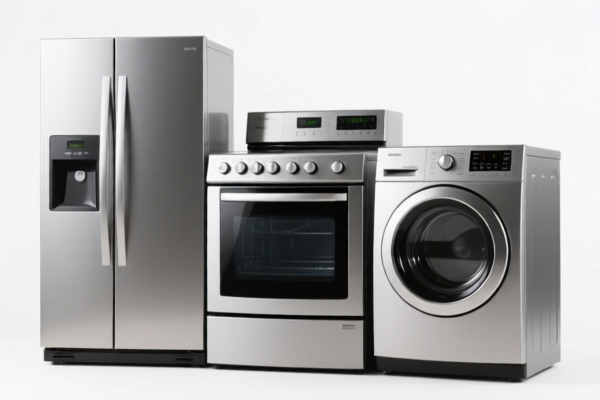
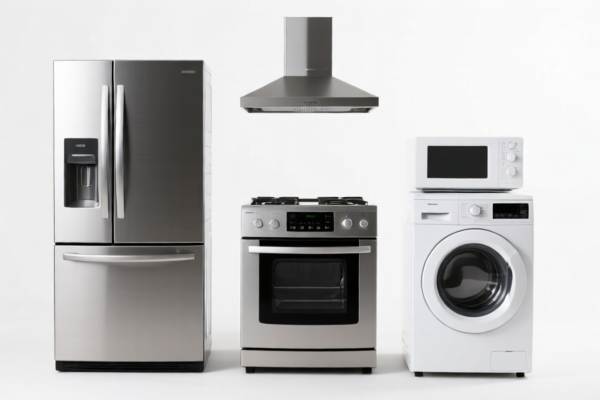
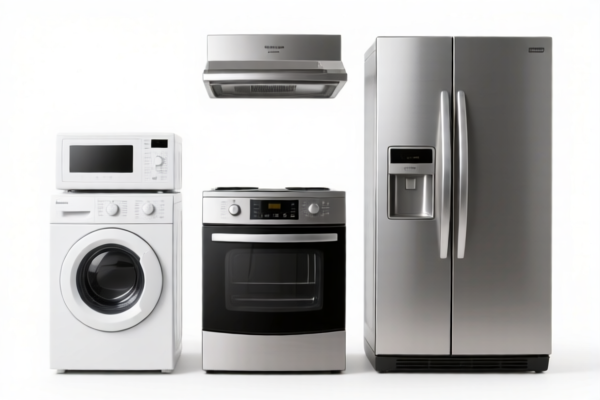
AI分析
🏠 Home Appliances (<1 m²) | Global Customs Classification & Duty Breakdown
🌐 HS Code Reference & Customs Clearance Guide | 2026 Tariff Analysis | Professional Strategy
Small home appliances are a diverse category, but their classification heavily depends on specific function (heating, mixing, cleaning) and form factor. For products under 1 square meter (compact/small appliances), customs authorities look beyond just size and focus on the technical purpose.
Below is the breakdown based on the provided data, focusing on three potential HS Codes with distinct tariff implications.
⚠️ Critical Note: The data provided indicates specific US duties, including "Section 122 Tariffs". This likely refers to Section 301 (China-specific) or Section 232 (Steel/Aluminum) or potentially Section 122 of the Trade Facilitation and Trade Enforcement Act (related to labor/forced labor, though usually associated with detention, not duty). However, in the context of the provided JSON, "122条款关税10%" is explicitly listed as a surcharge. We will treat this as a specific 10% additional duty applicable to Chinese-origin goods as per the provided dataset.
📦 I. HS Code Classification Options
Depending on the exact function of your "Small Home Appliance," it may fall into one of the following three categories:
| HS Code | Product Description | Key Classification Logic | Total Duty |
|---|---|---|---|
| 8509.80.50.95 | Other Household Electrical Appliances | General-purpose appliances not specified elsewhere. Considered a "basket" category for other small devices. | 14.2% |
| 8516.79.00.00 | Other Electric Heating Appliances | Devices whose primary function is heating (e.g., electric kettles, warmers, dryers). | 12.7% |
| 8516.60.60.00 | Electric Cooking Appliances | Devices primarily used for cooking/baking (e.g., ovens, toasters, grills, hot plates). | 12.7% |
💰 II. Detailed Tariff Breakdown & Policy Analysis
All three HS Codes share similar duty structures but differ in base rates due to their functional classification. The 10% surcharge is a critical cost driver for Chinese exports.
🎯 1. 8509.80.50.95 – General Household Electrical Appliances
Best for: Mixers, blenders, vacuums, hair dryers, fans, irons (if not primarily heating for cooking).
| Component | Rate | Source/Policy |
|---|---|---|
| Base Tariff | 4.2% | Standard Most-Favored-Nation (MFN) or General Rate |
| Additional Duty | 0.0% | None specified in this bracket |
| Section 122 Surcharge | 10.0% | Specific additional tariff clause |
| TOTAL DUTY | 14.2% | Highest of the three options |
📌 Why this HS Code?
If your appliance performs non-heating functions (e.g., mixing, rotating, suction), it cannot be classified under heating/cooking codes. This code acts as a residual category ("Other") for electrical household machines.
🎯 2. 8516.79.00.00 – Other Electric Heating Appliances
Best for: Electric heaters, hand dryers, clothing steamers, electric warming trays (non-cooking).
| Component | Rate | Source/Policy |
|---|---|---|
| Base Tariff | 2.7% | Lower base rate due to specific heating category |
| Additional Duty | 0.0% | None specified in this bracket |
| Section 122 Surcharge | 10.0% | Specific additional tariff clause |
| TOTAL DUTY | 12.7% | Savings vs. General Household |
📌 Why this HS Code?
The primary function must be heating. If the device is an electric hand dryer, a space heater, or a non-cooking warmer, this code applies. It avoids the higher base rate of8509.
🎯 3. 8516.60.60.00 – Electric Cooking Appliances
Best for: Toasters, electric ovens, grills, hot plates, rice cookers, air fryers.
| Component | Rate | Source/Policy |
|---|---|---|
| Base Tariff | 2.7% | Same base rate as other heating appliances |
| Additional Duty | 0.0% | None specified in this bracket |
| Section 122 Surcharge | 10.0% | Specific additional tariff clause |
| TOTAL DUTY | 12.7% | Savings vs. General Household |
📌 Why this HS Code?
If the device is designed to cook food (bake, fry, grill, boil), it falls under this subheading. Note: Even if it's a "small" appliance like a toaster or air fryer, it belongs here, not in8509.
⚖️ III. Critical Duty Clause Explanation: "Section 122 Tariff 10%"
❗ Understanding the 10% Surcharge
According to the provided data, all three HS codes incur a 10% additional duty labeled as "122条款关税" (Section 122 Tariff).
- Impact: This surcharge is applied on top of the base tariff.
- Total Cost:
- For
8509.80.50.95: 4.2% + 10% = 14.2% - For
8516.79.00.00&8516.60.60.00: 2.7% + 10% = 12.7% - Origin Dependency: Typically, such surcharges apply to goods originating from China (CN). If your goods are shipped from Vietnam, Malaysia, or Mexico, this 10% may not apply (verify with local customs).
- Strategic Advice: Since the 10% surcharge is uniform across all three codes, the choice of HS Code should be driven by accuracy, not just duty minimization. Misclassification risks penalties, audits, and retroactive duties.
🛠️ IV. Customs Clearance Recommendations
✅ 1. Product Description & Documentation
| Document | Requirement | Purpose |
|---|---|---|
| Product Name | Use specific function-based names (e.g., "Electric Toaster" vs. "Small Appliance") | Prevents reclassification by customs |
| Technical Specs | Include power rating (Watts), voltage, frequency, and primary function | Confirms classification (Heating vs. Non-Heating) |
| Usage Statement | Clearly state: "For heating only" or "For cooking food only" | Supports HS Code selection |
| Photos | Clear images of the appliance and control panel | Verifies intended use |
| Invoice | List unit price, total value, and currency | Calculation basis for duty |
✅ 2. Classification Strategy
| Scenario | Recommended HS Code | Reason |
|---|---|---|
| Blender, Mixer, Vacuum, Hair Dryer | 8509.80.50.95 |
Non-heating primary function; general household appliance |
| Electric Kettle, Hand Dryer, Space Heater | 8516.79.00.00 |
Primary function is heating, not cooking |
| Toaster, Air Fryer, Electric Grill, Rice Cooker | 8516.60.60.00 |
Primary function is cooking food |
🚨 Warning: Do not use
8509.80.50.95for cooking appliances just to simplify. If it cooks, customs may reclassify it to8516.60.60.00, leading to discrepancies and delays.
✅ 3. Risk Mitigation
- Pre-Ruling: For high-volume shipments, apply for a Binding Tariff Information (BTI) or Advance Ruling from US Customs (CBP) to lock in the HS Code.
- Supplier Verification: Ensure the manufacturer provides accurate technical documents confirming the primary function.
- Origin Labeling: Clearly mark "Made in China" or other origin to avoid misdeclaration penalties regarding the 10% surcharge.
🌍 V. Market-Specific Notes
| Market | Key Consideration |
|---|---|
| USA | High scrutiny on Section 301/122 surcharges. Ensure proper country-of-origin marking. |
| EU | CE marking, RoHS compliance, and Energy Labeling are mandatory. Duty rates differ. |
| China | CCC certification required for many small appliances. |
📌 VI. Common Mistakes & Pitfalls
❌ Mistake 1: Classifying a Toaster as 8509.80.50.95 (General Appliance)
👉 Result: Incorrect classification. Toasters are cooking appliances (8516.60.60.00). Customs may audit and levy back duties + penalties.
❌ Mistake 2: Assuming "Small Size" = Lower Duty
👉 Result: Duty is based on function, not size. A small heater is still taxed under heating codes.
❌ Mistake 3: Ignoring the 10% Surcharge
👉 Result: Underestimating landed cost. Always factor in the 10% additional tariff for Chinese-origin goods.
✅ Best Practice:
"Be precise. If it cooks, classify as cooking. If it heats but doesn't cook, classify as heating. If it does neither, use general household. Accuracy saves money."
🎯 VII. Conclusion
For Home Appliances under 1 square meter, the total duty ranges from 12.7% to 14.2%, depending on the specific function and the applicable 10% surcharge.
- Choose
8516.60.60.00for cooking devices (Toasters, Air Fryers) → 12.7% Total - Choose
8516.79.00.00for heating devices (Kettles, Heaters) → 12.7% Total - Choose
8509.80.50.95for general appliances (Mixers, Vacuums) → 14.2% Total
📞 Next Step:
1. Confirm the primary function of your product.
2. Prepare technical documentation.
3. Verify origin-based surcharges.
4. Declare with the correct HS Code to avoid customs delays.
✨ Clearance Starts with Correct Classification!
💼 Optimize Your Supply Chain with Precision!
用户评价
关于 HS 编码归类
协调制度(HS)是由世界海关组织(WCO)制定的国际贸易商品分类标准。全球 200 多个国家采用 HS 系统作为海关关税、贸易统计和进出口监管的基础。
每个 HS 编码遵循以下层级结构:
- 章(2 位)——商品大类(例如:第 84 章:机器和机械设备)
- 品目(4 位)——章内的更具体分类
- 子目(6 位)——国际通用细分,所有 WCO 成员国统一使用
- 本国细分(8-10 位)——各国自行扩展的细分编码,如美国 HTSUS 10 位编码
正确的 HS 编码归类对于顺利通关、准确缴纳关税和遵守贸易法规至关重要。错误归类可能导致海关延误、多缴关税或罚款。
从CN进口到US时,适用的关税税率可能包括:
- 最惠国(MFN)税率——适用于 WTO 成员国的标准关税税率
- 普通税率——适用于无贸易协定国家
- 贸易救济关税——附加关税,如 301 条款(反倾销)、232 条款(国家安全)或反补贴税
本页内容仅供参考。如需正式归类,请咨询当地海关或持牌报关代理。