indene modified elastomer
CN → US| HS编码 | 关税税率 | 原产国 | 目的国 | 文档 |
|---|---|---|---|---|
| 3901909000 | 41.5% | CN | US | 官方文档 |
| 3901901000 | 35.0% | CN | US | 官方文档 |
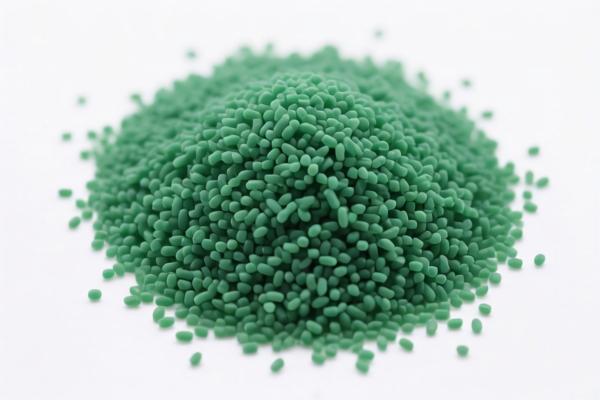
商品图片



AI分析
🧪 Indene Modified Elastomer (Polymers of Ethylene, Primary Forms)
🌐 HS Code Reference & Customs Clearance Guide | 2026 Latest Tariff Analysis | Professional Clearance Strategy 📌 I. Product Definition & Classification: What is "Indene Modified Elastomer"?
Indene Modified Elastomer is a specialized type of polymer, specifically a copolymer or modified polymer of ethylene. In the context of international trade and customs classification, it falls under the broad category of "Polymers of ethylene, in primary forms."
The key distinction lies in its physical properties and chemical structure: 1. Base Material: Ethylene polymer (PE/EP). 2. Modifier: Indene resin or modified indene derivatives are added to enhance tack, heat resistance, or compatibility. 3. Physical State: "Primary Forms" (e.g., powders, granules, flakes, liquids) – NOT finished goods like shoes, hoses, or tubes. 4. Key Property: If the material retains elastomeric characteristics (rubber-like elasticity) after modification, it is classified as "Elastomeric." If it has lost this property and behaves more like a standard rigid or semi-rigid plastic, it falls under "Other."
⚠️ Critical Distinction Point:
- If the product is elastic/rubber-like → It is an Elastomer → HS 3901.90.10.00
- If the product is non-elastic/rigid/plastic-like → It is Other → HS 3901.90.90.00
📦 II. HS Code Classification Details (2026 Latest Tariff Authority Comparison)
| HS Code | Product Description | Application Scenario | Elastic Property |
|---|---|---|---|
3901.90.10.00 |
Polymers of ethylene, in primary forms: Other: Elastomeric | Modified PE resins used for adhesives, sealants, roofing membranes, flexible packaging | ✅ Yes (Elastomeric) |
3901.90.90.00 |
Polymers of ethylene, in primary forms: Other: Elastomeric: Other | Non-elastic modified PE, rigid copolymers, standard industrial resins | ❌ No (Non-Elastomeric) |
🔍 Key Reminder:
- The term "Elastomer" in HS codes refers to materials that exhibit rubber-like elasticity even if they are thermoplastic.
- If your Indene Modified Elastomer is used in sealants, adhesives, or flexible films, it is highly likely to be classified as Elastomeric (3901.90.10.00).
- If it is a hard resin used for coating or rigid molding, it falls under Other (3901.90.90.00).
💰 III. 2026 Latest Tariff Rate Detailed Explanation (Including Surtaxes)
✅ Applicable Country: United States (US)
✅ Origin: China (CN)
✅ Effective Date: 2025/2026 (Current Trade Policy)
🎯 1. 3901.90.10.00 – Polymers of Ethylene, Elastomeric
| Item | Content |
|---|---|
| Product Description | Polymers of ethylene, in primary forms: Other: Elastomeric |
| Base Tariff | 0.0% |
| Additional Tariff (Section 301) | +25.0% |
| Total Tax Rate | 25.0% |
| Tax Calculation | CIF Value × 25.0% |
| De Minimis Exemption | ❌ Not Available |
| Legal Basis | HTSUS 3901.90.10.00 + USITC Footnote (Section 301 List 4) |
📌 Explanation:
- Base Tariff is 0%: This is because most polymers of ethylene have low base duties.
- 25% Surtax: This is the critical cost driver. Due to ongoing trade tensions, many chemical polymers from China are subject to a 25% additional tariff.
- Total Cost: Importers must pay 25% of the CIF value as duty. This is a significant cost factor that must be calculated in pricing.
🎯 2. 3901.90.90.00 – Polymers of Ethylene, Other (Non-Elastomeric)
| Item | Content |
|---|---|
| Product Description | Polymers of ethylene, in primary forms: Other: Elastomeric: Other |
| Base Tariff | 6.5% |
| Additional Tariff (Section 301) | +25.0% |
| Total Tax Rate | 31.5% |
| Tax Calculation | CIF Value × 31.5% |
| De Minimis Exemption | ❌ Not Available |
| Legal Basis | HTSUS 3901.90.90.00 + USITC Footnote (Section 301 List 4) |
📌 Explanation:
- Base Tariff is 6.5%: Non-elastomeric ethylene polymers have a higher base duty than elastomeric ones.
- 25% Surtax: Same as above, the Section 301 surcharge applies.
- Total Cost: 31.5% total duty. This is 6.5% higher than the elastomeric version.
- Strategic Implication: If your product can be technically classified as "Elastomeric," you save 6.5% in base duties. However, misclassification can lead to penalties.
🛠️ IV. Customs Clearance Operational Advice (Practical Pitfall Avoidance Guide)
✅ 1. Required Documentation Checklist (All Required)
| Document | Mandatory | Explanation |
|---|---|---|
| ✅ Technical Data Sheet (TDS) | ✔️ | Must specify: "Ethylene-based," "Indene-modified," and Elastic/Non-elastic properties. |
| ✅ SDS (Safety Data Sheet) | ✔️ | Helps confirm chemical composition and physical state. |
| ✅ Product Photos | ✔️ | Show physical form (granules, powder, liquid). |
| ✅ Bill of Lading & Invoice | ✔️ | Clearly state "Indene Modified Ethylene Polymer" – avoid vague terms like "Plastic Resin." |
| ✅ Certificate of Origin | ✔️ | Required for verifying country of origin (China). |
| ✅ Elasticity Test Report | ✔️ | Optional but recommended. If dispute arises, a test showing rubber-like elasticity supports HS 3901.90.10.00. |
✅ 2. Declaration Strategy (Key Tips)
🔥 "Know Your Elasticity, Declare Precisely, Avoid 31.5% Trap!"
| Scenario | Correct Declaration | Wrong Practice |
|---|---|---|
| Product is flexible/rubbery (e.g., for adhesives) | 3901.90.10.00 (Elastomeric) |
Declaring as 3901.90.90.00 → Overpay 6.5% |
| Product is rigid/hard (e.g., for coating) | 3901.90.90.00 (Other) |
Declaring as 3901.90.10.00 → Risk of Penalty for Misclassification |
| Vague Description: "Plastic Material" | ❌ Rejected | Use specific chemical name: "Indene-Modified Ethylene Copolymer" |
| Mixed Shipment (Elastomeric + Non-Elastomeric) | Split Declaration | Combined declaration → Highest rate applied to all |
✅ 3. Special Case Handling
| Situation | Handling Advice |
|---|---|
| Indene-Modified PE for Adhesives | Likely Elastomeric → Use 3901.90.10.00. Provide SDS showing tack/elasticity. |
| Indene-Modified PE for Rigid Containers | Likely Other → Use 3901.90.90.00. Provide TDS showing high rigidity. |
| Chemical Mixture | If not a polymer, might fall under 3824 (Prepared Binders). Consult Customs Broker. |
| Small Sample Shipment | Even small samples are subject to full duty (No De Minimis for China origin in this category). |
📌 V. Common Mistakes & Pitfalls (Lessons Learned)
❌ Mistake 1: Assuming all "Indene Resins" are the same.
👉 Consequence: Indene-modified ethylene polymers are under Chapter 39. Pure indene resins may be under Chapter 39 or 38. Misclassification leads to wrong duty rate.
❌ Mistake 2: Ignoring the "Elastomeric" definition.
👉 Consequence: If you declare "Other" (3901.90.90.00) for an elastomeric product, you overpay 6.5%. If you declare "Elastomeric" for a non-elastomeric product, you risk penalties for false declaration.
❌ Mistake 3: Not accounting for the 25% Surtax.
👉 Consequence: Many importers forget the Section 301 surcharge. Total cost becomes 25% or 31.5%, not just the base rate. This can destroy profit margins.
❌ Mistake 4: Vague Product Description.
👉 Consequence: "Chemical Material" → Customs may assign a higher default rate or require extensive documentation, causing customs holds.
✅ Correct Approach:
"Indene-Modified Ethylene Polymer, Granules, Elastomeric Grade, HS 3901.90.10.00, Made in China"
🎯 VI. Conclusion: Professional Classification Saves Money!
🎯 Remember:
🔹 "Elastomeric? Go to 10.00 (25% total). Non-Elastomeric? Go to 90.00 (31.5% total)."
🔹 "25% Surtax is Non-Negotiable for China Origin. Plan Your Budget Accordingly."
🔹 "Provide Technical Data to Prove Elasticity. Don't Let Customs Guess."
📌 Pro Tip:
- If your product is indene-modified ethylene-propylene copolymer, it is still likely under 3901 if ethylene is the principal monomer.
- Always request a Pre-Ruling (Binding Ruling) from US Customs (CBP) if the elasticity is borderline. This provides legal protection against misclassification penalties.
📣 Immediate Action:
📞 Contact Your Customs Broker with the TDS and SDS.
📊 Calculate Total Landed Cost: Include 25% or 31.5% duty in your pricing model.
🚀 Ensure Accurate HS Code Declaration to avoid delays and penalties.
✨ Professional Customs Clearance Starts with Accurate Classification!
💼 Your Cost Efficiency Depends on Getting the HS Code Right!
用户评价
关于 HS 编码归类
协调制度(HS)是由世界海关组织(WCO)制定的国际贸易商品分类标准。全球 200 多个国家采用 HS 系统作为海关关税、贸易统计和进出口监管的基础。
每个 HS 编码遵循以下层级结构:
- 章(2 位)——商品大类(例如:第 84 章:机器和机械设备)
- 品目(4 位)——章内的更具体分类
- 子目(6 位)——国际通用细分,所有 WCO 成员国统一使用
- 本国细分(8-10 位)——各国自行扩展的细分编码,如美国 HTSUS 10 位编码
正确的 HS 编码归类对于顺利通关、准确缴纳关税和遵守贸易法规至关重要。错误归类可能导致海关延误、多缴关税或罚款。
从CN进口到US时,适用的关税税率可能包括:
- 最惠国(MFN)税率——适用于 WTO 成员国的标准关税税率
- 普通税率——适用于无贸易协定国家
- 贸易救济关税——附加关税,如 301 条款(反倾销)、232 条款(国家安全)或反补贴税
本页内容仅供参考。如需正式归类,请咨询当地海关或持牌报关代理。