industrial grade chlorinated elastomer raw material
CN → US| HS编码 | 关税税率 | 原产国 | 目的国 | 文档 |
|---|---|---|---|---|
| 3824995000 | 41.5% | CN | US | 官方文档 |
| 3824999397 | 40.0% | CN | US | 官方文档 |
| 390210 | 0.0% | CN | US | 官方文档 |
| 390290 | 0.0% | CN | US | 官方文档 |
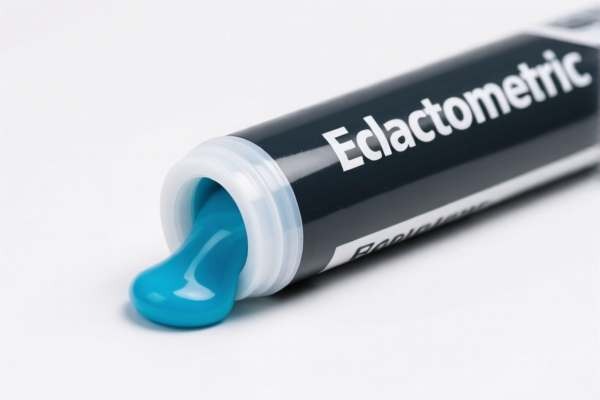
商品图片



AI分析
🧪 Industrial Grade Chlorinated Elastomer Raw Material
🌐 HS Code Reference & Clearance Guide | 2026 Latest Tariff Analysis | Professional Clearance Strategy
📌 I. Product Definition & Classification: Do You Really Understand "Chlorinated Elastomers"?
Industrial Grade Chlorinated Elastomer Raw Materials are critical chemical intermediates used in the manufacturing of high-performance rubber products, sealants, and specialized industrial components. In international trade, these materials are strictly categorized based on their chemical state (primary form vs. prepared) and application purpose (raw material vs. finished binder).
1. Chemical Derivatives (Primary Forms):
These are pure or basic chemical substances in their raw, unprocessed state (e.g., powders, pellets, or liquids), intended as feedstock for further polymerization or compounding.
2. Prepared Binders & Mixtures (HS Chapter 38):
These are chemically processed mixtures, often containing additives, solvents, or curing agents, specifically formulated for use as binders in foundry molds or as specialized chemical preparations.
⚠️ Critical Distinction:
- If the product is a pure chemical derivative (e.g., chlorinated polyolefin elastomer in primary form) → It falls under Chapter 39 (Plastics).
- If the product is a prepared mixture (e.g., binder for foundry cores) → It falls under Chapter 38 (Miscellaneous Chemical Products).
- Misclassification Risk: Declaring a "pure elastomer" as a "preparer binder" (or vice versa) can lead to severe duty discrepancies, especially given the significant tariff differences between Chapter 38 and Chapter 39 items for Chinese-origin goods.
📦 II. HS Code Classification Details (2026 Latest Tariff Authority Comparison)
| HS Code | Product Description | Applicable Scenario | Chemical State |
|---|---|---|---|
3902.10 |
Chlorinated elastomers, in primary forms, used as raw materials for industrial applications, including manufacturing of rubber products and sealants. | Pure raw material; pelleted/powdered; for compounding into rubber goods | ✅ Primary Form |
3902.90 |
Other chlorinated derivatives of hydrocarbons, not elsewhere specified, used in industrial processing and as raw materials for specialized elastomeric products. | Other chlorinated hydrocarbon derivatives; not specified elsewhere; raw material grade | ✅ Primary Form |
3824.99.50.00 |
Prepared binders for foundry molds or cores; chemical products and preparations... Mixtures of halogenated hydrocarbons: Chlorinated but not otherwise halogenated | Specific industrial binder mixture; pre-formulated for mold/core making; mixture of chlorinated hydrocarbons | ❌ Prepared Mixture |
3824.99.93.97 |
Prepared binders for foundry molds or cores; chemical products and preparations... Other: Other: Other: Other: Other: Other Other | General prepared chemical preparations; not specifically halogenated mixtures; general industrial use | ❌ Prepared Mixture |
🔍 Key Reminder:
- Chapter 39 (3902.x0) applies to raw chemical substances in their primary form. These are often subject to tariff retrieval errors in automated systems because tax data may not be directly mapped in some databases, requiring manual verification.
- Chapter 38 (3824.x0) applies to prepared mixtures/binders. These have clear, defined tariff rates in the provided data.
- Do not mix: A "chlorinated elastomer raw material" should generally not be declared as a "prepared binder" unless it is already formulated for that specific purpose.
💰 III. 2026 Latest Tariff Rate Details (Including Surcharges & Policy Add-ons)
✅ Applicable Country: United States (US)
✅ Origin: China (CN)
✅ Effective Time: Current (2025-2026)
🎯 1. 3902.10 & 3902.90 —— Chlorinated Elastomers / Derivatives (Primary Forms)
| Item | Content |
|---|---|
| Base Tariff | Not Retrievable (Error) |
| USITC Surcharge | Failed to Retrieve |
| IEEPA Surcharge | Failed to Retrieve |
| Total Tax | Error / Unknown |
| Tax Calculation | Cannot be calculated automatically |
| De Minimis Exemption | ❓ Unclear (Requires manual verification) |
| Legal Basis Path | Error: Data Retrieval Failed |
📌 Explanation:
- The provided data indicates "Failed to retrieve tax information" for both3902.10and3902.90.
- This is a HIGH-RISK classification. It does not mean the tariff is zero. It often means:
1. The HS code is too broad, and specific sub-codes have different rates.
2. The product may be subject to Section 301 tariffs or IEEPA surcharges, but the system hasn't linked them automatically.
3. Action Required: You MUST consult a customs broker or use a paid tariff database to determine the exact rate. Do not assume it is duty-free.
🎯 2. 3824.99.50.00 —— Prepared Binders: Mixtures of Halogenated Hydrocarbons (Chlorinated)
| Item | Content |
|---|---|
| Base Tariff | 0.0% |
| USITC Surcharge | 0.0% |
| IEEPA Surcharge | 0.0% |
| Total Tax | 0.0% |
| Tax Calculation | CIF Value × 0% = $0 |
| De Minimis Exemption | ❓ Likely Applicable (if under $800) |
| Legal Basis Path | Customs Tariff: 3824.99.50.00 |
📌 Explanation:
- This code has a 0% total tariff for Chinese-origin goods.
- Condition: The product must be strictly a mixture of halogenated hydrocarbons (chlorinated, not otherwise halogenated) used as a prepared binder for foundry molds or cores.
- Caution: If your product is a pure elastomer (not a mixture/binder), declaring it under this code is misclassification. Customs may audit and levy back-duties if they determine it is actually a raw chemical derivative (Chapter 39).
🎯 3. 3824.99.93.97 —— Other Prepared Binders & Chemical Preparations
| Item | Content |
|---|---|
| Base Tariff | 5.0% |
| USITC Surcharge | 25.0% |
| IEEPA Surcharge | (Included in total) |
| Total Tax | 30.0% |
| Tax Calculation | CIF Value × 30% |
| De Minimis Exemption | ❌ Not Applicable (if classified under 301/IEEPA) |
| Legal Basis Path | Customs Tariff: 3824.99.93.97 + USITC Footnote for 3824 |
📌 Explanation:
- This is the "catch-all" category for prepared chemical preparations not specified elsewhere.
- High Tariff Risk: If your "chlorinated elastomer raw material" is incorrectly declared as a "preparer binder" but is actually a specialized chemical preparation, it may fall here.
- 30% Total Tax is significant. Compare this with Chapter 39 codes (which may have different rates, even if unretrieved).
🛠️ IV. Clearance Practical Advice (Field Pitfall Avoidance Guide)
✅ 1. Preparation Checklist (Essential Documents)
| Document | Mandatory? | Description |
|---|---|---|
| ✅ Technical Data Sheet (TDS) | ✔️ | Must show chemical composition, CAS numbers, and physical state (primary form vs. mixture). |
| ✅ Certificate of Analysis (COA) | ✔️ | Proves purity and confirms if it is a "primary form" or a "prepared mixture." |
| ✅ Product Photographs | ✔️ | Show packaging, labeling (chemical name, not just "elastomer"), and physical form (pellets, powder, liquid). |
| ✅ Intended Use Statement | ✔️ | Explicitly state: "Used as raw material for compounding" (Ch 39) OR "Used as binder for foundry molds" (Ch 38). |
| ✅ Commercial Invoice | ✔️ | Clearly describe the product using the exact HS Code description. |
| ✅ Bill of Lading | ✔️ | Ensure consistent description with invoice. |
✅ 2. Declaration Tips (Key Rules)
🔥 "Pure is Chapter 39, Mixed is Chapter 38. Don't guess, verify!"
| Scenario | Correct Declaration | Wrong Declaration |
|---|---|---|
| Pure Chlorinated Elastomer (Primary Form) | 3902.10 or 3902.90 |
3824.99.93.97 → Risk of 30% Tax + Audit |
| Chlorinated Hydrocarbon Mixture (Binder) | 3824.99.50.00 |
3902.10 → Misclassification Risk |
| General Chemical Preparation (Not Binder) | 3824.99.93.97 |
3824.99.50.00 → Wrong Sub-code, Potential Audit |
| Foundry Binder (Chlorinated Mixture) | 3824.99.50.00 |
3824.99.93.97 → Unnecessary 30% Tax (0% vs 30%) |
📌 Critical Note:
- If you declare a pure raw material as3824.99.93.97, you pay 30% tax unnecessarily.
- If you declare a pure raw material as3902.x0, you face data retrieval errors but may pay 0% or low tariffs if correctly verified. You must verify Chapter 39 rates manually.
- If you declare a binder as3902.x0, customs may reject the entry because binders are not "primary forms" of plastics.
✅ 3. Special Case Handling
| Scenario | Recommendation |
|---|---|
| Product is Both Raw Material & Binder? | If it is a mixture, it is a preparer chemical (Ch 38). Use 3824.99.50.00 if it's a chlorinated mixture. |
| Unclear Tax Rate for Chapter 39? | Hire a Customs Broker to verify 3902.10 and 3902.90 specific sub-codes. Do not assume 0%. |
| High-Value Shipment? | Apply for an Advance Ruling from U.S. Customs to fix the HS Code and tax rate before shipment. |
| Mixed Container (Raw + Binder)? | Split the entry. Declare raw materials under Ch 39 and binders under Ch 38 separately. |
🌍 V. Global Market Clearance Comparison (2026 Latest)
| Country/Region | Recommended HS Code | Tariff (CN Origin) | Certification | Notes |
|---|---|---|---|---|
| 🇺🇸 USA | 3902.10 / 3824.99.50.00 |
0% - 30% (Varies) | None Specific | Chapter 39 rates are uncertain. Verify manually. Chapter 38 is clear. |
| 🇨🇳 China | 3902.10 / 3824.99.50.00 |
0% - 5% | N/A | Import duties are generally low. |
| 🇪🇺 EU | 3902.10 / 3824.99.50.00 |
0% - 4.5% | REACH Registration | REACH compliance is mandatory for chemicals. |
| 🇯🇵 Japan | 3902.10 / 3824.99.50.00 |
0% - 3% | JIS Standards | Low tariffs, strict chemical testing. |
📌 Conclusion:
- USA is the most complex market due to unclear tax data for Chapter 39 and high tariffs (30%) for miscategorized binders.
- EU & Japan require REACH/JIS compliance, which is critical for chemical imports.
- Always verify Chapter 39 tariffs manually in the US. Do not rely on "Error" messages.
📌 VI. Common Errors & Pitfall Guide (Lessons Learned)
❌ Error 1: Declaring a pure elastomer as a prepared binder (3824.99.93.97)
👉 Consequence: 30% tax instead of potential 0-5%. Overpayment!
❌ Error 2: Assuming "Error" in tax data means 0% tariff for 3902.x0
👉 Consequence: Underpayment + Penalties. The rate may be 10-25%. Audit Risk!
❌ Error 3: Providing vague descriptions like "Industrial Chemical"
👉 Consequence: Customs holds shipment. Requires detailed COA and TDS. Delay!
❌ Error 4: Mixing raw materials and binders in one HS Code
👉 Consequence: Misclassification. Customs may split the entry and charge higher rates. Complexity!
✅ Correct Approach:
"Chlorinated Polyolefin Elastomer, Primary Form, CAS No. XXXXX, Pure, Not Prepared" →
3902.10
"Chlorinated Hydrocarbon Mixture, Prepared Binder for Foundry Molds" →3824.99.50.00
🎯 VII. Conclusion: Precise Classification, Cost Savings!
🎯 Remember the Mantra:
🔹 "Pure = Ch 39, Mixed = Ch 38. Verify Ch 39 Rates! Binders get 0% if Chlorinated Mixtures, 30% if General."
🔹 "Don't guess the 'Error' tax. Consult a broker. 30% vs 0% is a huge difference."
📌 Tips:
- If your product is a pure chlorinated elastomer, do not assume 0% tax. Verify 3902.10 and 3902.90 specific rates.
- If your product is a foundry binder mixture, use 3824.99.50.00 for 0% tax.
- Apply for an Advance Ruling if the product is complex or high-value.
📣 Immediate Action:
📞 Contact a Customs Broker to verify Chapter 39 tariffs.
📄 Provide TDS/COA to confirm "Primary Form" vs. "Prepared Mixture."
🚀 Accurate Classification = Lower Taxes + Faster Clearance!
✨ Professional Clearance Starts with Precise Classification!
💼 Every Dollar Saved Counts!
用户评价
关于 HS 编码归类
协调制度(HS)是由世界海关组织(WCO)制定的国际贸易商品分类标准。全球 200 多个国家采用 HS 系统作为海关关税、贸易统计和进出口监管的基础。
每个 HS 编码遵循以下层级结构:
- 章(2 位)——商品大类(例如:第 84 章:机器和机械设备)
- 品目(4 位)——章内的更具体分类
- 子目(6 位)——国际通用细分,所有 WCO 成员国统一使用
- 本国细分(8-10 位)——各国自行扩展的细分编码,如美国 HTSUS 10 位编码
正确的 HS 编码归类对于顺利通关、准确缴纳关税和遵守贸易法规至关重要。错误归类可能导致海关延误、多缴关税或罚款。
从CN进口到US时,适用的关税税率可能包括:
- 最惠国(MFN)税率——适用于 WTO 成员国的标准关税税率
- 普通税率——适用于无贸易协定国家
- 贸易救济关税——附加关税,如 301 条款(反倾销)、232 条款(国家安全)或反补贴税
本页内容仅供参考。如需正式归类,请咨询当地海关或持牌报关代理。