industrial grade textile reinforced plastic sheets
CN → US| HS编码 | 关税税率 | 原产国 | 目的国 | 文档 |
|---|---|---|---|---|
| 3921902510 | 41.5% | CN | US | 官方文档 |
| 3926905600 | 40.1% | CN | US | 官方文档 |
| 3926905700 | 41.5% | CN | US | 官方文档 |
| 3921904010 | 39.2% | CN | US | 官方文档 |
| 6815190000 | 35.0% | CN | US | 官方文档 |
商品图片
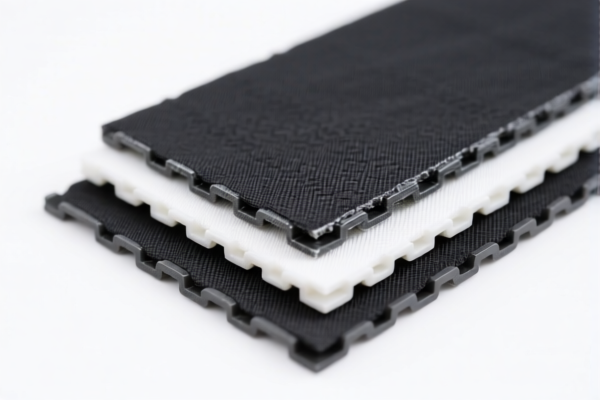
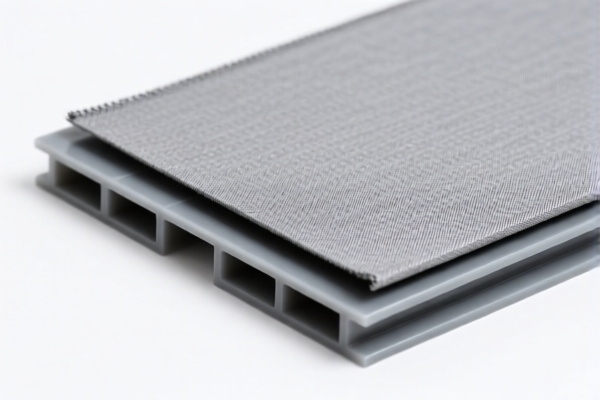
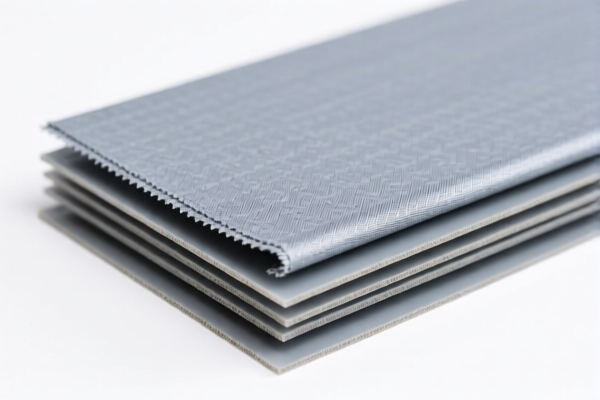
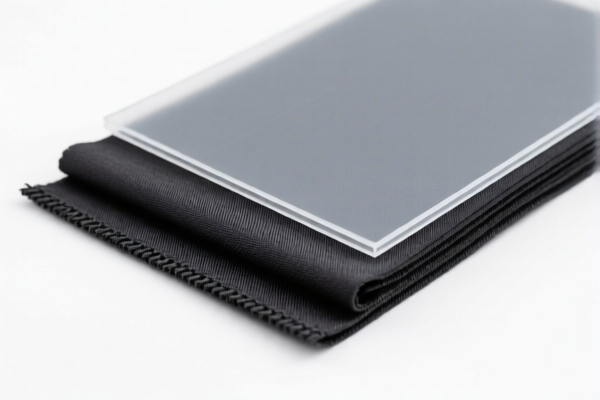
AI分析
🧱 Industrial Grade Textile Reinforced Plastic Sheets (TRPS)
🌐 HS Code Reference & Customs Clearance Guide | 2026 Latest Tariff Analysis | Strategic Compliance Strategy
📌 I. Product Definition & Classification: Do You Really Understand "Textile Reinforced Plastics"?
Industrial Grade Textile Reinforced Plastic Sheets are high-performance composite materials combining the structural strength of textiles (glass, carbon, or aramid fibers) with the corrosion resistance and moldability of plastics (resins like epoxy, vinyl ester, or polyester).
In international trade, these products are often misclassified due to their hybrid nature. They can be viewed as: 1. Plastic Sheets/Plates: If the plastic content is dominant by weight or volume, or if the textile serves merely as reinforcement within a plastic matrix. 2. Plastic Articles: If the product is finished into a specific shape (like a board/sheet) and loses its identity as a raw material. 3. Non-Electric Fiber Reinforced Articles: If classified under general composite articles that are not specifically electrical or mechanical parts.
⚠️ Key Classification Distinction:
- 3921 Series: Focuses on plastic sheets, plates, and films that are reinforced. This is the most common classification for "Plastic Sheets." - 3926 Series: Focuses on other plastic articles. This is used when the item is a finished plate/board not fitting strictly into the "sheet/film" definition of 3921. - 6815 Series: Focuses on articles of stone, plaster, cement, or fiber. This is a critical alternative if the textile reinforcement is interpreted as a "fiber composite" distinct from standard plastic lamination, particularly for decorative or structural boards.
📦 II. HS Code Classification Matrix (2026 Latest Tariff Authority Comparison)
| HS Code | Product Description | Application Scenario | Material Conflict? | Total Tax Rate |
|---|---|---|---|---|
3921.90.25.10 |
High-strength textile-reinforced plastic sheet; dominant plastic content, fits textile-plastic composite characteristics | High-strength structural panels, automotive parts | ❌ No | 41.5% |
3926.90.56.00 |
Plastic products containing textile fibers, in board form, no material conflict | General industrial plastic boards with fiber fill | ❌ No | 40.1% |
3926.90.57.00 |
Plastic material board-shaped articles, with textile reinforcement attributes, fits plastic product category | Finished plastic plates, decorative or semi-structural | ❌ No | 41.5% |
3921.90.40.10 |
Plastic sheet form, textile reinforcement logic similar to paper reinforcement, no material conflict | Standard reinforced plastic sheets, comparable to paper-reinforced laminates | ❌ No | 39.2% |
6815.19.00.00 |
Textile-reinforced plastic decorative board, non-electrical fiber-reinforced composite articles, board shape | Decorative panels, non-electrical composite boards | ❌ No | 35.0% |
🔍 Key Insight:
-3921.90.25.10&3926.90.57.00: Often used for high-strength, structural-grade TRPS. Both carry a 41.5% total tax rate. -3921.90.40.10: A slightly lower tax rate option (39.2%) if the reinforcement logic is deemed similar to traditional paper/plastic laminates. -6815.19.00.00: Offers the lowest total tax (35.0%) but requires convincing customs that the product is a "fiber-reinforced composite article" rather than a standard plastic sheet. This is often viable for decorative or specific composite boards.
💰 III. 2026 Latest Tariff Rate Details (Including Surtaxes & Policy Add-ons)
✅ Applicable Country: United States (US)
✅ Country of Origin: China (CN)
✅ Effective Date: November 10, 2025 (for subsequent imports)
🎯 1. 3921.90.25.10 & 3926.90.57.00 —— High-Strength Reinforced Plastic Sheets/Plates
| Item | Detail |
|---|---|
| Base Tariff Rate | 6.5% (ad valorem) |
| Section 301 Surtax | +25.0% |
| 122 Clause Surtax | +10.0% |
| Total Tax Rate | 41.5% |
| Tax Calculation | CIF Value × 41.5% |
| De Minimis Eligibility | ❌ Not Eligible (deny_de_minimis) |
| Legal Basis Path | Base Tariff → Section 301: 8521/8523/etc. (applied to 3921/3926) → 122 Clause: 9903.01.19 |
📌 Explanation:
- Base 6.5%: Standard Most Favored Nation (MFN) rate for plastic sheets/plates. - Section 301 25%: Additional tariff on Chinese-origin plastics and plastic articles under US Trade Act Section 301. - 122 Clause 10%: Additional tariff under Section 122 of the Trade Expansion Act (often applied to strategic goods). - Total 41.5%: This is the standard high-cost pathway for reinforced plastic sheets.
🎯 2. 3926.90.56.00 —— Plastic Products with Textile Fibers (Board Form)
| Item | Detail |
|---|---|
| Base Tariff Rate | 5.1% (ad valorem) |
| Section 301 Surtax | +25.0% |
| 122 Clause Surtax | +10.0% |
| Total Tax Rate | 40.1% |
| Tax Calculation | CIF Value × 40.1% |
| De Minimis Eligibility | ❌ Not Eligible |
| Legal Basis Path | Base Tariff → Section 301 → 122 Clause |
📌 Note:
- Slightly lower than 3921 due to a lower base rate (5.1% vs 6.5%). - Suitable for generic industrial plastic boards with fiber content.
🎯 3. 3921.90.40.10 —— Plastic Sheets (Paper-Reinforcement Logic)
| Item | Detail |
|---|---|
| Base Tariff Rate | 4.2% (ad valorem) |
| Section 301 Surtax | +25.0% |
| 122 Clause Surtax | +10.0% |
| Total Tax Rate | 39.2% |
| Tax Calculation | CIF Value × 39.2% |
| De Minimis Eligibility | ❌ Not Eligible |
| Legal Basis Path | Base Tariff → Section 301 → 122 Clause |
📌 Optimization Tip:
- If your product’s reinforcement is less structural and more laminar (similar to paper/plastic laminates), this code offers the lowest tax among the 3921/3926 group.
🎯 4. 6815.19.00.00 —— Non-Electric Fiber Reinforced Composite Articles
| Item | Detail |
|---|---|
| Base Tariff Rate | 0.0% (ad valorem) |
| Section 301 Surtax | +25.0% |
| 122 Clause Surtax | +10.0% |
| Total Tax Rate | 35.0% |
| Tax Calculation | CIF Value × 35.0% |
| De Minimis Eligibility | ❌ Not Eligible |
| Legal Basis Path | Base Tariff (0%) → Section 301 → 122 Clause |
📌 Critical Note:
- This is the most cost-effective option at 35.0%. - However, customs may challenge this if the product is deemed primarily plastic. You must emphasize the textile/fiber composite nature and non-electrical application. - Suitable for "decorative boards" or "non-structural composite panels."
🛠️ IV. Customs Clearance Practical Advice (Battle-Tested Pitfall Avoidance)
✅ 1. Required Documentation Checklist (Non-Negotiable)
| Document | Mandatory? | Description |
|---|---|---|
| ✅ Technical Data Sheet | ✔️ | Specifies resin type, fiber type (glass/carbon/aramid), weight %, and lamination process. |
| ✅ Material Composition Statement | ✔️ | Must detail the percentage of plastic vs. textile by weight to justify HS Code choice. |
| ✅ Product Photos (Clear) | ✔️ | Show cross-section to reveal reinforcement layers, surface finish, and edge quality. |
| ✅ Commercial Invoice | ✔️ | Must use precise description: "Textile Reinforced Plastic Sheet, Model XYZ, Non-Electrical." |
| ✅ Packing List | ✔️ | Detail net/gross weight, dimensions, and number of layers/pieces. |
| ✅ FCC/CE Certification | ❌ Optional | Not required for non-electrical items, but helps prove non-electrical status if challenged. |
✅ 2. Declaration Strategy (Key Mantra)
🔥 “Emphasize Composite, Not Just Plastic; Clarify Non-Electrical, Avoid 8500s!”
| Scenario | Recommended Declaration | Common Error |
|---|---|---|
| High-Strength Structural Sheet | 3921.90.25.10 or 3926.90.57.00 |
Misdeclaring as 8500 (Electrical) → 0% base but high scrutiny |
| Generic Industrial Board | 3926.90.56.00 |
Over-declaring as 3921 → Higher base tax (6.5% vs 5.1%) |
| Decorative Composite Panel | 6815.19.00.00 |
Misdeclaring as 3921 → Pay 41.5% instead of 35.0% |
| Paper-like Laminated Sheet | 3921.90.40.10 |
Misdeclaring as 3926 → Pay 40.1% instead of 39.2% |
📌 Warning:
- Do NOT declare as Electrical Articles (e.g.,8536,8544) unless the sheet is specifically designed for electrical insulation and has been tested/certified as such. Even then, base tax may be 0%, but 301 tariffs still apply. - Do NOT use "De Minimis" (800.32) for shipments >$800. These HS codes are explicitly excluded from de minimis treatment under current US regulations.
✅ 3. Special Case Handling
| Scenario | Handling Advice |
|---|---|
| OEM Custom Sheets | Provide client spec sheets showing custom resin/fiber mix to support 3921 or 6815 classification. |
| Mixed Shipments (Plastic + Metal) | Declare separately. Plastic parts under 39xx, Metal parts under 73xx. Do not bundle. |
| Decorative vs. Structural | If decorative, lean towards 6815.19.00.00 for lower tax. If structural, use 3921.90.25.10. |
| Origin Marking | Ensure every sheet/package is marked "Made in China" to avoid origin-related delays. |
🌍 V. Global Market Comparison (2026 Latest)
| Country/Region | Recommended HS Code | Tariff (China Origin) | Certification | Notes |
|---|---|---|---|---|
| 🇺🇸 United States | 3921.90.25.10 / 6815.19.00.00 |
35.0% - 41.5% | N/A (Non-electrical) | Highest tariffs globally due to 301 & 122 clauses. |
| 🇨🇳 China | 3921.90.25.10 |
6.5% | CCC (if applicable) | No 301/122 surtaxes. |
| 🇪🇺 EU | 3921.90.00 / 3926.90.99 |
6.5% - 8.0% | REACH, RoHS | Lower base tariffs, no US-style surtaxes. |
| 🇬🇧 UK | 3921.90.00 / 3926.90.99 |
6.5% - 8.0% | UKCA, REACH | Post-Brexit rules align with EU for most plastics. |
| 🇯🇵 Japan | 3921.90.00 / 3926.90.99 |
5.0% - 8.0% | PSE (if electrical) | Generally lower tariffs than US/EU. |
📌 Conclusion:
- The US is the most challenging market for TRPS due to 35-41.5% effective tariff rates. - Supply Chain Strategy: Consider sourcing from Vietnam, Mexico, or Thailand to avoid US Section 301 and 122 tariffs. These countries may offer 0% - 8% effective rates. - Pre-Ruling: Apply for an Advance Ruling with US CBP for6815.19.00.00if marketing as decorative/composite, to lock in the 35.0% rate and avoid disputes.
📌 VI. Common Errors & Pitfalls (Blood Lessons)
❌ Error 1: Declaring as "Plastic Sheet" without mentioning "Textile Reinforcement"
👉 Consequence: Customs may reclassify under higher tax brackets or demand additional testing.
❌ Error 2: Using "De Minimis" for shipments >$800
👉 Consequence: Seizure and penalty. These HS codes are explicitly denied de minimis status.
❌ Error 3: Mislabeling as "Electrical Insulation Board" when it's not
👉 Consequence: Requires FCC/UL certification. If missing, shipment held or returned.
❌ Error 4: Ignoring "122 Clause"
👉 Consequence: Underpaying taxes by 10%. Back taxes + interest + penalties.
✅ Correct Practice:
"Textile Reinforced Plastic Sheet, 50% Glass Fiber / 50% Epoxy Resin, Non-Electrical, Industrial Grade, Model XYZ, Made in China"
🎯 VII. Conclusion: Precise Classification Saves Profit Margins!
🎯 Remember the Mantra:
🔹 "Plastic Base? Use 3921. Composite Board? Try 6815. Non-Electrical? Avoid 8500s!"
🔹 "Tax Rate 35% vs 41.5%: A 6.5% difference is pure profit. Choose wisely!"
📌 Pro Tip:
If your product is decorative or non-structural, aggressively pursue 6815.19.00.00 with a 35.0% total tax rate. It offers the best balance of compliance and cost savings in the US market.
📣 Immediate Action:
📞 Consult a licensed customs broker for an Advance Ruling.
🚀 Optimize your supply chain by considering non-China origins to bypass US surtaxes.
✨ Professional Customs Clearance Starts with Accurate Classification!
💼 Every Percent Saved is Margin Gained!
用户评价
关于 HS 编码归类
协调制度(HS)是由世界海关组织(WCO)制定的国际贸易商品分类标准。全球 200 多个国家采用 HS 系统作为海关关税、贸易统计和进出口监管的基础。
每个 HS 编码遵循以下层级结构:
- 章(2 位)——商品大类(例如:第 84 章:机器和机械设备)
- 品目(4 位)——章内的更具体分类
- 子目(6 位)——国际通用细分,所有 WCO 成员国统一使用
- 本国细分(8-10 位)——各国自行扩展的细分编码,如美国 HTSUS 10 位编码
正确的 HS 编码归类对于顺利通关、准确缴纳关税和遵守贸易法规至关重要。错误归类可能导致海关延误、多缴关税或罚款。
从CN进口到US时,适用的关税税率可能包括:
- 最惠国(MFN)税率——适用于 WTO 成员国的标准关税税率
- 普通税率——适用于无贸易协定国家
- 贸易救济关税——附加关税,如 301 条款(反倾销)、232 条款(国家安全)或反补贴税
本页内容仅供参考。如需正式归类,请咨询当地海关或持牌报关代理。