industrial packaging paper
CN → US| HS编码 | 关税税率 | 原产国 | 目的国 | 文档 |
|---|---|---|---|---|
| 3923900080 | 38.0% | CN | US | 官方文档 |
| 3923109000 | 38.0% | CN | US | 官方文档 |
| 3926901000 | 20.9% | CN | US | 官方文档 |
| 3926909989 | 22.8% | CN | US | 官方文档 |
| 3923900080 | 38.0% | CN | US | 官方文档 |
商品图片
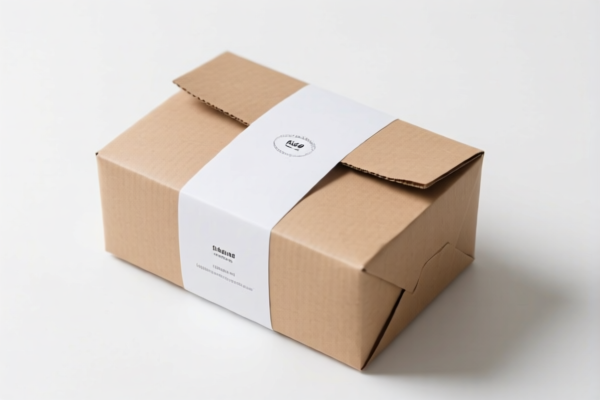
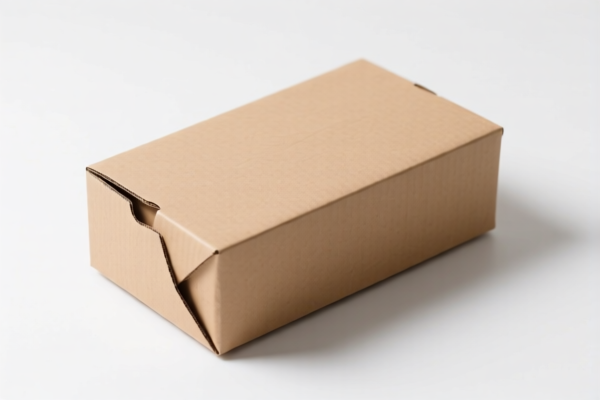

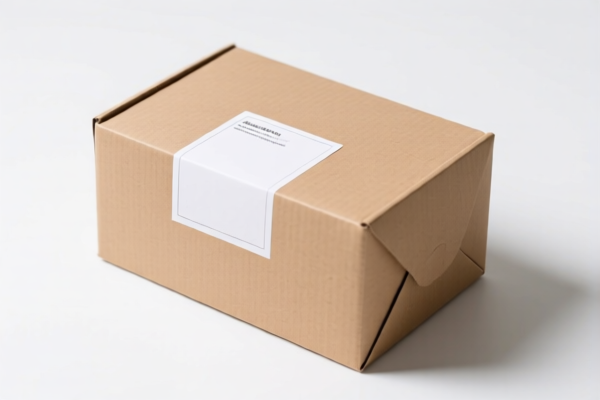
AI分析
📦 Industrial Packaging Paper (Industrial Cartons & Corrugated Materials)
🌐 HS Code Reference & Customs Clearance Guide | 2026 Latest Tariff Analysis | Professional Clearance Strategy
📌 I. Product Definition & Classification: Do You Really Understand "Industrial Packaging"?
"Industrial Packaging Paper" in international trade is rarely just plain sheet paper. It refers to processed paper products designed for logistics, storage, and transport. Crucially, this term often encompasses corrugated cardboard, paperboard boxes, and reinforced paper sacks used in B2B supply chains.
The key distinction in classification lies in the form and function: 1. Paper Containers/Boxes (HS 4819): Shaped boxes, cartons, folding cartons used for direct product packaging. 2. Plastic/Paper Composite Packaging (HS 3923): If the "paper" includes plastic coatings, laminates, or is a composite film used for industrial wrapping/bags. 3. Miscellaneous Paper Articles (HS 4823/4911): Less common for bulk industrial packaging, usually for labels or specific paper goods.
⚠️ Critical Distinction:
- If the item is a box/carton made primarily of paper/paperboard → Look at Chapter 48 (HS 4819).
- If the item is a bag/film where plastic is the primary material or it's a composite primarily classified as plastic → Look at Chapter 39 (HS 3923).
- Note: The provided DATA focuses heavily on HS 3923 (Plastic Packaging) and HS 3926 (Plastic Articles). This suggests the input "Industrial Packaging Paper" might refer to plastic-coated paper bags or composite packaging materials where customs classifies them under plastic due to the polymer content or primary function as a "plastic article."
📦 II. HS Code Classification Details (Based on Provided Data)
The following HS Codes are derived from the provided <DATA> context. Note that these codes primarily classify plastic-related packaging or other plastic articles, which often covers plastic-coated industrial paper bags, laminated cardboard boxes, or composite packaging films.
| HS Code | Product Description | Application Scenario | Material/Composition |
|---|---|---|---|
3923.90.00.80 |
Other articles for the conveyance or packing of goods | Industrial wrapping, bulk bags, composite packaging | Plastics/Paper Composite (Packing articles) |
3923.10.90.00 |
Boxes, cases, crates and similar articles | Industrial shipping boxes, pallet wraps, transport containers | Plastics/Paper Composite (Containers) |
3926.90.10.00 |
Other articles of plastic (specific sub-category) | Industrial plastic containers, specialized packaging articles | Plastic (Articles/Containers) |
3926.90.99.89 |
Other plastic articles not elsewhere specified | Generic industrial plastic packaging items, unlisted composite bags | Plastic (Other Articles) |
🔍 Important Note:
- Although the user input is "Industrial Packaging Paper," the provided tax data exclusively lists HS 39xx codes (Plastics). This implies that the specific products in question are likely plastic-laminated paper, paper-based bags with plastic lining, or are being misclassified/over-classified as plastic due to their industrial utility. - HS 3923 is for "Articles for the conveyance or packing of goods, of plastics." - HS 3926 is for "Other articles of plastic."
💰 III. 2026 Latest Tariff Rate Breakdown (With Surcharges & Policy Add-ons)
✅ Applicable Country: United States (US)
✅ Country of Origin: China (CN)
✅ Effective Time: 2025-11-10 onwards (Including subsequent imports)
🎯 1. 3923.90.00.80 —— Other Packing Articles (Plastics)
| Item | Content |
|---|---|
| Base Duty Rate | 3.0% |
| USITC Additional Duty | +25.0% (Section 301) |
| IEEPA Additional Duty | +10.0% (122 Clause/China-specific) |
| Total Effective Rate | 38.0% |
| Tax Calculation | CIF Value × 38.0% |
| De Minimis Exemption | ❌ Not Eligible (High duty rates exclude small packages from de minimis benefits) |
| Legal Basis Path | USITC:3923.90.00.80 → FOOTNOTE:301 → IEEPA:9903.01.25 |
📌 Explanation:
- This code is often used for plastic shrink wrap, composite bags, or plastic-lined boxes. - The 38% total rate is significant. It combines the standard MFN rate (3%) with heavy trade barrier tariffs. - Risk: If the item is actually uncoated paper, classifying it here may lead to overpayment of duties (if paper rates are lower) or misdeclaration penalties if audited. However, if it's a composite with plastic as the essential character, this is correct.
🎯 2. 3923.10.90.00 —— Boxes, Cases, Crates (Plastics)
| Item | Content |
|---|---|
| Base Duty Rate | 3.0% |
| USITC Additional Duty | +25.0% |
| IEEPA Additional Duty | +10.0% |
| Total Effective Rate | 38.0% |
| Tax Calculation | CIF Value × 38.0% |
| De Minimis Exemption | ❌ Not Eligible |
| Legal Basis Path | USITC:3923.10.90.00 → FOOTNOTE:301 → IEEPA:9903.01.24 |
📌 Explanation:
- This code covers plastic boxes, crates, and similar containers. - If your "Industrial Packaging Paper" is a corrugated box with a plastic film layer or a plastic-reinforced carton, it may fall here. - Strategy: Ensure the primary material is correctly identified. If it's >50% paper by weight, challenge classification. If it's plastic-coated for waterproofing, this classification stands.
🎯 3. 3926.90.10.00 —— Other Plastic Articles (Specific)
| Item | Content |
|---|---|
| Base Duty Rate | 3.4% |
| USITC Additional Duty | +7.5% |
| IEEPA Additional Duty | +10.0% |
| Total Effective Rate | 20.9% |
| Tax Calculation | CIF Value × 20.9% |
| De Minimis Exemption | ❌ Not Eligible |
| Legal Basis Path | USITC:3926.90.10.00 → FOOTNOTE:301 → IEEPA:9903.01.24 |
📌 Explanation:
- This is a lower tariff category within Chapter 39. - It may apply to specialized plastic packaging components or industrial plastic containers that don't fit the "boxes/crates" definition of 3923. - Opportunity: If your product can be classified here (e.g., as a "plastic article" rather than a "packing article"), you save 17.1% in duties compared to 3923 codes.
🎯 4. 3926.90.99.89 —— Other Plastic Articles (General)
| Item | Content |
|---|---|
| Base Duty Rate | 5.3% |
| USITC Additional Duty | +7.5% |
| IEEPA Additional Duty | +10.0% |
| Total Effective Rate | 22.8% |
| Tax Calculation | CIF Value × 22.8% |
| De Minimis Exemption | ❌ Not Eligible |
| Legal Basis Path | USITC:3926.90.99.89 → FOOTNOTE:301 → IEEPA:9903.01.24 |
📌 Explanation:
- This is a catch-all for plastic articles not specified elsewhere. - If the packaging is a unique industrial item (e.g., a custom-shaped plastic/paper composite sleeve), this might apply. - Comparison: Slightly higher than3926.90.10.00but significantly lower than3923codes.
🛠️ IV. Customs Clearance Practical Advice (Real-World Pitfall Guide)
✅ 1. Preparation Checklist (Non-negotiable)
| Document | Required | Description |
|---|---|---|
| ✅ Product Composition Sheet | ✔️ | Must detail % of paper vs. plastic. Critical for Chapter 39 vs 48 classification. |
| ✅ Material Safety Data Sheet (MSDS) | ✔️ | If plastic coating is involved. |
| ✅ Commercial Invoice | ✔️ | Clearly state "Industrial Packaging" or "Carton," not just "Paper." |
| ✅ Photos of Product | ✔️ | Show cross-section if laminated. |
| ✅ Origin Certificate | ✔️ | For China origin verification. |
✅ 2. Declaration Strategy (Key Mnemonic)
🔥 "Material Defines Chapter, Function Defines Heading!"
| Scenario | Correct Declaration | Risk if Wrong |
|---|---|---|
| Plastic-lined Paper Bag | 3923.90.00.80 (38%) or 3926 (20-22%) |
Under-declaring may lead to audits. Over-classifying loses money. |
| Pure Corrugated Box | HS 4819 (Not in Data, but likely lower tax) | Classifying as 3923 pays 38% instead of ~5-10%. |
| Plastic Wrap Film | 3923.21 or 3923.40 |
Check specific plastic film codes for better rates. |
| Composite Laminated Box | 3923.10.90.00 |
If plastic is essential character. |
✅ 3. Special Considerations
| Situation | Handling Advice |
|---|---|
| Laminated Paper | If the paper is coated with plastic for moisture resistance, US Customs may classify it as Plastic (Chapter 39) rather than Paper (Chapter 48). Use 3926.90.10.00 (20.9%) if possible for savings. |
| Bulk Bags (FIBC) | If made of woven plastic, classify under 3923.21 or 3923.29. If paper-based with plastic lining, it's complex. |
| Customs Bonding | Due to high duties (up to 38%), consider using Bonded Warehouses if final destination is unclear. |
🌍 V. Global Market Comparison (2026 Latest)
| Country/Region | Recommended HS Code (Plastic Packaging) | Duty Rate (China Origin) | Certification | Notes |
|---|---|---|---|---|
| 🇺🇸 USA | 3923.90.00.80 / 3926.90.10.00 |
20.9% – 38.0% | FDA (if food contact) | High Section 301 + IEEPA tariffs. |
| 🇨🇳 China | 3923.90.00.80 |
~3-5% | None | No Section 301. |
| 🇪🇺 EU | 3923.90.00.00 |
~6.5% | REACH/RoHS | No Section 301. |
| 🇨🇦 Canada | 3923.90.00.00 |
~5% | None | Similar to US but lower surcharges. |
📌 Conclusion:
- USA is the most expensive market for industrial packaging due to Section 301 and IEEPA tariffs. - If you can prove the product is primarily paper (Chapter 48), you could save ~30% in duties. However, if it's plastic-coated or composite, you are stuck with Chapter 39 rates.
📌 VI. Common Mistakes & Pitfall Guide (Blood & Tears Lessons)
❌ Mistake 1: Declaring "Industrial Packaging Paper" as 4819.20 (Paper Boxes) when it's plastic-laminated.
👉 Consequence: Customs rejects, demands re-classification to 3923, and charges 38% + penalties.
❌ Mistake 2: Assuming "Paper" means low tax.
👉 Consequence: If the product has plastic film for industrial use, it's often classified as Plastic. Paying 38% instead of ~5% is a massive margin killer.
❌ Mistake 3: Ignoring the 122 Clause (IEEPA 10%).
👉 Consequence: Underestimating total landed cost. Always calculate Base + 301 + IEEPA.
✅ Correct Action:
"Laminated? Coated? Reinforced with Plastic? → Classify as Plastic (39xx). Pure Paper? → Classify as Paper (48xx)."
🎯 VII. Conclusion: Precision Classification Saves Money
🎯 Remember the Mantra:
🔹 "Plastic Presence = Plastic Chapter."
🔹 "3923 is for Packing, 3926 is for Articles."
🔹 "38% vs 20%: Check Sub-headings Before You Ship!"
🔹 "Don't Let 'Paper' in the Name Trick You into Low Tax on Plastic Goods."
📌 Pro Tip:
If your "Industrial Packaging Paper" is 100% uncoated paper, immediately re-evaluate classification to HS 4819. The provided data only covers plastic codes, which may not be optimal for pure paper products. If it is composite, use 3926.90.10.00 (20.9%) over 3923.90.00.80 (38%) if applicable, to save 17.1%.
📣 Immediate Action:
📞 Consult a Customs Broker: Provide a physical sample or detailed cross-section.
📝 Pre-Ruling: Apply for an Advance Ruling to confirm if your specific "Paper/Plastic" hybrid qualifies for the lower3926rates or must fall under3923.
🚀 Optimize Your Supply Chain: If duties are prohibitive, consider sourcing packaging from countries with FTAs (Free Trade Agreements) with the US, or switch to 100% paper packaging if feasible.
✨ Professional Clearance Starts with Accurate Classification!
💼 Every Percentage Point of Duty Saves You Dollars!
用户评价
关于 HS 编码归类
协调制度(HS)是由世界海关组织(WCO)制定的国际贸易商品分类标准。全球 200 多个国家采用 HS 系统作为海关关税、贸易统计和进出口监管的基础。
每个 HS 编码遵循以下层级结构:
- 章(2 位)——商品大类(例如:第 84 章:机器和机械设备)
- 品目(4 位)——章内的更具体分类
- 子目(6 位)——国际通用细分,所有 WCO 成员国统一使用
- 本国细分(8-10 位)——各国自行扩展的细分编码,如美国 HTSUS 10 位编码
正确的 HS 编码归类对于顺利通关、准确缴纳关税和遵守贸易法规至关重要。错误归类可能导致海关延误、多缴关税或罚款。
从CN进口到US时,适用的关税税率可能包括:
- 最惠国(MFN)税率——适用于 WTO 成员国的标准关税税率
- 普通税率——适用于无贸易协定国家
- 贸易救济关税——附加关税,如 301 条款(反倾销)、232 条款(国家安全)或反补贴税
本页内容仅供参考。如需正式归类,请咨询当地海关或持牌报关代理。