industrial textiles
CN → US| HS编码 | 关税税率 | 原产国 | 目的国 | 文档 |
|---|---|---|---|---|
| 5906993000 | 38.3% | CN | US | 官方文档 |
| 6006901000 | 42.0% | CN | US | 官方文档 |
| 5903102010 | 35.0% | CN | US | 官方文档 |
| 6307909882 | 24.5% | CN | US | 官方文档 |
| 6307909884 | 24.5% | CN | US | 官方文档 |
商品图片
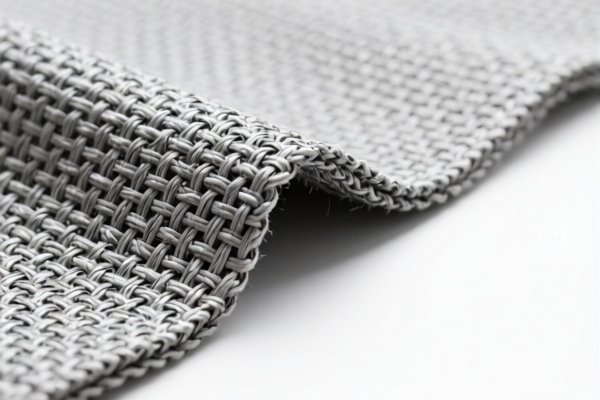
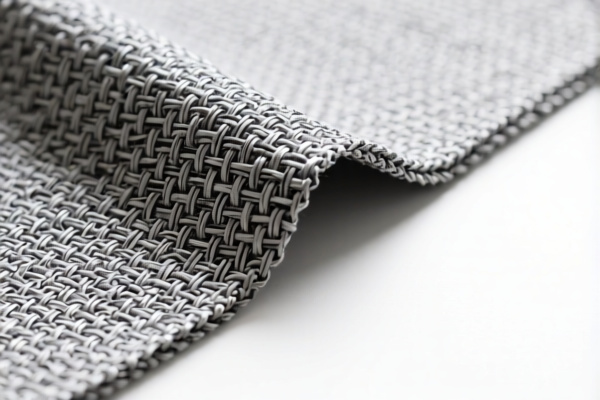
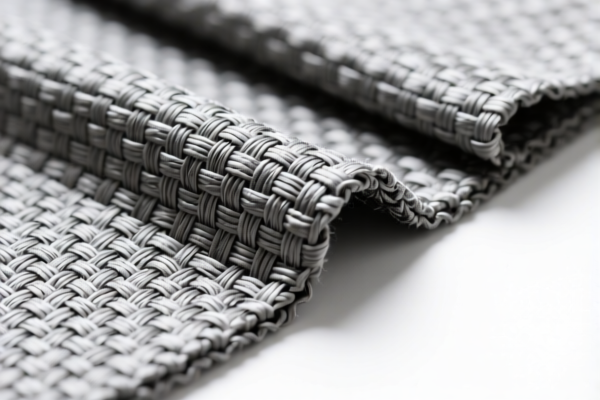
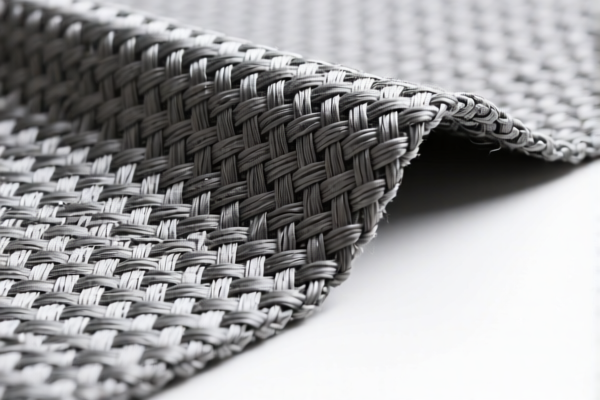
AI分析
🧵 Industrial Textiles (Fabric & Apparel Accessories)
🌐 HS Code Reference & Customs Clearance Guide | 2026 Latest Tariff Analysis | Professional Customs Strategy
📌 Part 1: Product Definition & Classification: Do You Really Understand "Industrial Textiles"?
Industrial textiles are a broad category of fabric products used primarily for functional, rather than aesthetic, purposes. In international trade, they are often misclassified due to their diverse end-uses. They generally fall into two main buckets:
Raw/Processed Fabrics (Chapter 59-60): Fabrics that have been impregnated, coated, covered, or laminated with rubber, plastics, or other substances for durability, water resistance, or insulation.
Finished Goods (Chapter 63): Finished articles made from textile materials, such as bags, sacks, filters, or protective covers, which do not have a specific dedicated chapter heading.
⚠️ Key Distinction Point:
- If the product is bare fabric (even if coated/rubberized) used for further manufacturing → Classified under 5906, 5903, or 6006.
- If the product is a finished item (e.g., a tarp, bag, or cover) with no specific heading elsewhere → Classified under 6307.
📦 Part 2: HS Code Classification Details (2026 Latest Authorized Comparison)
| HS Code | Product Description | Application Scenario | Key Characteristics |
|---|---|---|---|
5906.99.30.00 |
Rubberized textile fabrics, other (Industrial Grade) | Conveyor belts, hoses, waterproof industrial covers, automotive interiors | ✅ Contains rubber coating/lamination; retains fabric structure |
6006.90.10.00 |
Knitted or crocheted fabrics, other (incl. silk blends) | Flexible industrial sleeves, filtration fabrics, high-strength knit components | ✅ Knitted/Crocheted structure; potential silk/nylon/polyester blend |
5903.10.20.10 |
Textile fabrics impregnated/coated with plastics (PVC/EVA) | PVC tarpaulins, plastic-coated workwear lining, insulated bags | ✅ Plastic impregnation/coating; flat fabric form |
6307.90.98.82 |
Made-up articles of textiles, n.e.s. (incl. cotton components) | Industrial sacks, cotton-based filter bags, protective covers | ✅ Finished article; "Cotton" dominant material; general category |
6307.90.98.84 |
Made-up articles of textiles, n.e.s. (incl. man-made fibers) | Synthetic rope bags, nylon cargo nets, synthetic protective gear | ✅ Finished article; "Man-made fibers" dominant; general category |
6006.90.90.00 |
Knitted or crocheted fabrics, n.e.s. (Other) | General-purpose knit industrial fabrics, non-specific knit layers | ✅ Knitted structure; no specific rubber/plastic coating; general fallback |
🔍 Key Reminder:
- Products under 6307 are "catch-all" categories for finished items. If you are importing raw fabric, do NOT use 6307.
- Products under 5906/5903/6006 are fabrics. If you are importing finished bags or covers, do NOT use these codes.
- Misclassification between "Fabric" (59/60) and "Made-up Article" (63) is the #1 cause of customs delays.
💰 Part 3: 2026 Latest Tariff Rate Breakdown (Including Surtaxes & Policy Add-ons)
✅ Applicable Country: United States (US)
✅ Country of Origin: China (CN)
✅ Effective Date: November 10, 2025 (and subsequent imports)
🎯 1. 5906.99.30.00 – Rubberized Textile Fabrics (Industrial)
| Item | Details |
|---|---|
| Base Tariff Rate | 3.3% |
| Section 301 Surtax | +25.0% |
| Section 122 Surtax | +10.0% |
| Total Tax Rate | 38.3% |
| Tax Calculation | CIF Value × 38.3% |
| De Minimis Eligibility | ❌ Not Eligible (deny_de_minimis) |
| Legal Basis Path | USITC:5906.99.30.00 → 301:25.0% → 122:10.0% |
📌 Explanation:
- "Rubberized" fabrics are considered durable industrial goods, attracting full Section 301 tariffs.
- The 10% Section 122 surcharge applies to certain textile/cotton-related imports under specific trade actions.
🎯 2. 6006.90.10.00 – Knitted/Crocheted Fabrics (Silk/Blend)
| Item | Details |
|---|---|
| Base Tariff Rate | 7.0% |
| Section 301 Surtax | +25.0% |
| Section 122 Surtax | +10.0% |
| Total Tax Rate | 42.0% |
| Tax Calculation | CIF Value × 42.0% |
| De Minimis Eligibility | ❌ Not Eligible |
| Legal Basis Path | USITC:6006.90.10.00 → 301:25.0% → 122:10.0% |
📌 Note:
- Knitted fabrics often have higher base rates due to perceived labor intensity.
- Includes silk blends or synthetic knits intended for industrial use.
🎯 3. 5903.10.20.10 – Plastic-Impregnated Textile Fabrics
| Item | Details |
|---|---|
| Base Tariff Rate | 0.0% |
| Section 301 Surtax | +25.0% |
| Section 122 Surtax | +10.0% |
| Total Tax Rate | 35.0% |
| Tax Calculation | CIF Value × 35.0% |
| De Minimis Eligibility | ❌ Not Eligible |
| Legal Basis Path | USITC:5903.10.20.10 → 301:25.0% → 122:10.0% |
📌 Explanation:
- Despite a 0% base rate, the high surtaxes make the effective cost significant.
- Typically applies to PVC-coated fabrics, common in tarps and industrial sheeting.
🎯 4. 6307.90.98.82 – Other Made-Up Textile Articles (Cotton)
| Item | Details |
|---|---|
| Base Tariff Rate | 7.0% |
| Section 301 Surtax | +7.5% |
| Section 122 Surtax | +10.0% |
| Total Tax Rate | 24.5% |
| Tax Calculation | CIF Value × 24.5% |
| De Minimis Eligibility | ❌ Not Eligible |
| Legal Basis Path | USITC:6307.90.98.82 → 301:7.5% → 122:10.0% |
📌 Key Insight:
- Lowest Surtax in Category! Section 301 for general made-up articles is often lower (7.5%) than for raw fabrics (25%).
- Ideal for finished cotton sacks, bags, or filters.
🎯 5. 6307.90.98.84 – Other Made-Up Textile Articles (Man-Made Fibers)
| Item | Details |
|---|---|
| Base Tariff Rate | 7.0% |
| Section 301 Surtax | +7.5% |
| > Section 122 Surtax | +10.0% |
| Total Tax Rate | 24.5% |
| Tax Calculation | CIF Value × 24.5% |
| De Minimis Eligibility | ❌ Not Eligible |
| Legal Basis Path | USITC:6307.90.98.84 → 301:7.5% → 122:10.0% |
📌 Key Insight:
- Same favorable rate as cotton made-up articles.
- Applies to nylon, polyester, or synthetic finished goods (e.g., rope bags, synthetic covers).
🎯 6. 6006.90.90.00 – Other Knitted/Crocheted Fabrics (Fallback)
| Item | Details |
|---|---|
| Base Tariff Rate | 0.0% |
| Section 301 Surtax | +25.0% |
| Section 122 Surtax | +10.0% |
| Total Tax Rate | 35.0% |
| Tax Calculation | CIF Value × 35.0% |
| De Minimis Eligibility | ❌ Not Eligible |
| Legal Basis Path | USITC:6006.90.90.00 → 301:25.0% → 122:10.0% |
📌 Note:
- This is a "catch-all" for knitted fabrics not covered elsewhere.
- High surtax applies because it is still classified as a raw fabric/int intermediate good, not a finished article.
🛠️ Part 4: Customs Clearance Practical Advice (Real-World Pitfall Avoidance)
✅ 1. Documentation Checklist (Must-Haves)
| Document | Required | Explanation |
|---|---|---|
| ✅ Product Specifications | ✔️ | Detailed description: Material composition (e.g., 100% Polyester), Weave type (Knit/Woven), Coating type (Rubber/PVC) |
| ✅ Product Photos | ✔️ | Must clearly show if the item is a roll of fabric or a finished bag/cover |
| ✅ Bill of Lading / Invoice | ✔️ | Must specify "Industrial Textile Fabric" or "Made-up Textile Article" accurately |
| ✅ Material Test Report | ✔️ | Proof of composition (e.g., fiber analysis) to distinguish between Cotton (6307.98.82) and Man-Made (6307.98.84) |
| ✅ Declaration of End-Use | ✔️ | Confirm if it is for further manufacturing (fabric) or direct use (finished good) |
✅ 2. Declaration Tips (Key Mantra)
🔥 “Fabric is Raw, Finished is Done; Know the Code, Avoid the Fine!”
| Scenario | Correct Declaration | Wrong Practice |
|---|---|---|
| Roll of PVC-coated fabric | 5903.10.20.10 |
Declare as "Bag" → 24.5% (Lower rate, but illegal misclassification) |
| Finished cotton sack | 6307.90.98.82 |
Declare as "Fabric" → 38.3% (Higher rate, but illegal misclassification) |
| Roll of knitted synthetic fabric | 6006.90.90.00 |
Declare as "Finished Item" → 24.5% (Illegal, risk of seizure) |
| Rubberized conveyor belt material | 5906.99.30.00 |
Declare as "General Fabric" → Incorrect |
📌 Critical Advice:
- Do not arbitrarily choose the lowest tax rate. Customs will audit the physical product. If you declare a finished bag as "fabric" to pay 35% instead of 24.5%, you risk penalties and delays.
- Accuracy is Key: Use precise terms like "Impregnated" (for 5903) or "Made-up" (for 6307).
✅ 3. Special Cases Handling
| Situation | Handling Advice |
|---|---|
| Mixed Materials (Cotton + Nylon) | Determine the dominant material by weight. Cotton → 6307.90.98.82; Nylon → 6307.90.98.84. |
| OEM Custom Bags | Provide design specs. If it’s a standard shape, use 6307. If it’s a unique industrial component, consult a broker. |
| Samples for R&D | Still subject to tariffs. Ensure samples are clearly marked "Not for Resale" but still declare correctly. |
| Duty Drawback Claims | If imported as fabric (59/60) and exported as finished goods, check if duty drawback applies under specific trade agreements. |
🌍 Part 5: Global Market Customs Comparison (2026 Latest)
| Country/Region | Recommended HS Code | Tariff (China Origin) | Certification | Notes |
|---|---|---|---|---|
| 🇺🇸 USA | 6307.90.98.82 / 5903.10.20.10 |
24.5% - 42.0% | No specific CE/FCC | High Surtaxes Apply |
| 🇨🇳 China | 6307.90.98.82 / 5903.10.20.10 |
7.0% - 10.0% | No CCC needed | No Surtaxes |
| 🇪🇺 EU | 6307.90.98 / 5903.10 |
0% - 12.0% | REACH Compliant | No US-style Surtaxes |
| 🇨🇦 Canada | 6307.90.98 / 5903.10 |
0% - 15.0% | Standard | CUSMA Eligible if Canadian |
| 🇲🇽 Mexico | 6307.90.98 / 5903.10 |
0% - 12.0% | NOM | USMCA Eligible if Mexican |
📌 Conclusion:
- USA is the most expensive market due to Section 301 and 122 surtaxes.
- EU/Canada/Mexico have standard MFN rates without US-style punitive surtaxes.
- Consider supply chain diversification if targeting the US market to mitigate tax costs.
📌 Part 6: Common Errors & Pitfall Guide (Blood & Tears Lessons)
❌ Error 1: Declaring "Industrial Bag" as "Fabric" to avoid higher base rates
👉 Consequence: Customs inspection finds a finished item → Fine + Retention
❌ Error 2: Declaring "PVC Coated Fabric" as "General Fabric"
👉 Consequence: Misclassification → Audit + Back Taxes
❌ Error 3: Ignoring the "Section 122" surcharge
👉 Consequence: Underpayment → Additional 10% Tax + Interest
❌ Error 4: Using vague terms like "Textile Product"
👉 Consequence: CBP Request for Information → Delay in Release
✅ Correct Approach:
"PVC-Coated Polyester Fabric, 1000 denier, for industrial conveyor use, rolled on cardboard core"
OR
"Finished Cotton Sack, 50kg capacity, with handles, for agricultural use"
🎯 Part 7: Conclusion: Professional Declaration Saves Money!
🎯 Remember the Mantra:
🔹 "Fabric is Raw, Finished is Done; Surtaxes Apply, Be Known!"
🔹 "HS Code Defines the Cost; A Small Mistake Costs Big Money!"
📌 Pro Tip:
If your industrial textiles are originating from Vietnam, Mexico, Thailand, or Malaysia, you may qualify for IEEPA Exemptions or Free Trade Agreement (FTA) benefits, reducing tariffs to 0%~5%.
Consider applying for Advance Rulings for complex coated fabrics to avoid classification disputes.
📣 Take Action Now:
📞 Contact a licensed customs broker + Provide Product Photos + Request HS Code Advance Ruling
🚀 Let your Industrial Textiles clear customs smoothly, efficiently, and profitably!
✨ Professional Customs, Starting with Accurate Classification!
💼 Your Every Penny Should Be Precisely Calculated!
用户评价
关于 HS 编码归类
协调制度(HS)是由世界海关组织(WCO)制定的国际贸易商品分类标准。全球 200 多个国家采用 HS 系统作为海关关税、贸易统计和进出口监管的基础。
每个 HS 编码遵循以下层级结构:
- 章(2 位)——商品大类(例如:第 84 章:机器和机械设备)
- 品目(4 位)——章内的更具体分类
- 子目(6 位)——国际通用细分,所有 WCO 成员国统一使用
- 本国细分(8-10 位)——各国自行扩展的细分编码,如美国 HTSUS 10 位编码
正确的 HS 编码归类对于顺利通关、准确缴纳关税和遵守贸易法规至关重要。错误归类可能导致海关延误、多缴关税或罚款。
从CN进口到US时,适用的关税税率可能包括:
- 最惠国(MFN)税率——适用于 WTO 成员国的标准关税税率
- 普通税率——适用于无贸易协定国家
- 贸易救济关税——附加关税,如 301 条款(反倾销)、232 条款(国家安全)或反补贴税
本页内容仅供参考。如需正式归类,请咨询当地海关或持牌报关代理。