inflatable boats
CN → US| HS编码 | 关税税率 | 原产国 | 目的国 | 文档 |
|---|---|---|---|---|
| 4016950000 | 21.7% | CN | US | 官方文档 |
| 4016940000 | 39.2% | CN | US | 官方文档 |
| 8903110015 | 37.4% | CN | US | 官方文档 |
| 8903110060 | 37.4% | CN | US | 官方文档 |
| 4016950000 | 21.7% | CN | US | 官方文档 |
商品图片

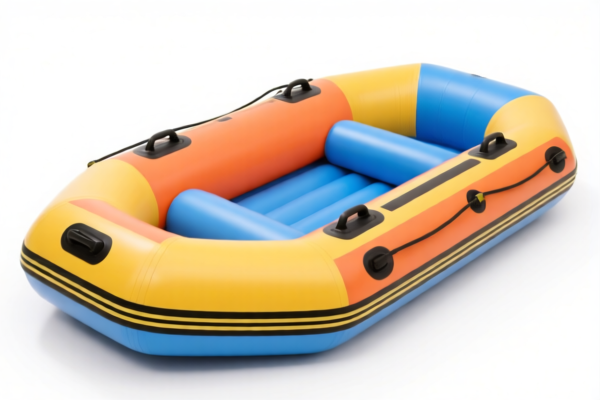

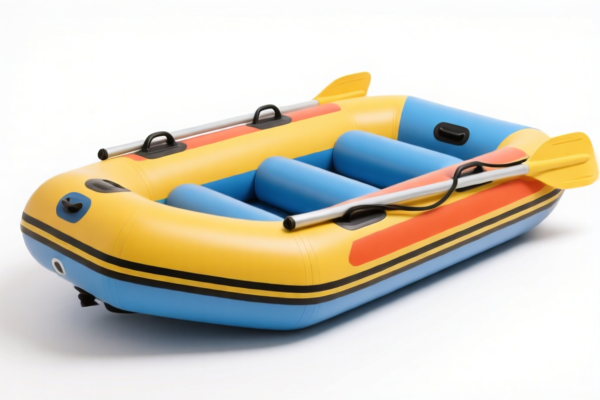
AI分析
🚤 Inflatable Boats (Rubber/Plastic Construction)
🌐 HS Code Reference & Customs Clearance Guide | 2026 Latest Tariff Analysis | Professional通关 Strategy
📌 I. Product Definition & Classification: What Are "Inflatable Boats"?
Inflatable boats, often referred to as RIBs (Rigid Inflatable Boats) or air-deck vessels, are watercraft characterized by air-filled chambers made of rubber, PVC, or hypalon. In international trade, they are primarily classified based on two factors: 1. Material Composition: Primarily vulcanized rubber (HS Chapter 40) or other plastics/rubber blends. 2. Function/Usage: Whether they are classified as general rubber goods (HS 4016) or specific watercraft/vessels (HS 8903).
⚠️ Key Distinction Point:
- If the item is primarily viewed as a rubber inflatable product (regardless of specific nautical use, or if material is generic rubber) → Look at 4016.95.00.00.
- If the item is explicitly an inflatable boat/vessel designed for navigation (with or without engine mounting) → Look at 8903.11.00.15 / 8903.11.00.60.
📦 II. HS Code Classification Details (2026 Latest Tariff Authority Comparison)
| HS Code | Product Description | Applicable Scenario | Tax Rate (Total) |
|---|---|---|---|
4016.95.00.00 |
Other inflatable articles of vulcanized rubber other than hard rubber | Generic rubber inflatables; inflatable boats where material is strictly defined as vulcanized rubber; or items lacking specific "boat" functional declaration in some customs interpretations. | 21.7% |
4016.94.00.00 |
Other inflatable articles of vulcanized rubber other than hard rubber | Inflatable fenders/bollard guards; or "inflatable boats" interpreted strictly under rubber goods with specific protective function (e.g., boat bumpers). Note: High punitive tariffs apply. | 39.2% |
8903.11.00.15 |
Boats, inflatable: Inflatable boats with outboard motors (designed/equipped for engine) | Inflatable boats explicitly designed for motorization (outboard engines). Focus on "vessel" status. | 37.4% |
8903.11.00.60 |
Boats, inflatable: Inflatable boats (other than those with outboard motors) | Inflatable boats for recreational/sport use, specifically non-motorized or general recreational classification. Focus on "vessel" status. | 37.4% |
🔍 Critical Reminder:
- Chapter 40 (4016): Focuses on the material (Vulcanized Rubber). If the customs officer perceives the item primarily as a "rubber good" rather than a "vessel," these codes may apply.4016.94carries a massive penalty due to specific trade disputes.
- Chapter 89 (8903): Focuses on the function (Boat/Vessel). This is the most common classification for actual "Inflatable Boats."
- Do NOT mix: You cannot claim "Vessel" status in description but file under "Rubber Goods" to avoid higher taxes; consistency between description and HS Code is key.
💰 III. 2026 Latest Tariff Rate Breakdown (Including Additional Taxes & Policy Surcharges)
✅ Applicable Country: United States (US)
✅ Origin: China (CN)
✅ Effective Date: From November 10, 2025 onwards (including subsequent imports)
🎯 1. 4016.95.00.00 —— Other Inflatable Articles of Vulcanized Rubber
| Item | Content |
|---|---|
| Base Tariff | 4.2% (ad valorem) |
| Section 301 Additional Tariff | +7.5% (List 3/4 adjustments) |
| Section 122 Tariff | +10% (Specific to certain Chinese imports under recent enforcement) |
| Total Tariff | 21.7% |
| Tax Calculation | CIF Value × 21.7% |
| De Minimis Eligibility | ❌ No (deny_de_minimis for rubber articles under these sections) |
| Legal Basis Path | Section 301: 4016.95.00.00 → Section 122: 10% |
📌 Explanation:
- The base rate is low (4.2%), but the addition of Section 301 (7.5%) and Section 122 (10%) brings the total to 21.7%.
- This code is often used for generic rubber inflatables. If the "boat" is seen merely as a "rubber product," this applies.
🎯 2. 4016.94.00.00 —— Other Inflatable Articles (High Risk)
| Item | Content |
|---|---|
| Base Tariff | 4.2% |
| Section 301 Additional Tariff | +25.0% (Heavy penalty tier) |
| Section 122 Tariff | +10% |
| Total Tariff | 39.2% |
| Tax Calculation | CIF Value × 39.2% |
| De Minimis Eligibility | ❌ No |
| Legal Basis Path | Section 301: 4016.94.00.00 → Section 122: 10% |
📌 Warning:
- This code carries the highest total tax rate (39.2%).
- It is typically applied to inflatable rubber goods deemed strategic or subject to stricter trade controls (e.g., certain fenders, industrial inflatables).
- Avoid this code for standard recreational boats unless explicitly required by material specificity that excludes "vessel" classification.
🎯 3. 8903.11.00.15 & 8903.11.00.60 —— Inflatable Boats (Vessel Classification)
| Item | Content |
|---|---|
| Base Tariff | 2.4% |
| Section 301 Additional Tariff | +25.0% |
| Section 122 Tariff | +10% |
| Total Tariff | 37.4% |
| Tax Calculation | CIF Value × 37.4% |
| De Minimis Eligibility | ❌ No |
| Legal Basis Path | Section 301: 8903.11.00.xx → Section 122: 10% |
📌 Analysis:
- Base Tariff is Lower: Only 2.4%, reflecting the "vessel" nature.
- High Section 301: 25% indicates that inflatable boats are heavily targeted in US-China trade tensions.
- Section 122: Adds another 10%.
- Total 37.4%: This is the standard high-rate for inflatable boats. Despite the lower base, the total is very close to the4016.94penalty rate.
- Distinction between .15 and .60:
-.15: Specifically mentions "with outboard motor" or designed for it.
-.60: General recreational inflatable boats (may or may not have engine).
- Tax impact is identical (37.4%), but correct subheading ensures smooth customs review.
🛠️ IV. Customs Clearance Practical Advice (Battle-Tested Pitfall Avoidance)
✅ 1. Required Documentation Checklist (Non-negotiable)
| Document | Must Provide | Explanation |
|---|---|---|
| ✅ Product Specification Sheet | ✔️ | Material type (Hypalon, PVC, Rubber), dimensions, number of chambers, max load capacity. |
| ✅ Product Photos (Labeled) | ✔️ | Clear view of seams, valves, engine mount (if any), and brand/model. |
| ✅ Commercial Invoice | ✔️ | Must state: "Inflatable Boat," Material, HS Code, and Value. Do not use vague terms like "Rubber Sheet." |
| ✅ Packing List | ✔️ | Detail if engine, paddle, or repair kit is included. If engine is shipped separately, declare it separately (Engine HS may differ). |
| ✅ Material Declaration | ✔️ | Explicitly state if "Vulcanized Rubber" vs. "PVC/Plastic." This determines Chapter 40 vs. 89. |
| ✅ CE/FCC Certificates | ✔️ | If electronic components (GPS, lights) are included. |
✅ 2. Declaration Tactics (Key Mantras)
🔥 "Material Dictates Chapter, Function Dictates Heading, Name Matches Both!"
| Scenario | Correct Declaration | Wrong Practice |
|---|---|---|
| Standard Recreational Inflatable Boat | 8903.11.00.60 (Inflatable Boat) |
Declaring as "Rubber Inflatable" → Risk of 4016.94 (39.2%) or audit. |
| Boat Designed for Outboard Motor | 8903.11.00.15 |
Calling it a "Rubber Tube" → Misclassification. |
| Boat Bumper/Fender (Not for Riding) | 4016.94.00.00 |
Calling it a "Boat" → Wrong function. |
| Generic Rubber Inflatable Mat | 4016.95.00.00 |
Calling it a "Boat" → Fraud risk. |
📌 Critical Tip:
- If the product has oars, motor mounts, and a hull shape, it is almost certainly a Boat (8903).
- If it is a simple inflatable tube or raft without navigation features, Customs might still scrutinize it under Chapter 40 if not clearly defined as a vessel.
- Never under-declare value to avoid the 37.4% tax; CBP (Customs and Border Protection) uses advanced AI to detect undervaluation in recreational goods.
✅ 3. Special Circumstances Handling
| Situation | Handling Advice |
|---|---|
| Sold with Outboard Motor | Declare Separately! The boat is 8903.11.xx. The motor is likely 8407 or 8408. Combining them may complicate the tariff calculation. Motor tariffs may differ. |
| Hybrid Materials (PVC + Rubber) | If the main structural material is rubber, 4016 might be argued. If it's PVC/Plastic, it might fall under 3926 (Other articles of plastics) or 8903 depending on interpretation. Provide Material Safety Data Sheet (MSDS). |
| OEM/Custom Brands | Ensure the name on the boat matches the invoice. Discrepancies lead to delays. |
| Used Inflatable Boats | Still subject to the same HS codes. Additional biosecurity declarations may be required (cleaning certificates). |
🌍 V. Global Market Customs Comparison (2026 Latest)
| Country/Region | Recommended HS Code | Tariff (China Origin) | Certification Requirements | Notes |
|---|---|---|---|---|
| 🇺🇸 USA | 8903.11.00.15/60 |
37.4% (37.4% Total) | USCG Compliance (if applicable) | High punitive tariffs. Strict material scrutiny. |
| 🇪🇺 EU | 8903.11.00.00 |
~3.7% (Base) | CE Marking (EN ISO 6185) | No 122/301 equivalents. Standard WTO rates apply. |
| 🇨🇳 China | 8903.11.00.00 |
1.5% - 5% | CCC (if electronic parts) | Import duty is low. VAT 13% applies. |
| 🇦🇺 Australia | 8903.11.00.00 |
5% | RCM (if electrical) | Standard MFN rates. |
| 🇬🇧 UK | 8903.11.00.00 |
4.5% | UKCA Marking | Post-Brexit rules. No China-specific punitive tariffs like US. |
📌 Conclusion:
- The USA is the most expensive market due to Section 301 and Section 122 tariffs.
- EU, UK, Australia, and China have significantly lower duty burdens. Consider supply chain routing if tariffs are prohibitive.
📌 VI. Common Errors & Pitfall Guide (Lessons from the Trenches)
❌ Error 1: Declaring an "Inflatable Boat" as "Rubber Inflatable Mat" (4016.95)
👉 Consequence: While tax is lower (21.7% vs 37.4%), it is misclassification. If discovered, CBP will demand back taxes + penalties + interest. Worse, if deemed intentional fraud, seizure risk increases.
✅ Fix: Be honest. Use 8903.11.00.60.
❌ Error 2: Ignoring the "Engine Mount" feature
👉 Consequence: If the boat has strong engine mounts but is declared as a non-motorized boat (.60 instead of .15), it may trigger a functional audit.
✅ Fix: Check if the boat is designed for engines. If yes, use .15.
❌ Error 3: Confusing "Boat" with "Raft"
👉 Consequence: A "Raft" (flat, no rigid floor, no engine capability) might sometimes be argued under 4016 or 9404 (Mattresses/Bedding) in extreme cases, but usually 8903.
✅ Fix**: If it has a rigid floor (RIB), it is 100% 8903.
❌ Error 4: Splitting Shipments to Avoid De Minimis
👉 Consequence: Section 301 and 122 tariffs apply per shipment. Splitting does not avoid the tariff. It only creates more administrative hassle and risk of detection.
✅ Fix**: Factor the 37.4% into your pricing model.
🎯 VII. Conclusion: Professional Declaration, Smooth Clearance!
🎯 Remember the Mantra:
🔹 "Boat is Boat (8903), Rubber is Rubber (4016). Don't mix them!"
🔹 "US Market? Prepare 37.4%. EU Market? Chill 3.7%."
🔹 "Engine Mount? Use .15. No Engine? Use .60."
📌 Pro Tip:
If your inflatable boats are made of PVC (not vulcanized rubber), double-check if 3926 (Articles of plastic) applies instead of 4016. However, for vessels, 8903 usually overrides material-based chapters if the primary function is navigation.
Always consult a licensed customs broker for high-value shipments and request an Advance Ruling from CBP if unsure about the specific construction material.
📣 Take Action Now:
📞 Contact a licensed customs broker + Provide Material Specs + Apply for HS Code Advance Ruling
🚀 Let your Inflatable Boats, clear customs smoothly, export efficiently, and maximize profit!
✨ Professional Customs Clearance Starts with Accurate Classification!
💼 Every dollar of duty saved is a dollar of profit earned!
用户评价
关于 HS 编码归类
协调制度(HS)是由世界海关组织(WCO)制定的国际贸易商品分类标准。全球 200 多个国家采用 HS 系统作为海关关税、贸易统计和进出口监管的基础。
每个 HS 编码遵循以下层级结构:
- 章(2 位)——商品大类(例如:第 84 章:机器和机械设备)
- 品目(4 位)——章内的更具体分类
- 子目(6 位)——国际通用细分,所有 WCO 成员国统一使用
- 本国细分(8-10 位)——各国自行扩展的细分编码,如美国 HTSUS 10 位编码
正确的 HS 编码归类对于顺利通关、准确缴纳关税和遵守贸易法规至关重要。错误归类可能导致海关延误、多缴关税或罚款。
从CN进口到US时,适用的关税税率可能包括:
- 最惠国(MFN)税率——适用于 WTO 成员国的标准关税税率
- 普通税率——适用于无贸易协定国家
- 贸易救济关税——附加关税,如 301 条款(反倾销)、232 条款(国家安全)或反补贴税
本页内容仅供参考。如需正式归类,请咨询当地海关或持牌报关代理。