inner page
CN → US| HS编码 | 关税税率 | 原产国 | 目的国 | 文档 |
|---|---|---|---|---|
| 4820900000 | 35.0% | CN | US | 官方文档 |
| 4911998000 | 17.5% | CN | US | 官方文档 |
| 4911996000 | 17.5% | CN | US | 官方文档 |
| 4820104000 | 10.0% | CN | US | 官方文档 |
| 4823908680 | 35.0% | CN | US | 官方文档 |
| 4823906700 | 35.0% | CN | US | 官方文档 |
商品图片
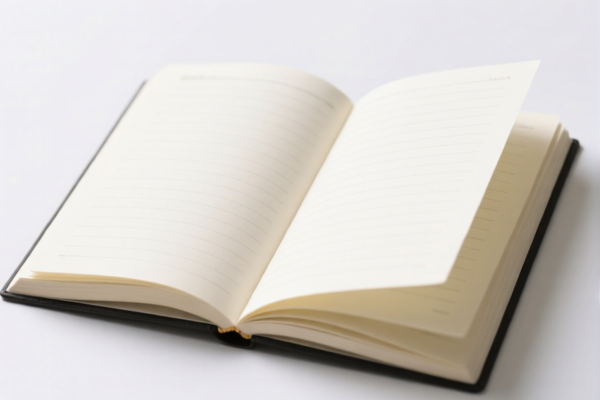
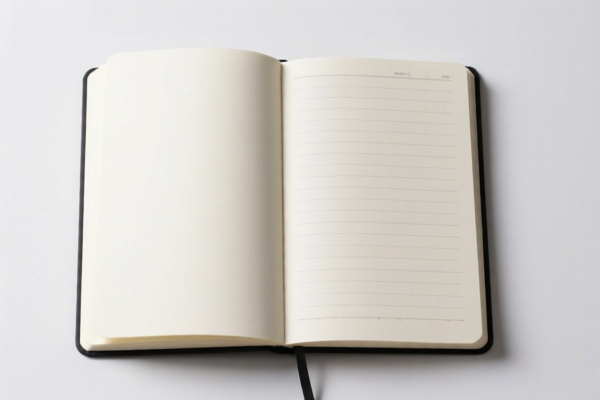

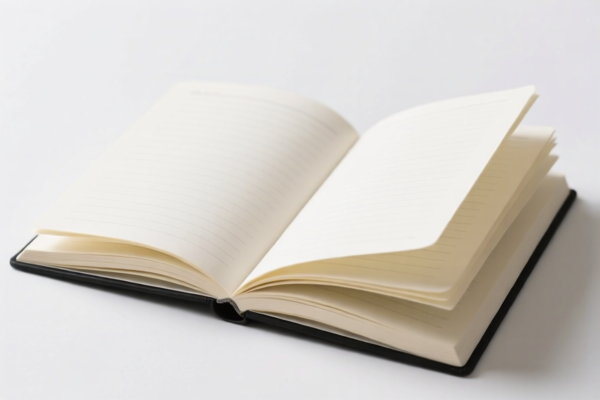
AI分析
📓 Inner Pages: The Hidden Heart of Paper Goods | HS Code & Tariff Deep Dive (2026)
🌐 HS Code Classification & Customs Clearance Guide | 2026 Latest Tariff Analysis | Precision Strategy for "Inner Pages"
📌 I. Product Definition: What Exactly Are "Inner Pages"?
In international trade, "Inner Pages" are not a standalone finished product but a component or material often embedded within notebooks, registration books, file folders, or printed documents. Their classification depends entirely on material composition, state of processing (cut/shaped vs. printed), and functional purpose.
⚠️ Critical Distinction:
- If the pages are blank or lightly formatted structural components of notebooks/folders → Classified under Chapter 48 (Paper/Paperboard Articles)
- If the pages are fully printed/text-rich documents or part of printed matter → Classified under Chapter 49 (Printed Books/Newspapers/Other Printed Matter)
📦 II. HS Code Classification Matrix (2026 Authorized Codes from Data)
Based on the provided data, here are the 6 specific HS codes assigned to "Inner Pages" with their respective tariff structures:
| HS Code | Summary Description | Product Category | Key Characteristic |
|---|---|---|---|
4820.90.00.00 |
Paper/cardboard material for registration books, notebooks, binders | Paper Stationery | Structural component of binding systems |
4911.99.80.00 |
Inner pages as part of printed matter, other printed items | Other Printed Matter | Fully printed, informational content |
4911.99.60.00 |
Inner pages as paper-based printed matter | Printed on Paper | Standard printed text/images on paper |
4820.10.40.00 |
Paper/cardboard inner pages for notebooks/registration books | Notebook/Register Components | Blank or ruled paper for writing |
4823.90.86.80 |
Cut/sized paper products, other paper articles | Cut Paper Products | Pre-cut to specific dimensions/shapes |
4823.90.67.00 |
Paper/cardboard cut to size/shape | Shaped Paper Items | Geometrically cut paper materials |
🔍 Key Insight:
- Chapters 48 vs. 49:
- 48: Focuses on physical form (cut, bound, blank, structural).
- 49: Focuses on content (printed, intellectual, informational).
- Tax Implication: Codes under 4820 and 4823 carry higher total taxes (35% or 10%) due to higher "Section 301" or "122 Clause" duties compared to 4911 codes (17.5%).
💰 III. 2026 Tariff Rate Breakdown (Detailed & Transparent)
✅ Applicable Country: USA (US)
✅ Origin: China (CN)
✅ Effective Date: 2025–2026 (Including recent "122 Clause" adjustments)
🎯 1. 4820.90.00.00 — Paper/Cardboard Inner Pages for Books/Binders
| Item | Detail |
|---|---|
| Base Tariff | 0.0% |
| Section 301 Add-on | 25.0% |
| 122 Clause Tariff | 10.0% |
| Total Tax Rate | 35.0% |
| Tax Calculation | CIF Value × 35% |
| De Minimis Eligibility | ❌ No (High risk of rejection under Section 301) |
| Legal Basis | USITC Footnote: Section 301 (25%) + 122 Clause (10%) |
📌 Explanation:
- This code covers structural inner pages (blank or lightly ruled) used in notebooks or binders.
- The 25% Section 301 tariff applies to most Chinese-origin paper products.
- The 10% 122 Clause is an additional punitive tariff targeting specific Chinese imports.
- Total burden: 35% — HIGH COST.
🎯 2. 4820.10.40.00 — Notebook/Register Inner Pages (Paper/Cardboard)
| Item | Detail |
|---|---|
| Base Tariff | 0.0% |
| Section 301 Add-on | 0.0% |
| 122 Clause Tariff | 10.0% |
| Total Tax Rate | 10.0% |
| Tax Calculation | CIF Value × 10% |
| De Minimis Eligibility | ❌ No (Due to 122 Clause) |
| Legal Basis | 122 Clause Tariff Only |
📌 Explanation:
- This is a LOW-COST alternative for notebook/register components.
- No Section 301 duty applies here, only the 10% 122 Clause.
- Ideal for standard lined or blank notebook paper without complex printing.
- Savings: 25% vs.4820.90.00.00.
🎯 3. 4823.90.86.80 — Cut Paper Products (Other Paper Articles)
| Item | Detail |
|---|---|
| Base Tariff | 0.0% |
| Section 301 Add-on | 25.0% |
| 122 Clause Tariff | 10.0% |
| Total Tax Rate | 35.0% |
| Tax Calculation | CIF Value × 35% |
| De Minimis Eligibility | ❌ No |
| Legal Basis | USITC Footnote: Section 301 (25%) + 122 Clause (10%) |
📌 Explanation:
- Applies to pre-cut, shaped paper not specifically for notebooks (e.g., decorative cutouts, templates).
- High tax (35%) due to Section 301 + 122 Clause.
- Use only if product is not a notebook component.
🎯 4. 4823.90.67.00 — Cut Paper/Cardboard to Size/Shape
| Item | Detail |
|---|---|
| Base Tariff | 0.0% |
| Section 301 Add-on | 25.0% |
| 122 Clause Tariff | 10.0% |
| Total Tax Rate | 35.0% |
| Tax Calculation | CIF Value × 35% |
| De Minimis Eligibility | ❌ No |
| Legal Basis | USITC Footnote: Section 301 (25%) + 122 Clause (10%) |
📌 Explanation:
- Similar to4823.90.86.80, but for different cut specifications.
- Same high tax rate (35%).
- Ensure product description matches "cut to size" not "printed matter".
🎯 5. 4911.99.80.00 — Other Printed Matter (Inner Pages as Printed)
| Item | Detail |
|---|---|
| Base Tariff | 0.0% |
| Section 301 Add-on | 7.5% |
| 122 Clause Tariff | 10.0% |
| Total Tax Rate | 17.5% |
| Tax Calculation | CIF Value × 17.5% |
| De Minimis Eligibility | ❌ No |
| Legal Basis | USITC Footnote: Section 301 (7.5%) + 122 Clause (10%) |
📌 Explanation:
- Applies when inner pages are fully printed (e.g., workbooks, educational materials, manuals).
- Moderate tax (17.5%) — lower than paper-only codes.
- Section 301 rate is only 7.5% (not 25%), making it more cost-effective for printed goods.
🎯 6. 4911.99.60.00 — Printed Matter on Paper (Inner Pages)
| Item | Detail |
|---|---|
| Base Tariff | 0.0% |
| Section 301 Add-on | 7.5% |
| 122 Clause Tariff | 10.0% |
| Total Tax Rate | 17.5% |
| Tax Calculation | CIF Value × 17.5% |
| De Minimis Eligibility | ❌ No |
| Legal Basis | USITC Footnote: Section 301 (7.5%) + 122 Clause (10%) |
📌 Explanation:
- Standard code for paper-based printed items.
- Same 17.5% total rate as4911.99.80.00.
- Best for text-heavy inner pages (e.g., textbooks, printed forms).
🛠️ IV. Customs Clearance Practical Advice (Pitfall Avoidance)
✅ 1. Document Checklist (Mandatory)
| Document | Required | Purpose |
|---|---|---|
| ✅ Product Specification Sheet | ✔️ | Define material (paper/cardboard), state (printed/blank), usage |
| ✅ Product Photos | ✔️ | Show inner pages, binding, printing quality |
| ✅ Commercial Invoice | ✔️ | Clearly state "Inner Pages for Notebook/Printed Matter" |
| ✅ Packing List | ✔️ | Specify weight, dimensions, cut size if applicable |
| ✅ Proof of Printing | ✔️ | If claiming Chapter 49, provide sample printed pages |
| ✅ Origin Certificate (CO) | ✔️ | For potential preferential treatment (if non-CN origin) |
✅ 2. Classification Strategy (Key Rules)
🔥 "Printed = Chapter 49 (17.5%) | Blank/Cut = Chapter 48 (10%–35%)"
| Scenario | Recommended HS Code | Total Tax | Why? |
|---|---|---|---|
| Blank notebook inner pages | 4820.10.40.00 |
10% | No Section 301, only 122 Clause |
| Lined/ruled notebook pages | 4820.10.40.00 |
10% | Still considered "paper articles" |
| Printed workbook pages | 4911.99.60.00 |
17.5% | Printed matter, lower Section 301 |
| Fully printed manual pages | 4911.99.80.00 |
17.5% | Other printed matter |
| Cut decorative paper shapes | 4823.90.67.00 |
35% | High tax, avoid if possible |
| Cardboard binder inner layers | 4820.90.00.00 |
35% | High tax, only if necessary |
✅ 3. Special Cases & Mitigation
| Case | Handling Advice |
|---|---|
| Mixed Contents (Blank + Printed) | Declare as Printed Matter (Chapter 49) if printing is dominant → 17.5% vs. 35% |
| OEM Custom Inner Pages | Provide client design + printing specs to prove Chapter 49 eligibility |
| Pre-cut vs. Raw Sheets | Pre-cut may trigger 4823 codes (35%); raw sheets may fit 4820 (10%) — choose wisely |
| Small Quantity Samples | Still subject to full tariffs; De Minimis exemption does NOT apply due to 122 Clause |
🌍 V. Global Market Comparison (2026)
| Country | Recommended HS Code | Base Tax | China-Specific Add-on | Total Tax (China Origin) | Notes |
|---|---|---|---|---|---|
| 🇺🇸 USA | 4820.10.40.00 / 4911.99.60.00 |
0% | 10% (122) + 0–7.5% (301) | 10% – 17.5% | Section 301 varies by sub-code |
| 🇨🇳 China | 4820.10.40.00 / 4911.99.60.00 |
0% – 10% | None | 0% – 10% | No punitive tariffs |
| 🇪🇺 EU | 4820.10.40.00 / 4911.99.60.00 |
0% | None | 0% – 0.5% | Low duty for paper/print |
| 🇦🇺 Australia | 4820.10.40.00 / 4911.99.60.00 |
5% | None | 5% | Standard GST applies |
| 🇯🇵 Japan | 4820.10.40.00 / 4911.99.60.00 |
0% | None | 0% – 8% | Depends on paper type |
📌 Conclusion:
- USA is the most expensive market due to Section 301 and 122 Clause.
- Chapter 49 (Printed) codes are cheaper (17.5%) than Chapter 48 (Paper) codes (10%–35%).
- Opt for4820.10.40.00(10%) or4911.99.60.00(17.5%) for cost efficiency.
📌 VI. Common Mistakes & Pitfalls (Lessons Learned)
❌ Mistake 1: Declaring printed pages as blank paper (4820 instead of 4911)
👉 Consequence: Misclassification → Penalties + Back Taxes (海关可能认定为低报税率)
❌ Mistake 2: Using 4823.90 codes for notebook inner pages
👉 Consequence: 35% tax instead of 10% → 25% extra cost
❌ Mistake 3: Ignoring 122 Clause impact
👉 Consequence: All codes above face 10% punitive tariff regardless of Section 301
❌ Mistake 4: Assuming De Minimis exemption applies
👉 Consequence: Denied due to 122 Clause → Full tax charged on small shipments
✅ Correct Approach:
"Inner Pages, Printed, A4 Size, for Educational Notebooks, Paper Material, Model XYZ"
🎯 VII. Conclusion: Optimize Classification, Reduce Costs!
🎯 Key Takeaways:
🔹 "Printed = Chapter 49 (17.5%) | Blank Notebook = Chapter 48 (10%)"
🔹 "Avoid 4823 codes (35%) unless necessary"
🔹 "122 Clause adds 10% to ALL Chinese-origin paper/print goods"
🔹 "De Minimis exemption DOES NOT apply"
📌 Pro Tip:
- For notebooks, declare as
4820.10.40.00(10%) — Lowest tax.- For workbooks/manuals, declare as
4911.99.60.00(17.5%) — Balanced cost.- Always provide printing samples to justify Chapter 49 if applicable.
📣 Immediate Action:
📞 Consult Customs Broker + Provide Product Samples + Apply for Advance Ruling
🚀 Save up to 25% in taxes by choosing the right HS code!
✨ Precision in Classification, Profit in Clearance!
💼 Every Percent Saved is Pure Profit!
用户评价
关于 HS 编码归类
协调制度(HS)是由世界海关组织(WCO)制定的国际贸易商品分类标准。全球 200 多个国家采用 HS 系统作为海关关税、贸易统计和进出口监管的基础。
每个 HS 编码遵循以下层级结构:
- 章(2 位)——商品大类(例如:第 84 章:机器和机械设备)
- 品目(4 位)——章内的更具体分类
- 子目(6 位)——国际通用细分,所有 WCO 成员国统一使用
- 本国细分(8-10 位)——各国自行扩展的细分编码,如美国 HTSUS 10 位编码
正确的 HS 编码归类对于顺利通关、准确缴纳关税和遵守贸易法规至关重要。错误归类可能导致海关延误、多缴关税或罚款。
从CN进口到US时,适用的关税税率可能包括:
- 最惠国(MFN)税率——适用于 WTO 成员国的标准关税税率
- 普通税率——适用于无贸易协定国家
- 贸易救济关税——附加关税,如 301 条款(反倾销)、232 条款(国家安全)或反补贴税
本页内容仅供参考。如需正式归类,请咨询当地海关或持牌报关代理。