insecticide concentrated emulsifiable oil
CN → US| HS编码 | 关税税率 | 原产国 | 目的国 | 文档 |
|---|---|---|---|---|
| 3808915001 | 40.0% | CN | US | 官方文档 |
| 3808915001 | 40.0% | CN | US | 官方文档 |
| 3808990800 | 41.5% | CN | US | 官方文档 |
商品图片
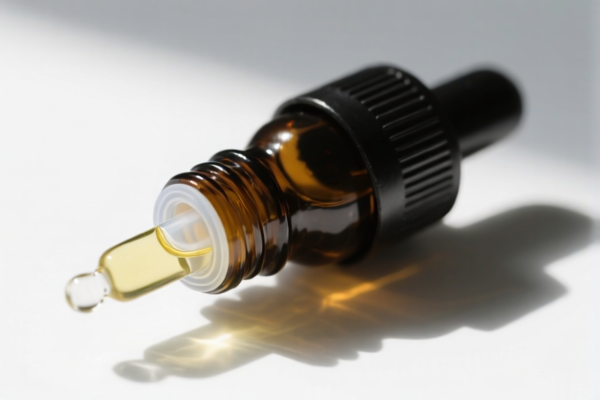
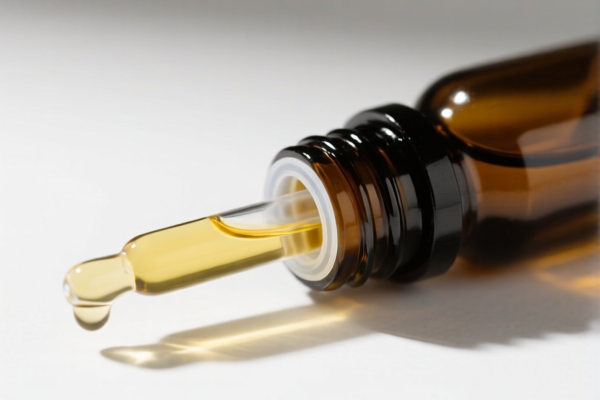
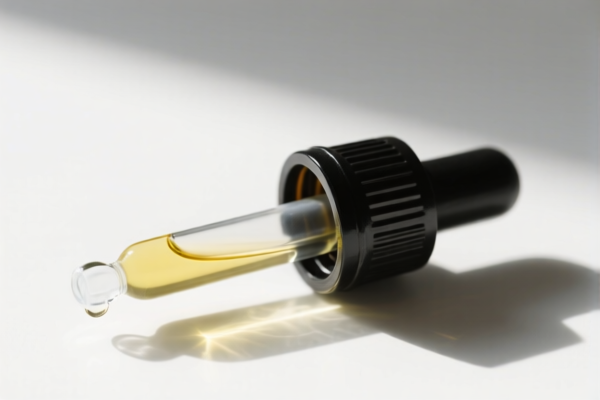
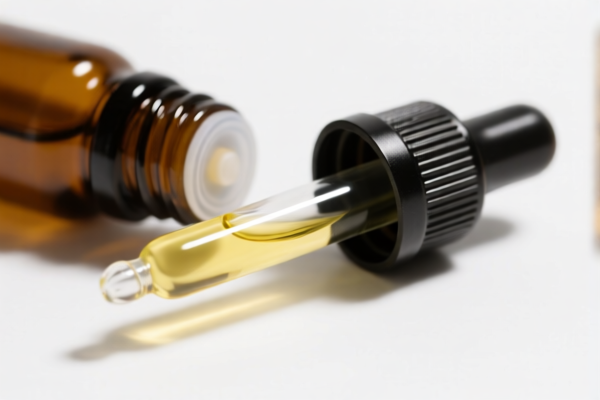
AI分析
🌿 Insecticide Concentrated Emulsifiable Oil (Microemulsion/Emulsifiable Concentrate)
🌐 HS Code Reference & Customs Clearance Guide | 2026 Latest Tariff Analysis | Professional Entry Strategy
📌 I. Product Definition: What Exactly Is "Emulsifiable Oil"?
Insecticide Concentrated Emulsifiable Oil (often referred to as Emulsifiable Concentrate or EC, sometimes Microemulsion/ME depending on specific formulation) is a pesticide formulation where the active ingredient is dissolved in an organic solvent with emulsifiers, allowing it to mix with water to form an emulsion upon application.
In international trade, the critical distinction lies in: 1. Active Ingredient Type: Is it aromatic (e.g., pyrethroids, organophosphates) or non-aromatic? 2. Formulation State: Is it a raw chemical or a formulated "制剂" (preparation)?
⚠️ Key Distinction:
- If it is an Aromatic Pesticide Preparation (most common for synthetic insecticides like permethrin, deltamethrin) → HS 3808.91
- If it is a Non-Aromatic Pesticide Preparation → HS 3808.99
📦 II. HS Code Classification Details (2026 Latest Tariff Authority Comparison)
Based on the provided data, there are three potential HS Codes depending on the specific aromatic nature and exact formulation subclass.
| HS Code | Product Description | Application Scenario | Aroma/Nature | Total Tax Rate |
|---|---|---|---|---|
3808.91.50.01 |
Insecticides, Aromatic, Emulsifiable Concentrate | Matches "Insecticide" use & "Emulsifiable Oil" form. No material conflict with aromatic pesticides. | ✅ Aromatic | 40.0% |
3808.91.50.01 |
Insecticides, Aromatic, Microemulsion | Explicitly classified as insecticide category; "Microemulsion" form fully matches preparation category. | ✅ Aromatic | 40.0% |
3808.99.08.00 |
Other Insecticides/Preparations (Non-Aromatic/Other) | Matches "Insecticide" use & "Preparation/Microemulsion" form. Classified under "Other" due to lack of obvious aromatic material conflict. | ❌ Other/Non-Aromatic | 41.5% |
🔍 Critical Reminder:
- Most common synthetic insecticides (Pyrethroids, Organochlorines, etc.) are considered Aromatic and fall under 3808.91.
- If the product is an Organophosphate or other specific non-aromatic class, it may fall under 3808.99.
- Do not misclassify "Microemulsion" as a raw chemical; it is a preparation (制剂) and must use the 3808.xx.xx.xx codes, not 3808.xx.xx.99 generic codes if a specific one exists.
💰 III. 2026 Latest Tariff Rate Breakdown (Including Surtaxes & Policy Add-ons)
✅ Applicable Country: United States (US)
✅ Origin: China (CN)
✅ Effective Date: November 10, 2025 onwards (including subsequent imports)
🎯 1. 3808.91.50.01 —— Insecticides, Aromatic, Emulsifiable/Microemulsion
| Item | Content |
|---|---|
| Basic Duty Rate | 5.0% |
| Section 301 Surtax | +25.0% |
| Section 122 Tariff | +10.0% |
| Total Tax Rate | 40.0% |
| Tax Calculation | CIF Value × 40% |
| De Minimis Exemption | ❌ Not Applicable (Denied) |
| Legal Basis Path | 3808.91 → Section 301: 25% → Section 122: 10% |
📌 Explanation:
- "Basic Duty 5%": Standard US MFN rate for aromatic pesticide preparations.
- "Section 301 Surtax 25%": Standard additional duty for Chinese goods under Trade Act Section 301.
- "Section 122 Tariff 10%": Specific additional tariff applied to certain Chinese products (often related to intellectual property or specific trade remedies).
- Combined Total: 40%. This is a high-cost item. Accurate classification is vital to avoid overpaying if a lower rate applies, but currently, this is the standard for aromatic insecticides.
🎯 2. 3808.99.08.00 —— Other Insecticide Preparations (Non-Aromatic)
| Item | Content |
|---|---|
| Basic Duty Rate | 6.5% |
| Section 301 Surtax | +25.0% |
| Section 122 Tariff | +10.0% |
| Total Tax Rate | 41.5% |
| Tax Calculation | CIF Value × 41.5% |
| De Minimis Exemption | ❌ Not Applicable |
| Legal Basis Path | 3808.99 → Section 301: 25% → Section 122: 10% |
📌 Note:
- Even though the basic rate is slightly higher (6.5% vs 5.0%), the total is 41.5% because the same surtaxes apply.
- This code is used when the product does not fit the specific aromatic criteria of 3808.91 but is still an insecticide preparation.
- Warning: If your product is aromatic but declared under 3808.99, you risk a re-classification audit and penalties. If it is non-aromatic, this is the correct code.
🛠️ IV. Customs Clearance Practical Advice (Avoid Pitfalls)
✅ 1. Documentation Checklist (Mandatory)
| Document | Must Provide | Explanation |
|---|---|---|
| ✅ Product Specification Sheet | ✔️ | Must clearly state: Active Ingredient, Percentage, Solvent Type (Aromatic vs. Non-Aromatic), Formulation (EC/ME). |
| ✅ Certificate of Analysis (COA) | ✔️ | Proof of chemical composition to verify "Aromatic" status. |
| ✅ MSDS (SDS) | ✔️ | Section 3 (Composition) and Section 9 (Physical Properties) are critical for HS classification. |
| ✅ EPA Registration Number | ✔️ | Required for all pesticides in the US. Ensure it is valid and matches the product name. |
| ✅ Commercial Invoice | ✔️ | Must describe goods as "Insecticide Preparation, Emulsifiable Concentrate" – not just "Chemical". |
| ✅ Bill of Lading | ✔️ | Ensure no conflicting descriptions (e.g., don't say "Raw Powder" if it's "Liquid Emulsion"). |
✅ 2. Declaration Tips (Key Mnemonics)
🔥 "Formulation Matters, Aromatic Check, EPA ID Must Match!"
| Scenario | Correct Declaration | Incorrect Practice |
|---|---|---|
| Synthetic Insecticide (e.g., Cypermethrin) | HS: 3808.91.50.01Name: "Insecticide, Emulsifiable Concentrate" |
Misdeclare as "Detergent" or "Solvent" → Severe Penalty |
| Microemulsion Form | HS: 3808.91.50.01 or 3808.99.08.00 |
Declare as "Liquid Chemical" → Unclear classification |
| Non-Aromatic Insecticide | HS: 3808.99.08.00 |
Force fit into 3808.91 → Audit Risk |
| Pure Active Ingredient (Powder) | HS: Different Code (e.g., 2933...) | Declare as "Emulsifiable Oil" → Wrong HS Code |
📌 Crucial Point:
- "Emulsifiable Oil" (乳油) is a formulation type, not the chemical itself.
- If you are importing the Active Ingredient (pure powder/liquid), do NOT use 3808.91/99. You must use the specific chemical HS code (e.g., for Pyrethroids, it might be 2933.xxxx).
- 3808 codes are ONLY for the Preparation/Formulation (the ready-to-use or dilute-with-water product).
✅ 3. Special Handling Cases
| Situation | Handling Advice |
|---|---|
| OEM Private Label | Ensure the EPA label matches the importer’s registration. Do not use another brand’s EPA number. |
| Mixed Shipments | If insecticides are mixed with non-pesticide items in one container, separate bills of lading are recommended to avoid delays in pesticide clearance. |
| High-Value Shipments | Consider Advance Ruling (Pre-classification) from CBP to confirm if your specific formulation is "Aromatic" (3808.91) or "Other" (3808.99). |
| Section 122 Exemption | Currently, there is no exemption for Section 122 10% tariff for these products. Plan for the full 40-41.5% cost. |
🌍 V. Global Market Comparison (2026 Latest)
| Country/Region | Recommended HS Code | Total Tax (Approx.) | Certification Requirement | Notes |
|---|---|---|---|---|
| 🇺🇸 USA | 3808.91.50.01 or 3808.99.08.00 |
40.0% - 41.5% | EPA Registration + MSDS | Highest Cost. Strict EPA enforcement. |
| 🇨🇳 China | 3808.91 or 3808.99 |
~5-6% | Pesticide Registration Certificate | No Section 301/122 surtaxes. |
| 🇪🇺 EU | 3808.94 or 3808.93 |
~3.7% - 6.5% | EU BPR Registration | Strict chemical safety data required. |
| 🇯🇵 Japan | 3808.91 |
~5-6% | JIS/Ministry of Agriculture Approval | Phytotoxicity tests may be needed. |
📌 Conclusion:
- The US market is the most expensive due to Section 301 (25%) and Section 122 (10%) tariffs.
- EPA Compliance is non-negotiable. Without a valid EPA number, the shipment will be rejected or destroyed at US ports.
- Accurate distinction between Aromatic (3808.91) and Non-Aromatic (3808.99) is critical for avoiding classification audits.
📌 VI. Common Mistakes & Pitfalls (Lessons Learned)
❌ Mistake 1: Declaring "Emulsifiable Oil" as a general "Chemical Liquid"
👉 Consequence: CBP reclassifies to 3808.xx with highest duty + liquidated damages.
❌ Mistake 2: Using an old or expired EPA Number
👉 Consequence: Immediate seizure by CBP and EPA. No refund.
❌ Mistake 3: Confusing "Active Ingredient" with "Formulation"
👉 Consequence: Wrong HS Code. If you import pure chemical but declare as formulation, you face fraud allegations.
❌ Mistake 4: Ignoring Section 122 Tariff
👉 Consequence: Underpayment of 10%. CBP will assess duty shortfall + interest upon review.
✅ Correct Practice:
"Insecticide, Permethrin 10%, Emulsifiable Concentrate, EPA Reg. No. XXXX-XX, Model XYZ, MSDS Available"
🎯 VII. Conclusion: Professional Clearance, Cost Control, Compliance First
🎯 Remember These Key Points:
🔹 "EPA Number is King, HS Code is Queen, Surtaxes are the Bill."
🔹 "Aromatic = 3808.91 (40%), Non-Aromatic = 3808.99 (41.5%)."
🔹 "Formulation Matters: Don't mix raw chemicals with preparations."
📌 Pro Tip:
- If your insecticide contains Pyrethroids (e.g., Deltamethrin, Cypermethrin), it is almost certainly Aromatic → Use
3808.91.50.01.- Always request a Pre-Alert from your customs broker to check for any new Section 122 updates before shipping.
📣 Immediate Action Required:
📞 Verify EPA Registration + Confirm Chemical Structure (Aromatic?) + Apply for HS Code Advance Ruling
🚀 Ensure Smooth Customs Clearance, Avoid Seizures, Protect Your Margins!
✨ Professional Customs Clearance Starts with Precise Classification!
💼 Every Percent of Tariff Counts in High-Tax Pesticide Trade!
用户评价
关于 HS 编码归类
协调制度(HS)是由世界海关组织(WCO)制定的国际贸易商品分类标准。全球 200 多个国家采用 HS 系统作为海关关税、贸易统计和进出口监管的基础。
每个 HS 编码遵循以下层级结构:
- 章(2 位)——商品大类(例如:第 84 章:机器和机械设备)
- 品目(4 位)——章内的更具体分类
- 子目(6 位)——国际通用细分,所有 WCO 成员国统一使用
- 本国细分(8-10 位)——各国自行扩展的细分编码,如美国 HTSUS 10 位编码
正确的 HS 编码归类对于顺利通关、准确缴纳关税和遵守贸易法规至关重要。错误归类可能导致海关延误、多缴关税或罚款。
从CN进口到US时,适用的关税税率可能包括:
- 最惠国(MFN)税率——适用于 WTO 成员国的标准关税税率
- 普通税率——适用于无贸易协定国家
- 贸易救济关税——附加关税,如 301 条款(反倾销)、232 条款(国家安全)或反补贴税
本页内容仅供参考。如需正式归类,请咨询当地海关或持牌报关代理。