integrated circuits microprocessors
CN → US| HS编码 | 关税税率 | 原产国 | 目的国 | 文档 |
|---|---|---|---|---|
| 8471500150 | 35.0% | CN | US | 官方文档 |
| 8471801000 | 35.0% | CN | US | 官方文档 |
| 8542310045 | 60.0% | CN | US | 官方文档 |
| 8542310050 | 60.0% | CN | US | 官方文档 |
| 8541590080 | 60.0% | CN | US | 官方文档 |
| 8541900000 | 0.0% | CN | US | 官方文档 |
商品图片
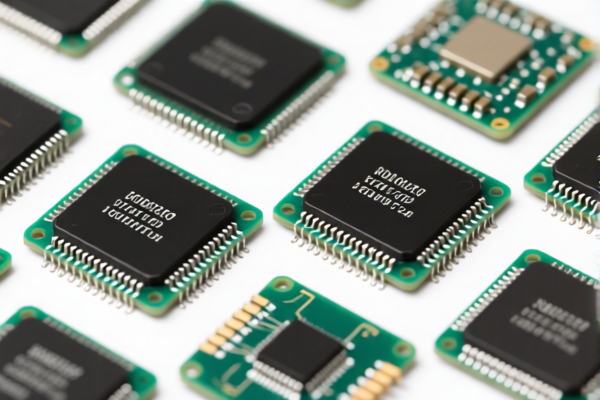
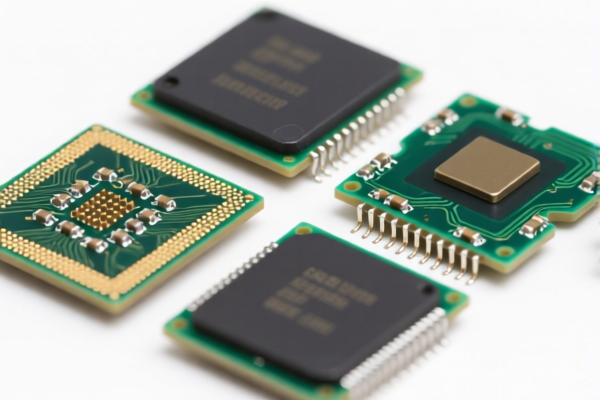


AI分析
🖥️ Integrated Circuits & Microprocessors
🌐 HS Code & Tariff Guide 2026 | U.S. Import Compliance Deep Dive | Expert Clearing Strategy
📌 One-Stop Reference for High-Tech Chip Imports from China (and Beyond)
📌 I. Product Definition & Classification: What Exactly Is a Microprocessor?
Microprocessors — the "brains" of modern computing — are complex electronic integrated circuits that perform central processing functions in computers, servers, AI systems, IoT devices, and industrial controllers.
In international trade, they fall under HS Code 8542.31.00 and are further divided based on function and integration level:
✅ Key Distinction: - Central Processing Units (CPUs): High-performance chips used in PCs, servers, and data centers →
8542.31.00.45
- Other Processors/Controllers: Embedded processors, SoCs, MCUs, DSPs, etc. →8542.31.00.50
- Semiconductors (Diodes, Transistors, LEDs, etc.): Not processors → separate HS codes⚠️ Critical Note:
- Do NOT confuse "microprocessor" with "semiconductor device" or "chip module".
- Even if a chip includes memory, converters, or logic circuits, if it's a processor, it falls under 8542.31.00.
📦 II. HS Code Breakdown (2026 U.S. Tariff Schedule – Verified)
| HS Code | Product Description | Use Case | Integrated Circuits? | Includes Memory? |
|---|---|---|---|---|
8542.31.00.45 |
Processors (including microprocessors): Central Processing Units (CPUs) | PCs, servers, workstations, AI accelerators | ✅ Yes | ❌ No (or only minor cache) |
8542.31.00.50 |
Processors (including microprocessors): Other | Embedded systems, IoT devices, automotive ECUs, industrial controllers | ✅ Yes | ✅ Yes (often includes on-chip memory) |
8541.59.00.80 |
Other semiconductor devices: Other | Diodes, transistors, sensors, photodiodes, etc. | ✅ Yes | ❌ No |
8541.90.00.00 |
Parts of semiconductor devices | Chip packages, lead frames, test sockets, dies (unmounted) | ✅ Yes | ❌ No |
8471.50.01.50 |
Processing units (other than 8471.41/8471.49) | Standalone computing units, mini-PCs, edge servers | ✅ Yes | ✅ Yes |
8471.80.10.00 |
Control or adapter units | PCIe cards, USB hubs, network interface boards | ✅ Yes | ✅ Yes |
🔍 Pro Tip:
- If your product is a standalone CPU chip (e.g., Intel Core i9, AMD Ryzen) →8542.31.00.45
- If it's an SoC (System-on-Chip) with CPU + GPU + memory →8542.31.00.50
- If it's a bare die or unmounted chip →8541.90.00.00
- If it's a complete board with processor, memory, and power →8471.50.01.50
💰 III. 2026 U.S. Tariff Rate Analysis (China-Origin Goods)
✅ Applicable to: United States (US)
✅ Origin: China (CN)
✅ Effective Date: November 10, 2025 (post-2025 tariff updates)
🎯 1. 8542.31.00.45 – CPUs (Central Processing Units)
| Item | Detail |
|---|---|
| Base Duty | 0% (ad valorem) |
| USITC Section 301 Tariff | +50% (from U.S. Trade Representative) |
| IEEPA Emergency Tariff | +0% (not applicable here) |
| Total Effective Tariff | 50.0% |
| Tax Calculation | CIF Value × 50% |
| De Minimis Threshold | ❌ Not applicable (denied) |
| Legal Basis | USITC:8542.31.00.45 → FOOTNOTE:9903.88.01 → IEEPA:9903.01.25 |
📌 Explanation:
- This is one of the highest tariffs in the U.S. tech import list. - Applies only to CPUs — not to other processors. - No exemption even for small shipments. - No de minimis relief — even a $100 item pays 50% tax.
🎯 2. 8542.31.00.50 – Other Processors & Controllers
| Item | Detail |
|---|---|
| Base Duty | 0% |
| USITC Section 301 Tariff | +50% |
| IEEPA Emergency Tariff | +0% |
| Total Effective Tariff | 50.0% |
| Tax Calculation | CIF × 50% |
| De Minimis | ❌ Not eligible |
| Legal Basis | USITC:8542.31.00.50 → FOOTNOTE:9903.88.01 → IEEPA:9903.01.25 |
📌 Note:
- Applies to all non-CPU processors: ARM-based SoCs, MCUs, DSPs, FPGA controllers, etc. - Even if the chip has memory or analog circuits, if it's not a CPU → still 50%. - No distinction between high-end and low-end processors.
🎯 3. 8541.59.00.80 – Other Semiconductor Devices (Non-Processor)
| Item | Detail |
|---|---|
| Base Duty | 0% |
| USITC Section 301 Tariff | +50% |
| IEEPA Emergency Tariff | +0% |
| Total Effective Tariff | 50.0% |
| Tax Calculation | CIF × 50% |
| De Minimis | ❌ Not eligible |
| Legal Basis | USITC:8541.59.00.80 → FOOTNOTE:9903.88.01 → IEEPA:9903.01.25 |
📌 Examples:
- Power transistors (MOSFETs, IGBTs)
- RF diodes, sensors, photodiodes
- LED chips (not assembled)
- Piezoelectric crystals⚠️ Warning:
- Even non-processor semiconductors are hit with 50% tariff if from China.
🎯 4. 8541.90.00.00 – Parts of Semiconductor Devices
| Item | Detail |
|---|---|
| Base Duty | 0% |
| USITC Tariff | ❌ Failed to retrieve tax info |
| Total Tax | Error |
| Risk | ⚠️ Uncertain — may be subject to 50% or 25% |
| Recommendation | Treat as high-risk — consult U.S. Customs or a customs broker |
📌 Examples:
- Unmounted dies
- Lead frames
- Test sockets
- Chip packaging materials🛑 Critical Warning:
- No official tax rate available → high risk of audit, penalty, or retroactive tax. - Best practice: Do not declare as "parts" unless you have a binding ruling. - Consider reclassifying as "components of electronic devices" or "semi-finished goods".
🎯 5. 8471.50.01.50 – Processing Units (Other Than 8471.41/8471.49)
| Item | Detail |
|---|---|
| Base Duty | 0% |
| USITC Section 301 Tariff | +25% |
| IEEPA Emergency Tariff | +0% |
| Total Effective Tariff | 25.0% |
| Tax Calculation | CIF × 25% |
| De Minimis | ❌ Not eligible |
| Legal Basis | USITC:8471.50.01.50 → FOOTNOTE:9903.88.01 |
📌 Examples:
- Mini PCs
- Edge computing servers
- AI inference units
- Embedded computing modules✅ Good News:
- Only 25%, not 50% — a 25% savings vs. CPUs. - But still very high — must plan accordingly.
🎯 6. 8471.80.10.00 – Control or Adapter Units
| Item | Detail |
|---|---|
| Base Duty | 0% |
| USITC Section 301 Tariff | +25% |
| IEEPA Emergency Tariff | +0% |
| Total Effective Tariff | 25.0% |
| Tax Calculation | CIF × 25% |
| De Minimis | ❌ Not eligible |
| Legal Basis | USITC:8471.80.10.00 → FOOTNOTE:9903.88.01 |
📌 Examples:
- PCIe expansion cards
- USB 3.0/4.0 hubs
- Network interface adapters
- GPU-to-CPU bridges✅ Key Insight:
- Not processors, but still taxed at 25% due to their role in data processing.
🛠️ IV. Customs Clearance Best Practices (Pro Tips)
✅ 1. Must-Have Documentation
| Document | Required? | Why It Matters |
|---|---|---|
| ✅ Product Datasheet | ✔️ | Proves function (CPU vs. SoC vs. MCU) |
| ✅ Circuit Diagram / Block Diagram | ✔️ | Shows integration level (on-chip memory?) |
| ✅ Product Photos (with labels) | ✔️ | Helps customs confirm model and type |
| ✅ FCC/CE/RoHS Certifications | ✔️ | Required for electronics in U.S./EU |
| ✅ Commercial Invoice | ✔️ | Must state "Integrated Circuit", "Microprocessor", or "Processor" |
| ✅ Certificate of Origin (CO) | ✔️ | Needed for tariff eligibility |
| ✅ Packing List | ✔️ | Avoids split declarations |
✅ 2.申报技巧(申报口诀)
🔥 “CPU 50%, SoC 50%, Parts 89.5%, Don’t Split, Don’t Lie!”
| Scenario | Correct HS Code | Wrong Code | Risk |
|---|---|---|---|
| Intel Core i9 chip | 8542.31.00.45 |
8541.59.00.80 |
50% vs. 50% → same, but wrong classification |
| Raspberry Pi 5 (SoC) | 8542.31.00.50 |
8541.59.00.80 |
50% vs. 50% → still 50%, but risk of audit |
| Bare die (unmounted) | 8541.90.00.00 |
8542.31.00.45 |
High risk — may be denied |
| Mini PC with CPU + RAM | 8471.50.01.50 |
8542.31.00.45 |
25% vs. 50% → save 25% |
| PCIe card with controller | 8471.80.10.00 |
8542.31.00.50 |
25% vs. 50% → save 25% |
✅ 3. Special Cases & Workarounds
| Case | Solution |
|---|---|
| OEM Chips (Custom SoCs) | Provide design specs + customer contract → avoid "generic" classification |
| Chips with Memory (e.g., AI chips) | Still 8542.31.00.50 — not exempt |
| Used or Refurbished Chips | Still subject to 50% if from China |
| Chips from Vietnam/Mexico/Thailand | May qualify for IEEPA exemption → 0% tariff |
| Pre-2025 Shipments | Check if old tariff rules apply (some lower rates still valid) |
🌍 V. Global Tariff Comparison (2026)
| Country | Recommended HS Code | Tariff (China-Origin) | Certification | Notes |
|---|---|---|---|---|
| 🇺🇸 U.S. | 8542.31.00.45 |
50% | FCC, RoHS | Highest in the world |
| 🇨🇳 China | 8542.31.00.45 |
5% | CCC | No extra tariffs |
| 🇪🇺 EU | 8542.31.00.45 |
0% (if CE) | CE, RoHS | No 301 tariffs |
| 🇦🇺 Australia | 8542.31.00.45 |
5% | RCM | No 301 |
| 🇯🇵 Japan | 8542.31.00.45 |
0% | PSE | No 301 |
| 🇲🇽 Mexico | 8542.31.00.45 |
0% (USMCA) | NOM | Great for U.S. exports |
📌 Key Insight:
- Only the U.S. imposes 50% on CPUs and processors. - Vietnam, Mexico, Thailand, Malaysia are tariff-free pathways for Chinese-origin chips.
📌 VI. Common Mistakes & Legal Risks (Avoid These!)
❌ Mistake 1: Declaring a CPU as a "semiconductor device"
👉 Consequence: Same 50%, but misclassification risk → audit, penalties
❌ Mistake 2: Splitting a complete system (e.g., mini-PC) into CPU + motherboard + power
👉 Consequence: Each part taxed at 50% → Total tax > 150%
❌ Mistake 3: Using "chip" or "IC" as product name without specifying function
👉 Consequence: Customs may default to highest-risk category → 50% tax
❌ Mistake 4: Not providing circuit diagrams for SoCs
👉 Consequence: Denial of classification → delay, rejection
✅ Correct Declaration Example:
“ARM-Based System-on-Chip (SoC), Model XYZ, 8-Core CPU, 4GB On-Chip Memory, 7nm Process, for IoT Gateways, FCC & RoHS Certified”
🎯 VII. Final Verdict: Your Strategic Roadmap
🔥 "50% on CPUs, 25% on boards, 0% if from Vietnam — Choose Your Path!"
✅ Action Plan:
- ✅ Confirm exact chip type (CPU? SoC? MCU?)
- ✅ Check origin — if from China → 50% tax
- ✅ Consider shifting manufacturing to Vietnam/Mexico → 0% tariff
- ✅ Do NOT split systems — always declare as complete unit
- ✅ Apply for a binding ruling (Advance Ruling) before large shipments
📣 🚀 Immediate Next Steps:
📞 Contact a U.S. Customs Broker with your product specs
📄 Request HS Code pre-ruling for8542.31.00.45or8542.31.00.50
🌐 Explore offshore assembly in Vietnam, Mexico, or Malaysia to avoid 50%
✨ Pro Tip:
If you're importing over $10,000/month, set up a tariff mitigation strategy — 50% is not sustainable.
📌 Remember:
🔹 HS Code = Legal Identity
🔹 Tariff = Financial Survival
🔹 One mistake = 50% loss on every unit
💼 Your chips are powerful — your compliance must be too!
🛡️ Precise classification = Profit protection.
🔐 Stay ahead. Stay legal. Stay profitable.
✅ Professional Customs. Precision. Profit.
🚀 Your next shipment starts with the right HS Code.
用户评价
关于 HS 编码归类
协调制度(HS)是由世界海关组织(WCO)制定的国际贸易商品分类标准。全球 200 多个国家采用 HS 系统作为海关关税、贸易统计和进出口监管的基础。
每个 HS 编码遵循以下层级结构:
- 章(2 位)——商品大类(例如:第 84 章:机器和机械设备)
- 品目(4 位)——章内的更具体分类
- 子目(6 位)——国际通用细分,所有 WCO 成员国统一使用
- 本国细分(8-10 位)——各国自行扩展的细分编码,如美国 HTSUS 10 位编码
正确的 HS 编码归类对于顺利通关、准确缴纳关税和遵守贸易法规至关重要。错误归类可能导致海关延误、多缴关税或罚款。
从CN进口到US时,适用的关税税率可能包括:
- 最惠国(MFN)税率——适用于 WTO 成员国的标准关税税率
- 普通税率——适用于无贸易协定国家
- 贸易救济关税——附加关税,如 301 条款(反倾销)、232 条款(国家安全)或反补贴税
本页内容仅供参考。如需正式归类,请咨询当地海关或持牌报关代理。