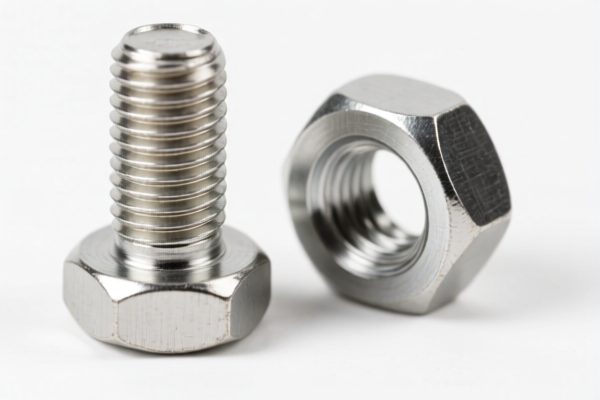
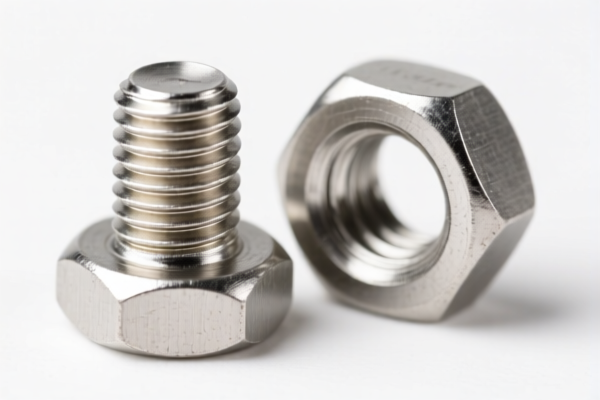
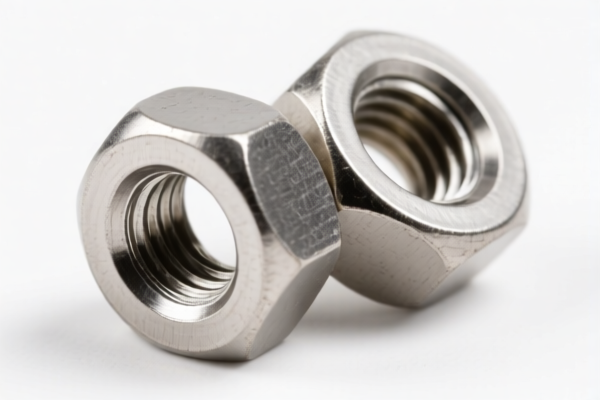
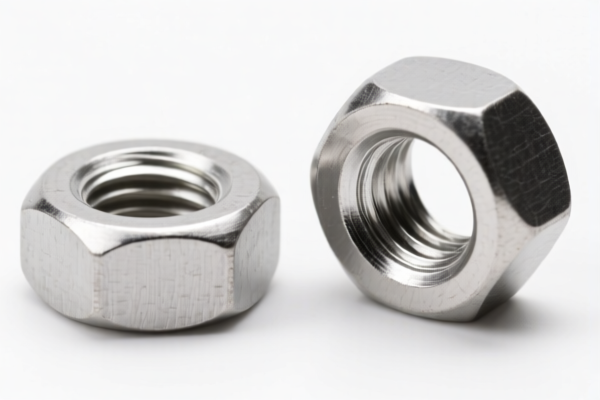
internal and external thread nuts
CN → US| HS编码 | 关税税率 | 原产国 | 目的国 | 文档 |
|---|---|---|---|---|
| 7318160015 | 67.5% | CN | US | 官方文档 |
| 7318160060 | 67.5% | CN | US | 官方文档 |
| 7415330500 | 88.0% | CN | US | 官方文档 |
| 7415338050 | 88.0% | CN | US | 官方文档 |
商品图片
AI分析
🔩 Internal and External Thread Nuts (Double-End Nuts)
🌐 HS Code Reference & Customs Clearance Guide | 2026 Latest Tariff Analysis | Professional Clearance Strategy
📌 I. Product Definition & Classification: Do You Really Know "Double-End Nuts"?
Internal and External Thread Nuts (commonly known as Double-End Nuts, Rod Ends, or Jam Nuts with Extension) are fasteners featuring a threaded hole on both sides of a hexagonal or cylindrical body, often used in machinery, automotive, and structural applications to adjust tension or bridge gaps.
In international trade, they are classified based on their material composition, which drastically affects the HS Code and, consequently, the Tariff Rate:
- Steel/Stainless Steel Variants: The most common industrial fasteners, classified under Chapter 73.
- Copper/Brass Variants: Used for electrical conductivity or corrosion resistance, classified under Chapter 74.
⚠️ Critical Distinction Point:
- If the nut is made of Steel or Stainless Steel → It falls under HS 7318.16.
- If the nut is made of Copper (solid or alloy) → It falls under HS 7415.33.
- Misclassification Alert: Declaring a steel nut as copper (or vice versa) leads to severe customs penalties and re-classification delays.
📦 II. HS Code Classification Details (2026 Latest Tariff Authority Cross-Reference)
| HS Code | Product Description | Applicable Scenario | Material Basis |
|---|---|---|---|
7318.16.00.15 |
Internal/External Thread Nuts, Metal | General metal fasteners, industrial machinery | Steel/Stainless Steel (Base) |
7318.16.00.60 |
Internal/External Thread Nuts, Stainless/Steel | High-corrosion resistance applications, food/medical | Stainless Steel / Carbon Steel |
7415.33.05.00 |
Internal/External Thread Nuts, Copper Head/Iron Body | Mixed-material fasteners, electrical grounding | Copper + Steel Composite |
7415.33.80.50 |
Internal/External Thread Nuts, Copper | Electrical fittings, marine applications (corrosion resistant) | Solid Copper / Brass |
🔍 Key Reminder:
- Steel/NSS nuts are grouped under 7318.16.00;
- Copper nuts are grouped under 7415.33.80;
- Composite materials (e.g., copper head on steel body) may require specific subheadings like7415.33.05.00depending on local customs interpretation.
💰 III. 2026 Latest Tariff Rate Breakdown (Including Surcharges, Policy Add-ons)
✅ Applicable Country: United States (US)
✅ Country of Origin: China (CN)
✅ Effective Date: From 2025 onwards (Includes subsequent imports)
🎯 1. 7318.16.00.15 & 7318.16.00.60 —— Steel/Stainless Steel Double-End Nuts
| Item | Content |
|---|---|
| Basic Tariff | 0.0% (ad valorem) |
| Section 301 Surcharge (Add-on Tariff) | +7.5% |
| Section 122 Tariff | +10% |
| Steel, Aluminum, Copper Products Surcharge | +50% |
| Total Tariff Rate | 67.5% |
| Tax Calculation | CIF Value × 67.5% |
| De Minimis Eligibility | ❌ Not Eligible (Denied) |
| Legal Basis Path | 301: 7318.16.00 → 122: 7318.16.00 → Steel/Cu/Al Surcharge: 7318.16.00 |
📌 Explanation:
- The 0% basic tariff is misleading; the real burden comes from additional surcharges.
- Section 301 (7.5%): Standard retaliatory tariff on Chinese steel products.
- Section 122 (10%): Additional national security-related surcharge on steel/iron products.
- Steel/Aluminum/Copper Surcharge (50%): The most significant component, targeting strategic raw materials and processed goods.
- Total 67.5%: Extremely high. This makes Chinese steel nuts profit-challenged for the US market unless absorbed by the buyer or offset by lower production costs.
🎯 2. 7415.33.05.00 & 7415.33.80.50 —— Copper Double-End Nuts
| Item | Content |
|---|---|
| Basic Tariff | 3.0% (ad valorem) |
| Section 301 Surcharge (Add-on Tariff) | +25.0% |
| Section 122 Tariff | +10% |
| Steel, Aluminum, Copper Products Surcharge | +50% |
| Total Tariff Rate | 88.0% |
| Tax Calculation | CIF Value × 88.0% |
| De Minimis Eligibility | ❌ Not Eligible (Denied) |
| Legal Basis Path | 301: 7415.33 → 122: 7415.33 → Steel/Cu/Al Surcharge: 7415.33 |
📌 Explanation:
- Copper products face an even higher total tariff (88%) than steel.
- Basic Tariff (3%): Copper has a small baseline duty.
- Section 301 (25%): Higher surcharge applied to copper goods compared to steel (7.5%).
- Section 122 (10%): Applies to copper as well.
- Steel/Copper Surcharge (50%): Same 50% levy applies to copper products.
- Total 88%: One of the highest tariff rates for fasteners. Importing copper nuts from China to the US is economically unviable without significant pricing strategy adjustments.
🛠️ IV. Customs Clearance Practical Advice (Real-World Pitfall Guide)
✅ 1. Required Documentation Checklist (Non-Negotiable)
| Document | Must Provide | Description |
|---|---|---|
| ✅ Material Certificate | ✔️ | Crucial for distinguishing Steel (7318) vs. Copper (7415). Must specify alloy composition. |
| ✅ Product Specifications | ✔️ | Diameter, thread pitch, length, head shape (hex/cylindrical). |
| ✅ Commercial Invoice | ✔️ | Clearly state "Internal and External Thread Nuts" and Material (e.g., 304 Stainless Steel / C110 Copper). |
| ✅ Packing List | ✔️ | Weight, dimensions, number of pieces. |
| ✅ Origin Certificate (CO) | ✔️ | To prove origin from China (affects tariff eligibility). |
| ✅ Photos of Products | ✔️ | Show markings, labels, and material finish (stainless vs. copper color). |
✅ 2. Declaration Tips (Key Mantras)
🔥 “Material First, HS Code Second, Total Tax High, Strategy Needed!”
| Scenario | Correct Declaration | Wrong Practice |
|---|---|---|
| Steel Nut | 7318.16.00.15 or 60 + "Steel" |
Declaring as "Iron" without material spec → Risk of audit |
| Copper Nut | 7415.33.80.50 + "Copper" |
Declaring as "Steel" to avoid 50% surcharge → Fraud Risk, Heavy Penalty |
| Mixed Package | Split by material in invoice | Mixing steel and copper in one line item → Confusion, Delay |
| Origin: China | Full disclosure | Hiding origin → Seizure, Blacklist |
✅ 3. Special Cases Handling
| Case | Handling Advice |
|---|---|
| OEM Custom Nuts | Provide customer drawings + material test reports. Avoid generic "nut" descriptions. |
| Coated Nuts | If steel nut has copper plating, classify based on base material (usually steel, HS 7318), but consult customs for precise ruling. |
| Small Quantity Samples | Still subject to 67.5%-88% tariff. De minimis (Section 321) does not apply to these HS codes. |
| Re-export from Third Country | If re-shipped from Vietnam/Mexico, ensure Substantial Transformation occurred. Otherwise, US Customs may still apply CN origin tariffs. |
🌍 V. Global Market Comparison (2026 Latest)
| Country/Region | Recommended HS Code | Tariff (China Origin) | Certification | Remarks |
|---|---|---|---|---|
| 🇺🇸 USA | 7318.16.00 / 7415.33.80 |
67.5% (Steel) / 88.0% (Copper) | None for fasteners | Highest global tariff burden |
| 🇨🇳 China | 7318.16 / 7415.33 |
0% - 3% (Export) | N/A | N/A |
| 🇪🇺 EU | 7318.16 / 7415.33 |
2.7% - 6.5% (Standard) | REACH | No Section 301/122 equivalent |
| 🇦🇺 Australia | 7318.16 / 7415.33 |
5% - 8% | None | Moderate tariff |
| 🇮🇳 India | 7318.16 / 7415.33 |
15% - 25% | BIS (if applicable) | High but lower than US |
📌 Conclusion:
- The US market is prohibitively expensive for Chinese-made double-end nuts due to Section 301, 122, and Material Surcharges.
- Steel nuts (67.5%) and Copper nuts (88%) face some of the highest effective tariff rates globally.
- Strategy: Consider sourcing from non-China countries (e.g., Vietnam, Thailand, India) to mitigate tariffs, or absorb costs if demand is inelastic.
📌 VI. Common Errors & Pitfall Guide (Lessons Learned)
❌ Error 1: Declaring Copper Nuts as Steel to Avoid 50% Surcharge
👉 Consequence: Customs inspection reveals material mismatch → Fine + Seizure + Blacklist.
❌ Error 2: Ignoring Section 122 and 301 Surcharges in Costing
👉 Consequence: Profit margin erased by 67.5%-88% tax → Financial Loss.
❌ Error 3: Using Generic "Nut" Description Without Material
👉 Consequence: Customs assigns highest possible rate or holds shipment for clarification → Delay.
❌ Error 4: Assuming De Minimis Applies to Small Shipments
👉 Consequence: No exemption for these HS codes. Every shipment is taxed.
✅ Correct Approach:
"Internal and External Thread Nuts, Model XYZ, Hex Head, 1/4-20 UNC, Material: 316 Stainless Steel, Origin: China, HS: 7318.16.00.60"
🎯 VII. Conclusion: Professional Declaration Saves Millions!
🎯 Remember the Mantra:
🔹 “Steel is 67.5%, Copper is 88%, No De Minimis, No Mercy!”
🔹 “HS Code Defines Tariff, Material Defines Code, Declaration Defines Success!”
📌 Pro Tip:
If you are importing large volumes to the US, consider:
1. Advance Ruling: Apply for a binding ruling from US CBP to confirm HS code.
2. Supply Chain Diversification: Source from countries not subject to US Section 301/122 tariffs.
3. Value Engineering: Reduce weight/size to minimize CIF value impact, though percentage remains high.
📣 Immediate Action:
📞 Consult a Licensed Customs Broker + Provide Material Test Report + Apply for Advance Ruling
🚀 Let your fasteners clear smoothly, avoid penalties, and protect your margins!
✨ Professional Clearance Starts with Accurate Classification!
💼 Every Percent of Tariff Counts in Your Bottom Line!
用户评价
关于 HS 编码归类
协调制度(HS)是由世界海关组织(WCO)制定的国际贸易商品分类标准。全球 200 多个国家采用 HS 系统作为海关关税、贸易统计和进出口监管的基础。
每个 HS 编码遵循以下层级结构:
- 章(2 位)——商品大类(例如:第 84 章:机器和机械设备)
- 品目(4 位)——章内的更具体分类
- 子目(6 位)——国际通用细分,所有 WCO 成员国统一使用
- 本国细分(8-10 位)——各国自行扩展的细分编码,如美国 HTSUS 10 位编码
正确的 HS 编码归类对于顺利通关、准确缴纳关税和遵守贸易法规至关重要。错误归类可能导致海关延误、多缴关税或罚款。
从CN进口到US时,适用的关税税率可能包括:
- 最惠国(MFN)税率——适用于 WTO 成员国的标准关税税率
- 普通税率——适用于无贸易协定国家
- 贸易救济关税——附加关税,如 301 条款(反倾销)、232 条款(国家安全)或反补贴税
本页内容仅供参考。如需正式归类,请咨询当地海关或持牌报关代理。