internal combustion piston engine
CN → US| HS编码 | 关税税率 | 原产国 | 目的国 | 文档 |
|---|---|---|---|---|
| 8408100005 | 37.5% | CN | US | 官方文档 |
| 8408201040 | 35.0% | CN | US | 官方文档 |
商品图片
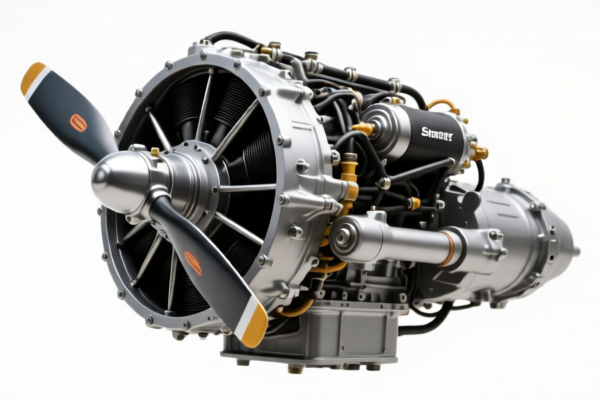
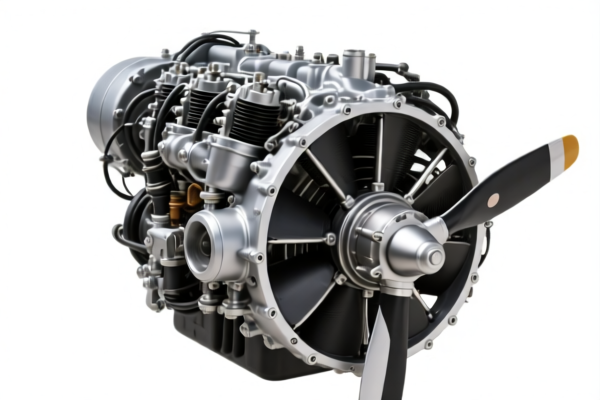
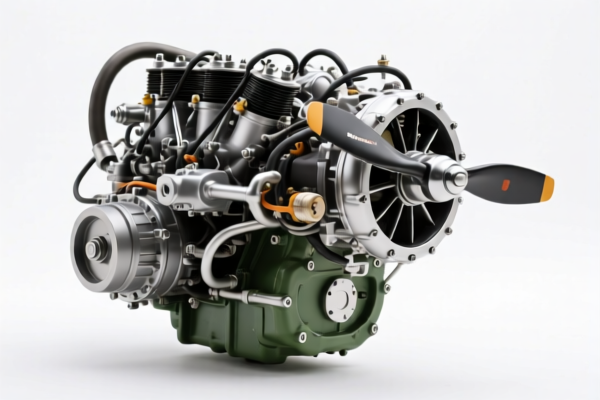
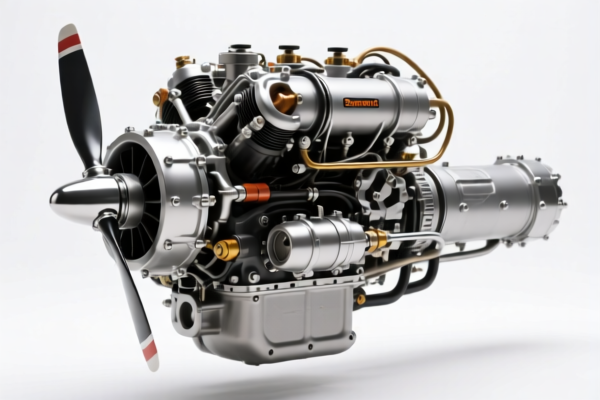
AI分析
⚙️ Internal Combustion Piston Engine (Diesel/Semi-Diesel)
🌐 HS Code Reference & Customs Clearance Guide | 2026 Tariff Structure Analysis | Professional Entry Strategy
📌 Part 1: Product Definition & Classification: Do You Know Your Engine?
Internal combustion piston engines are the "heart" of heavy machinery, marine vessels, and agricultural vehicles. In international trade, these engines are strictly categorized by their specific application and power output. Misclassification is the #1 cause of customs delays and punitive tariffs.
Diesel/Semi-Diesel Engines are broadly split into two critical buckets:
- Marine Propulsion Engines: Designed specifically for boats and ships.
- Vehicle Propulsion Engines: Designed for road/non-road vehicles (e.g., tractors, trucks, cars).
⚠️ Key Distinction Point:
- If the engine is only for boats/ships → It falls under 8408.10.
- If the engine is for tractors (agricultural use) → It falls under 8408.20, with further细分 by kW (kilowatts).
- Note: The data provided does not cover general automotive engines (cars/trucks) or industrial stationary engines, focusing only on Marine and Agricultural Tractors.
📦 Part 2: HS Code Classification Details (2026 Latest Tariff Schedule)
| HS Code | Product Description | Application Scenario | Power Limit | Key Classification Criteria |
|---|---|---|---|---|
8408.10.00.05 |
Compression-ignition piston engines for Marine Propulsion | Ship engines, boat motors | Not exceeding 111.9 kW | Specific to marine use; power ≤ 111.9 kW |
8408.20.10.40 |
Engines for vehicles of Chapter 87, for Agricultural Tractors | Farm tractors suitable for agricultural use | Not exceeding 37.3 kW | Specific to agricultural tractors; power ≤ 37.3 kW |
🔍 Critical Reminder:
- Marine vs. Vehicle: A diesel engine for a boat is NOT the same HS code as a diesel engine for a tractor, even if they have the same horsepower. - Power Thresholds Matter:
- For marine engines, if power exceeds 111.9 kW, it likely moves to a different subheading (not covered in this specific dataset).
- For tractor engines, if power exceeds 37.3 kW, it may fall under a different agricultural subheading (not covered in this specific dataset).
- Do Not Guess: The classification is binary based on Application (Marine vs. Tractor) and Power (kW).
💰 Part 3: 2026 Tariff Rate Breakdown (Detailed Tax Analysis)
✅ Context: The tax details provided below reflect the specific duty structures for these HS codes.
⚠️ Note: The second item (8408.20.10.40) shows a 25% additional tariff, which is significantly higher than the marine counterpart.
🎯 1. 8408.10.00.05 —— Marine Propulsion Diesel Engine (≤ 111.9 kW)
| Item | Content |
|---|---|
| Base Duty Rate | 0.0% |
| Additional Tariff | 0.0% |
| Total Tax Rate | 0.0% |
| Tax Detail | Base: 0.0%, Additional: 0.0% |
| Impact | Duty-Free Entry |
📌 Explanation:
- Marine propulsion engines under 111.9 kW enjoy a 0% total tariff rate.
- This is a highly favorable category for shipbuilding and marine equipment exporters.
- No additional Section 301 or IEEPA surcharges are indicated for this specific subheading in the provided data.
🎯 2. 8408.20.10.40 —— Agricultural Tractor Diesel Engine (≤ 37.3 kW)
| Item | Content |
|---|---|
| Base Duty Rate | 0.0% |
| Additional Tariff | +25.0% |
| Total Tax Rate | 25.0% |
| Tax Detail | Base: 0.0%, Additional: 25.0% |
| Impact | High Import Duty |
📌 Explanation:
- Agricultural tractor engines (≤ 37.3 kW) have a 0% base rate but incur a 25% additional tariff.
- This 25% surcharge is typical for goods subject to trade tensions (e.g., US Section 301 tariffs on Chinese agricultural machinery components).
- Cost Implication: For a $10,000 engine, you pay $2,500 in taxes.
🛠️ Part 4: Customs Clearance Practical Advice (Avoid Pitfalls)
✅ 1. Preparation Checklist (Essential Documents)
| Document | Required? | Purpose |
|---|---|---|
| ✅ Engine Technical Specification | Yes | Must clearly state: Type (Compression-ignition), Application (Marine/Agricultural), and Power Output (kW). |
| ✅ Engine Serial Plate Photo | Yes | Shows model number, manufacturer, and rated power. Crucial for verifying ≤ 111.9 kW or ≤ 37.3 kW. |
| ✅ Intended Use Statement | Yes | Declare: "For marine propulsion" OR "For agricultural tractor use". Do not write "general purpose". |
| ✅ Commercial Invoice | Yes | Must match the HS Code description exactly. |
| ✅ Bill of Lading | Yes | Ensure cargo description aligns with invoice. |
✅ 2. Declaration Tips (Key Mantras)
🔥 "Application Defines Code, Power Defines Rate!"
| Scenario | Correct HS Code | Risk if Incorrect |
|---|---|---|
| Boat Engine (≤ 111.9 kW) | 8408.10.00.05 |
If declared as "Tractor Engine" → 25% Tax instead of 0%. |
| Tractor Engine (≤ 37.3 kW) | 8408.20.10.40 |
If declared as "Marine Engine" → 0% Tax (but risk of fraud investigation if physical inspection shows tractor mounting). |
| Engine > 111.9 kW (Marine) | Not in Dataset | Likely higher duty or different code. Misdeclaration leads to rejection. |
| Engine > 37.3 kW (Tractor) | Not in Dataset | Likely different agricultural code. Misdeclaration leads to penalties. |
⚠️ Critical Warning:
- Do not use generic terms like "Diesel Engine" or "Motor" in the declaration.
- Must specify: "Compression-ignition internal combustion piston engine for marine propulsion" or "for agricultural tractors".
- Power Unit: Always provide power in Kilowatts (kW), not just Horsepower (HP). Convert if necessary (1 kW ≈ 1.34 HP).
✅ 3. Special Cases & Strategy
| Case | Recommendation |
|---|---|
| Multi-Purpose Engine | If the engine can be used for both marine and agricultural purposes, customs will likely apply the highest applicable tariff or require proof of intended use. Provide a manufacturer's declaration of intended use. |
| Parts vs. Complete Engine | If shipping only parts (pistons, cylinders), do not classify as 8408.xx.xx. Parts usually fall under Chapter 8499 or specific part codes. Only classify as 8408 if it is a complete, functional engine. |
| Used Engines | Used engines may require additional environmental or safety certifications. Check local regulations for re-import or export of used machinery. |
🌍 Part 5: Comparative Tariff Analysis (Based on Provided Data)
| Feature | 8408.10.00.05 (Marine) |
8408.20.10.40 (Tractor) |
|---|---|---|
| Primary Use | Ships/Boats | Agricultural Tractors |
| Power Limit | ≤ 111.9 kW | ≤ 37.3 kW |
| Base Duty | 0.0% | 0.0% |
| Additional Duty | 0.0% | 25.0% |
| Total Cost Impact | Low (Tax-Free) | High (25% Tax) |
| Risk Level | Low | Medium (Due to high tariff) |
📌 Conclusion:
- Marine engines (< 111.9 kW) are tariff-free, making them highly competitive.
- Agricultural tractor engines (< 37.3 kW) incur a 25% surcharge, which must be factored into pricing strategies.
- Exporters should verify the exact power rating (kW) and application before shipping to avoid unexpected 25% charges.
📌 Part 6: Common Mistakes & Pitfalls (Learn from Errors)
❌ Mistake 1: Declaring a Marine Engine as "General Purpose Diesel Engine"
👉 Result: Customs may classify it under a generic, higher-duty code or reject the declaration for ambiguity.
✅ Fix: Specify "For Marine Propulsion".
❌ Mistake 2: Confusing Horsepower (HP) with Kilowatts (kW)
👉 Result: If you declare 110 HP as 110 kW, you might exceed the 111.9 kW limit for 8408.10.00.05, pushing it to a different, potentially higher-taxed category.
✅ Fix: Convert HP to kW accurately (HP × 0.7457 = kW).
❌ Mistake 3: Ignoring the 25% Surcharge on Tractor Engines
👉 Result: Profit margin erosion. Buyers expect 0% base tax, but the 25% add-on is real.
✅ Fix: Quote prices DDP (Delivered Duty Paid) or clearly state that the buyer is responsible for the 25% additional duty.
🎯 Part 7: Conclusion: Precision Pays Off
🎯 Key Takeaways:
🔹 "Marine < 112kW = 0% Tax. Tractor < 37kW = 25% Tax."
🔹 "Specify Application: Marine vs. Agricultural."
🔹 "Convert HP to kW: Precision prevents penalties."
📌 Pro Tip:
- If your engine is exactly 111.9 kW or 37.3 kW, ensure the documentation clearly states "Not Exceeding" to qualify for the lower brackets.
- For large marine engines (> 111.9 kW) or larger tractors (> 37.3 kW), consult a customs broker immediately as the HS codes and tariffs will differ significantly from the provided dataset.
📣 Action Required:
📞 Verify Engine Specs: Confirm kW output and intended use.
📄 Draft Accurate Invoice: Use exact HS Code descriptions.
🚀 Prepare for 25% Tax: If shipping tractor engines, budget for the additional duty.
✨ Professional clearance starts with accurate classification!
💼 Don't let a 0.1 kW difference or a wrong application declaration cost you 25% in taxes!
用户评价
关于 HS 编码归类
协调制度(HS)是由世界海关组织(WCO)制定的国际贸易商品分类标准。全球 200 多个国家采用 HS 系统作为海关关税、贸易统计和进出口监管的基础。
每个 HS 编码遵循以下层级结构:
- 章(2 位)——商品大类(例如:第 84 章:机器和机械设备)
- 品目(4 位)——章内的更具体分类
- 子目(6 位)——国际通用细分,所有 WCO 成员国统一使用
- 本国细分(8-10 位)——各国自行扩展的细分编码,如美国 HTSUS 10 位编码
正确的 HS 编码归类对于顺利通关、准确缴纳关税和遵守贸易法规至关重要。错误归类可能导致海关延误、多缴关税或罚款。
从CN进口到US时,适用的关税税率可能包括:
- 最惠国(MFN)税率——适用于 WTO 成员国的标准关税税率
- 普通税率——适用于无贸易协定国家
- 贸易救济关税——附加关税,如 301 条款(反倾销)、232 条款(国家安全)或反补贴税
本页内容仅供参考。如需正式归类,请咨询当地海关或持牌报关代理。