inverter
CN → US| HS编码 | 关税税率 | 原产国 | 目的国 | 文档 |
|---|---|---|---|---|
| 8504409570 | 10.0% | CN | US | 官方文档 |
| 8501801000 | 12.5% | CN | US | 官方文档 |
| 8537109170 | 37.7% | CN | US | 官方文档 |
| 8501809000 | 37.4% | CN | US | 官方文档 |
商品图片
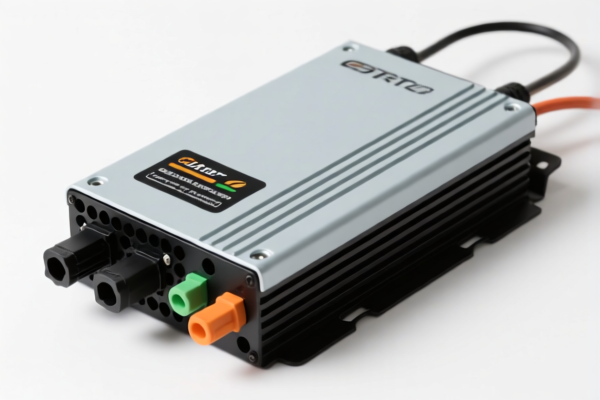
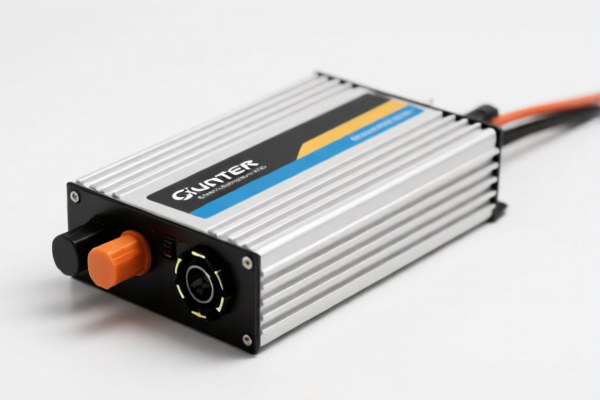
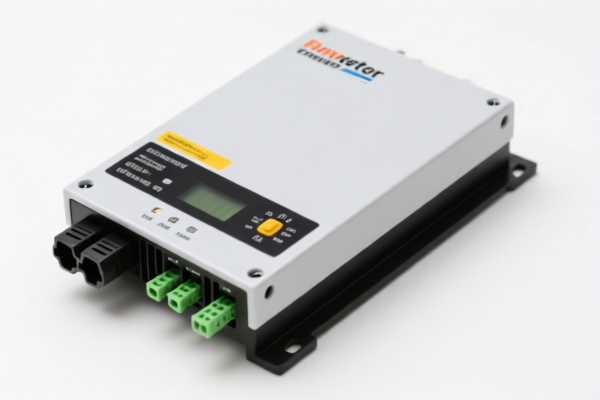
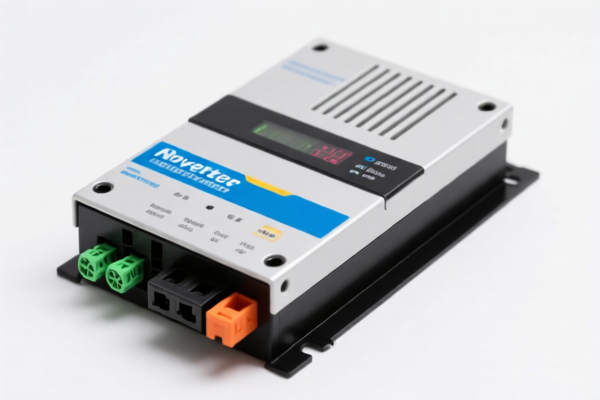
AI分析
⚡ Inverter (Power Conversion Equipment)
🌐 HS Code Reference & Customs Clearance Guide | 2026 Latest Tariff Analysis | Professional-Level Strategy
📌 Part 1: Product Definition & Classification: Do You Really Understand "Inverters"?
An inverter is a critical power conversion device that transforms Direct Current (DC) into Alternating Current (AC). In international trade, inverters are classified based on their specific function, voltage control capabilities, and end-use application. Misclassification can lead to severe tariff penalties, especially under current US trade policies.
⚠️ Key Distinction Points:
- If the device is strictly for power conversion (DC to AC) without primary control functions → Often falls under 8504 or 8501;
- If the device includes voltage control, regulation, or distribution features → May fall under 8537;
- If it is specifically a photovoltaic (PV) AC generator → Falls under 8501.80.
📦 Part 2: HS Code Classification Details (2026 Latest Tariff Authority Comparison)
Based on the provided data, here are the four potential HS Codes for Inverters, with detailed tax breakdowns:
| HS Code | Product Description | Logic for Classification | Total Tax Rate |
|---|---|---|---|
8504.40.95.70 |
Static Converters (Inverters) | Matches the specific use case of "Inverter" perfectly. Recognized as pure power conversion equipment. | 10.0% |
8501.80.10.00 |
Photovoltaic AC Generators | "Inverters" fit the characteristics of PV AC generators. Based on the "Possible Match" principle. | 12.5% |
8537.10.91.70 |
Electric Control Panels (<1kV) | Inverters involve voltage control and distribution. Fits the attribute of electrical control equipment for voltages ≤1,000V. | 37.7% |
8501.80.90.00 |
Other DC Machines/Generators | Function is DC-to-AC conversion, matching "PV AC Generator" conversion traits. No conflict with the "Other" category. | 37.4% |
🔍 Critical Reminder:
-8504.40.95.70offers the lowest tariff (10%) if the product is a standard static converter/inverter;
-8537.10.91.70and8501.80.90.00carry high tariffs (37.4%–37.7%) due to additional USITC Section 301 duties;
-8501.80.10.00is a mid-tier option (12.5%) but is specific to PV applications.
💰 Part 3: 2026 Latest Tariff Rate Details (Including Surcharges & Policy Add-ons)
✅ Applicable Country: United States (US)
✅ Country of Origin: China (CN)
✅ Effective Date: Post-2025 (including subsequent imports)
🎯 1. 8504.40.95.70 —— Static Converters (Inverters)
| Item | Details |
|---|---|
| Base Duty Rate | 0.0% |
| USITC Section 301 Surcharge | 0.0% |
| 122 Clause Tariff | 10% |
| Total Tax Rate | 10.0% |
| Tax Calculation | CIF Value × 10% |
| De Minimis Exemption | ❌ Not Available |
| Legal Basis Path | Section 122 → USITC:8504.40.95.70 |
📌 Explanation:
- This classification is the most favorable for standard inverters;
- The 10% tariff is attributed to the "122 Clause Tariff";
- No additional USITC Section 301 duties apply, keeping costs manageable.
🎯 2. 8501.80.10.00 —— Photovoltaic AC Generators
| Item | Details |
|---|---|
| Base Duty Rate | 2.5% |
| USITC Section 301 Surcharge | 0.0% |
| 122 Clause Tariff | 10% |
| Total Tax Rate | 12.5% |
| Tax Calculation | CIF Value × 12.5% |
| De Minimis Exemption | ❌ Not Available |
| Legal Basis Path | Section 122 → USITC:8501.80.10.00 |
📌 Note:
- Applicable if the inverter is explicitly designed for Photovoltaic (Solar) Systems;
- Slightly higher than8504.40.95.70but still significantly lower than the 37%+ brackets;
- Requires clear documentation proving PV-specific usage.
🎯 3. 8537.10.91.70 —— Electric Control Panels (≤1,000V)
| Item | Details |
|---|---|
| Base Duty Rate | 2.7% |
| USITC Section 301 Surcharge | 25.0% |
| 122 Clause Tariff | 10% |
| Total Tax Rate | 37.7% |
| Tax Calculation | CIF Value × 37.7% |
| De Minimis Exemption | ❌ Not Available |
| Legal Basis Path | Section 301 → Section 122 → USITC:8537.10.91.70 |
📌 Warning:
- This classification triggers both USITC Section 301 duties (25%) and 122 Clause duties (10%);
- Suitable only if the inverter is integrated into a larger control panel system for voltage regulation/distribution;
- High cost implication—avoid unless necessary for functional justification.
🎯 4. 8501.80.90.00 —— Other DC Machines/Generators
| Item | Details |
|---|---|
| Base Duty Rate | 2.4% |
| USITC Section 301 Surcharge | 25.0% |
| 122 Clause Tariff | 10% |
| Total Tax Rate | 37.4% |
| Tax Calculation | CIF Value × 37.4% |
| De Minimis Exemption | ❌ Not Available |
| Legal Basis Path | Section 301 → Section 122 → USITC:8501.80.90.00 |
📌 Warning:
- Classified under "Other" because it doesn't fit the specific "PV Generator" sub-heading precisely, but still involves conversion;
- Also subject to high combined duties (25% + 10%);
- Generally not recommended unless8501.80.10.00is not applicable.
🛠️ Part 4: Customs Clearance Practical Advice (Battle-Tested Pitfall Guide)
✅ 1. Preparation Checklist (All Mandatory)
| Document | Required? | Description |
|---|---|---|
| ✅ Product Specification Sheet | ✔️ | Must include input/output voltage, frequency, power rating, conversion efficiency |
| ✅ Circuit Diagram / Internal Structure | ✔️ | To prove whether it is a pure inverter (8504) or a control panel (8537) |
| ✅ Product Photos (with Nameplate) | ✔️ | Clear view of model number, brand, input/output terminals |
| ✅ Third-Party Test Reports | ✔️ | UL, CE, RoHS, FCC (if applicable) |
| ✅ Commercial Invoice | ✔️ | Must clearly state "Inverter" or "Power Conversion Equipment" |
| ✅ Certificate of Origin (CO) | ✔️ | To verify Country of Origin (China) |
| ✅ Packing List | ✔️ | Clarify if inverters are shipped as standalone units or integrated into panels |
✅ 2. Declaration Strategies (Key Mantra)
🔥 “Pure Conversion = 8504; Control Panel = 8537; PV Specific = 8501.80”
| Scenario | Correct Declaration | Wrong Practice |
|---|---|---|
| Standard DC-to-AC Inverter | 8504.40.95.70 |
Misdeclare as 8537 → 37.7% |
| Solar PV Inverter | 8501.80.10.00 |
Misdeclare as general converter → 10% (if eligible) or 12.5% |
| Inverter Integrated in Control Panel | 8537.10.91.70 |
Declare as separate inverter → Risk of Audit |
| Generic DC Machine | 8501.80.90.00 |
Misdeclare as 8504 → Underpayment Penalty |
✅ 3. Special Handling Cases
| Situation | Recommendation |
|---|---|
| OEM Custom Inverters | Provide client orders + technical drawings to justify 8504.40.95.70 |
| Inverter with Built-in Control Module | If control is secondary, stick with 8504; if primary, consider 8537 (but expect high tax) |
| Hybrid Inverters (Solar + Battery) | Clearly define primary function. If PV generation is key, use 8501.80.10.00 |
| High-Voltage Industrial Inverters | If >1,000V, different rules apply. Ensure voltage rating is clearly stated |
🌍 Part 5: Global Market Comparison (2026 Latest)
| Country/Region | Recommended HS Code | Tariff (China Origin) | Certification Requirements | Notes |
|---|---|---|---|---|
| 🇺🇸 USA | 8504.40.95.70 |
10% | UL + FCC | Lowest tax option for standard inverters |
| 🇺🇸 USA | 8537.10.91.70 |
37.7% | UL + FCC | Avoid unless functionally required |
| 🇨🇳 China | 8504.40.95.70 |
0% | CCC + RoHS | No extra surcharges |
| 🇪🇺 EU | 8504.40.95.70 |
0% (if CE compliant) | CE + ErP | No surcharges |
| 🇬🇧 UK | 8504.40.95.70 |
0% | UKCA | No surcharges |
| 🇦🇺 Australia | 8504.40.95.70 |
5% | RCM | No surcharges |
📌 Conclusion:
- The US is the only major market imposing significant surcharges on Chinese inverters;
-8504.40.95.70is the optimal classification to minimize costs (10% vs. 37%+);
- Accurate functional description is crucial to avoid reclassification by US Customs.
📌 Part 6: Common Errors & Pitfall Guide (Lessons Learned)
❌ Error 1: Declaring a "Control Panel with Inverter" as just "Inverter"
👉 Consequence: If Customs determines control function is primary, they may reclassify to 8537 → Back taxes + Penalties!
❌ Error 2: Declaring a "PV Inverter" as a generic converter (8504) without proof
👉 Consequence: Risk of rejection or audit. If approved, 8504 is cheaper (10%), but if rejected as "PV-specific," you might face different duties. Be transparent.
❌ Error 3: Missing Voltage Details
👉 Consequence: If voltage >1,000V, 8537 classification might not apply. Clear voltage specs prevent misclassification.
❌ Error 4: Using vague terms like "Power Adapter"
👉 Consequence: Delays in clearance. Use precise terms: "Static Inverter," "DC-AC Converter," "Photovoltaic Inverter."
✅ Correct Approach:
"Static Inverter, DC-to-AC, 5kW, 48V DC Input, 120V/240V AC Output, Model XYZ, UL Certified, for Solar PV System"
🎯 Part 7: Conclusion: Precise Classification Saves Money!
🎯 Key Takeaways:
🔹 “Pure Inverter = 8504.40.95.70 (10%)” is the cheapest and safest option for standard inverters;
🔹 “Control Panel Function = 8537.10.91.70 (37.7%)” is expensive—avoid unless necessary;
🔹 “PV Specific = 8501.80.10.00 (12.5%)” is a viable alternative for solar products;
🔹 Documentation is Key: Circuit diagrams and specifications must match the declared HS Code.
📌 Pro Tip:
If your inverters are shipped from Vietnam, Mexico, or Thailand, you may qualify for IEEPA Exemptions, reducing rates to 0%~5%.
Recommend Advance Rulings for high-value shipments to ensure classification certainty.
📣 Take Action Now:
📞 Contact a Professional Customs Broker + Provide Product Specs + Apply for HS Code Advance Ruling
🚀 Ensure your inverters clear customs smoothly, maximize profits, and scale efficiently!
✨ Professional Clearance Starts with Accurate Classification!
💼 Every Percentage Point Matters—Optimize Your Tariff Today!
用户评价
关于 HS 编码归类
协调制度(HS)是由世界海关组织(WCO)制定的国际贸易商品分类标准。全球 200 多个国家采用 HS 系统作为海关关税、贸易统计和进出口监管的基础。
每个 HS 编码遵循以下层级结构:
- 章(2 位)——商品大类(例如:第 84 章:机器和机械设备)
- 品目(4 位)——章内的更具体分类
- 子目(6 位)——国际通用细分,所有 WCO 成员国统一使用
- 本国细分(8-10 位)——各国自行扩展的细分编码,如美国 HTSUS 10 位编码
正确的 HS 编码归类对于顺利通关、准确缴纳关税和遵守贸易法规至关重要。错误归类可能导致海关延误、多缴关税或罚款。
从CN进口到US时,适用的关税税率可能包括:
- 最惠国(MFN)税率——适用于 WTO 成员国的标准关税税率
- 普通税率——适用于无贸易协定国家
- 贸易救济关税——附加关税,如 301 条款(反倾销)、232 条款(国家安全)或反补贴税
本页内容仅供参考。如需正式归类,请咨询当地海关或持牌报关代理。