isobutene isoprene rubber iir
CN → US| HS编码 | 关税税率 | 原产国 | 目的国 | 文档 |
|---|---|---|---|---|
| 4002390000 | 35.0% | CN | US | 官方文档 |
| 3911909110 | 41.5% | CN | US | 官方文档 |
| 3902201000 | 35.0% | CN | US | 官方文档 |
| 3902205000 | 41.5% | CN | US | 官方文档 |
| 4002310000 | 35.0% | CN | US | 官方文档 |
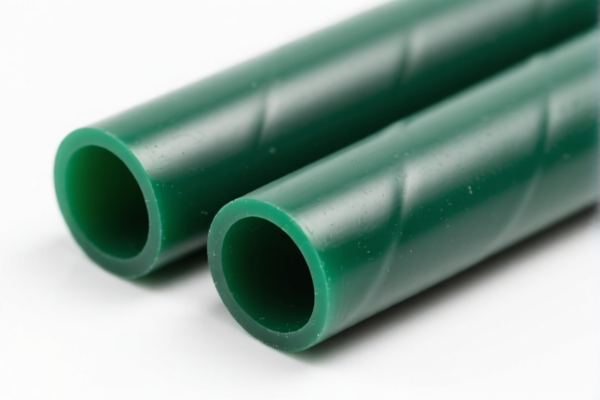
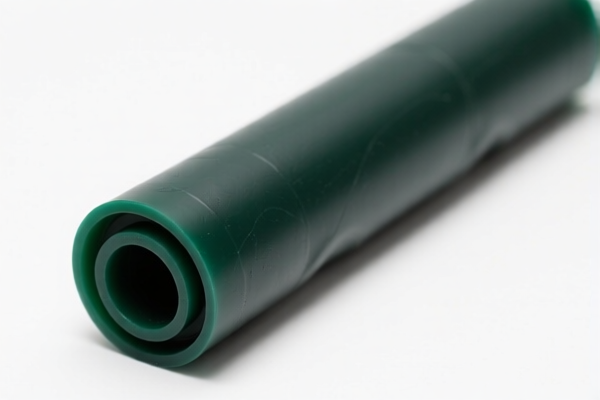
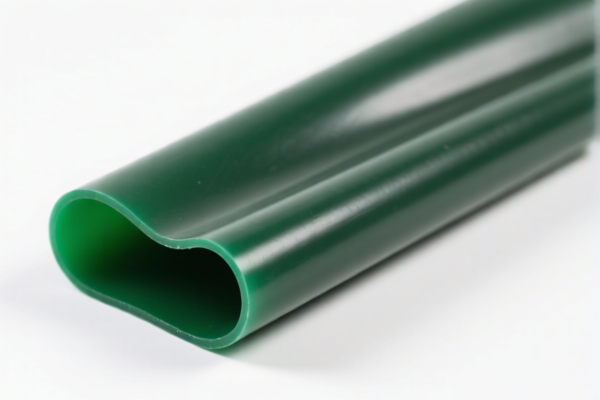
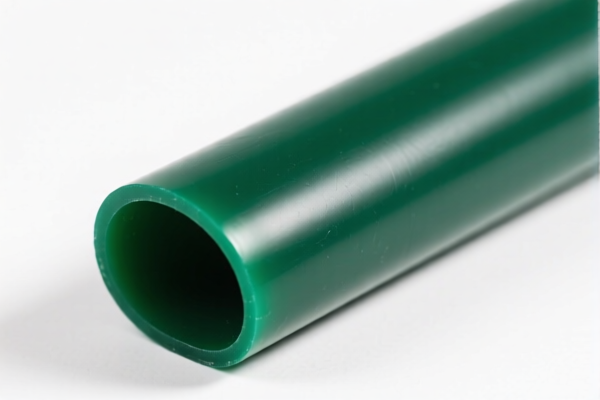
商品图片
AI分析
🧪 Isobutene Isoprene Rubber (IIR) – HS Code & Tariff Guide | 2026 Full Compliance & Customs Clearance Strategy
🌐 HS Code Reference & Customs Clearance Handbook | 2026 Updated Tariff Rules | Expert-Level Trade Compliance
📌 I. Product Definition & Classification: What Exactly Is IIR?
Isobutene Isoprene Rubber (IIR), commonly known as Butyl Rubber, is a synthetic elastomer formed by copolymerizing isobutene with a small amount of isoprene. It is renowned for its:
- Exceptional air impermeability
- Outstanding chemical resistance
- High damping capacity
- Excellent weathering and aging resistance
In international trade, IIR is classified not as a simple chemical but as a polymer in primary forms (raw material), typically supplied as pellets, flakes, or crude rubber — not as finished products like tires or seals.
⚠️ Critical Distinction:
- If it’s raw polymer (e.g., crude rubber, pellets, granules) → HS Code in 3902 or 4002
- If it’s vulcanized rubber parts (e.g., inner tubes, gaskets) → different HS Code (e.g., 4010, 4011)
📦 II. HS Code Classification Breakdown (2026 Official Tariff List)
| HS Code | Product Description | Applicable to IIR? | Primary Form | Key Reason |
|---|---|---|---|---|
4002.39.00.00 |
Butyl rubber (IIR), not vulcanized, in primary forms | ✅ Yes | Raw polymer | Matches material composition & form |
3911.90.91.10 |
Other synthetic rubber, not vulcanized, in primary forms | ✅ Yes | Raw polymer | IIR is a synthetic rubber under this category |
3902.20.10.00 |
Polymers of isobutene, in primary forms | ✅ Yes | Raw polymer | IIR is a polymer of isobutene |
3902.20.50.00 |
Other polymers of olefins (e.g., polyisobutene), in primary forms | ✅ Yes | Raw polymer | IIR is a copolymer of olefins |
4002.31.00.00 |
Butyl rubber (IIR), in primary forms, not vulcanized | ✅ Yes | Raw polymer | Exact match for IIR material |
🔍 Important Note:
All five codes are valid for raw, unvulcanized IIR in primary polymer form. The correct one depends on exact material composition, polymer structure, and customs interpretation.
💰 III. 2026 U.S. Tariff Breakdown (Including All附加 Taxes)
✅ Applicable Country: United States (US)
✅ Origin: China (CN)
✅ Effective Date: November 10, 2025 (inclusive)
🎯 1. 4002.39.00.00 – Butyl Rubber (IIR), Not Vulcanized
| Tax Component | Rate | Legal Basis |
|---|---|---|
| Base Tariff | 0.0% | Ad valorem |
| USITC Section 301 Tariff | +25.0% | From USITC Footnote 9903.88.01 |
| IEEPA Tariff (Section 122) | +10.0% | Under International Emergency Economic Powers Act (IEEPA) |
| Total Effective Tariff | 35.0% | CIF × 35% |
| De Minimis Exemption? | ❌ No (denied for China-origin goods) | |
| Legal Pathway | IEEPA:9903.01.25 → IEEPA:9903.01.24 → USITC:4002.39.00.00 → FOOTNOTE:9903.88.01 |
📌 Explanation:
- 25% USITC = 301 Tariff on Chinese imports (for "unfair trade practices")
- 10% IEEPA = Emergency powers tariff on Chinese goods under national security concerns
- Total = 35% — High-risk, high-cost for importers
🎯 2. 3911.90.91.10 – Other Synthetic Rubber, Not Vulcanized
| Tax Component | Rate | Legal Basis |
|---|---|---|
| Base Tariff | 6.5% | Ad valorem |
| USITC Section 301 Tariff | +25.0% | |
| IEEPA Tariff (Section 122) | +10.0% | |
| Total Effective Tariff | 41.5% | CIF × 41.5% |
| De Minimis Exemption? | ❌ No | |
| Legal Pathway | IEEPA:9901.25 → IEEPA:9903.01.24 → USITC:3911.90.91.10 → FOOTNOTE:9903.88.01 |
📌 Why Higher?
- 6.5% base tariff applies due to classification under "other synthetic rubber"
- Even though IIR is technically a butyl rubber, customs may apply this code if the product lacks "butyl" in the name or structure
🎯 3. 3902.20.10.00 – Polymers of Isobutene, in Primary Forms
| Tax Component | Rate | Legal Basis |
|---|---|---|
| Base Tariff | 0.0% | Ad valorem |
| USITC Section 301 Tariff | +25.0% | |
| IEEPA Tariff (Section 122) | +10.0% | |
| Total Effective Tariff | 35.0% | CIF × 35% |
| De Minimis Exemption? | ❌ No | |
| Legal Pathway | IEEPA:9903.01.25 → IEEPA:9903.01.24 → USITC:3902.20.10.00 → FOOTNOTE:9903.88.01 |
📌 Key Insight:
- This code is perfectly accurate for IIR as a polymer of isobutene
- No base tariff, but same 35% total due to 25% + 10% add-ons
🎯 4. 3902.20.50.00 – Other Olefin Polymers, in Primary Forms
| Tax Component | Rate | Legal Basis |
|---|---|---|
| Base Tariff | 6.5% | Ad valorem |
| USITC Section 301 Tariff | +25.0% | |
| IEEPA Tariff (Section 122) | +10.0% | |
| Total Effective Tariff | 41.5% | CIF × 41.5% |
| De Minimis Exemption? | ❌ No | |
| Legal Pathway | IEEPA:9901.25 → IEEPA:9903.01.24 → USITC:3902.20.50.00 → FOOTNOTE:9903.88.01 |
📌 Why This Applies:
- IIR is a copolymer of olefins (isobutene + isoprene)
- If not explicitly labeled as "butyl rubber", customs may apply this broader code
- Higher base rate → higher total tax
🎯 5. 4002.31.00.00 – Butyl Rubber (IIR), in Primary Forms
| Tax Component | Rate | Legal Basis |
|---|---|---|
| Base Tariff | 0.0% | Ad valorem |
| USITC Section 301 Tariff | +25.0% | |
| IEEPA Tariff (Section 122) | +10.0% | |
| Total Effective Tariff | 35.0% | CIF × 35% |
| De Minimis Exemption? | ❌ No | |
| Legal Pathway | IEEPA:9903.01.25 → IEEPA:9903.01.24 → USITC:4002.31.00.00 → FOOTNOTE:9903.88.01 |
📌 Best Fit?
- This is the most precise code for IIR
- Matches material, function, and form
- 35% total — lowest possible under current rules
🛠️ IV. Customs Clearance Best Practices (Pro Tips to Avoid Penalties)
✅ 1. Required Documentation (MUST Provide)
| Document | Required? | Purpose |
|---|---|---|
| ✅ Product Specification Sheet | ✔️ | Show polymer structure, monomers, molecular weight |
| ✅ Certificate of Analysis (CoA) | ✔️ | Confirm isobutene-isoprene copolymer composition |
| ✅ Technical Data Sheet (TDS) | ✔️ | Prove primary form (pellets/flakes), not vulcanized |
| ✅ Commercial Invoice | ✔️ | Must state: "Isobutene Isoprene Rubber (IIR), Raw Polymer, Not Vulcanized" |
| ✅ Bill of Lading | ✔️ | Prove shipment origin & route |
| ✅ Certificate of Origin (CO) | ✔️ | Required for tariff eligibility |
| ✅ MSDS / SDS | ✔️ | Safety & handling info |
✅ 2.申报技巧(Key Rules to Remember)
🔥 "Label Right, Code Right, Tax Right – One Mistake = 41.5%!"
| Scenario | Correct HS Code | Wrong Code | Risk |
|---|---|---|---|
| IIR in pellets, not vulcanized | 4002.31.00.00 or 4002.39.00.00 |
3902.20.50.00 |
Tax ↑ from 35% → 41.5% |
| IIR named as "Butyl Rubber" | 4002.31.00.00 |
3911.90.91.10 |
Risk of misclassification |
| IIR not labeled as butyl, only "polymer" | 3902.20.10.00 |
4002.31.00.00 |
May be rejected |
| IIR mixed with other rubber | 4002.39.00.00 (if IIR dominant) |
3911.90.91.10 |
Higher tax risk |
✅ 3. Special Cases & Solutions
| Situation | Recommended Action |
|---|---|
| IIR used in tire inner liners | Still raw polymer → Use 4002.31.00.00 |
| IIR blended with other polymers | If IIR > 50% → Use 4002.31.00.00 |
| IIR with additives (e.g., stabilizers) | Still primary form → Use 4002.31.00.00 |
| IIR in bulk bags, drums, or pallets | No change — remains 4002.31.00.00 |
| IIR for export to EU/UK/AU | No 301/IEEPA tariffs — check local rules |
🌍 V. Global Market Tariff Comparison (2026)
| Country/Region | Recommended HS Code | Base Tariff | 301/IEEPA? | Total Tariff (China Origin) | Notes |
|---|---|---|---|---|---|
| 🇺🇸 United States | 4002.31.00.00 |
0.0% | ✅ Yes (+25%+10%) | 35.0% | Highest risk |
| 🇨🇳 China | 4002.31.00.00 |
5.0% | ❌ No | 5.0% | No extra tariffs |
| 🇪🇺 European Union | 4002.31.00.00 |
0.0% | ❌ No | 0.0% | CE + REACH required |
| 🇦🇺 Australia | 4002.31.00.00 |
5.0% | ❌ No | 5.0% | RCM + AS/NZS |
| 🇯🇵 Japan | 4002.31.00.00 |
0.0% | ❌ No | 0.0% | PSE + JIS |
📌 Insight:
- Only the U.S. applies 301 + IEEPA tariffs on IIR from China
- Other markets are much friendlier — ideal for diversification
📌 VI. Common Mistakes & How to Avoid Them
❌ Mistake 1: Using 3902.20.50.00 for IIR without proof
👉 Result: 41.5% tax instead of 35% → $10k+ extra cost per container
❌ Mistake 2: Not specifying "not vulcanized" in invoice
👉 Result: Customs may suspect finished product → higher scrutiny or rejection
❌ Mistake 3: Using "synthetic rubber" in description without "IIR"
👉 Result: May trigger 3911.90.91.10 → 41.5% tax
❌ Mistake 4: Not providing CoA or TDS
👉 Result: Delayed clearance, possible seizure
✅ Correct Declaration Example:
"Isobutene Isoprene Rubber (IIR), Copolymer of Isobutene and Isoprene, in Primary Forms (Pellets), Not Vulcanized, HS Code: 4002.31.00.00, Origin: CN"
🎯 VII. Final Verdict: How to Optimize Your IIR Import
✅ Best HS Code:
4002.31.00.00— most accurate, lowest tax (35%)
✅ Best Strategy:
- Label clearly: "IIR", "Butyl Rubber", "Not Vulcanized"
- Use CoA & TDS to prove polymer structure
- Avoid generic terms like "rubber" or "polymer"
- Consider sourcing from Vietnam/Mexico to avoid 301/IEEPA tariffs
📣 Immediate Action Required!
📞 Contact a U.S. Customs Broker + Submit product specs for HS Code Pre-Ruling
🚀 Avoid 41.5% tax — get 35% certainty with official clearance
💼 Save thousands per shipment — precision matters!
✨ Professional Compliance Starts with Precise Classification!
💼 Your IIR shipment’s fate depends on ONE code — choose wisely!
用户评价
关于 HS 编码归类
协调制度(HS)是由世界海关组织(WCO)制定的国际贸易商品分类标准。全球 200 多个国家采用 HS 系统作为海关关税、贸易统计和进出口监管的基础。
每个 HS 编码遵循以下层级结构:
- 章(2 位)——商品大类(例如:第 84 章:机器和机械设备)
- 品目(4 位)——章内的更具体分类
- 子目(6 位)——国际通用细分,所有 WCO 成员国统一使用
- 本国细分(8-10 位)——各国自行扩展的细分编码,如美国 HTSUS 10 位编码
正确的 HS 编码归类对于顺利通关、准确缴纳关税和遵守贸易法规至关重要。错误归类可能导致海关延误、多缴关税或罚款。
从CN进口到US时,适用的关税税率可能包括:
- 最惠国(MFN)税率——适用于 WTO 成员国的标准关税税率
- 普通税率——适用于无贸易协定国家
- 贸易救济关税——附加关税,如 301 条款(反倾销)、232 条款(国家安全)或反补贴税
本页内容仅供参考。如需正式归类,请咨询当地海关或持牌报关代理。