kitchen utensil set
CN → US| HS编码 | 关税税率 | 原产国 | 目的国 | 文档 |
|---|---|---|---|---|
| 7323997000 | 65.3% | CN | US | 官方文档 |
| 7323930045 | 62.0% | CN | US | 官方文档 |
| 7615103025 | 70.6% | CN | US | 官方文档 |
| 7615107180 | 63.1% | CN | US | 官方文档 |
| 8215200000 | 0.0% | CN | US | 官方文档 |
商品图片
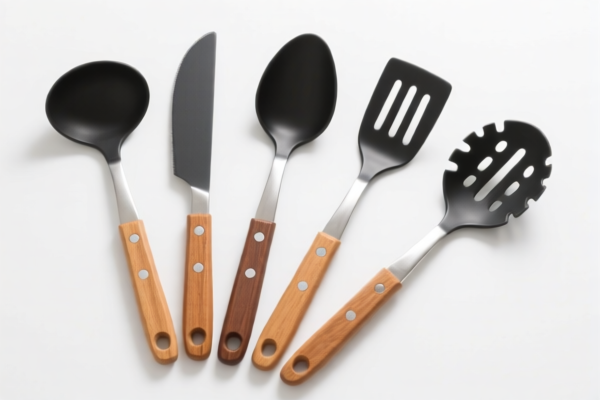
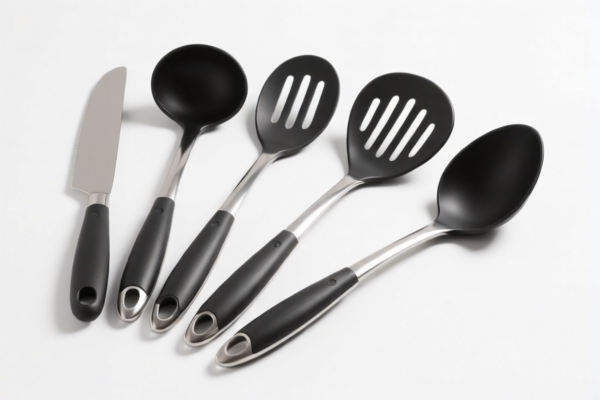
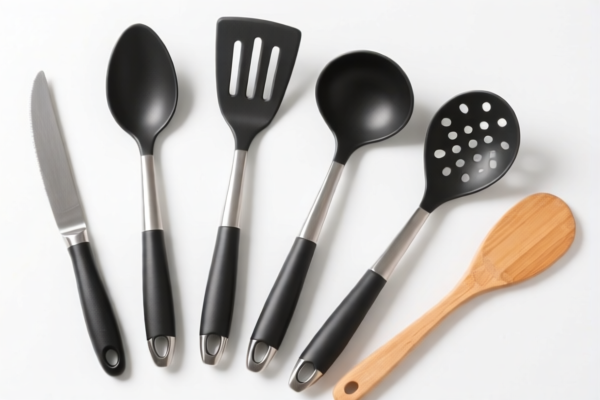

AI分析
🍳 Kitchen Utensil Set (Cookware & Cutlery Sets)
🌐 HS Code Reference & Customs Clearance Guide | 2026 Latest Tariff Analysis | Professional Entry Strategies
📌 I. Product Definition & Classification: Do You Really Understand "Kitchen Utensils"?
A "Kitchen Utensil Set" is a broad category in international trade, encompassing everything from heavy-duty pots and pans to delicate cutlery and serving tools. In customs classification, the key differentiators are Material, Usage, and Form (Set vs. Individual).
1. Cookware Sets (Pots/Pans):
Used for cooking, typically made of iron, steel, or aluminum. Often sold as a bundled set.
2. Tableware/Cutlery Sets:
Used for eating or serving at the table (spoons, forks, knives), often made of stainless steel.
⚠️ Key Classification Point:
- If the set consists primarily of pots/pans (cooking vessels) → Look to Chapter 73 (Iron/Steel) or Chapter 76 (Aluminum).
- If the set consists primarily of cutlery/tablespoons → Look to Chapter 82 (Cutlery).
- Material Matters: The tax rate varies significantly between Iron/Steel (Ch 73/82) and Aluminum (Ch 76).
📦 II. HS Code Classification Details (2026 Latest Tariff Authority)
Based on the provided data, here are the five most likely HS Code matches for a "Kitchen Utensil Set," ranked by material and usage specificity.
| HS Code | Product Description | Primary Material | Form/Usage | Key Identifier |
|---|---|---|---|---|
7323.99.70.00 |
Table, kitchen or other household articles and parts thereof, of iron or steel | Iron or Steel | Set (Cookware) | Heavy-duty cookware sets |
7323.93.00.45 |
Table, kitchen or other household articles and parts thereof, of stainless steel | Stainless Steel (Metal) | Set (Cooking) | General metal cookware sets |
7615.10.30.25 |
Table, kitchen or other household articles and parts thereof, of aluminum; with enamel or non-stick lining | Aluminum | Cookware | Enamel/Non-stick pots |
7615.10.71.80 |
Table, kitchen or other household articles and parts thereof, of aluminum | Aluminum | Cookware | Lightweight aluminum goods |
8215.20.00.00 |
Sets of table or kitchen cutlery | Metal (Mixed/General) | Set (Cutlery/Table) | Spoon/Fork/Knife sets |
🔍 Critical Distinction:
- Cookware (Pots/Pans): Falls under 7323 (Iron/Steel) or 7615 (Aluminum).
- Cutlery (Spoons/Forks): Falls under 8215.
- Misclassification Risk: Declaring an aluminum pot as "Iron/Steel" (7323) will lead to inspection delays. Declaring a stainless steel spoon set as "Aluminum Cookware" (7615) will result in wrong tariff application.
💰 III. 2026 Latest Tariff Rate Breakdown (Including Surcharges)
✅ Applicable Market: United States (US)
✅ Origin: China (CN)
✅ Effective Date: Includes current 122 Section surcharges and Section 301/IEEPA implications
🎯 1. 7323.99.70.00 – Iron/Steel Cookware Sets
| Item | Content |
|---|---|
| Base Duty | 5.3% |
| Section 301 Surtax | 0.0% (Note: Data shows 0.0%, but verify current status) |
| Section 122 Surtax (Steel/Alu/Cu) | 50.0% |
| Total Tax Rate | 65.3% |
| Tax Detail | Base: 5.3% + Section 301: 0.0% + Section 122: 50% |
📌 Explanation:
- Section 122 (10% Steel/Alu/Cu Surtax): The data explicitly mentions a 50% surcharge for steel/aluminum/copper products under Section 122. This is a massive burden.
- Total Cost: You are paying 65.3% on top of the CIF value. This is extremely high.
🎯 2. 7323.93.00.45 – Stainless Steel Cookware Sets
| Item | Content |
|---|---|
| Base Duty | 2.0% |
| Section 301 Surtax | 0.0% |
| Section 122 Surtax (Steel/Alu/Cu) | 50.0% |
| Total Tax Rate | 62.0% |
| Tax Detail | Base: 2.0% + Section 301: 0.0% + Section 122: 50% |
📌 Note:
- Lower base duty than general steel (7323.99), but still hit hard by the 50% Section 122 surcharge.
- Total: 62.0%.
🎯 3. 7615.10.30.25 – Aluminum Cookware (Enamel/Non-Stick)
| Item | Content |
|---|---|
| Base Duty | 3.1% |
| Section 301 Surtax | 7.5% |
| Section 122 Surtax (Steel/Alu/Cu) | 50.0% |
| Total Tax Rate | 70.6% |
| Tax Detail | Base: 3.1% + Section 301: 7.5% + Section 122: 50% |
📌 Warning:
- Aluminum goods attract both Section 301 (7.5%) AND Section 122 (50%).
- Total: 70.6%. This is the highest tax burden in the list. Non-stick coatings do not exempt you from these surcharges.
🎯 4. 7615.10.71.80 – Aluminum Cookware (Lightweight)
| Item | Content |
|---|---|
| Base Duty | 3.1% |
| Section 301 Surtax | 0.0% |
| Section 122 Surtax (Steel/Alu/Cu) | 50.0% |
| Total Tax Rate | 63.1% |
| Tax Detail | Base: 3.1% + Section 301: 0.0% + Section 122: 50% |
📌 Comparison:
- Slightly lower than the enamel version (7615.10.30.25) because it may not trigger the extra 7.5% Section 301 surcharge (depending on specific subheading rules).
- Total: 63.1%. Still very high due to the 50% Section 122.
🎯 5. 8215.20.00.00 – Cutlery Sets (Spoons/Forks/Knives)
| Item | Content |
|---|---|
| Base Duty | "The rate of duty applicable to that article in the set subject to..." |
| Section 301 Surtax | 25.0% |
| Section 122 Surtax | 10.0% |
| Total Tax Rate | Variable (Base + 35.0%) |
| Tax Detail | Base + Section 301: 25% + Section 122: 10% |
📌 Explanation:
- This HS code applies to cutlery sets (tablespoons, forks, knives), NOT pots/pans.
- The total rate is Base Duty + 35%. If the base duty is, for example, 6%, the total would be 41%.
- Lower than Cookware: Cutlery avoids the massive 50% Section 122 surcharge applied to bulk cookware materials, paying only 10% instead.
- Key: Ensure the set is indeed cutlery. If it includes pots, it cannot use this code.
🛠️ IV. Customs Clearance Practical Advice (Real-World Pitfall Guide)
✅ 1. Documentation Checklist (Must-Have)
| Document | Required | Notes |
|---|---|---|
| ✅ Product Specification Sheet | ✔️ | Must list material (e.g., "Carbon Steel," "Aluminum Alloy 3003"), dimensions, and set composition. |
| ✅ Product Photos (Set & Individual Items) | ✔️ | Clearly show if it's a cookware set (pots) or cutlery set (spoons). Crucial for HS Code distinction. |
| ✅ Commercial Invoice | ✔️ | Itemize each piece in the set. Do not just write "Kitchen Set." Write "Set of 5 Pots (Iron)" or "Set of 12 Spoons (Stainless Steel)." |
| ✅ Packing List | ✔️ | Confirm weight and volume. Heavy iron sets attract more scrutiny. |
| ✅ Country of Origin Certificate | ✔️ | Essential for verifying China origin (triggering Section 122/301). |
✅ 2. Declaration Strategy (Key Mnemonic)
🔥 "Material First, Form Second, Don't Mix Cookware with Cutlery!"
| Scenario | Correct Declaration | Wrong Declaration | Consequence |
|---|---|---|---|
| Iron Pots Set | 7323.99.70.00 (Iron/Steel Cookware) |
8215.20.00.00 (Cutlery) |
Audit & Penalty: High risk of misclassification. |
| Aluminum Non-Stick Pan | 7615.10.30.25 (Alu w/ Coating) |
7323.93.00.45 (Steel) |
Inspection Delay: Material mismatch leads to hold. |
| Spoon/Fork Set | 8215.20.00.00 (Cutlery Set) |
7323.99.70.00 (Cookware) |
Wrong Tax: May overpay or underpay duties incorrectly. |
| Mixed Set (Pot + Spoon) | Separate Lines | Single Line "Kitchen Set" | Rejection: Customs will split the shipment, potentially applying highest tax rate to all items. |
✅ 3. Special Handling for High-Tariff Goods
| Issue | Solution |
|---|---|
| 50% Section 122 Surcharge | This is unavoidable for Chinese-made iron/steel/aluminum cookware. Factor this into your pricing immediately. |
| Aluminum vs. Steel | Aluminum (7615) has a slightly lower base (3.1%) but still faces 50% surcharge. Steel (7323) has variable base (2-5%) + 50% surcharge. No significant difference in total tax; both are ~62-65%. |
| Cutlery Advantage | If your "Utensil Set" is mostly spoons/forks, use 8215.20.00.00. Total tax is ~35% + Base, which is much lower than cookware (~65%+). |
🌍 V. Global Market Comparison (2026)
| Market | Recommended HS Code (Cookware) | Approx. Total Tax (China Origin) | Notes |
|---|---|---|---|
| 🇺🇸 USA | 7323.99.70.00 or 7615.10.xxxx |
62% - 70.6% | Heavy Section 122 (50%) + Section 301 penalties. |
| 🇨🇳 China | 7323.99.70.00 |
~10-15% | Standard Import VAT + Duty. No Section 122. |
| 🇪🇺 EU | 7323.99 or 7615.10 |
~0% - 4% | Usually low or zero duty. No Section 122. |
| 🇬🇧 UK | 7323.99 or 7615.10 |
~0% - 4% | Post-Brexit tariff schedules. |
📌 Conclusion:
- The US market is the most expensive due to the 50% Section 122 surcharge on metal cookware.
- EU/UK/China offer significantly better margins.
- Strategy: If targeting the US, consider non-metal materials (e.g., plastic, silicone, bamboo utensils) which fall under different HS codes (e.g., Chapter 39, 44, 42) with 0% Section 122.
📌 VI. Common Mistakes & Pitfalls (Lessons Learned)
❌ Mistake 1: Declaring an Aluminum Pot as "Stainless Steel"
👉 Result: Customs inspection reveals aluminum. Penalty + 50% Surcharge applied retroactively.
❌ Mistake 2: Combining Cutlery and Cookware in One Line Item
👉 Result: Customs may apply the higher tax rate (Cookware ~65%) to the entire set (including cutlery), inflating costs unnecessarily.
❌ Mistake 3: Ignoring the "Set" Definition
👉 Result: If a set contains one item of a different material (e.g., a wooden handle on a steel pan), the entire set may be classified under the dominant material or the component that gives essential character. Be precise.
❌ Mistake 4: Assuming "Kitchen Utensil" is a Single Code
👉 Result: There is no single code. You MUST select based on Material (73 vs 76 vs 82) and Use (Cook vs Eat).
✅ Correct Practice:
"Set of 5 Stainless Steel Pots, 16-20cm diameter, with Glass Lids, Model XYZ. HS: 7323.93.00.45."
"Set of 12 Stainless Steel Tablespoons, Model ABC. HS: 8215.20.00.00."
🎯 VII. Conclusion: Professional Declaration Saves Money!
🎯 Remember the Mnemonic:
🔹 "Steel/Alu Cookware = ~65% Tax (Section 122!)";
🔹 "Cutlery Sets = ~35% Tax (Section 122 Only 10%!)";
🔹 "Non-Metal = Low Tax!"
📌 Pro Tip:
If your product is not made of Iron, Steel, or Aluminum (e.g., Silicone Spatulas, Wooden Spoons, Plastic Containers), you can avoid the 50% Section 122 surcharge.
Recommendation: Consider diversifying into Non-Metal Kitchen Utensils for the US market to drastically reduce customs costs.
📣 Immediate Action:
📞 Verify Material Composition: Is it Iron, Steel, Aluminum, or Stainless Steel?
📞 Define "Set": Is it Cookware (Pots) or Cutlery (Spoons)?
📞 Apply Correct HS Code: Use the table above to select the precise code.
🚀 Optimize Costs: If tax is too high, explore non-metal alternatives or third-party country sourcing (e.g., Vietnam, Mexico) for Section 122 exemptions.
✨ Professional Customs Clearance Starts with Accurate Classification!
💼 Your Profit Margin Depends on Your HS Code!
用户评价
关于 HS 编码归类
协调制度(HS)是由世界海关组织(WCO)制定的国际贸易商品分类标准。全球 200 多个国家采用 HS 系统作为海关关税、贸易统计和进出口监管的基础。
每个 HS 编码遵循以下层级结构:
- 章(2 位)——商品大类(例如:第 84 章:机器和机械设备)
- 品目(4 位)——章内的更具体分类
- 子目(6 位)——国际通用细分,所有 WCO 成员国统一使用
- 本国细分(8-10 位)——各国自行扩展的细分编码,如美国 HTSUS 10 位编码
正确的 HS 编码归类对于顺利通关、准确缴纳关税和遵守贸易法规至关重要。错误归类可能导致海关延误、多缴关税或罚款。
从CN进口到US时,适用的关税税率可能包括:
- 最惠国(MFN)税率——适用于 WTO 成员国的标准关税税率
- 普通税率——适用于无贸易协定国家
- 贸易救济关税——附加关税,如 301 条款(反倾销)、232 条款(国家安全)或反补贴税
本页内容仅供参考。如需正式归类,请咨询当地海关或持牌报关代理。