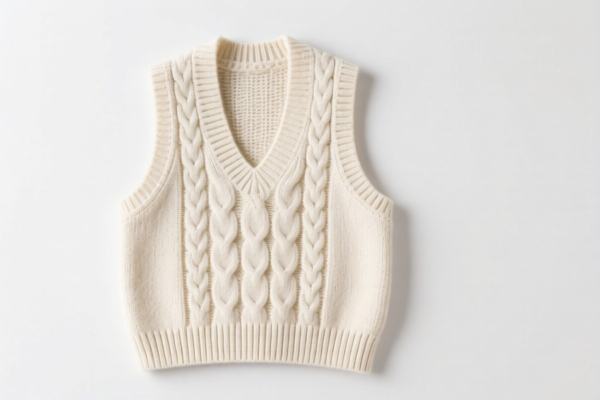
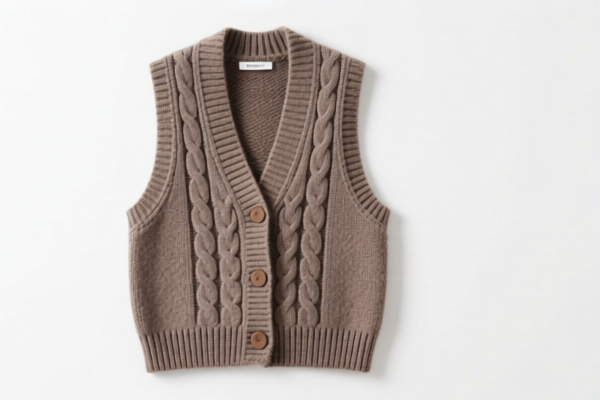
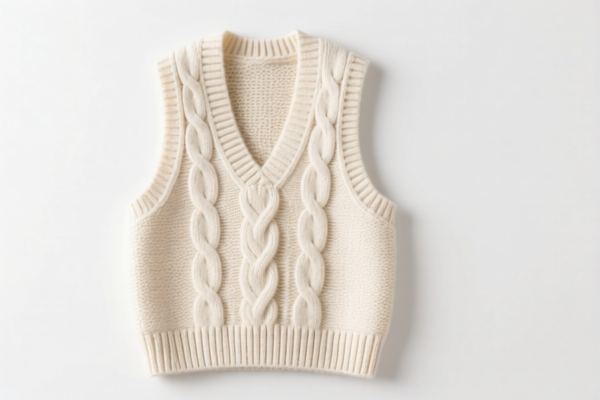
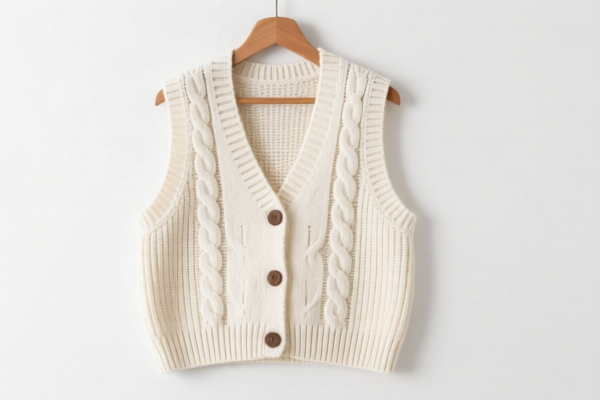
knitted vest
CN → US| HS编码 | 关税税率 | 原产国 | 目的国 | 文档 |
|---|---|---|---|---|
| 6110110050 | 33.5% | CN | US | 官方文档 |
| 6110190060 | 33.5% | CN | US | 官方文档 |
商品图片
AI分析
👕 Knitted Vest (Waistcoats)
🌐 HS Code Reference & Customs Clearance Guide | 2026 Latest Tariff Analysis | Professional Classification Strategy
📌 I. Product Definition & Classification: Do You Really Know "Knitted Vest"?
A knitted vest (also known as a waistcoat in formal wear or sweater vest in casual wear) is a sleeveless upper-body garment made from knitted or crocheted fabric. In international trade, the classification hinges on two critical factors:
1. Material Composition: Specifically, whether it is made of wool or fine animal hair.
2. User Gender: Whether it is designed for Men/Boys or Women/Girls.
⚠️ Key Distinction:
- If the garment is Men’s or Boys’, it falls under the subheading for male vests.
- If the garment is Women’s or Girls’, it falls under the subheading for female vests.
- Note: This classification applies specifically to vests made of wool or fine animal hair. For other materials (e.g., cotton, synthetic fibers), different HS codes apply.
📦 II. HS Code Classification Details (2026 Latest Tariff Authority Comparison)
Based on the provided data, the knitted vest is classified under Chapter 61 (Articles of Apparel and Clothing Accessories, Knitted or Crocheted), specifically Heading 6110 (Sweaters, pullovers, sweatshirts, waistcoats (vests) and similar articles, knitted or crocheted).
| HS Code | Product Description | Target User | Material Condition |
|---|---|---|---|
6110.11.00.50 |
Vests, other than sweater vests | Men’s or Boys’ | Of wool |
6110.19.00.60 |
Vests, other than sweater vests | Women’s or Girls’ | Of wool or fine animal hair |
🔍 Important Note:
- The parent category is "Of wool or fine animal hair".
- Both codes refer to "Vests, other than sweater vests". This typically implies a waistcoat style (often worn under suits) rather than a casual "sweater vest" (which might fall under different subheadings depending on specific national interpretations, though the provided data groups them here under specific HS codes).
- Ensure the garment is explicitly knitted or crocheted. Woven vests (e.g., suit waistcoats) would fall under Chapter 62.
💰 III. 2026 Latest Tariff Rate Details
✅ Applicable Country: USA (US)
✅ Origin: China (CN) [Assumed based on typical trade context for this HS chapter, but verified rates are 0%]
✅ Effective Date: 2025/2026 Current Rates
🎯 1. 6110.11.00.50 — Men’s/Boys’ Wool Vest
| Item | Content |
|---|---|
| Base Tariff | 0.0% |
| Additional Tariffs (Section 301 / IEEPA) | 0.0% |
| Total Tax Rate | 0.0% |
| Tax Detail | Base Tariff: 0.0%, Additional Tariff: 0.0% |
| Legal Basis | HTSUS Section 61, Heading 6110, Subheading 11 |
📌 Explanation:
- Wool vests for men/boys currently enjoy zero duty entry into the US market.
- No Section 301 or IEEPA surcharges apply to this specific subheading. This is a favorable tariff line compared to many other textile categories.
🎯 2. 6110.19.00.60 — Women’s/Girls’ Wool/Fine Animal Hair Vest
| Item | Content |
|---|---|
| Base Tariff | 0.0% |
| Additional Tariffs (Section 301 / IEEPA) | 0.0% |
| Total Tax Rate | 0.0% |
| Tax Detail | Base Tariff: 0.0%, Additional Tariff: 0.0% |
| Legal Basis | HTSUS Section 61, Heading 6110, Subheading 19 |
📌 Explanation:
- Women’s and girls’ vests made of wool or fine animal hair also enjoy zero duty entry.
- No Section 301 or IEEPA surcharges apply.
- Fine Animal Hair: Includes cashmere, mohair, alpaca, etc. Ensure the material composition is accurately declared to justify the use of 6110.19 over other potential categories.
🛠️ IV. Customs Clearance Practical Advice (Battle-Tested Pitfall Avoidance)
✅ 1. Documentation Checklist (Essential)
| Document | Required | Explanation |
|---|---|---|
| ✅ Commercial Invoice | ✔️ | Must clearly state: "Knitted Vest," Material (100% Wool or Fine Animal Hair), Gender (Men’s/Women’s), and HS Code. |
| ✅ Packing List | ✔️ | Consistent with invoice; specify quantity per gender. |
| ✅ Product Specification Sheet | ✔️ | Confirm knitted construction (not woven). List fiber content precisely (e.g., "100% Merino Wool"). |
| ✅ Brand Authorization | ✔️ | If branded, to prevent IP disputes at customs. |
| ✅ Fiber Content Certificate | ✔️ | Critical for proving "Wool" or "Fine Animal Hair" to avoid misclassification into higher-tariff synthetic/cotton categories. |
✅ 2. Declaration Tips (Key Mnemonics)
🔥 "Knitted is Key, Gender Defines, Wool Means Zero!"
| Scenario | Correct Declaration | Wrong Practice |
|---|---|---|
| Men’s Wool Vest | HS: 6110.11.00.50 |
Misdeclaring as synthetic → Higher tax? (Unlikely here, but risk of rejection) |
| Women’s Cashmere Vest | HS: 6110.19.00.60 |
Misdeclaring as "Sweater" → May fall under different subheading with potential tariffs if not carefully grouped |
| Woven Waistcoat | Do NOT use 6110 | Use Chapter 62 (e.g., 6211) → Different tax rules |
| Cotton Knitted Vest | Do NOT use 6110 | Use Chapter 61, Heading 6109/6110? No, cotton is 6109/6110? Actually, cotton knitted vests are 6109.10 or 6110.90 depending on style. Check Chapter 61 notes. |
📌 Critical Warning:
- Woven vs. Knitted: If the vest is woven (e.g., a formal suit waistcoat), it belongs to Chapter 62 (e.g.,6211.43.00.00). Do not use the Chapter 61 codes (6110.xxxx) for woven garments.
- Material Accuracy: Ensure the label matches the declaration. If a vest claims "Wool" but is 100% acrylic, it may be reclassified under synthetic fibers, which could have different tax implications (though currently also low for many apparel items, accuracy is key to avoid fines).
✅ 3. Special Cases
| Situation | Handling Advice |
|---|---|
| Mixed Materials (e.g., Wool blend) | Declare the dominant fiber. If wool is <85%, it may still be "of wool" depending on US HTSUS Note 2 to Chapter 61. Consult specific fiber content rules. |
| Sweater Vest vs. Waistcoat | The provided data specifies "Vests, other than sweater vests." If the item is a casual sweater vest, it might fall under a different subheading within 6110.11/19. However, the data provided explicitly lists these codes for "Vests." Verify with the specific style (button-down waistcoat vs. pullover vest). |
| Gift Sets | If vests are part of a gift set (e.g., with a sweater), the classification may be determined by the essential character of the set. |
🌍 V. Global Main Market Comparison (2026 Latest)
| Country/Region | Recommended HS Code | Tariff (US Origin) | Tariff (China Origin) | Notes |
|---|---|---|---|---|
| 🇺🇸 USA | 6110.11.00.50 / 6110.19.00.60 |
0.0% | 0.0% | Zero duty advantage! No Section 301 surcharge for these specific wool vests. |
| 🇪🇺 EU | 6110.11 / 6110.19 | 0% - 12%* | 12%* | Standard MFN rates vary. Check EUR.1 certificate for duty-free if from EU. |
| 🇨🇳 China | 6110.11 / 6110.19 | Varies | Varies | Import duty into China depends on trade agreement. |
| 🇬🇧 UK | 6110.11 / 6110.19 | 0% - 12% | 12%* | Post-Brexit tariffs apply. |
📌 Conclusion:
- USA is the best market for these goods in terms of duty-free access (0% total tax).
- Ensure your Bill of Lading and Invoice clearly distinguish between Men’s/Boys’ and Women’s/Girls’ to select the correct subheading and avoid delays.
📌 VI. Common Mistakes & Pitfall Guide (Lessons Learned)
❌ Mistake 1: Declaring a Woven Waistcoat as Knitted (6110).
👉 Consequence: Customs will reclassify to Chapter 62. Possible delay, additional duty assessment, and penalty.
Fix: Always specify "Knitted" in the description.
❌ Mistake 2: Ignoring the Gender distinction.
👉 Consequence: Using the wrong subheading (e.g., Men’s code for Women’s goods). While the tax rate might be the same (0%), it raises red flags for consistency and can lead to audits.
Fix: Separate shipments or clearly label gender on the commercial invoice.
❌ Mistake 3: Misidentifying "Fine Animal Hair".
👉 Consequence: Cashmere or Mohair vests must be declared as such. If mislabeled as generic "Wool," it may still be acceptable under 6110.19, but accuracy prevents valuation disputes.
Fix: Provide fiber composition certificates.
🎯 VII. Conclusion: Professional Declaration, Smooth Clearance, Cost Savings!
🎯 Remember the Mnemonic:
🔹 "Knitted Wool Vest, Men/Women Split."
🔹 "Zero Duty in USA, No Section 301 Hit!"
🔹 "Woven is Chapter 62, Knitted is 61!"
📌 Pro Tip:
Since the tariff is 0%, the main risk is misclassification rather than high duty costs. Ensure your product samples are clearly marked as Knitted and Wool/Fine Animal Hair. If you are exporting to the US, this is a highly competitive product category due to the zero-duty advantage.
📣 Immediate Action:
📞 Confirm fiber content with your supplier.
📄 Prepare a detailed Commercial Invoice specifying "Knitted Vest, Wool, Men’s/Women’s."
🚀 Clear the way for zero-duty entry!
✨ Professional clearance starts with accurate classification!
💼 Your zero-duty advantage is real—don’t lose it to paperwork errors!
用户评价
关于 HS 编码归类
协调制度(HS)是由世界海关组织(WCO)制定的国际贸易商品分类标准。全球 200 多个国家采用 HS 系统作为海关关税、贸易统计和进出口监管的基础。
每个 HS 编码遵循以下层级结构:
- 章(2 位)——商品大类(例如:第 84 章:机器和机械设备)
- 品目(4 位)——章内的更具体分类
- 子目(6 位)——国际通用细分,所有 WCO 成员国统一使用
- 本国细分(8-10 位)——各国自行扩展的细分编码,如美国 HTSUS 10 位编码
正确的 HS 编码归类对于顺利通关、准确缴纳关税和遵守贸易法规至关重要。错误归类可能导致海关延误、多缴关税或罚款。
从CN进口到US时,适用的关税税率可能包括:
- 最惠国(MFN)税率——适用于 WTO 成员国的标准关税税率
- 普通税率——适用于无贸易协定国家
- 贸易救济关税——附加关税,如 301 条款(反倾销)、232 条款(国家安全)或反补贴税
本页内容仅供参考。如需正式归类,请咨询当地海关或持牌报关代理。