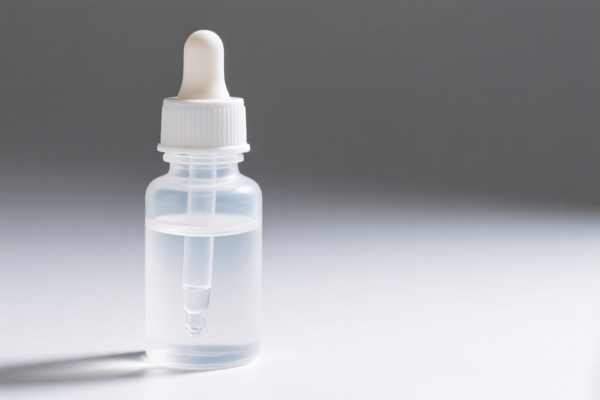
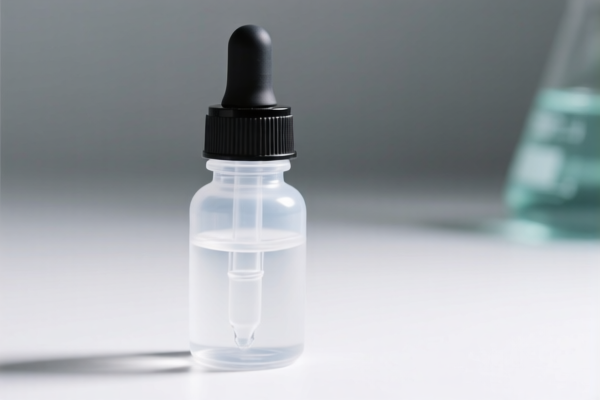
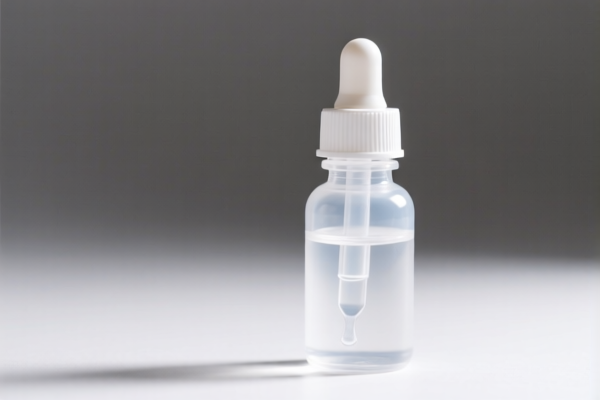
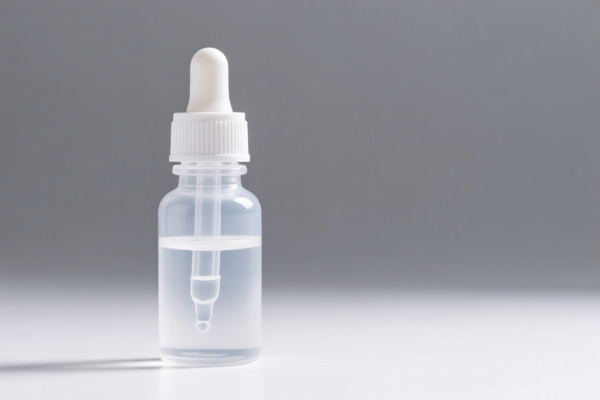
laboratory plastic dropper bottle
CN → US| HS编码 | 关税税率 | 原产国 | 目的国 | 文档 |
|---|---|---|---|---|
| 3923300010 | 38.0% | CN | US | 官方文档 |
| 3926909989 | 22.8% | CN | US | 官方文档 |
| 3926909910 | 22.8% | CN | US | 官方文档 |
| 3923300090 | 38.0% | CN | US | 官方文档 |
| 9011800000 | 35.0% | CN | US | 官方文档 |
商品图片
AI分析
🧪 Laboratory Plastic Dropper Bottle (Labware/Chemical Containers)
🌐 HS Code Reference & Customs Clearance Guide | 2026 Latest Tariff Analysis | Professional Clearance Strategy
📌 I. Product Definition & Classification: Do You Really Understand the "Dropper Bottle"?
A plastic dropper bottle is a versatile container used in laboratories, cosmetics, and chemical industries. Its classification depends heavily on its primary function and structural design:
- Packaging Container: If the bottle is primarily used for general packaging (e.g., cosmetics, reagents) and features a standard closure system, it falls under packaging articles.
- Specialized Laboratory Ware: If designed specifically for precise chemical handling, titration, or lab storage, it may be classified as laboratory equipment or parts thereof.
- Optical Accessory: Rarely, if it is an integral, non-separable part of an optical microscope system (e.g., immersion oil reservoir), it might be grouped with optical instruments.
⚠️ Key Distinction Point:
- If it is a standalone container for holding liquids, generally used for packaging or general lab storage → Refer to 3923.30 or 3926.90.
- If it is an accessory to a microscope (e.g., for holding immersion oil attached to the scope) → Refer to 9011.80.
📦 II. HS Code Classification Details (2026 Latest Tariff Authority Comparison)
| HS Code | Product Description | Applicable Scenario | Tax Rate |
|---|---|---|---|
3923.30.00.10 |
Plastic bottles, articles for the conveyance or packaging of goods (specifically "Plastic Dropper Bottles") | General packaging, cosmetic bottles, reagent packaging | 38.0% |
3923.30.00.90 |
Plastic bottles, articles for conveyance/packaging (Other than above) | Other plastic packaging bottles | 38.0% |
3926.90.99.89 |
Other plastic articles (Not elsewhere specified) | General plastic lab containers, not strictly "packaging" | 22.8% |
3926.90.99.10 |
Laboratory ware / Chemical containers (Plastic) | Specific lab use, chemical storage, precise lab instruments | 22.8% |
9011.80.00.00 |
Parts and accessories of optical microscopes | Dropper bottles integrated into/for optical microscopes | 35.0% |
🔍 Key Reminder:
- Packaging vs. Labware: Customs often scrutinizes whether the item is for "packaging" (3923) or "specialized lab use" (3926). The intent of use and labeling matter.
- Microscope Parts: If the bottle is not sold as a standalone product but as a part of a microscope kit, it may fall under 9011.80.
💰 III. 2026 Latest Tariff Rate Detailed Breakdown (Including Surtaxes & Policy Add-ons)
✅ Applicable Country: United States (US)
✅ Origin: China (CN)
✅ Effective Time: 2025 Nov 10 onwards (including subsequent imports)
🎯 1. 3923.30.00.10 & 3923.30.00.90 —— Plastic Bottles (Packaging)
| Item | Content |
|---|---|
| Basic Tariff | 3.0% (ad valorem) |
| Surtax (Section 301) | +25.0% |
| IEEPA Surtax | +10.0% (Targeting China/HK products, from 2025 Nov 10) |
| Total Tariff Rate | 38.0% |
| Tax Calculation | CIF Value × 38.0% |
| De Minimis Exemption | ❌ Not Eligible (deny_de_minimis) |
| Legal Basis Path | IEEPA:9903.01.25 → USITC:3923.30.00.10 → FOOTNOTE:3923.30 |
📌 Explanation:
- The 25% surtax is from the Section 301 trade remedy measures.
- The 10% IEEPA surtax is an additional penalty on Chinese-origin goods under the International Emergency Economic Powers Act.
- Total 38% is high for plastic packaging. Clear labeling as "Packaging" is required.
🎯 2. 3926.90.99.89 & 3926.90.99.10 —— Other Plastic Articles / Laboratory Ware
| Item | Content |
|---|---|
| Basic Tariff | 5.3% (ad valorem) |
| Surtax (Section 301) | +7.5% |
| IEEPA Surtax | +10.0% (Targeting China/HK products, from 2025 Nov 10) |
| Total Tariff Rate | 22.8% |
| Tax Calculation | CIF Value × 22.8% |
| De Minimis Exemption | ❌ Not Eligible (deny_de_minimis) |
| Legal Basis Path | IEEPA:9901.25 → IEEPA:9903.01.24 → USITC:3926.90.99.10 → FOOTNOTE:3926.90 |
📌 Note:
- Classifying as Laboratory Ware (3926.90.99.10) significantly reduces the base rate and surtax compared to packaging.
- To qualify, you must prove specialized lab use (e.g., chemical resistance, precision graduations, lab-specific labeling).
- Savings: 22.8% vs. 38.0% = 15.2% difference. This is a major cost-saving opportunity if justified.
🎯 3. 9011.80.00.00 —— Parts & Accessories of Microscopes
| Item | Content |
|---|---|
| Basic Tariff | 0.0% (ad valorem) |
| Surtax (Section 301) | +25.0% |
| IEEPA Surtax | +10.0% (Targeting China/HK products, from 2025 Nov 10) |
| Total Tariff Rate | 35.0% |
| Tax Calculation | CIF Value × 35.0% |
| De Minimis Exemption | ❌ Not Eligible (deny_de_minimis) |
| Legal Basis Path | IEEPA:9903.01.25 → USITC:9011.80.00.00 → FOOTNOTE:9011.80 |
📌 Analysis:
- While the basic rate is 0%, the high surtaxes push the total to 35%.
- Only applicable if the bottle is clearly defined as a part/accessory of a microscope (e.g., sold together with a microscope, or specifically designed for it).
- Risk: If classified as packaging, it jumps to 38%. If classified as general labware, it drops to 22.8%. 22.8% is the lowest option.
🛠️ IV. Customs Clearance Practical Advice (Real-World Pitfall Avoidance Guide)
✅ 1. Required Documents Checklist (缺一不可)
| Document | Mandatory | Description |
|---|---|---|
| ✅ Product Specifications | ✔️ | Material (e.g., PP, PE, LDPE), capacity, closure type, chemical resistance |
| ✅ Usage Declaration | ✔️ | Clearly state: "Laboratory Use," "Chemical Storage," or "Packaging" |
| ✅ Product Photos | ✔️ | Show graduation marks, dropper mechanism, and any lab-specific branding |
| ✅ Commercial Invoice | ✔️ | Accurate description matching HS Code logic |
| ✅ Packing List | ✔️ | Separate line items if sold with microscopes |
| ✅ Third-Party Test Report | ✔️ | FDA compliance (if food/cosmetic), Chemical resistance tests |
✅ 2. Declaration Tips (Key Mnemonic)
🔥 "Lab Use, Lower Tax; Packaging, Higher Tax; Microscope, Middle Tax!"
| Scenario | Correct Declaration | Wrong Approach |
|---|---|---|
| General chemical storage, lab-specific | 3926.90.99.10 (22.8%) |
Calling it "Packaging" → 38.0% |
| Cosmetic bottle, general retail use | 3923.30.00.10 (38.0%) |
Calling it "Lab Ware" to avoid tax → Audit Risk |
| Sold with a microscope kit | 9011.80.00.00 (35.0%) |
Separating bottle as packaging → 38.0% |
| Standalone plastic bottle | 3926.90.99.10 (22.8%) |
Generic "Plastic Container" → 22.8% (Best Option) |
✅ 3. Special Circumstances Handling
| Situation | Handling Advice |
|---|---|
| OEM Lab Bottles | Provide design specs showing chemical resistance and precision. Avoid "cosmetic" keywords. |
| Bottles for Cosmetics | Must declare as 3923.30 (Packaging). High tax is unavoidable. |
| Mixed Container | If sold with microscope, declare bottle as part of 9011.80. If standalone, use 3926.90. |
| Material Declaration | Specify exact plastic type (PP vs. PE). Some plastics have different chemical resistance profiles affecting classification. |
🌍 V. Global Major Market Customs Comparison (2026 Latest)
| Country/Region | Recommended HS Code | Tariff (China Origin) | Certification | Notes |
|---|---|---|---|---|
| 🇺🇸 USA | 3926.90.99.10 |
22.8% | FDA (if applicable) | Lowest tariff for lab use. Avoid "Packaging" classification. |
| 🇨🇳 China | 3926.90.99.10 |
~5-6% | CCC (if applicable) | Low tariff, stable policy. |
| 🇪🇺 EU | 3926.90.99 |
~6% | CE (if applicable) | No Section 301/IEEPA equivalent. |
| 🇦🇺 Australia | 3926.90.99 |
~5% | ADR (if chemical) | No high surtaxes. |
| 🇯🇵 Japan | 3926.90.99 |
~0-5% | PSE (if electrical) | Generally low tariffs. |
📌 Conclusion:
- USA has the highest complexity due to surtaxes.
- Strategic Advantage: Classifying as "Laboratory Ware" (3926.90.99.10) saves 15.2% compared to packaging classification.
- Actionable Advice: Ensure product labeling and marketing materials emphasize "Laboratory," "Chemical Resistant," "Scientific Use" rather than "Cosmetic" or "General Packaging."
📌 VI. Common Errors & Pitfall Guide (Blood Lessons)
❌ Error 1: Declaring lab bottles as "Packaging" to simplify | 📉 Result: Higher tariff (38.0% vs 22.8%)
👉 Fix: Prove specialized lab use with technical specs.
❌ Error 2: Declaring standalone bottles as "Microscope Parts" | ⚠️ Result: Customs rejection if not part of a scope kit | 📉 Result: 35.0% (still higher than 22.8%)
👉 Fix: Only use 9011.80 if sold with microscopes.
❌ Error 3: Ignoring IEEPA 10% surtax in cost calculation | 💸 Result: Margin erosion |
👉 Fix: Include all surtaxes (301 + IEEPA) in CIF costing.
❌ Error 4: Using vague descriptions like "Plastic Bottle" | 🚫 Result: Customs audit & delay |
👉 Fix: Use precise terms: "Polypropylene Laboratory Dropper Bottle, Chemical Resistant."
✅ Correct Practice:
"Lab-Grade PP Dropper Bottle, 30ml, Graduated, Chemical Resistant, For Laboratory Reagent Storage, Model LAB-30, Non-Cosmetic Use"
🎯 VII. Conclusion: Professional Declaration, Cost Savings, Efficiency!
🎯 Remember the Mnemonic:
🔹 "Lab Use Wins, Packaging Costs, Microscope Mixes!"
🔹 "HS Code Saves 15%, Declaration Avoids Fines!"
📌 Pro Tip:
If your dropper bottles are originally from Vietnam, Thailand, or Malaysia, you may qualify for IEEPA exemptions or lower 301 rates.
Recommendation: Apply for a Binding Ruling (Advance Ruling) from US CBP to confirm 3926.90.99.10 classification before shipment.
📣 Immediate Action:
📞 Contact a professional customs broker + Provide technical specs + Request HS Code Pre-ruling
🚀 Let your lab bottles clear customs smoothly, save costs, and boost margins!
✨ Professional clearance starts with accurate classification!
💼 Every cent of tariff is worth calculating precisely!
用户评价
关于 HS 编码归类
协调制度(HS)是由世界海关组织(WCO)制定的国际贸易商品分类标准。全球 200 多个国家采用 HS 系统作为海关关税、贸易统计和进出口监管的基础。
每个 HS 编码遵循以下层级结构:
- 章(2 位)——商品大类(例如:第 84 章:机器和机械设备)
- 品目(4 位)——章内的更具体分类
- 子目(6 位)——国际通用细分,所有 WCO 成员国统一使用
- 本国细分(8-10 位)——各国自行扩展的细分编码,如美国 HTSUS 10 位编码
正确的 HS 编码归类对于顺利通关、准确缴纳关税和遵守贸易法规至关重要。错误归类可能导致海关延误、多缴关税或罚款。
从CN进口到US时,适用的关税税率可能包括:
- 最惠国(MFN)税率——适用于 WTO 成员国的标准关税税率
- 普通税率——适用于无贸易协定国家
- 贸易救济关税——附加关税,如 301 条款(反倾销)、232 条款(国家安全)或反补贴税
本页内容仅供参考。如需正式归类,请咨询当地海关或持牌报关代理。