leather conveyor belt
CN → US| HS编码 | 关税税率 | 原产国 | 目的国 | 文档 |
|---|---|---|---|---|
| 3926906090 | 39.2% | CN | US | 官方文档 |
| 5910009000 | 37.6% | CN | US | 官方文档 |
| 5910001090 | 39.0% | CN | US | 官方文档 |
| 3926905900 | 37.4% | CN | US | 官方文档 |
| 3926905500 | 40.1% | CN | US | 官方文档 |
商品图片
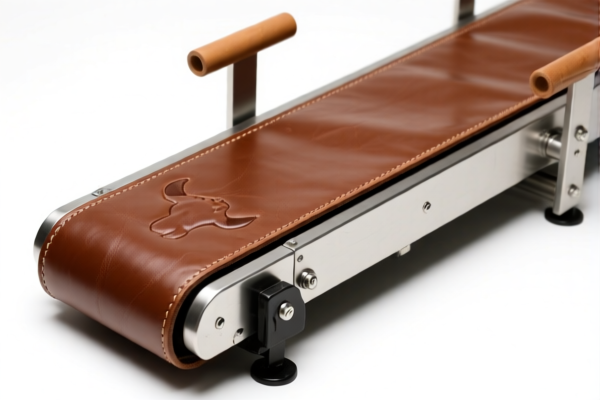
AI分析
🏭 Leather Conveyor Belt: The "Synthetic Leather" Classification Trap & Duty Breakdown
🌐 HS Code Reference & Customs Clearance Guide | 2026 Updated Tariff Analysis | Critical Compliance Strategy
📌 I. Product Definition: Why "Leather" Doesn't Mean "Animal Hide" Here?
In international trade, a "Leather Conveyor Belt" almost always refers to a belt made of Synthetic Leather (PU/PVC/Plastic) or Fabric-reinforced Composite, NOT genuine animal hide.
The Classification Dilemma:
海关 (Customs) does not treat "Synthetic Leather" as a single category. Depending on the manufacturing process and primary material structure, it falls into two vastly different HS Code buckets with different tariff burdens:
- Chapter 39 (Plastics/Rubber): If the belt is primarily plastic/synthetic material-based.
- Chapter 59 (Textiles/Impregnated Fabrics): If the belt is primarily textile-based with synthetic leather coating.
⚠️ Key Distinction Point:
- If the core is plastic/extruded synthetic material → Chapter 39 (Higher Base Tariff ~4-5%)
- If the core is woven fabric/textile coated with synthetic leather → Chapter 59 (Lower Base Tariff ~2.6-4%)
📦 2. HS Code Classification Details (2026 Latest Tariff Alignment)
Based on the provided , here are the 4 possible HS Codes for "Synthetic Leather Conveyor Belts" and why they apply:
| HS Code | Product Description & Logic | Material Category | Total Tax Rate |
|---|---|---|---|
3926.90.60.90 |
Other Articles of Plastic: | ||
| Synthetic leather conveyor belt viewed as a "plastic article" (e.g., molded or non-reinforced plastic leather). | Plastic/Synthetic Material | 39.2% | |
5910.00.90.00 |
Transmission Belts of Textile Material: | ||
| Synthetic leather belt where the base is textile/fabric and coated with synthetic leather. Matches the definition of "textile-made transmission belts." | Textile/Non-Metallic | 37.6% | |
5910.00.10.90 |
Artificial Fiber Belts: | ||
| Synthetic leather belt made of artificial/synthetic fibers. Matches the specific sub-category for artificial fiber transmission belts. | Artificial/Synthetic Fiber | 39.0% | |
3926.90.59.00 |
Other Plastic Articles (Transmission Belts): | ||
| Synthetic leather belt classified as a plastic transmission belt/pulley belt. Fits the "catch-all" for plastic传动带. | Plastic/Synthetic Material | 37.4% | |
3926.90.55.00 |
Plastic Transmission Belts (Specific): | ||
| Conveyor belt explicitly categorized as a mechanical transmission belt under plastic products. A "bottom-match" for plastic drive belts. | Plastic/Synthetic Material | 40.1% |
🔍 Critical Note:
-3926.90.55.00has the HIGHEST total tax (40.1%) due to a higher base tariff (5.1%).
-3926.90.59.00is the LOWEST among plastic categories (37.4%).
-5910.00.90.00is the LOWEST overall if classified as textile-based (37.6%).
- All rates include US Section 301 Tariffs (25%) + Section 122 Tariffs (10%) + Base Tariff.
💰 3. Detailed Tariff Breakdown (2026 US Import Rules for China Origin)
✅ Applicable Country: United States (US)
✅ Origin: China (CN)
✅ Effective Date: Post-2025 Trade Policy Adjustments
🎯 1. Chapter 39: Plastic-Based Synthetic Leather Belts
(Includes Codes: 3926.90.60.90, 3926.90.59.00, 3926.90.55.00)
| Tax Component | Rate | Source/Legal Basis |
|---|---|---|
| Base Tariff | 2.4% – 5.1% | HTSUS Chapter 39 General Rate |
| Section 301 Tariff | +25.0% | USITC Footnote 9903.88.01 (China-specific) |
| Section 122 Tariff | +10.0% | IEEPA/Trade Act provisions (China-specific) |
| 🔴 TOTAL RATE | 37.4% – 40.1% | Varies by specific plastic sub-category |
📌 Explanation:
- Base Tariff: Varies because "Plastic Articles" (3926.90) have different sub-headings for "Other" vs. "Transmission Belts."
- 301 Tariff (25%): Applies to nearly all Chinese plastic products.
- 122 Tariff (10%): Additional surcharge on Chinese goods.
- Result: A $10,000 shipment costs $3,740 – $4,010 in duties alone.
🎯 2. Chapter 59: Textile-Based Synthetic Leather Belts
(Includes Codes: 5910.00.90.00, 5910.00.10.90)
| Tax Component | Rate | Source/Legal Basis |
|---|---|---|
| Base Tariff | 2.6% – 4.0% | HTSUS Chapter 59 General Rate |
| Section 301 Tariff | +25.0% | USITC Footnote 9903.88.01 (China-specific) |
| Section 122 Tariff | +10.0% | IEEPA/Trade Act provisions (China-specific) |
| 🔴 TOTAL RATE | 37.6% – 39.0% | Lower base tariff, but still high |
📌 Explanation:
- Base Tariff: Chapter 59 (Textiles) generally has lower base rates (2.6-4.0%) than Chapter 39 (Plastics, up to 5.1%).
- 301 & 122 Tariffs: Same 25% + 10% surcharges apply.
- Result: A $10,000 shipment costs $3,760 – $3,900 in duties.
🛠️ 4. Customs Clearance Practical Advice (How to Avoid Errors)
✅ 1. Documentation Checklist (Must-Haves)
| Document | Requirement | Why It Matters |
|---|---|---|
| ✅ Product Specification Sheet | ✔️ | Must specify: Core Material (Plastic vs. Fabric) and Surface (Synthetic Leather/PU). |
| ✅ Cross-Section Photo/Diagram | ✔️ | CRITICAL: Shows if the belt is solid plastic (Chapter 39) or fabric-reinforced (Chapter 59). |
| ✅ Commercial Invoice | ✔️ | Must clearly state: "Conveyor Belt, Synthetic Leather, [Plastic/Fabric] Core, for Industrial Use." |
| ✅ Bill of Lading | ✔️ | Match HS Code description exactly. |
| ✅ Material Certificate | ✔️ | Proves the "leather" is synthetic/plastic, NOT animal hide (which would have different duties). |
✅ 2. Classification Strategy (Avoid Over-Taxation)
🔥 Golden Rule:
"Material Core Dictates Chapter: Plastic → Ch39, Fabric → Ch59."
| Scenario | Recommended HS Code | Why? | Risk of Wrong Code |
|---|---|---|---|
| Solid Plastic Belt (No fabric) | 3926.90.59.00 (37.4%) |
Best rate for plastic belts. | 3926.90.55.00 (40.1%) → +2.7% extra duty |
| Fabric-Reinforced Belt | 5910.00.90.00 (37.6%) |
Lower base tariff than plastic. | Misclassified as Plastic → +2.5% extra duty |
| Artificial Fiber Belt | 5910.00.10.90 (39.0%) |
Specific for synthetic fibers. | Must prove "artificial fiber" composition. |
📌 Warning:
- Do NOT use "Leather" (Chapter 41) unless it is genuine animal hide.
- Do NOT use "Rubber" (Chapter 40) unless it is solid rubber.
- Synthetic Leather = Plastic or Textile.
✅ 3. Special Cases
| Situation | Action |
|---|---|
| OEM Custom Belt | Provide design specs showing material layers. |
| Mixed Package (Belt + Parts) | Declare belt separately. Parts may have different HS codes. |
| Used/Refurbished Belt | Still subject to same HS code + duties. |
| Non-China Origin | If made in Vietnam/Thailand, Section 301 & 122 tariffs may not apply → Drastic duty savings! |
🌍 5. Global Market Comparison (2026)
| Country | Recommended HS Code | Base Duty | US Extra Tariffs | Total Cost Impact |
|---|---|---|---|---|
| 🇺🇸 USA | 3926.90.59.00 or 5910.00.90.00 |
2.6-5.1% | +35% (301+122) | 37.4-40.1% |
| 🇨🇳 China (Import) | 4010.39.00.00 (Rubber) or 5910.00.00.00 |
5-10% | None | ~5-10% |
| 🇪🇺 EU | 4010.39 or 5910.00 |
0-2% | None | ~0-2% |
| 🇻🇳 Vietnam | Same HS | 0% | None (if local origin) | 0% |
📌 Conclusion:
- US Market is the most expensive for Chinese-made synthetic leather belts due to 35%+ surcharges.
- EU and China have significantly lower base duties.
- Sourcing from Vietnam/Thailand can eliminate 35% of tariffs entirely.
📌 6. Common Mistakes & Pitfalls (Learn from Others)
❌ Mistake 1: Classifying as "Genuine Leather" (Chapter 41)
👉 Result: Rejected by Customs. Synthetic leather is NOT Chapter 41. Penalty + Retaxation.
❌ Mistake 2: Using 3926.90.55.00 when 3926.90.59.00 applies
👉 Result: Overpaying 2.7% duty. Always check if the belt is a "specific transmission belt" (55) or "other plastic article" (59).
❌ Mistake 3: Ignoring the "Core Material"
👉 Result: If fabric-core but declared as plastic, Customs may audit and apply the higher rate or fine for misdeclaration.
✅ Correct Declaration Example:
"Conveyor Belt, Synthetic Leather (PU Coated), Fabric Core, for Industrial Machinery, Model XYZ, HS 5910.00.90.00"
🎯 7. Final Recommendation: Save Costs & Stay Compliant
🎯 Key Takeaways:
🔹 "Synthetic Leather = Plastic or Textile, NOT Animal."
🔹 Check Core Material: Plastic → Ch39, Fabric → Ch59.
🔹 Lowest US Duty:3926.90.59.00(37.4%) or5910.00.90.00(37.6%).
🔹 Avoid3926.90.55.00(40.1%) unless specifically required.
🔹 Consider Non-China Origin: Vietnam/Thailand can save 35% in duties.
📌 Pro Tip:
If your synthetic leather belt is fabric-reinforced, always aim for
5910.00.90.00. It often has a lower base tariff than plastic equivalents, resulting in a slightly lower total duty (37.6% vs 37.4-40.1% depending on plastic sub-code).
📣 Immediate Action:
📞 Get a Pre-Ruling: Submit product specs to a customs broker for an Advance Ruling before shipping.
📦 Photograph the Cross-Section: Keep this as proof of material core (Plastic vs. Fabric).
🚀 Optimize Supply Chain: If tariffs are too high, consider sourcing from Vietnam or Thailand to bypass US surcharges.
✨ Precision in Classification = Savings in Duty.
💼 Don't let 35% in tariffs eat your margin. Get the HS Code right.
用户评价
关于 HS 编码归类
协调制度(HS)是由世界海关组织(WCO)制定的国际贸易商品分类标准。全球 200 多个国家采用 HS 系统作为海关关税、贸易统计和进出口监管的基础。
每个 HS 编码遵循以下层级结构:
- 章(2 位)——商品大类(例如:第 84 章:机器和机械设备)
- 品目(4 位)——章内的更具体分类
- 子目(6 位)——国际通用细分,所有 WCO 成员国统一使用
- 本国细分(8-10 位)——各国自行扩展的细分编码,如美国 HTSUS 10 位编码
正确的 HS 编码归类对于顺利通关、准确缴纳关税和遵守贸易法规至关重要。错误归类可能导致海关延误、多缴关税或罚款。
从CN进口到US时,适用的关税税率可能包括:
- 最惠国(MFN)税率——适用于 WTO 成员国的标准关税税率
- 普通税率——适用于无贸易协定国家
- 贸易救济关税——附加关税,如 301 条款(反倾销)、232 条款(国家安全)或反补贴税
本页内容仅供参考。如需正式归类,请咨询当地海关或持牌报关代理。