leisure woven handbag
CN → US| HS编码 | 关税税率 | 原产国 | 目的国 | 文档 |
|---|---|---|---|---|
| 4202224020 | 42.4% | CN | US | 官方文档 |
| 4202228980 | 52.6% | CN | US | 官方文档 |
| 4602192920 | 40.3% | CN | US | 官方文档 |
| 4602112100 | 41.2% | CN | US | 官方文档 |
| 6307908940 | 17.0% | CN | US | 官方文档 |
商品图片
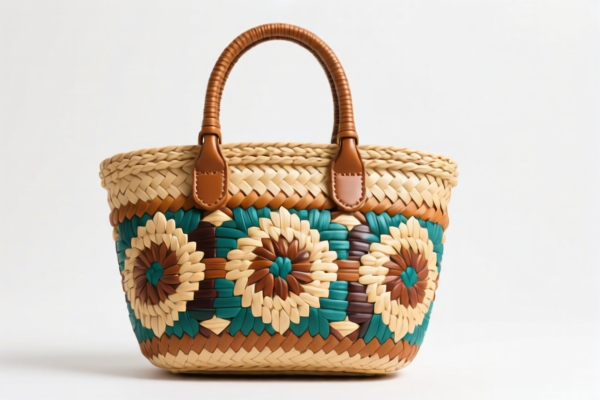
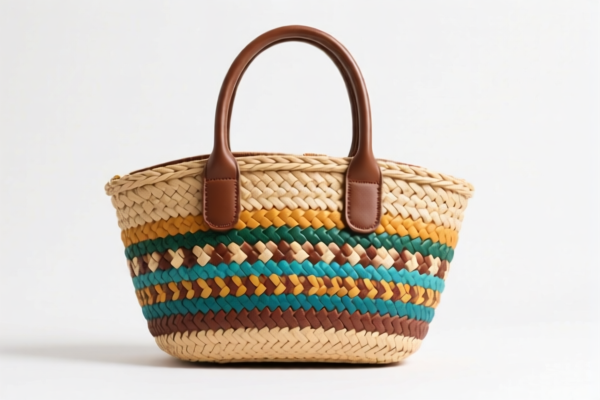
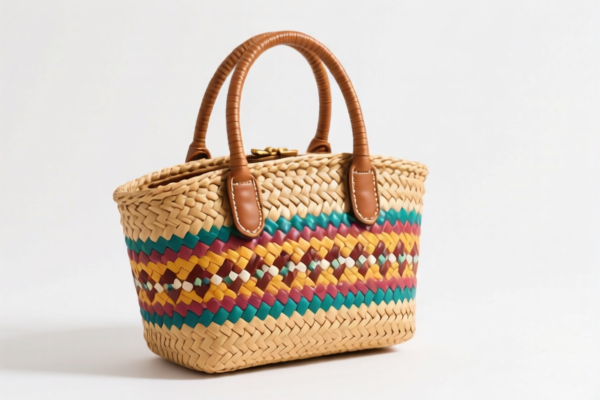
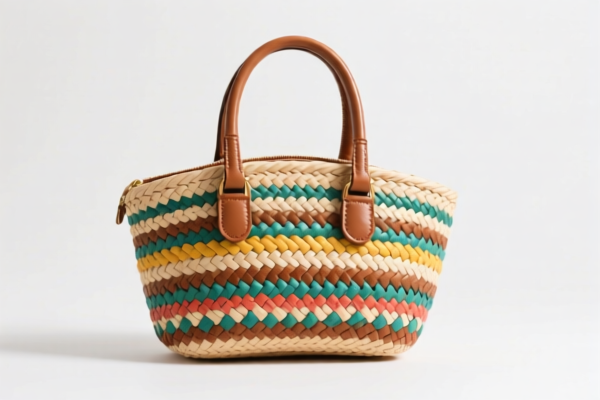
AI分析
👜 Leisure Woven Handbag (编织手提包)
🌐 HS Code Reference & Customs Clearance Guide | 2026 Latest Tariff Analysis | Professional Customs Strategy
📌 Part 1: Product Definition & Classification: Do You Really Understand "Woven Handbags"?
A "Leisure Woven Handbag" is a broad term in international trade. The critical factor for classification is not the style, but the primary material and manufacturing technique. In customs terms, "woven" can refer to: 1. Plant-based weaving (Bamboo, Rattan, Straw) → Chapter 46 2. Textile/Yarn weaving (Fabric, Synthetic fibers) → Chapter 42 3. Specific cotton blends (Casual Tote structures) → Chapter 63
⚠️ Key Distinction Point:
- If made from natural plant materials (bamboo, rattan, straw, wicker) →归入 Chapter 46
- If made from woven textile materials (polyester, nylon, canvas fabric) →归入 Chapter 42
- If made from woven cotton in a casual tote format → May fall under Chapter 63 (special case)
📦 Part 2: HS Code Classification Details (2026 Latest Tariff Authority Comparison)
| HS Code | Product Description | Material Type | Key Characteristics |
|---|---|---|---|
4602.19.29.20 |
Woven Handbag, Material: Plant-based woven products | Natural Plant Fibers | Bamboo, rattan, straw, wicker, grass. Hand-woven or machine-woven plant structures. |
4602.11.21.00 |
Woven Handbag, Material: Bamboo, Rattan, etc. | Bamboo & Rattan | Specifically bamboo or rattan-based weaving. High rigidity, natural texture. |
4202.22.40.20 |
Woven Handbag, Material: Woven Materials | Synthetic/Textile Woven | Made from woven synthetic or textile fabrics (e.g., woven polypropylene, woven polyester). |
4202.22.89.80 |
Woven Handbag, Material: Other Textile Materials | Other Textiles | Woven bags not specified elsewhere (e.g., complex textile weaves, mixed material weaves). |
6307.90.89.40 |
Cotton Casual Tote Bag, Material: Cotton | 100% Cotton Woven | Specifically cotton-based casual totes. Distinct from general woven textiles due to specific cotton weave rules. |
🔍 Important Reminder:
- Do not confuse "Woven Plant" (Ch 46) with "Woven Fabric" (Ch 42). A bag made of "straw" goes to 4602; a bag made of "woven cotton fabric" goes to 6307 or 4202 depending on specific construction.
- Material Declaration is Critical: If you declare "Woven Bag" without specifying the material, Customs will likely default to the highest tariff or require re-inspection.
💰 Part 3: 2026 Latest Tariff Rate Details (Including Surcharges, Policy Surcharges)
✅ Applicable Country: USA (US)
✅ Country of Origin: China (CN)
✅ Effective Time: From November 10, 2025 (and subsequent imports)
🎯 1. 4602.19.29.20 —— Woven Handbag (Plant-based Woven Products)
| Item | Content |
|---|---|
| Base Tariff | 5.3% |
| Section 301 Surcharge | +25.0% |
| IEEPA Surcharge (Section 122) | +10.0% |
| Total Tariff Rate | 40.3% |
| Tax Calculation | CIF Value × 40.3% |
| De Minimis Eligible? | ❌ No (deny_de_minimis) |
| Legal Basis Path | IEEPA:9903.01.25 → IEEPA:9903.01.24 → USITC:4602.19.29.20 |
📌 Explanation:
- Plant-based woven goods are subject to Section 301 (25%) due to Chinese origin.
- The IEEPA 10% surcharge applies to all Chinese-origin consumer goods (Section 122).
- Total 40.3% is high. Even though the base rate is low (5.3%), the surcharges dominate.
🎯 2. 4602.11.21.00 —— Woven Handbag (Bamboo, Rattan, etc.)
| Item | Content |
|---|---|
| Base Tariff | 6.2% |
| Section 301 Surcharge | +25.0% |
| IEEPA Surcharge (Section 122) | +10.0% |
| Total Tariff Rate | 41.2% |
| Tax Calculation | CIF Value × 41.2% |
| De Minimis Eligible? | ❌ No (deny_de_minimis) |
| Legal Basis Path | IEEPA:9903.01.25 → IEEPA:9903.01.24 → USITC:4602.11.21.00 |
📌 Note:
- Bamboo and rattan bags are also subject to Section 301.
- Slightly higher total rate (41.2%) due to higher base tariff (6.2% vs 5.3%).
- Commonly used in summer fashion; high volume, low unit value, but tax burden is significant.
🎯 3. 4202.22.40.20 —— Woven Handbag (Woven Materials)
| Item | Content |
|---|---|
| Base Tariff | 7.4% |
| Section 301 Surcharge | +25.0% |
| IEEPA Surcharge (Section 122) | +10.0% |
| Total Tariff Rate | 42.4% |
| Tax Calculation | CIF Value × 42.4% |
| De Minimis Eligible? | ❌ No (deny_de_minimis) |
| Legal Basis Path | IEEPA:9903.01.25 → IEEPA:9903.01.24 → USITC:4202.22.40.20 |
📌 Explanation:
- "Woven materials" usually refers to synthetic woven fabrics (e.g., woven polypropylene bags).
- This is a common classification for casual woven shopping bags or fashion totes made from synthetic yarns.
- Total 42.4% is a significant cost driver.
🎯 4. 4202.22.89.80 —— Woven Handbag (Other Textile Materials)
| Item | Content |
|---|---|
| Base Tariff | 17.6% |
| Section 301 Surcharge | +25.0% |
| IEEPA Surcharge (Section 122) | +10.0% |
| Total Tariff Rate | 52.6% |
| Tax Calculation | CIF Value × 52.6% |
| De Minimis Eligible? | ❌ No (deny_de_minimis) |
| Legal Basis Path | IEEPA:9903.01.25 → IEEPA:9903.01.24 → USITC:4202.22.89.80 |
📌 Warning:
- This is the highest tariff category.
- It applies to "other textile materials" not specifically covered in4202.22.40.20.
- Misclassification here (e.g., classifying a woven cotton bag as "other textile") will cost you 10% more than necessary.
🎯 5. 6307.90.89.40 —— Cotton Casual Tote Bag (Cotton Material)
| Item | Content |
|---|---|
| Base Tariff | 7.0% |
| Section 301 Surcharge | +0.0% |
| IEEPA Surcharge (Section 122) | +10.0% |
| Total Tariff Rate | 17.0% |
| Tax Calculation | CIF Value × 17.0% |
| De Minimis Eligible? | ❌ No (deny_de_minimis) |
| Legal Basis Path | IEEPA:9903.01.24 → USITC:6307.90.89.40 |
📌 Critical Advantage:
- Only 17.0% Total!
- Zero Section 301 Surcharge for this specific cotton tote classification.
- If your product is a 100% Cotton Woven Tote, this is the best option.
- Note: Must be strictly "Cotton". If it contains polyester or other fibers, it may be reclassified to Ch 42 with higher rates.
🛠️ Part 4: Customs Clearance Practical Advice (Battle-Tested Pitfall Avoidance)
✅ 1. Documentation Checklist (All Required)
| Document | Mandatory? | Notes |
|---|---|---|
| ✅ Product Specification Sheet | ✔️ | Must specify: Material (e.g., 100% Cotton, Bamboo, Rattan), Weave Type, Lining Material. |
| ✅ Product Photos (Clear) | ✔️ | Show texture, weave pattern, handles, lining, and label. |
| ✅ Commercial Invoice | ✔️ | Description must match HS Code exactly (e.g., "Cotton Woven Tote Bag"). |
| ✅ Packing List | ✔️ | Item count, weight, dimensions. |
| ✅ Origin Certificate (CO) | ✔️ | If claiming non-China origin (e.g., Vietnam), required for potential duty reduction. |
| ✅ Material Composition Statement | ✔️ | Signed declaration of fiber content (critical for Ch 63 vs Ch 42). |
✅ 2. Classification Tips (Key Mnemonic)
🔥 “Plant to 46, Textile to 42, Cotton Tote 63, 301 on 42/46, 0 on 63 (Base)!”
| Scenario | Correct HS Code | Incorrect Code | Consequence |
|---|---|---|---|
| Bamboo/Rattan Bag | 4602.11.21.00 |
4202.22.40.20 |
Overpayment by ~1% (41.2% vs 42.4%) → Minor |
| Synthetic Woven Bag | 4202.22.40.20 |
4202.22.89.80 |
Overpayment by 10% (42.4% vs 52.6%) → Major! |
| 100% Cotton Woven Tote | 6307.90.89.40 |
4202.22.89.80 |
Overpayment by 35.6% (17.0% vs 52.6%) → Critical! |
| Mixed Material Bag | Depends on Primary Material | Generic "Handbag" | High risk of audit, reclassification, penalties. |
✅ 3. Special Situation Handling
| Situation | Handling Advice |
|---|---|
| "Woven" Ambiguity | If the bag is made of "woven fabric" (like canvas), do not use Ch 46. Use Ch 42 or 63. Ch 46 is for structured plant weaving. |
| Cotton Content < 100% | If cotton is blended with polyester, it likely falls under Ch 42 (Textile), not Ch 63. This increases tax from 17.0% to 42-52%. |
| Bamboo vs. Rattan | Both go to Ch 46. 4602.11.21.00 is for Bamboo/Rattan specifically. 4602.19.29.20 is for other plants. Rates are similar. |
| Section 122 (IEEPA) | Applies to all categories above. Do not assume exemption. The 10% is non-negotiable for Chinese origin. |
🌍 Part 5: Global Market Comparison (2026 Latest)
| Country/Region | Recommended HS Code | Tariff (CN Origin) | Certification | Notes |
|---|---|---|---|---|
| 🇺🇸 USA | 6307.90.89.40 (if Cotton) |
17.0% | None specific | Best rate if 100% Cotton. Else 40-52%. |
| 🇺🇸 USA | 4202.22.40.20 (Synthetic) |
42.4% | None | High tax due to 301 + IEEPA. |
| 🇪🇺 EU | 4202.22.00 (General) |
~4-12% | REACH, CE | No 301/IEEPA. Much lower tax. |
| 🇨🇳 China | 4202.22.00 (General) |
~5-15% | CCC (if applicable) | Domestic market tax varies. |
| 🇬🇧 UK | 4202.22.00 (General) |
~5-12% | UKCA | Post-Brexit rules apply. |
📌 Conclusion:
- USA is the highest tax jurisdiction for woven bags from China.
- Cotton Totes (Ch 63) offer the only significant tax advantage (17.0% vs 40%+).
- European Union tariffs are significantly lower, making non-US markets more profitable for non-cotton woven bags.
📌 Part 6: Common Errors & Pitfall Guide (Lessons Learned)
❌ Error 1: Declaring a Synthetic Woven Bag as "Cotton Tote"
👉 Consequence: Customs inspection reveals polyester content. Reclassified to 4202.22.89.80. Tax increases from 17% to 52.6%. Penalties applied.
❌ Error 2: Using "Handbag" without material specification
👉 Consequence: Customs assigns default high tariff code. Delays clearance. Additional duties and storage fees.
❌ Error 3: Misclassifying Bamboo Bags as "Textile Bags"
👉 Consequence: Incorrect HS Code. Reclassification required. Potential Section 301 disputes if material origin is unclear.
❌ Error 4: Assuming "Woven" means Ch 46 for all woven items
👉 Consequence: A woven cotton bag is not Ch 46. It is Ch 63 or 42. Misclassification leads to 10-35% tax difference.
✅ Correct Approach:
"100% Cotton Woven Tote Bag, Casual Style, No Lining, HS 6307.90.89.40"
"Bamboo Woven Handbag, Natural Finish, HS 4602.11.21.00"
"Polyester Woven Tote Bag, Synthetic Material, HS 4202.22.40.20"
🎯 Part 7: Conclusion: Professional Classification, Save Money, Stay Compliant!
🎯 Remember the Mnemonic:
🔹 "Cotton Tote 63, 17% Tax (Win!)"
🔹 "Bamboo/Rattan 46, 40-41% Tax (Moderate)"
🔹 "Synthetic Woven 42, 42-52% Tax (Expensive)"
🔹 "Always Pay IEEPA 10%, No Escape for CN Origin"
📌 Pro Tip:
- If your bag is not 100% Cotton, try to maximize cotton content or use natural fibers (bamboo, rattan) to potentially benefit from lower base rates (though still subject to 301).
- Pre-classify with a licensed customs broker to avoid post-clearance audits.
- For non-US markets, consider diversifying to EU/UK where tariffs are significantly lower for textile bags.
📣 Immediate Action:
📞 Consult Customs Broker + Provide Material Spec + Verify Fiber Content
🚀 Minimize Duty, Maximize Profit, Clear Customs Smoothly!
✨ Professional Customs, Starts with Accurate Classification!
💼 Every Percent of Tax Saved is Pure Profit!
用户评价
关于 HS 编码归类
协调制度(HS)是由世界海关组织(WCO)制定的国际贸易商品分类标准。全球 200 多个国家采用 HS 系统作为海关关税、贸易统计和进出口监管的基础。
每个 HS 编码遵循以下层级结构:
- 章(2 位)——商品大类(例如:第 84 章:机器和机械设备)
- 品目(4 位)——章内的更具体分类
- 子目(6 位)——国际通用细分,所有 WCO 成员国统一使用
- 本国细分(8-10 位)——各国自行扩展的细分编码,如美国 HTSUS 10 位编码
正确的 HS 编码归类对于顺利通关、准确缴纳关税和遵守贸易法规至关重要。错误归类可能导致海关延误、多缴关税或罚款。
从CN进口到US时,适用的关税税率可能包括:
- 最惠国(MFN)税率——适用于 WTO 成员国的标准关税税率
- 普通税率——适用于无贸易协定国家
- 贸易救济关税——附加关税,如 301 条款(反倾销)、232 条款(国家安全)或反补贴税
本页内容仅供参考。如需正式归类,请咨询当地海关或持牌报关代理。