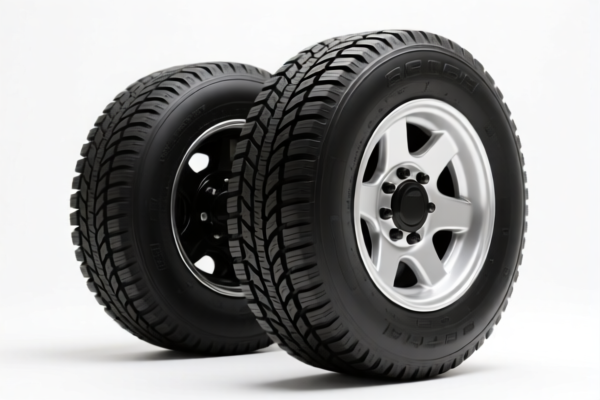
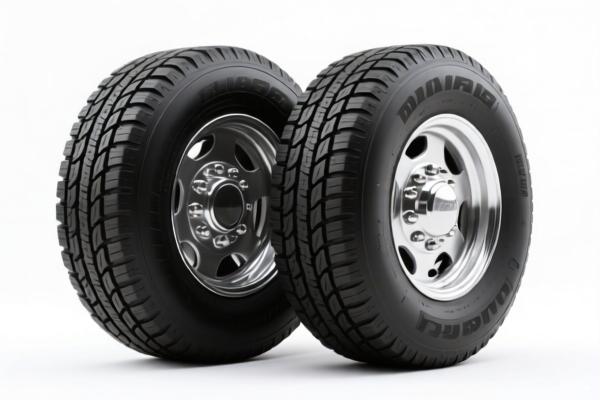
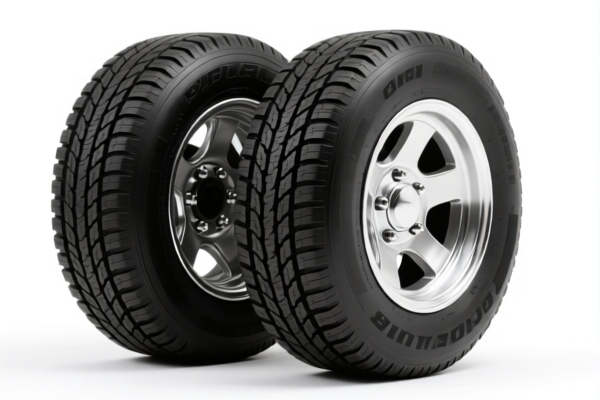
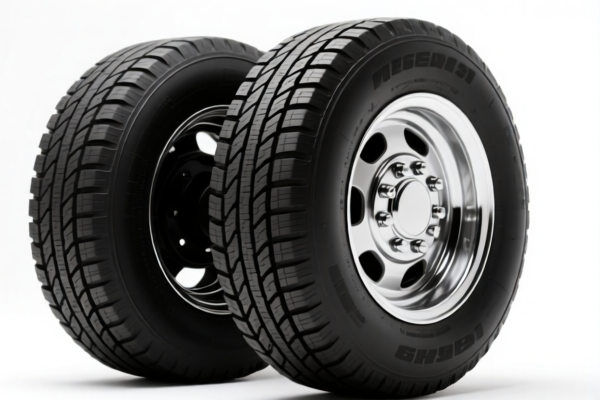
light truck tire
CN → US| HS编码 | 关税税率 | 原产国 | 目的国 | 文档 |
|---|---|---|---|---|
| 4012128019 | 38.4% | CN | US | 官方文档 |
| 4011201005 | 39.0% | CN | US | 官方文档 |
| 4011205010 | 38.4% | CN | US | 官方文档 |
| 4012124015 | 39.0% | CN | US | 官方文档 |
商品图片
AI分析
🚚 Light Truck Tires: The High-Cost Trap for US Imports
🌐 HS Code Reference & Customs Guide | 2026 Latest Tariff Full Analysis | Professional Clearance Strategy
📌 I. Product Definition & Classification: Do You Really Understand "Light Truck Tires"?
Light Truck Tires are critical components for commercial logistics, last-mile delivery, and light utility vehicles. In international trade, classification hinges strictly on the vehicle weight class and tire construction. Unlike passenger car tires (PC) or heavy-duty truck/bus tires (HT/B), Light Truck tires serve a specific niche.
Key Classification Logic: * By Vehicle Type: If designed for "Light Trucks" (GVWR typically between 8,501 lbs and 10,000 lbs in the US context, or similar weight classes globally), they fall under Chapter 40, Heading 4011. * By Sub-Category: The HS Code splits based on specific width, aspect ratio, and rim diameter nuances, leading to slightly different base duty rates.
⚠️ Critical Distinction:
- If it is for a Passenger Car → Go to 4011.20 (but check specific sub-headings).
- If it is for a Light Truck → Go to 4011.20 or 4012.12 (depending on exact specification and national sub-heading rules).
- Note: The provided data indicates multiple valid HS Codes for "Light Truck Tires," suggesting nuanced classification based on specific dimensions or manufacturing standards.
📦 II. HS Code Classification Details (2026 Latest Tariff Authority Comparison)
| HS Code | Product Description | Application Scenario | Base Duty Rate |
|---|---|---|---|
4011.20.10.05 |
Light Truck Tires | Designed for light trucks, material inferred as rubber | 4.0% |
4011.20.50.10 |
Light Truck Tires | Specific shape/form, material inferred as rubber | 3.4% |
4012.12.40.15 |
Light Truck Tires | Retreaded or specific subtype? (See Note) | 4.0% |
4012.12.80.19 |
Light Truck Tires | Other specified subtypes | 3.4% |
🔍 Key Insight:
- All listed codes are for Light Truck Tires.
- The Base Duty varies slightly: 3.4% vs 4.0%, depending on the exact sub-heading interpretation (e.g., size, tread pattern, or whether it's new vs. retreaded, though the summary says "material inferred as rubber").
- Crucially, the Total Tax is heavily influenced by Section 301 and Section 122 tariffs, pushing the effective rate to ~38-39%.
💰 III. 2026 Latest Tariff Rate Breakdown (Including Surcharges & Policy Add-ons)
✅ Applicable Country: United States (US)
✅ Country of Origin: China (CN)
✅ Effective Date: Current active rates (Section 301 & Section 122)
🎯 1. 4011.20.10.05 & 4012.12.40.15 —— Standard Light Truck Tires
| Item | Content |
|---|---|
| Base MFN Duty | 4.0% (Ad Valorem) |
| Section 301 Surcharge | +25.0% (Trump/Biden Era Trade War Tariff) |
| Section 122 Tariff | +10.0% (Additional surcharge on certain industrial goods) |
| Total Effective Rate | 39.0% |
| Tax Calculation | CIF Value × 39.0% |
| De Minimis Exemption | ❌ NOT ELIGIBLE (Section 301 & 122 goods are excluded from 80/800/2500 USD de minimis) |
| Legal Basis Path | USITC:4011.20.10.05 → SECTION301:9903.03.99 → SECTION122 |
📌 Explanation:
- Base Duty (4%): The standard Most Favored Nation (MFN) rate for rubber tires.
- Section 301 (25%): Applies to Chinese-origin tires. This is the biggest cost driver.
- Section 122 (10%): An additional levy on specific imports, further increasing the burden.
- Total: 39%. This is an EXTREMELY HIGH tariff for a commodity import. Profit margins will be severely impacted unless priced accordingly.
🎯 2. 4011.20.50.10 & 4012.12.80.19 —— Alternative Sub-classifications
| Item | Content |
|---|---|
| Base MFN Duty | 3.4% (Ad Valorem) |
| Section 301 Surcharge | +25.0% |
| Section 122 Tariff | +10.0% |
| Total Effective Rate | 38.4% |
| Tax Calculation | CIF Value × 38.4% |
| De Minimis Exemption | ❌ NOT ELIGIBLE |
| Legal Basis Path | USITC:4011.20.50.10 → SECTION301:9903.03.99 → SECTION122 |
📌 Note:
- The base duty is slightly lower (3.4% vs 4.0%), resulting in a 0.6% total rate difference.
- However, the Section 301 and 122 rates are fixed at 25% and 10% respectively.
- Do not assume lower base duty means significant savings when the majority of the tariff is punitive.
🛠️ IV. Customs Clearance Practical Advice (Battle-Tested Pitfall Avoidance)
✅ 1. Documentation Checklist (Non-Negotiable)
| Document | Must Provide | Explanation |
|---|---|---|
| ✅ Product Specification Sheet | ✔️ | Must state "Light Truck Tire," dimensions, load index, speed rating, and "Made in China." |
| ✅ Commercial Invoice | ✔️ | Clearly describe goods as "Light Truck Tire," NOT "Rubber Part" or "General Tire." Mislabeling leads to penalties. |
| ✅ Packing List | ✔️ | Include net/gross weight, number of units per pallet. |
| ✅ Country of Origin Certificate | ✔️ | Essential for Section 301 application. If origin is not China, different rates may apply. |
| ✅ Labeling/Stenciling | ✔️ | Each tire must have visible country of origin marking ("Made in China") as per US Customs regulations. |
✅ 2. Classification Strategy (Key Mantras)
🔥 "Define the Vehicle, Define the Tire, Pay the 39%!"
| Scenario | Correct HS Code Strategy | Wrong Approach |
|---|---|---|
| New Light Truck Tire | 4011.20.xxxx or 4012.12.xxxx |
Classify as Passenger Car Tire (4011.10) → Risk of Misclassification Penalty |
| Retreaded Tire | 4012.12.xxxx (Check if 4012 is for retreads) |
Classify as New Tire → Over/Under Payment |
| Tire + Rim Assembly | Separate | Declare as one item → Complex Valuation Issues |
| De Minimis Shipment | NOT ELIGIBLE | Use 80/800/2500 USD exemption → Seizure & Penalty (Section 301 goods are excluded) |
⚠️ Critical Warning:
- Section 301 and Section 122 goods are EXCLUDED from de minimis treatment (Section 321). You cannot ship small quantities of these tires through informal entry without paying duties.
- Always declare formally and pay the 38.4%-39.0% tariff upfront.
✅ 3. Special Cases
| Case | Handling Advice |
|---|---|
| OEM Brand Tires | Provide OEM authorization letters if claiming brand-specific attributes, but origin matters most for tariffs. |
| Warehouse in Mexico/Central America | If transshipped, Proof of Origin is critical. Transshipment does NOT change the origin if the goods remain "Chinese." |
| Sample vs. Commercial | Both are taxable. No duty-free samples for Section 301/122 goods. |
🌍 V. Global Market Comparison (2026 Latest)
| Country/Region | Recommended HS Code | Tariff (China Origin) | Notes |
|---|---|---|---|
| 🇺🇸 USA | 4011.20.10.05 etc. |
38.4% - 39.0% | Includes 301 (25%) + 122 (10%). Highest barrier. |
| 🇨🇳 China | Same | ~5-10% | Export duty may apply, but lower than US import duty. |
| 🇪🇺 EU | 4011.20 | 0% (mostly) | No Section 301 equivalent, but check CE marking. |
| 🇯🇵 Japan | 4011.20 | 0-3% | FTA benefits may apply if rules of origin met. |
📌 Conclusion:
- The US is the most expensive market for Chinese light truck tires due to overlapping punitive tariffs.
- Supply Chain Diversification is highly recommended: Consider sourcing from Vietnam, Thailand, or Indonesia to avoid Section 301, if available.
- If sourcing from China, price elasticity is low; you must absorb or pass on the ~39% cost.
📌 VI. Common Errors & Pitfall Guide (Lessons from Blood & Tears)
❌ Error 1: Using "Rubber Product" or "Auto Part" as the description.
👉 Consequence: Customs may reclassify, delay shipment, or impose fines for misdeclaration.
👉 Correct: Always use "Light Truck Tire".
❌ Error 2: Assuming de minimis (Section 321) applies to small shipments.
👉 Consequence: 100% Seizure. Section 301 and 122 goods are explicitly excluded from de minimis.
👉 Correct: Pay full duty for every single shipment.
❌ Error 3: Confusing "Light Truck" with "Passenger Car" tires.
👉 Consequence: If classified incorrectly, you may underpay duty, leading to post-entry audits and back-taxes + interest.
👉 Correct: Verify the vehicle GVWR and tire load index.
🎯 VII. Conclusion: Professional Declaration, Cost Control, Risk Mitigation!
🎯 Remember the Mantra:
🔹 "301 + 122 = 35% Penalty on Top of Base Duty."
🔹 "No De Minimis for Tires from China."
🔹 "Classify Precisely: 4011.20 or 4012.12, Base 3.4-4.0%, Total ~39%."
📌 Pro Tip:
If your volume is high, consider Bonded Warehousing in the US to defer duty payment until sale.
For long-term cost reduction, explore non-Chinese origins (Vietnam/Thailand) to bypass the 25% Section 301 tariff, potentially reducing total duty to <15%.
📣 Immediate Action:
📞 Engage a Licensed US Customs Broker
📄 Verify HS Code with CBP Ruling if unsure
🚀 Factor 39% into your landed cost calculation NOW
✨ Professional Clearance, Starts with Accurate Classification!
💼 Your Profit Margin Depends on Every Percentage Point!
用户评价
关于 HS 编码归类
协调制度(HS)是由世界海关组织(WCO)制定的国际贸易商品分类标准。全球 200 多个国家采用 HS 系统作为海关关税、贸易统计和进出口监管的基础。
每个 HS 编码遵循以下层级结构:
- 章(2 位)——商品大类(例如:第 84 章:机器和机械设备)
- 品目(4 位)——章内的更具体分类
- 子目(6 位)——国际通用细分,所有 WCO 成员国统一使用
- 本国细分(8-10 位)——各国自行扩展的细分编码,如美国 HTSUS 10 位编码
正确的 HS 编码归类对于顺利通关、准确缴纳关税和遵守贸易法规至关重要。错误归类可能导致海关延误、多缴关税或罚款。
从CN进口到US时,适用的关税税率可能包括:
- 最惠国(MFN)税率——适用于 WTO 成员国的标准关税税率
- 普通税率——适用于无贸易协定国家
- 贸易救济关税——附加关税,如 301 条款(反倾销)、232 条款(国家安全)或反补贴税
本页内容仅供参考。如需正式归类,请咨询当地海关或持牌报关代理。