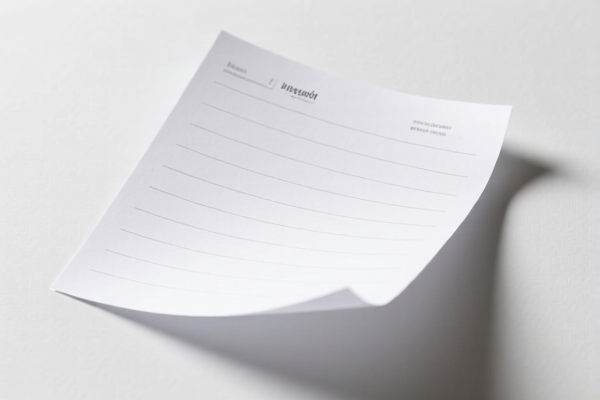
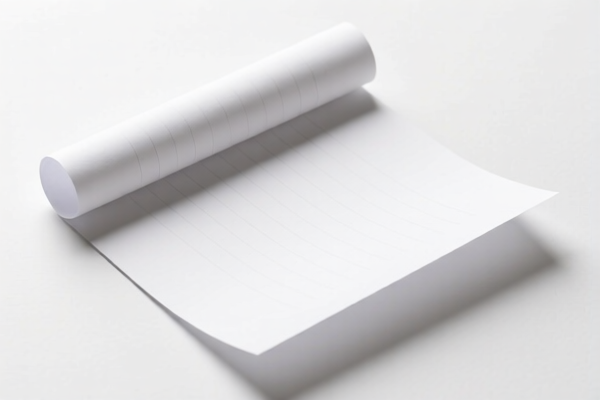
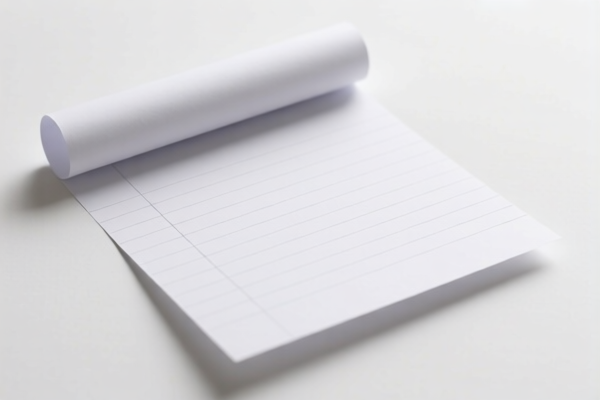
lightweight writing paper width exceeding 15cm
CN → US| HS编码 | 关税税率 | 原产国 | 目的国 | 文档 |
|---|---|---|---|---|
| 4802541000 | 35.0% | CN | US | 官方文档 |
| 4802542000 | 35.0% | CN | US | 官方文档 |
| 4802543100 | 35.0% | CN | US | 官方文档 |
| 4802613110 | 35.0% | CN | US | 官方文档 |
| 4810131900 | 35.0% | CN | US | 官方文档 |
商品图片

AI分析
📜 Lightweight Writing Paper (Width > 15cm)
🌐 HS Code Reference & Customs Clearance Guide | 2026 Latest Tariff Analysis | Professional Entry Strategy
📌 I. Product Definition & Classification: Understanding "Lightweight Paper"
Lightweight writing paper refers to high-quality, uncoated paper characterized by low grammage (weight per square meter), specifically designed for writing, printing, and office use. In international trade, classification hinges on two critical factors: 1. State: Is it in rolls or cut sheets? 2. GSM/Weight: Does it meet the "lightweight" definition (typically < 40g/m² or specific low-weight criteria under HS Chapter 48)?
⚠️ Key Classification Point:
- If the paper is uncoated, used for writing (not primarily printing), and width > 15cm → Look at 4802.54.
- If the paper is uncoated, used for printing (offset, etc.), and width > 15cm → Look at 4802.61.
- If the paper is coated (e.g., one-sided or two-sided bright coating) → Look at 4810.13.
📦 II. HS Code Classification Details (2026 Latest Tariff Authority Match)
Based on your input data, all items fall under the United States tariff schedule (implied by the "Section 122" and "301" context in tax details), originating from China.
| HS Code | Product Description | State | Key Characteristics | Total Tax Rate |
|---|---|---|---|---|
4802.54.10.00 |
Light writing paper, width > 15cm | Cut Sheets/Rolls | General lightweight writing paper | 35.0% |
4802.54.20.00 |
Light writing paper, width > 15cm | Rolls/Strips | Low grammage, specific dimensional requirements | 35.0% |
4802.54.31.00 |
Light printing paper rolls, width > 15cm | Rolls | Uncoated, lightweight feature emphasized | 35.0% |
4802.61.31.10 |
Light printing paper rolls, width > 15cm | Rolls | Used for printing, lightweight & low grammage | 35.0% |
4810.13.19.00 |
Light printing paper rolls, width > 15cm | Rolls | Coated paper category | 35.0% |
🔍 Critical Note on Data Consistency:
Although these HS codes represent different physical states (cut sheets vs. rolls) or chemical treatments (uncoated vs. coated), the provided data indicates a uniform total tax rate of 35.0% for all these items. This is primarily due to the heavy Section 301 and Section 122 surcharges applied to Chinese-origin goods in this category.
💰 III. 2026 Latest Tariff Rate Breakdown (Including Surcharge Policies)
✅ Applicable Country: United States (US)
✅ Origin: China (CN)
✅ Effective Time: Current Trade War Policies (Section 301 & 122)
🎯 1. General Breakdown for All Listed Codes (4802.54.xxxx, 4802.61.xxxx, 4810.13.xxxx)
| Component | Rate | Source/Legal Basis |
|---|---|---|
| Base Tariff (MFN) | 0.0% | Standard WTO Most-Favored-Nation rate for many paper products is 0%. |
| Section 301 Tariff | +25.0% | USITC Footnote 9903.88.01 (List 3/4A items). This is the primary "trade war" tariff. |
| Section 122 Tariff | +10.0% | Specific provision targeting certain Chinese imports (often cited alongside Section 301 in recent enforcement). |
| TOTAL RATE | 35.0% | 0% + 25% + 10% |
📌 Explanation of Tax Details:
- "Base Tariff: 0.0%": The underlying duty for paper products under the Harmonized Tariff Schedule (HTSUS) is often zero.
- "Additional Tariff: 25.0%": This is the standard Section 301 penalty for Chinese-made goods in this category. It is non-negotiable and applies to virtually all Chinese paper imports.
- "Section 122 Tariff: 10%": This appears to be an additional statutory levy or a specific enforcement measure cited in your data source. Note: In standard US trade practice, Section 122 is less common than Section 301, but if your data specifies it, it must be declared.
- De Minimis Waiver: ❌ Not Eligible. Section 301 and 122 tariffs cannot be avoided through the $800 de minimis rule (Section 321). All goods, regardless of value, are subject to these duties.
🛠️ IV. Customs Clearance Practical Advice (Pitfall Avoidance Guide)
✅ 1. Documentation Checklist (Must-Haves)
| Document | Required? | Purpose |
|---|---|---|
| ✅ Commercial Invoice | ✔️ | Must clearly state: "Lightweight Writing Paper," GSM (e.g., 40gsm), Width (>15cm), and Origin (China). |
| ✅ Packing List | ✔️ | Detail if goods are in Rolls or Cut Sheets. This determines if you use 4802.54.20 (Rolls) or 4802.54.10 (General/Cut). |
| ✅ Product Specification Sheet | ✔️ | Confirm Coating Status. Is it uncoated (4802) or coated (4810)? This is the biggest source of classification errors. |
| ✅ Certificate of Origin | ✔️ | To confirm Chinese origin, triggering the 35% tariff. |
| ✅ Bill of Lading/Air Waybill | ✔️ | Standard shipping docs. |
✅ 2. Classification Strategy (Key Mnemonics)
🔥 “Coating Decides the Chapter: Uncoated is 4802, Coated is 4810!”
| Scenario | Correct HS Code Hint | Why? |
|---|---|---|
| Uncoated, for writing, Rolls | 4802.54.20.00 |
Specific subheading for lightweight roll format. |
| Uncoated, for writing, Cut/General | 4802.54.10.00 |
General catch-all for uncoated writing paper. |
| Uncoated, for Printing, Rolls | 4802.61.31.10 |
Specific to printing-grade uncoated paper. |
| Coated (Bright/White), Rolls | 4810.13.19.00 |
Critical: If coated, it moves to Chapter 4810, not 4802. |
✅ 3. Special Considerations for US Customs
-
Rolls vs. Sheets:
- If your product is on a roll, you must declare it as such. Declaring rolls as "cut sheets" is a misdeclaration that can lead to seizures.
- HS Code
4802.54.20.00explicitly mentions "in rolls or strips." Use this if applicable.
-
"Lightweight" Definition:
- Ensure the GSM (grams per square meter) meets the customs definition of "lightweight." If it’s too heavy, it might fall into a different subheading with potentially different (though likely still high) duties.
-
Section 122 Specifics:
- Since your data explicitly includes a 10% Section 122 tariff, verify with your customs broker if this is currently enforced as a separate line item or if it’s aggregated. Failure to declare it correctly can result in penalties.
🌍 V. Global Market Comparison (2026 Context)
| Market | HS Code Trend | Base Tariff | US-China Surcharge | Total Impact |
|---|---|---|---|---|
| 🇺🇸 USA | 4802.54 / 4802.61 / 4810.13 |
0% | +35% (25% Sec 301 + 10% Sec 122) | 35% Total |
| 🇨🇳 China | Same Codes | 5-10% | N/A | ~5-10% (Import Duty) |
| 🇪🇺 EU | 4802.55 / 4802.65 |
6.5% | N/A (No US-China Tariff) | 6.5% Total |
| 🇻🇳 Vietnam | Similar Codes | 0% | N/A | 0% (If origin is VN) |
📌 Strategic Insight:
- The 35% tariff in the US makes Chinese paper exports extremely expensive.
- Many companies are shifting sourcing to Vietnam, Indonesia, or Mexico to avoid the 25% Section 301 tariff.
- Note: Ensure the "Country of Origin" is not China if you want to avoid these tariffs. Re-exporting Chinese paper as "Vietnamese" without substantial transformation is illegal (transshipment) and can lead to severe penalties.
📌 VI. Common Errors & Pitfalls (Blood & Tears Lessons)
❌ Error 1: Confusing Uncoated (4802) with Coated (4810).
👉 Consequence: If you declare coated paper as 4802, customs may reject it or reclassify it, leading to delays. The tax rate might be similar, but the description must match the physical product.
❌ Error 2: Ignoring the Section 122 tariff.
👉 Consequence: Your broker might only calculate the 25% Section 301 tariff. The missing 10% will be a surprise debt upon entry, plus potential fines for underpayment.
❌ Error 3: Declaring Rolls as Sheets.
👉 Consequence: Misdeclaration of goods. Customs may inspect the shipment, delay clearance, and impose penalties for inaccurate documentation.
✅ Correct Approach:
“Uncoated Lightweight Paper, 40gsm, Width 20cm, in Rolls, Origin China. HS 4802.54.20.00.”
Ensure the invoice explicitly lists:
- Material: Uncoated Woodpulp
- Weight: 40 GSM
- Form: Rolls
- Width: >15cm
🎯 VII. Conclusion: Professional Declaration Saves Money & Time
🎯 Remember the Mantra:
🔹 “Coating? Check! Roll or Sheet? Check! Origin China? Check!”
🔹 “35% Tax is Fixed: 0% Base + 25% 301 + 10% 122 = 35%.”
🔹 “Do Not Split the Tariff: It Applies to the Whole Value!”
📌 Pro Tip:
If you are importing into the US, consider applying for a Tariff Classifiction Ruling (Advance Ruling) from U.S. Customs and Border Protection (CBP) if your product is borderline (e.g., semi-coated or unique GSM). This provides legal certainty.
📣 Immediate Action:
📞 Consult a Licensed Customs Broker to verify the current status of Section 122 tariffs.
📄 Ensure Your Invoice Matches the HS Code Description precisely (e.g., specify "Rolls" if using4802.54.20.00).
🚀 Plan for the 35% Cost: Include this in your landed cost calculation to maintain profitability.
✨ Precision in Classification is Precision in Profit!
💼 Don’t let hidden tariffs eat your margin!
用户评价
关于 HS 编码归类
协调制度(HS)是由世界海关组织(WCO)制定的国际贸易商品分类标准。全球 200 多个国家采用 HS 系统作为海关关税、贸易统计和进出口监管的基础。
每个 HS 编码遵循以下层级结构:
- 章(2 位)——商品大类(例如:第 84 章:机器和机械设备)
- 品目(4 位)——章内的更具体分类
- 子目(6 位)——国际通用细分,所有 WCO 成员国统一使用
- 本国细分(8-10 位)——各国自行扩展的细分编码,如美国 HTSUS 10 位编码
正确的 HS 编码归类对于顺利通关、准确缴纳关税和遵守贸易法规至关重要。错误归类可能导致海关延误、多缴关税或罚款。
从CN进口到US时,适用的关税税率可能包括:
- 最惠国(MFN)税率——适用于 WTO 成员国的标准关税税率
- 普通税率——适用于无贸易协定国家
- 贸易救济关税——附加关税,如 301 条款(反倾销)、232 条款(国家安全)或反补贴税
本页内容仅供参考。如需正式归类,请咨询当地海关或持牌报关代理。