lithium battery
CN → US| HS编码 | 关税税率 | 原产国 | 目的国 | 文档 |
|---|---|---|---|---|
| 8507600010 | 20.9% | CN | US | 官方文档 |
| 3824993910 | 35.0% | CN | US | 官方文档 |
| 3824993990 | 35.0% | CN | US | 官方文档 |
| 8504409540 | 35.0% | CN | US | 官方文档 |
商品图片


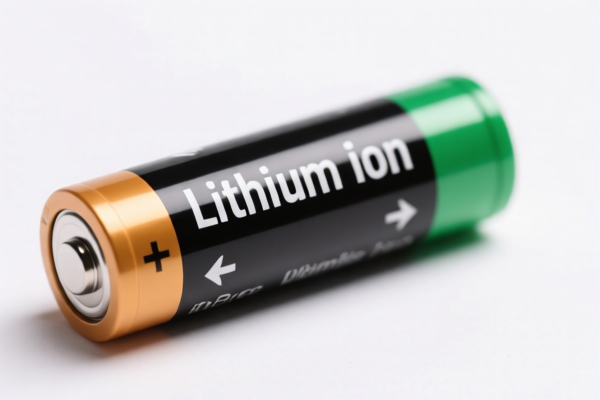
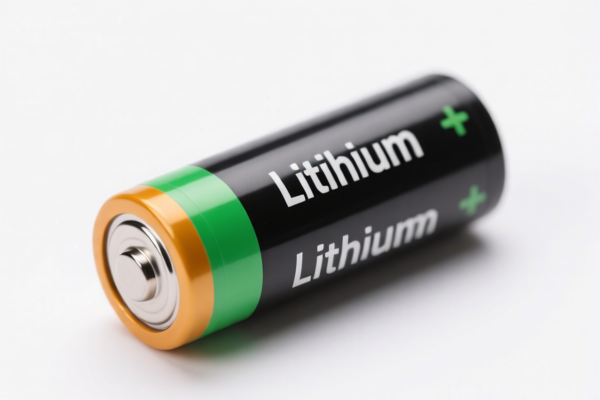
AI分析
🔋 Lithium Battery & Related Components (锂电产品及相关材料)
🌐 HS Code Reference & Customs Clearance Guide | 2026 Latest Tariff Analysis | Professional Clearance Strategy
📌 I. Product Definition & Classification: Do You Really Understand "Lithium"?
Lithium-based products are the core energy sources for modern electronics, electric vehicles, and renewable energy storage. In international trade, they are strictly categorized based on their chemical state, function, and integration level. Misclassification can lead to severe tariff penalties or shipment detention due to safety regulations.
1. Finished Batteries (Lithium-ion): Integrated power sources with cells, circuit protection, and packaging. 2. Active Materials (Precursors): Chemical powders like Lithium Nickel Cobalt Manganese Oxide used in manufacturing. 3. Supporting Equipment: Chargers, converters, and rectifiers designed specifically for lithium battery systems.
⚠️ Key Distinction Point:
- Is it a finished power source ready for use? → Likely 8507.60.
- Is it a raw chemical material for manufacturing? → Likely 3824.99.
- Is it a charger/converter? → Likely 8504.40.
📦 II. HS Code Classification Details (2026 Latest Tariff Authority Comparison)
| HS Code | Product Description | Application Scenario | Key Characteristic |
|---|---|---|---|
8507.60.00.10 |
Lithium-ion batteries, suitable for non-conflict lithium products | Consumer electronics, EVs, Power Tools | Finished Battery: Contains cells, BMS, and casing. Ready to use. |
3824.99.39.10 |
Lithium Nickel Cobalt Manganese Oxide, suitable for lithium materials containing specific oxides | Battery Manufacturing, Raw Material Import | Chemical Precursor: Active cathode material powder, not a battery. |
3824.99.39.90 |
Inorganic compound mixtures, suitable for lithium-related chemical products or materials | Chemical Industry, Specialty Materials | Chemical Mixture: General inorganic lithium compounds or mixtures. |
8504.40.95.40 |
Static converters (Rectifiers/Rectifying equipment), suitable for lithium battery charging equipment | Chargers, Power Supplies, EV Charging Stations | Supporting Device: Converts AC to DC for charging; does not store energy. |
🔍 Critical Reminder:
- Finished batteries (8507.60) have a significantly lower tax burden (20.9%) compared to chemical materials or equipment (35%).
- Chemical materials (3824.99) are classified under Chapter 38 (Chemical Products), not Chapter 85 (Electrical Machinery). Do not confuse "battery materials" with "batteries."
- Chargers (8504.40) are separate from the battery itself. If importing a "Battery + Charger" kit, they must be declared separately.
💰 III. 2026 Latest Tariff Rate Breakdown (Including Surtaxes & Policy Add-ons)
✅ Applicable Country: United States (US)
✅ Country of Origin: China (CN)
✅ Effective Date: 2025 onwards (Includes subsequent imports)
🎯 1. 8507.60.00.10 —— Lithium-ion Batteries (Finished Product)
| Item | Detail |
|---|---|
| Base Tariff | 3.4% (ad valorem) |
| Section 301 Surtax | +7.5% (Additional tariff under Section 301) |
| Section 122 Tariff | +10% (Specific levy on certain lithium products) |
| Total Tariff Rate | 20.9% |
| Tax Calculation | CIF Value × 20.9% |
| De Minimis Exemption | ❌ Not Eligible (Denied for Section 301/122 items) |
| Legal Basis Path | USITC:8507.60.00.10 → Section 301: 7.5% → Section 122: 10% |
📌 Explanation:
- This is the most favorable rate among the listed items.
- The "Section 122 Tariff" is a specific additional levy targeting lithium products, distinct from general Section 301 tariffs.
- Total 20.9% is manageable but requires precise documentation to prove it is a finished battery and not a component.
🎯 2. 3824.99.39.10 —— Lithium Nickel Cobalt Manganese Oxide (Chemical Material)
| Item | Detail |
|---|---|
| Base Tariff | 0.0% |
| Section 301 Surtax | +25.0% |
| Section 122 Tariff | +10.0% |
| Total Tariff Rate | 35.0% |
| Tax Calculation | CIF Value × 35.0% |
| De Minimis Exemption | ❌ Not Eligible |
| Legal Basis Path | USITC:3824.99.39.10 → Section 301: 25% → Section 122: 10% |
📌 Note:
- Although the base tariff is 0%, the Section 301 surtax is high at 25%.
- This applies to cathode active materials. If you import pre-mixed powders for battery manufacturing, this rate applies.
🎯 3. 3824.99.39.90 —— Inorganic Compound Mixtures (General Chemicals)
| Item | Detail |
|---|---|
| Base Tariff | 0.0% |
| Section 301 Surtax | +25.0% |
| Section 122 Tariff | +10.0% |
| Total Tariff Rate | 35.0% |
| Tax Calculation | CIF Value × 35.0% |
| De Minimis Exemption | ❌ Not Eligible |
| Legal Basis Path | USITC:3824.99.39.90 → Section 301: 25% → Section 122: 10% |
📌 Warning:
- This is a catch-all category for lithium-related inorganic compounds.
- If your product is a complex mixture of lithium salts or oxides not specifically listed under.10, it falls here. Tax burden is identical to .10 (35%).
🎯 4. 8504.40.95.40 —— Static Converters/Rectifiers (Charging Equipment)
| Item | Detail |
|---|---|
| Base Tariff | 0.0% |
| Section 301 Surtax | +25.0% |
| Section 122 Tariff | +10.0% |
| Total Tariff Rate | 35.0% |
| Tax Calculation | CIF Value × 35.0% |
| De Minimis Exemption | ❌ Not Eligible |
| Legal Basis Path | USITC:8504.40.95.40 → Section 301: 25% → Section 122: 10% |
📌 Attention:
- This code is for chargers, adapters, and rectifiers designed for lithium battery charging.
- Even if the base tariff is 0%, the 35% effective rate is high. Ensure the device is correctly declared as a "charger" and not a "battery" to avoid misclassification penalties.
🛠️ IV. Customs Clearance Practical Advice (Pitfall Avoidance Guide)
✅ 1. Required Documentation Checklist (Non-Negotiable)
| Document | Mandatory? | Explanation |
|---|---|---|
| ✅ MSDS (Material Safety Data Sheet) | ✔️ | Critical for all lithium products. Must indicate UN38.3 test compliance. |
| ✅ UN38.3 Test Report | ✔️ | Mandatory for shipping lithium batteries (Section 55, IATA/IMDG). |
| ✅ Product Specification Sheet | ✔️ | Details voltage, capacity, chemistry (Li-ion vs. Li-polymer), and dimensions. |
| ✅ Commercial Invoice | ✔️ | Must clearly state "Lithium-ion Battery" or "Lithium Oxide" to match HS Code. |
| ✅ Certificate of Origin (CO) | ✔️ | To verify Chinese origin for Section 301/122 application. |
| ✅ Battery Packing Declaration | ✔️ | For air/sea freight, confirms proper packaging per UN standards. |
✅ 2. Declaration Tips (Key Mantras)
🔥 “Chemicals are 38, Batteries are 85, Chargers are 85. Don’t mix them up!”
| Scenario | Correct Declaration | Wrong Practice |
|---|---|---|
| Finished Lithium-ion Battery | 8507.60.00.10 Description: "Lithium-ion Battery, 3.7V, 2000mAh" |
Misdeclaring as "Chemical" → Risk of detention |
| Cathode Material Powder | 3824.99.39.10 Description: "LiNiCoMnO2, Chemical Powder" |
Misdeclaring as "Battery" → Wrong safety clearance |
| Battery Charger | 8504.40.95.40 Description: "Lithium Battery Charger, AC-DC Converter" |
Bundling with battery as one item → Complex valuation |
| Mixture of Chemicals | 3824.99.39.90 Description: "Inorganic Lithium Compound Mixture" |
Vague description "Battery Material" → Customs delay |
✅ 3. Special Situations Handling
| Situation | Handling Advice |
|---|---|
| Batteries with Integrated Circuits | Still classified under 8507.60.00.10 as a battery, but ensure the BMS (Battery Management System) is documented. |
| Lithium Metal vs. Lithium Ion | This data focuses on Lithium-ion. Lithium metal batteries have different UN numbers and potentially different HS codes. Check separately. |
| Samples vs. Commercial | No de minimis exemption. Small samples still incur 20.9% or 35% tax. |
| OEM Custom Batteries | Provide the client’s design specs. Ensure the chemical composition matches the declared HS code (e.g., NCM vs. LFP). |
🌍 V. Global Market Comparison (2026 Latest)
| Country/Region | Recommended HS Code | Tariff Rate (China Origin) | Certification Requirements | Notes |
|---|---|---|---|---|
| 🇺🇸 USA | 8507.60.00.10 |
20.9% (Battery) 35.0% (Material/Charger) |
UN38.3, FCC (for chargers) | High scrutiny on Section 122. |
| 🇨🇳 China | 8507.60.10 |
Varies (Import Duty) | CCC (for chargers) | No Section 301/122. |
| 🇪🇺 EU | 8507.60 |
0% - 4.5% (DGSA) | CE, UN38.3, IEC 62133 | Strict battery directive compliance. |
| 🇦🇺 Australia | 8507.60 |
5% | RCM, UN38.3 | Moderate tariff. |
| 🇯🇵 Japan | 8507.60 |
0% - 3% | PSE, UN38.3 | Low tariff, high safety standards. |
📌 Conclusion:
- USA is the most expensive market due to Section 301 (7.5% or 25%) + Section 122 (10%).
- Batteries (8507.60) are cheaper (20.9%) than chemical materials (3824.99) or chargers (8504.40) (both 35%).
- Optimization Strategy: If possible, import raw materials for local assembly? No, raw materials have higher tax here.
- Best Value: Finished batteries (8507.60) have the lowest effective rate among the listed items.
📌 VI. Common Errors & Pitfall Guide (Lessons from Tears)
❌ Error 1: Declaring "Lithium Battery Materials" as "Batteries" to get 20.9% instead of 35%.
👉 Consequence: Customs audit reveals chemical composition → Penalty + Back Taxes.
❌ Error 2: Declaring a "Battery Charger" as a "Lithium Battery" (assuming 20.9% is better).
👉 Consequence: Safety documents (UN38.3) may not match charger requirements → Shipment Rejection.
❌ Error 3: Ignoring Section 122 Tariff (10%).
👉 Consequence: Underpayment of duties → Fines and Delay.
❌ Error 4: Missing UN38.3 Test Report.
👉 Consequence: Air/Sea freight rejected regardless of tax clearance.
✅ Correct Practice:
"Lithium-ion Battery Pack, 14.4V, 5Ah, UN3481, IATA PI965 Section II"
or
"Lithium Nickel Cobalt Manganese Oxide, LiNiCoMnO2, Chemical Grade, UN1325"
🎯 VII. Conclusion: Precision is Profit!
🎯 Remember the Mantra:
🔹 "Battery 85 is 20.9%, Chemical 38 is 35%, Charger 85 is 35%. Don't guess!"
🔹 "UN38.3 is King, MSDS is Queen. Without them, you don't ship!"
🔹 "Section 122 adds 10% across the board. Budget for it!"
📌 Pro Tip:
If your lithium products are sourced from Vietnam, Mexico, or Thailand, you may exempt Section 122 and potentially Section 301, significantly reducing the tariff to near 0-3.4%.
Recommendation: Apply for an Advance Ruling with US Customs and Border Protection (CBP) to confirm the correct HS Code and tariff applicability.
📣 Act Now:
📞 Consult a licensed Customs Broker + Provide UN38.3 Report + Verify Section 122 Applicability
🚀 Ensure your lithium products clear customs smoothly, avoid safety holds, and maximize profit margins!
✨ Professional Customs Clearance Starts with Accurate Classification!
💼 Every percentage point of tax savings is pure profit!
用户评价
关于 HS 编码归类
协调制度(HS)是由世界海关组织(WCO)制定的国际贸易商品分类标准。全球 200 多个国家采用 HS 系统作为海关关税、贸易统计和进出口监管的基础。
每个 HS 编码遵循以下层级结构:
- 章(2 位)——商品大类(例如:第 84 章:机器和机械设备)
- 品目(4 位)——章内的更具体分类
- 子目(6 位)——国际通用细分,所有 WCO 成员国统一使用
- 本国细分(8-10 位)——各国自行扩展的细分编码,如美国 HTSUS 10 位编码
正确的 HS 编码归类对于顺利通关、准确缴纳关税和遵守贸易法规至关重要。错误归类可能导致海关延误、多缴关税或罚款。
从CN进口到US时,适用的关税税率可能包括:
- 最惠国(MFN)税率——适用于 WTO 成员国的标准关税税率
- 普通税率——适用于无贸易协定国家
- 贸易救济关税——附加关税,如 301 条款(反倾销)、232 条款(国家安全)或反补贴税
本页内容仅供参考。如需正式归类,请咨询当地海关或持牌报关代理。