lithium ion battery
CN → US| HS编码 | 关税税率 | 原产国 | 目的国 | 文档 |
|---|---|---|---|---|
| 8507600010 | 20.9% | CN | US | 官方文档 |
| 8548000000 | 35.0% | CN | US | 官方文档 |
| 8507600010 | 20.9% | CN | US | 官方文档 |
商品图片


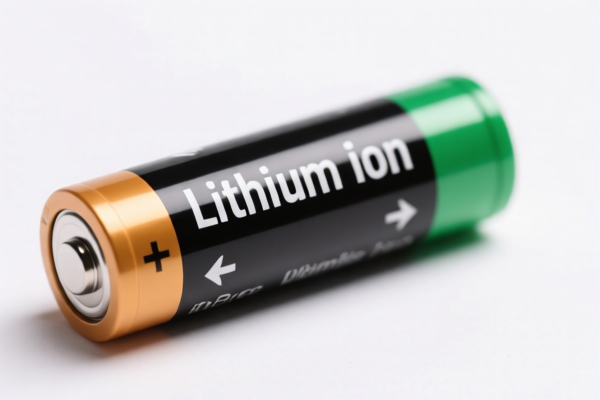
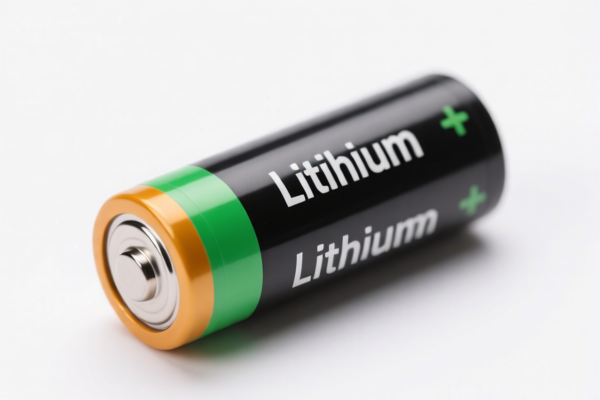
AI分析
🔋 Lithium-Ion Battery Groups: HS Code Classification & US Customs Clearance Guide (2026 Update)
🌐 HS Code Reference & Customs Clearance Strategy | 2026 Tariff Analysis | Professional Compliance Guide
📌 I. Product Definition & Classification: What is a "Lithium-Ion Battery Group"?
A Lithium-Ion Battery Group (often referred to as a battery pack) is an assembly of lithium-ion cells connected in series or parallel, protected by a Battery Management System (BMS), and housed in an external casing or connector. In international trade, the classification hinges on two critical factors: 1. Specific Function: Is it a general power source (e.g., for consumer electronics, EVs, power tools) or a specific electrical component/device? 2. Material Composition: Confirmed as lithium-ion.
⚠️ Key Classification Conflict:
- Primary Power Source: If the item is a complete battery pack intended to power devices (like laptops, drones, or electric vehicles), it is typically classified as a battery under Chapter 85.
- Electrical Component/Part: If the item is considered a "part" of a larger electrical machine or device (and not a standalone power source in its own right in the commercial context), it may fall under Chapter 85 as a part or under Chapter 85 as a specific electrical apparatus.
📦 II. HS Code Classification Details (Based on Provided Data)
According to the provided data, there are two primary classification paths for Lithium-Ion Battery Groups. Note that HS Code 8507.60.00.10 appears twice in the data with identical tax details but slightly different summaries, while HS Code 8548.00.00.00 represents a different classification bucket.
| HS Code | Product Description & Summary from Data | Applicable Scenario |
|---|---|---|
8507.60.00.10 |
Lithium-Ion Battery Group: Matches material and form. Based on common sense, it falls under the category of lithium-ion batteries. No conflict in usage. | General-purpose battery packs (e.g., for portable electronics, tools, EVs). Recognized as a "battery" per se. |
8507.60.00.10 |
Lithium-Ion Battery Group: Infers material as lithium-ion from "Li-battery." Specific use cannot be determined initially. Judged as non-conflicting based on principle. | Generic lithium-ion packs where specific end-use is unclear but material matches 8507. |
8548.00.00.00 |
Lithium-Ion Battery Group: As an electrochemical device, it fits the category of parts and accessories for electrical machines/devices or apparatus. | Battery packs treated as parts/accessories of a larger electrical apparatus or machine, rather than standalone batteries. |
🔍 Key Distinction:
- 8507.60.00.10: Classifies the item as a Battery (Primary article).
- 8548.00.00.00: Classifies the item as a Part/Accessory (Secondary article).
Note: In US Customs practice, "Battery" usually goes to 8507. If the battery is integrated into a device such that the device is the primary article, the battery may be classified as a part of that device. However, standalone battery packs are overwhelmingly classified under 8507.
💰 III. 2026 US Tariff Rate Detail (China Origin)
✅ Applicable Country: United States (US)
✅ Origin: China (CN)
✅ Effective Time: Current rates as per data (Subject to 122 Section and 301 Tariffs)
🎯 1. HS Code 8507.60.00.10 – Lithium-Ion Battery (As a Battery)
| Item | Detail |
|---|---|
| Base Tariff Rate | 3.4% |
| Section 301 Tariff (Added Tariff) | 7.5% |
| Section 122 Tariff | 10% |
| Total Tariff Rate | 20.9% |
| Calculation Method | CIF Value × 20.9% |
| De Minimis Eligibility | ❌ No (Section 122 and 301 tariffs generally do not apply to de minimis, but this code is for commercial shipments). Note: Section 122 often applies to packages valued under $800 if not otherwise exempt, but for standard commercial imports, it stacks. |
| Legal Basis Path | HTSUS:8507.60.00.10 → Section 301 (List 4A) → Section 122 |
📌 Explanation:
- The 3.4% is the standard Most Favored Nation (MFN) duty for lithium batteries.
- The 7.5% is the Section 301 additional duty on Chinese lithium-ion batteries.
- The 10% is the Section 122 tariff (temporary tariff on imports from China, often applied to lower-value shipments or specific categories).
- Total Cost Impact: A $10,000 shipment incurs $2,090 in duties.
🎯 2. HS Code 8548.00.00.00 – Parts & Accessories of Electrical Machines/Devices
| Item | Detail |
|---|---|
| Base Tariff Rate | 0.0% |
| Section 301 Tariff (Added Tariff) | 25.0% |
| Section 122 Tariff | 10% |
| Total Tariff Rate | 35.0% |
| Calculation Method | CIF Value × 35.0% |
| De Minimis Eligibility | ❌ No |
| Legal Basis Path | HTSUS:8548.00.00.00 → Section 301 (List 4A - Parts) → Section 122 |
📌 Explanation:
- The 0.0% base rate for general electrical parts is misleadingly low.
- The 25.0% Section 301 tariff is significantly higher than the 7.5% for batteries. This is because "parts" of Chinese-origin electrical equipment often face higher retaliation tariffs.
- The 10% Section 122 tariff still applies.
- Total Cost Impact: A $10,000 shipment incurs $3,500 in duties.
- Critical Risk: Misclassifying a standard battery pack as a "part" (8548) can increase your tariff by 14.1 percentage points (from 20.9% to 35.0%).
🛠️ IV. Customs Clearance Practical Advice
✅ 1. Documentation Checklist (Non-Negotiable)
| Document | Required? | Notes |
|---|---|---|
| ✅ Commercial Invoice | ✔️ | Must clearly state: "Lithium-Ion Battery Pack," Model Number, Voltage (V), Ampere-Hours (Ah), Watt-Hours (Wh). |
| ✅ Battery Data Sheet (MSDS/SDS) | ✔️ | Mandatory for all lithium shipments. Must include UN38.3 test summary. |
| ✅ UN38.3 Test Report | ✔️ | Proof that the battery packs passed safety testing (height, temperature, vibration, shock, etc.). |
| ✅ FCC Certificate (if applicable) | ✔️ | If the battery pack has electronic controls or is marketed for US sale, FCC ID may be required. |
| ✅ Packaging List | ✔️ | Show packaging details (e.g., "Packed in boxes, inner packaging with non-conductive material"). |
| ✅ Bill of Lading/Air Waybill | ✔️ | Must have UN3480 (Lithium-ion batteries packed in equipment) or UN3481 (Lithium-ion batteries alone) hazard label. |
✅ 2. Classification Strategy: How to Avoid the 35% Trap
🔥 Golden Rule: "If it's a standalone battery pack, use 8507.60.00.10. Do NOT use 8548 unless it is an integral, inseparable part of a larger machine."
| Scenario | Correct HS Code | Tariff Rate | Risk if Misclassified |
|---|---|---|---|
| Standalone Battery Pack (e.g., for power tools, e-bikes, laptops) | 8507.60.00.10 |
20.9% | If classified as 8548 → 35.0% (Overpay by 14.1%) |
| Battery Integrated into Device (e.g., iPhone, Laptop) | Part of the main device (e.g., 8517.62) |
Varies (Main Device Rate) | Separate declaration of battery is complex; usually shipped as part of the device. |
| Spare Battery for a Machine | 8507.60.00.10 |
20.9% | If declared as "Part of Machine" → 8548 → 35.0% |
📌 Pro Tip:
- Avoid 8548 for standalone packs. US Customs generally views lithium-ion battery packs as "batteries" (8507) even if they have BMS circuits.
- Use 8507.60.00.10 for the lowest effective tariff burden among the two options provided in the data.
✅ 3. Special Handling for Section 122 & 301
- Section 122 (10%): This tariff applies to imports from China. It is cumulative. Ensure your customs broker includes this in the calculation.
- Section 301: The difference between 7.5% (for batteries) and 25% (for parts) is significant. Proper description on the invoice ("Lithium-Ion Battery Pack, not a part of any machine") supports the 8507 classification.
🌍 V. Global Market Comparison (2026)
| Region | Recommended HS Code | Est. Tariff (China Origin) | Key Notes |
|---|---|---|---|
| 🇺🇸 USA | 8507.60.00.10 |
20.9% | Includes 301 (7.5%) + 122 (10%) + Base (3.4%). |
| 🇨🇳 China | 8507.60.00.10 |
0% - 5% | China may have lower import duties for lithium batteries used in manufacturing. |
| 🇪🇺 EU | 8507.60.30 |
4% + VAT | No Section 301/122. Standard EU duty applies. |
| 🇨🇦 Canada | 8507.60.00.90 |
5% + GST/HST | CUSMA eligible if originating in NA. |
📌 Conclusion:
- The USA has the highest effective tariff due to trade remedies (301 & 122).
- Accurate classification under 8507.60.00.10 is crucial to save 14.1% compared to misclassification under 8548.00.00.00.
📌 VI. Common Mistakes & Pitfalls (Lessons Learned)
❌ Mistake 1: Declaring a standalone battery pack as "Part of Laptop" or "Electrical Component" → HS 8548.
👉 Consequence: Tariff jumps from 20.9% to 35.0%.
❌ Mistake 2: Missing UN38.3 Test Report.
👉 Consequence: Cargo held at customs, demurrage fees, potential rejection.
❌ Mistake 3: Incorrect Hazard Labeling (UN3480/UN3481).
👉 Consequence: Rejection by carrier, return to sender, or fines.
✅ Correct Practice:
"Lithium-Ion Battery Pack, 12V 50Ah, for Solar Storage System, Model XYZ, UN3480 Compliant, MSDS Attached"
🎯 VII. Conclusion: Optimize Your Clearance Strategy
🎯 Remember:
🔹 "Battery = 8507 (20.9%)". "Part = 8548 (35.0%)". Choose 8507!
🔹 "Un38.3 & MSDS are Mandatory. No Exceptions!"
🔹 "Section 301 & 122 Apply. Plan for 20.9% Total Duty."
📌 Action Item:
📞 Consult a licensed customs broker to apply for a Binding Ruling on your specific battery pack design.
🚀 Save 14.1% in tariffs by classifying correctly as a Battery, not a Part.
✨ Precision in Classification = Profit in Logistics!
💼 Every Percentage Point Counts in Cross-Border Trade!
用户评价
关于 HS 编码归类
协调制度(HS)是由世界海关组织(WCO)制定的国际贸易商品分类标准。全球 200 多个国家采用 HS 系统作为海关关税、贸易统计和进出口监管的基础。
每个 HS 编码遵循以下层级结构:
- 章(2 位)——商品大类(例如:第 84 章:机器和机械设备)
- 品目(4 位)——章内的更具体分类
- 子目(6 位)——国际通用细分,所有 WCO 成员国统一使用
- 本国细分(8-10 位)——各国自行扩展的细分编码,如美国 HTSUS 10 位编码
正确的 HS 编码归类对于顺利通关、准确缴纳关税和遵守贸易法规至关重要。错误归类可能导致海关延误、多缴关税或罚款。
从CN进口到US时,适用的关税税率可能包括:
- 最惠国(MFN)税率——适用于 WTO 成员国的标准关税税率
- 普通税率——适用于无贸易协定国家
- 贸易救济关税——附加关税,如 301 条款(反倾销)、232 条款(国家安全)或反补贴税
本页内容仅供参考。如需正式归类,请咨询当地海关或持牌报关代理。