lithium special paper label
CN → US| HS编码 | 关税税率 | 原产国 | 目的国 | 文档 |
|---|---|---|---|---|
| 4821104000 | 35.0% | CN | US | 官方文档 |
| 4823908680 | 35.0% | CN | US | 官方文档 |
| 4823901000 | 35.0% | CN | US | 官方文档 |
| 4821102000 | 35.0% | CN | US | 官方文档 |
商品图片
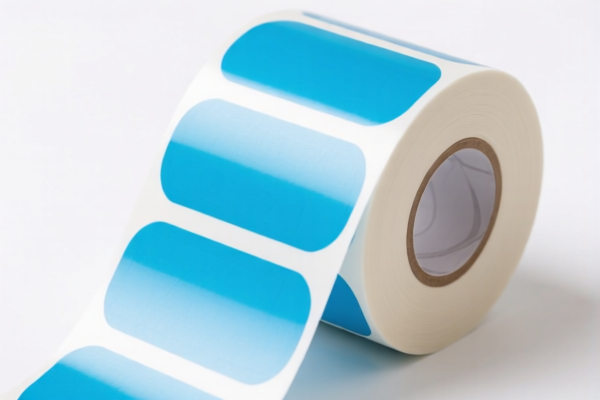
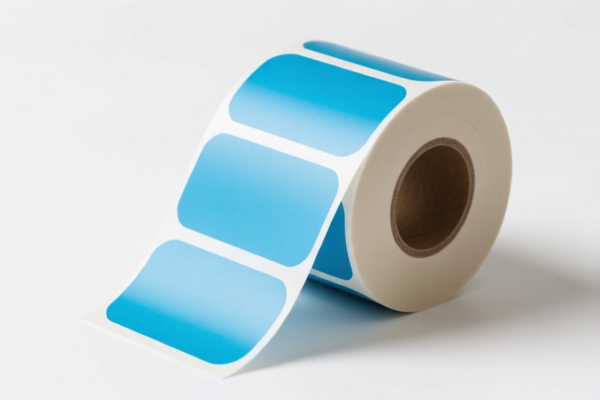
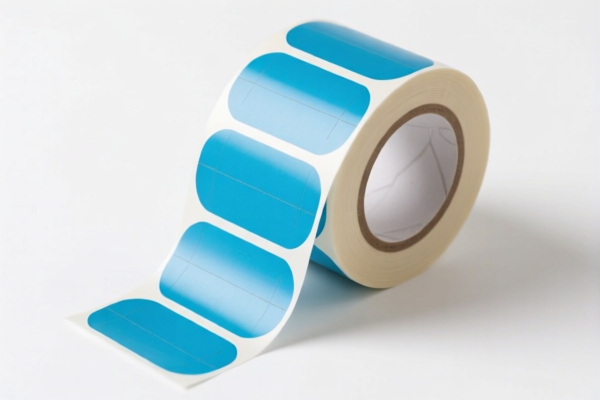

AI分析
🏷️ Lithium Special Paper Label (Lithium-Specific Paper Labels)
🌐 HS Code Reference & Customs Clearance Guide | 2024 Latest Tariff Analysis | Professional Clearance Strategy
📌 I. Product Definition & Classification: Do You Truly Understand "Lithium Special Paper Labels"?
"Lithium Special Paper Labels" are adhesive labels specifically designed for the lithium-ion battery industry. They are used for product identification, safety warnings, specification tracking, and compliance marking on battery cells, modules, and packs.
In international trade, the classification hinges on two core factors: 1. Material Composition: Primarily paper or paperboard (as inferred from "Paper Label"), potentially coated or treated for thermal/chemical resistance. 2. Form & Function: Adhesive-backed, printed, and cut to size for industrial application.
⚠️ Critical Distinction:
- If the label is self-adhesive, printed on paper, and used for identification → It falls under Heading 4821 (Paper Labels) or 4823 (Other Paper Articles).
- If it contains significant electronic components (e.g., RFID chips embedded within the paper structure acting as a circuit), it might shift toward Chapter 85, but standard "Lithium Labels" are typically passive paper products.
- Key Note: "Lithium" in the name refers to the application field (batteries), not the material (lithium metal). The material is still paper-based.
📦 II. HS Code Classification Details (2024 Latest Tariff Authority Comparison)
Based on the provided data, here are the four most relevant HS Codes for "Lithium Special Paper Labels":
| HS Code | Product Description | Application Scenario | Material/Feature |
|---|---|---|---|
4821.10.40.00 |
Other paper labels, of paper or paperboard | General-purpose printed labels for battery packs, cells, and modules. | ✅ Paper/Paperboard, Printed, Adhesive |
4823.90.86.80 |
Other paper articles, cut to size or shape | Labels that are non-standard shapes, die-cut, or specialized paper items not strictly classified as "labels" under 4821. | ✅ Paper, Cut to Shape, Non-Standard |
4823.90.10.00 |
Other paper articles, cut to size or shape | Similar to above; often used for fibrous or specialized paper products used in battery manufacturing (e.g., separator labels, thermal-resistant tags). | ✅ Paper/Fiber, Cut to Size |
4821.10.20.00 |
Other paper labels, of paper or paperboard | Specific subtype of paper labels, possibly distinct in size or adhesive type, still within the "label" category. | ✅ Paper/Paperboard, Printed, Adhesive |
🔍 Key Insight:
- 4821 is the primary category for "Labels".
- 4823 is a catch-all for "Other Paper Articles" if the item is considered more of a "part" or "specialty item" rather than a standard label.
- All four codes share the same tax rate in this context, simplifying the strategic choice to one based on precise physical description and customs officer interpretation.
💰 III. 2024 Latest Tariff Rate Breakdown (Including Surtaxes & Policy Add-ons)
✅ Applicable Country: United States (US)
✅ Country of Origin: China (CN)
✅ Effective Date: Post-2025 (Based on provided data structure reflecting 122 Clause & 301 Tariffs)
🎯 All HS Codes: 4821.10.40.00, 4823.90.86.80, 4823.90.10.00, 4821.10.20.00
| Item | Content |
|---|---|
| Base Tariff Rate | 0.0% (Ad Valorem) |
| Section 301 Surtax | +25.0% (From USITC Footnote 9903.88.01 / List 4A) |
| Section 122 Tariff | +10.0% (Specific to certain Chinese-origin goods, effective date varies; included in provided data) |
| Total Tariff Rate | 35.0% |
| Tax Calculation | CIF Value × 35% |
| De Minimis Exemption Eligibility | ❌ NOT Eligible (deny_de_minimis) |
| Legal Basis Path | USITC:4821.10.40.00 → FOOTNOTE:301-4A (+25%) + IEEPA:122 (+10%) → Total 35% |
📌 Explanation:
- "Base Tariff 0%": Paper labels generally have low base duties in the US Harmonized Tariff Schedule.
- "301 Surtax 25%": Standard tariff for most Chinese-origin paper products under Section 301.
- "122 Clause Tariff 10%": Additional duty applied under specific trade enforcement clauses.
- Total 35%: This is a high effective tariff. It significantly impacts cost competitiveness.
- No De Minimis: Small packages (under $800) do not qualify for tax exemption. Every shipment is subject to the 35% duty.
🛠️ IV. Customs Clearance Practical Advice (Real-World Pitfall Avoidance)
✅ 1. Required Documentation Checklist (All Must Be Provided)
| Document | Required? | Explanation |
|---|---|---|
| ✅ Product Specification Sheet | ✔️ | Must detail: Material (e.g., Thermal Paper, Coated Paper), Adhesive Type, Size, Print Method. |
| ✅ Product Photos | ✔️ | Clear images of labels on battery packs, showing text, barcodes, and adhesive backing. |
| ✅ Commercial Invoice | ✔️ | Must clearly state "Paper Labels for Lithium Battery Identification" and HS Code. |
| ✅ Packing List | ✔️ | Show weight, quantity, and packaging type. |
| ✅ Origin Certificate (if applicable) | ✔️ | To prove CN origin (triggers tariffs). If shipped from Vietnam/Malaysia with substantial transformation, may reduce duty. |
| ✅ Material Safety Data Sheet (MSDS) | ✔️ | Although labels are paper, if adhesive contains chemicals, MSDS may be requested for safety compliance. |
✅ 2. Declaration Tips (Key Mantras)
🔥 "Be Specific, Not Generic!"
Avoid vague terms like "Stickers" or "Paper Goods." Use precise language:
- ✅ Good: "Self-adhesive Paper Labels, Printed, for Lithium Battery Safety Compliance, HS 4821.10.40.00"
- ❌ Bad: "Labels" or "Paper Products" (Triggers manual review & potential misclassification)
| Scenario | Correct Declaration | Wrong Practice |
|---|---|---|
| Standard Battery Labels | 4821.10.40.00 |
Misclassify as 4823 to avoid scrutiny → Risk of Penalty |
| Die-Cut, Non-Standard Shapes | 4823.90.86.80 |
Declare as 4821 → Possible Rejection if shape is irregular |
| Labels with RFID Chip | Check Chapter 85 | Declare as 4821 → Major Misclassification |
✅ 3. Special Case Handling
| Situation | Handling Advice |
|---|---|
| OEM/ODM Orders | Provide customer PO and design files to prove the product is "for identification only," not for resale as standalone goods. |
| Small Sample Shipments | Even small samples are subject to 35% duty. Do not rely on de minimis. Consider shipping via DDP (Delivered Duty Paid) if possible. |
| Composite Packages | If labels are packaged with batteries, declare separately. Do not bundle them as one item. |
| Thermal vs. Inkjet | Specify print compatibility. This helps customs officers verify the material description. |
🌍 V. Global Market Clearance Comparison (2024 Latest)
| Country/Region | Recommended HS Code | Tariff (CN Origin) | Certification Requirements | Notes |
|---|---|---|---|---|
| 🇺🇸 USA | 4821.10.40.00 |
35% (0% + 25% + 10%) | No specific certification, but accurate declaration is critical. | Highest cost due to 301 & 122 tariffs. |
| 🇨🇳 China | 4821.10.40.00 |
0-5% | None | Domestic trade has no tariff barriers. |
| 🇪🇺 EU | 4821.10.00 |
0-2.7% | CE (if part of battery assembly), REACH | Low tariffs; focus on chemical compliance. |
| 🇦🇺 Australia | 4821.10.00 |
5% | None | Moderate tariff. |
| 🇯🇵 Japan | 4821.10.00 |
0-3.2% | None | Low tariff. |
📌 Conclusion:
- The US market is the most expensive due to the 35% combined tariff.
- For US exports, consider supply chain diversification (e.g., manufacturing labels in Vietnam or Thailand) to avoid CN origin tariffs, if feasible.
- Ensure accurate HS Code selection to prevent customs delays or penalties.
📌 VI. Common Mistakes & Pitfall Guide (Lessons Learned)
❌ Mistake 1: Declaring as "Stickers" or "Paper Goods"
👉 Consequence: Customs may reclassify to 4823 or 4911, leading to duty discrepancies and fines.
❌ Mistake 2: Ignoring the "122 Clause"
👉 Consequence: Underpaying 10% of duty → Audit risk & back payments + interest.
❌ Mistake 3: Assuming small shipments are tax-free
👉 Consequence: De minimis does not apply to Chinese paper labels under current trade policies.
❌ Mistake 4: Not specifying "Paper" in the description
👉 Consequence: Customs may suspect plastic or synthetic materials, leading to higher duty rates (e.g., 5-8% base + 25%).
✅ Correct Approach:
"Self-adhesive Paper Labels, Printed with Lithium Battery Safety Information, HS Code 4821.10.40.00, Origin: China"
🎯 VII. Conclusion: Precision Declaration, Cost Control, Smooth Clearance!
🎯 Remember the Mantra:
🔹 "Paper Labels, 35% Duty, No De Minimis, Declared Right!"
🔹 "HS Code Accuracy Saves 35% Cost, Misclassification Costs More!"
📌 Pro Tip:
If your product is shipped from Vietnam, Malaysia, or Thailand and undergoes substantial transformation, you may qualify for preferential tariffs under USMCA or other FTAs.
Recommendation: Apply for an Advance Ruling from US Customs (CBP) to confirm the correct HS Code and tariff liability before shipping.
📣 Immediate Action:
📞 Consult with a professional customs broker + Provide product specs + Request HS Code Pre-Ruling
🚀 Ensure your Lithium Labels clear customs smoothly, minimize tax costs, and boost your profit margins!
✨ Professional clearance starts with accurate classification!
💼 Every dollar saved on tariffs is pure profit!
用户评价
关于 HS 编码归类
协调制度(HS)是由世界海关组织(WCO)制定的国际贸易商品分类标准。全球 200 多个国家采用 HS 系统作为海关关税、贸易统计和进出口监管的基础。
每个 HS 编码遵循以下层级结构:
- 章(2 位)——商品大类(例如:第 84 章:机器和机械设备)
- 品目(4 位)——章内的更具体分类
- 子目(6 位)——国际通用细分,所有 WCO 成员国统一使用
- 本国细分(8-10 位)——各国自行扩展的细分编码,如美国 HTSUS 10 位编码
正确的 HS 编码归类对于顺利通关、准确缴纳关税和遵守贸易法规至关重要。错误归类可能导致海关延误、多缴关税或罚款。
从CN进口到US时,适用的关税税率可能包括:
- 最惠国(MFN)税率——适用于 WTO 成员国的标准关税税率
- 普通税率——适用于无贸易协定国家
- 贸易救济关税——附加关税,如 301 条款(反倾销)、232 条款(国家安全)或反补贴税
本页内容仅供参考。如需正式归类,请咨询当地海关或持牌报关代理。