lubricant anti oxidant
CN → US| HS编码 | 关税税率 | 原产国 | 目的国 | 文档 |
|---|---|---|---|---|
| 3811290000 | 41.5% | CN | US | 官方文档 |
| 3403191000 | 35.2% | CN | US | 官方文档 |
| 3811210000 | 41.5% | CN | US | 官方文档 |
| 3403191000 | 35.2% | CN | US | 官方文档 |
| 3811290000 | 41.5% | CN | US | 官方文档 |
商品图片
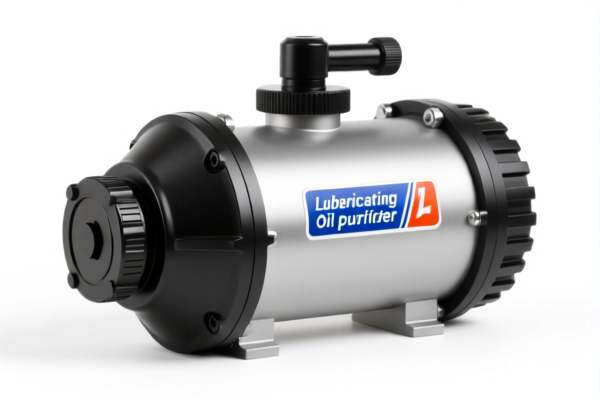
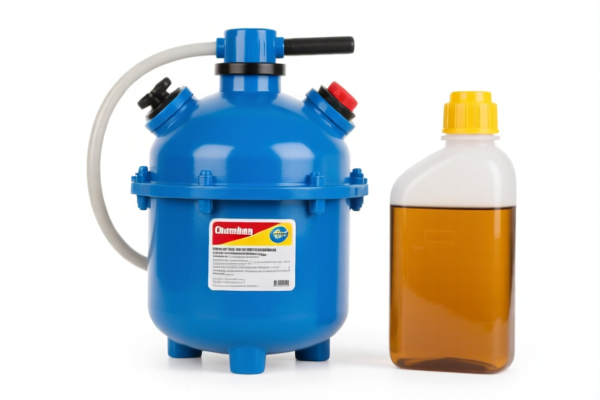
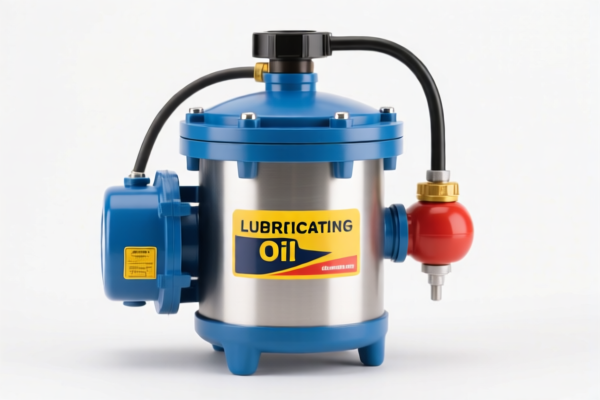

AI分析
🛢️ Lubricant Anti-Oxidant (润滑油抗氧化剂)
🌐 HS Code Reference & Customs Clearance Guide | 2026 Latest Tariff Analysis | Professional Clearance Strategy
📌 Part 1: Product Definition & Classification: Do You Really Understand "Lubricant Anti-Oxidants"?
Lubricant Anti-Oxidants are critical chemical additives used in industrial and automotive lubricating oils to prevent oxidation, reduce sludge formation, and extend the service life of equipment. In international trade, their classification depends heavily on their chemical composition and primary function.
There are two main classification pathways in the provided data:
Category A: Chemical Additives (HS 3811.29.00.00 / 3811.21.00.00)
Products specifically formulated as Anti-Oxidants or Anti-Oxidant Detergents. These are classified under Chapter 38 (Miscellaneous Chemical Products), focusing on their role as chemical stabilizers.
Category B: Lubricating Preparations (HS 3403.19.10.00)
Products classified as Lubricant Additives or Anti-Corrosion Agents containing petroleum oils or asphalt mineral oils. These fall under Chapter 34 (Soap, Organic Surface-Active Agents, Washing Preparations, Lubricating Preparations), focusing on their nature as lubricating chemical preparations.
⚠️ Key Distinction Point:
- If the product is primarily a chemical stabilizer (Anti-Oxidant/Anti-Oxidant Detergent) → Classify under 3811.xx (Tax: 41.5%)
- If the product is primarily a lubricating preparation containing mineral oil (Anti-Corrosion/Lubricant Additive with oil base) → Classify under 3403.19 (Tax: 35.2%)
📦 Part 2: HS Code Classification Details (2026 Latest Tariff Authority Comparison)
| HS Code | Product Description | Applicable Scenario | Tax Rate |
|---|---|---|---|
3811.29.00.00 |
Lubricant Anti-Oxidant Detergents, matching anti-oxidant inhibitor function | Chemical anti-oxidant stabilizers, detergents | 41.5% |
3811.21.00.00 |
Lubricant Anti-Oxidants, corresponding to oxidation inhibitors | Pure anti-oxidant additives, chemical stabilizers | 41.5% |
3403.19.10.00 |
Lubricant Additives (Lubricating Chemical Preparations) | General lubricant additives, chemical formulations | 35.2% |
3403.19.10.00 |
Lubricant Anti-Corrosion Agents (Containing Petroleum/Asphalt Mineral Oil) | Oil-based anti-corrosion agents, lubricating chemical preparations | 35.2% |
🔍 Key Reminder:
- 3811.29.00.00 and 3811.21.00.00 are for pure chemical anti-oxidants/detergents.
- 3403.19.10.00 is for lubricating preparations that may include anti-corrosion or additive functions, often containing mineral oil bases.
- Misclassification can lead to significant tax differences (6.3%) and potential customs penalties.
💰 Part 3: 2026 Latest Tariff Rate Breakdown (Including Additional Taxes & Policy Surcharges)
✅ Applicable Country: United States (US)
✅ Country of Origin: China (CN)
✅ Effective Time: Ongoing (Current Trade War Rates)
🎯 1. 3811.29.00.00 & 3811.21.00.00 —— Lubricant Anti-Oxidants / Detergents (Chemical Category)
| Item | Content |
|---|---|
| Base Tariff Rate | 6.5% (Ad Valorem) |
| USITC Additional Tariff (Section 301) | +25.0% |
| Section 122 Tariff | +10.0% |
| Total Tax Rate | 41.5% |
| Tax Calculation | CIF Value × 41.5% |
| De Minimis Eligibility | ❌ Not Eligible (High duty rate) |
| Legal Basis Path | Base: 6.5% → Section 301: 25% → Section 122: 10% → Total: 41.5% |
📌 Explanation:
- These HS codes fall under chemical products (Chapter 38).
- They are subject to Section 301 tariffs (25%) and Section 122 tariffs (10%), in addition to the base tariff.
- Total liability: 41.5%. This is a high-cost category; cost calculation must include all surcharges.
🎯 2. 3403.19.10.00 —— Lubricant Additives / Anti-Corrosion Agents (Lubricating Preparation Category)
| Item | Content |
|---|---|
| Base Tariff Rate | 0.2% (Ad Valorem) |
| USITC Additional Tariff (Section 301) | +25.0% |
| Section 122 Tariff | +10.0% |
| Total Tax Rate | 35.2% |
| Tax Calculation | CIF Value × 35.2% |
| De Minimis Eligibility | ❌ Not Eligible (High duty rate) |
| Legal Basis Path | Base: 0.2% → Section 301: 25% → Section 122: 10% → Total: 35.2% |
📌 Explanation:
- These HS codes fall under lubricating preparations (Chapter 34).
- The base tariff is very low (0.2%), but the Section 301 (25%) and Section 122 (10%) surcharges still apply.
- Total liability: 35.2%. This is 6.3% cheaper than the chemical anti-oxidant category.
- Strategic Tip: If your product qualifies as a "lubricating preparation" (e.g., contains mineral oil, serves as a lubricant additive), classifying under 3403.19.10.00 can save significant costs compared to 3811.xx.
🛠️ Part 4: Customs Clearance Practical Advice (Real-World Pitfall Avoidance Guide)
✅ 1. Required Documentation Checklist (Missing Any = Delay)
| Document | Required | Explanation |
|---|---|---|
| ✅ Product Specification Sheet | ✔️ | Must detail chemical composition, function (anti-oxidant vs. lubricant), and CAS numbers. |
| ✅ MSDS/SDS (Safety Data Sheet) | ✔️ | Critical for determining if it's a chemical (3811) or lubricant (3403). |
| ✅ Formula/Composition Analysis | ✔️ | To prove if it contains "petroleum oil or asphalt mineral oil" (for 3403 classification). |
| ✅ Commercial Invoice | ✔️ | Clearly state "Lubricant Additive" or "Anti-Oxidant" with HS Code. |
| ✅ Packing List | ✔️ | Detail net/gross weight, volume. |
| ✅ Certificate of Origin (CO) | ✔️ | Required for origin verification (China CN triggers surcharges). |
✅ 2. Declaration Strategy (Key Mnemonics)
🔥 “Oil Base = 3403 (Cheaper), Pure Chemical = 3811 (More Expensive)”
| Scenario | Correct Declaration | Wrong Approach | Consequence |
|---|---|---|---|
| Product contains mineral oil & acts as lubricant additive | 3403.19.10.00 |
Declare as "Anti-Oxidant Chemical" → 3811.29.00.00 |
Overpay 6.3% |
| Pure chemical anti-oxidant (no oil base) | 3811.29.00.00 or 3811.21.00.00 |
Declare as "Lubricant Preparation" → 3403.19.10.00 |
Underpayment Penalty + Back Taxes |
| Anti-corrosion agent with mineral oil | 3403.19.10.00 |
Declare as "Corrosion Inhibitor Chemical" → 3811.29.00.00 |
Overpay 6.3% |
📌 Advice:
- If your anti-oxidant is dissolved in or mixed with mineral oil, strongly consider 3403.19.10.00.
- If it is a pure chemical compound (e.g., phenolic amine antioxidant) without oil base, use 3811.xx.
✅ 3. Special Circumstances Handling
| Situation | Handling Advice |
|---|---|
| Customs Inquiry on Composition | Provide lab reports proving presence/absence of mineral oil. |
| Mixed Shipment (Chemicals + Oils) | Declare separately. Do not mix HS codes in one line item. |
| OEM Private Label | Provide authorization letter + original supplier MSDS to prove composition. |
| Dispute on Classification | Apply for Advance Ruling (Pre-classification) from US Customs to lock in the lower rate (35.2%) if eligible. |
🌍 Part 5: Global Main Market Customs Comparison (2026 Latest)
| Country/Region | Recommended HS Code | Tariff | Certification | Note |
|---|---|---|---|---|
| 🇺🇸 USA | 3403.19.10.00 |
35.2% | SDS, DOT | Cheaper than 3811 (41.5%) |
| 🇺🇸 USA | 3811.29.00.00 |
41.5% | SDS, DOT | Higher tax, strict chemical control |
| 🇨🇳 China | 3403.19.10.00 |
~2% | No major surcharges | Low tax, but verify import license |
| 🇪🇺 EU | 3811.10.00 / 3403.90 |
~6.5% | REACH, CLP | EU has different subheadings |
| 🇦🇺 Australia | 3403.19.00 |
~5% | GDS | No Section 301 surcharges |
📌 Conclusion:
- USA is the only market with heavy Section 301 + Section 122 surcharges.
- Choosing the correct HS code can save 6.3% of the CIF value.
- China-origin goods face high duties in the US; careful classification is vital for cost control.
📌 Part 6: Common Mistakes & Pitfall Guide (Lessons Learned)
❌ Mistake 1: Declaring an oil-based anti-corrosion agent as a pure chemical (3811)
👉 Consequence: Overpaying 6.3% on the entire shipment value.
❌ Mistake 2: Declaring a pure chemical anti-oxidant as a lubricant preparation (3403)
👉 Consequence: Customs penalty, back taxes, and potential shipment detention for misdeclaration.
❌ Mistake 3: Ignoring Section 122 Tariff (10%)
👉 Consequence: Under-declaring total tax liability, leading to audits and fines.
❌ Mistake 4: Not providing MSDS
👉 Consequence: Customs cannot verify composition → Hold at port → Demurrage costs.
✅ Correct Approach:
“Lubricant Additive, Oil-Based, Anti-Corrosion, Contains Petroleum Oil, MSDS Provided, CAS No. XXXXX” → 3403.19.10.00
🎯 Part 7: Conclusion: Professional Declaration, Cost Saving, Efficiency!
🎯 Remember Mnemonics:
🔹 “Oil Base = 3403 (35.2%), Pure Chemical = 3811 (41.5%)”
🔹 “6.3% Difference is Real, Pick Wrong Code, Pay Extra Bill!”
📌 Pro Tip:
- If your product is a mixture or complex additive, request a Laboratory Analysis to determine the primary function and composition.
- Apply for Advance Ruling if the classification is ambiguous. It provides legal certainty for the lower rate (35.2%) if eligible.
📣 Immediate Action:
📞 Contact a licensed customs broker + Provide MSDS & Composition + Verify HS Code Pre-classification
🚀 Ensure smooth clearance, minimize duty costs, and maximize profit margins!
✨ Professional Customs Clearance Starts with Accurate Classification!
💼 Every Percentage Point Counts in International Trade!
用户评价
关于 HS 编码归类
协调制度(HS)是由世界海关组织(WCO)制定的国际贸易商品分类标准。全球 200 多个国家采用 HS 系统作为海关关税、贸易统计和进出口监管的基础。
每个 HS 编码遵循以下层级结构:
- 章(2 位)——商品大类(例如:第 84 章:机器和机械设备)
- 品目(4 位)——章内的更具体分类
- 子目(6 位)——国际通用细分,所有 WCO 成员国统一使用
- 本国细分(8-10 位)——各国自行扩展的细分编码,如美国 HTSUS 10 位编码
正确的 HS 编码归类对于顺利通关、准确缴纳关税和遵守贸易法规至关重要。错误归类可能导致海关延误、多缴关税或罚款。
从CN进口到US时,适用的关税税率可能包括:
- 最惠国(MFN)税率——适用于 WTO 成员国的标准关税税率
- 普通税率——适用于无贸易协定国家
- 贸易救济关税——附加关税,如 301 条款(反倾销)、232 条款(国家安全)或反补贴税
本页内容仅供参考。如需正式归类,请咨询当地海关或持牌报关代理。