luffa kitchen utensils
CN → US| HS编码 | 关税税率 | 原产国 | 目的国 | 文档 |
|---|---|---|---|---|
| 4602110700 | 35.0% | CN | US | 官方文档 |
| 4602900000 | 38.5% | CN | US | 官方文档 |
商品图片
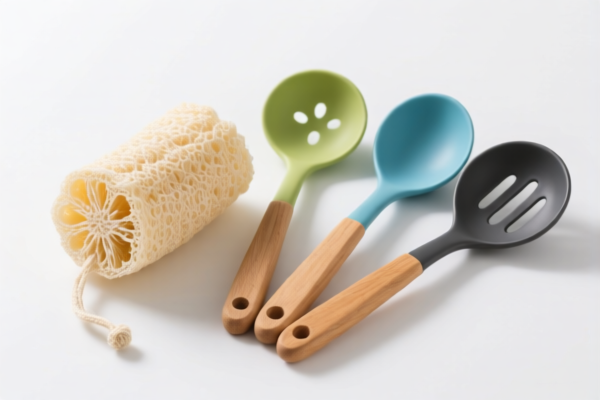
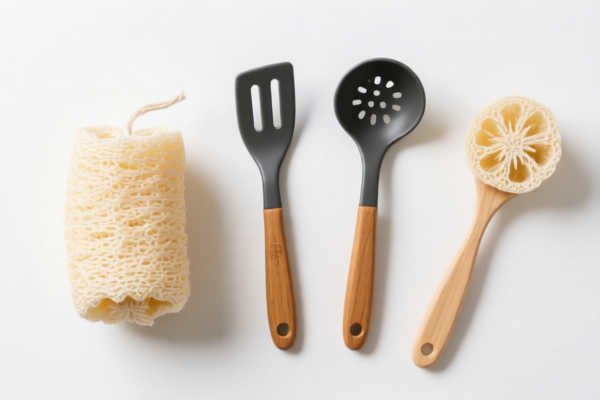
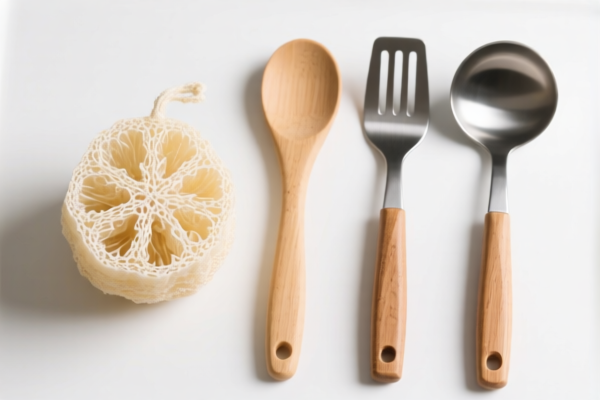
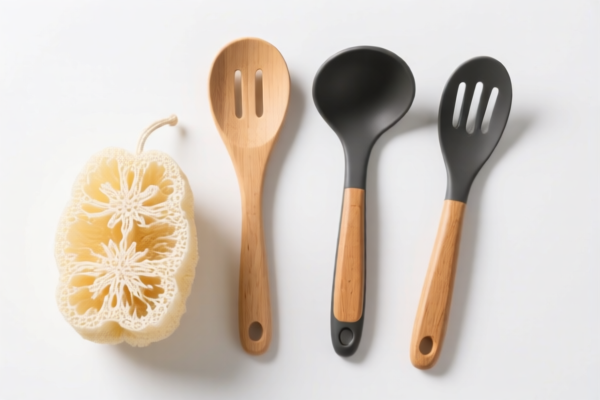
AI分析
🥗 Luffa Kitchen Utensils (Natural Loofah Cleaning Tools)
🌐 HS Code Reference & Customs Clearance Guide | 2026 Latest Tariff Analysis | Professional Clearance Strategy
📌 I. Product Definition & Classification: Are You Sure About "Luffa"?
Luffa kitchen utensils refer to cleaning tools, sponges, or scouring pads made from the dried fibrous skeleton of the Luffa plant (commonly known as loofah). In international trade, these are classified under Chapter 46 ("Plaiting materials and articles of plaiting materials; basketwork, wickerwork and other articles").
The classification depends heavily on whether the luffa is used in a specific shaped article (like a pre-cut sponge or handle) or sold as raw/processed material. However, under HS Code 4602, "articles of loofah" are specifically mentioned.
⚠️ Key Distinction:
- Finished Articles: Pre-shaped luffa sponges, brushes, or cleaning pads →归入 4602.90.00.00 (Other basketwork/wickerwork/articles of loofah).
- Raw/Partially Processed: If it’s just cut pieces not yet formed into a specific utility article, it might fall under 4601, but for kitchen utensils, it is almost always 4602.
📦 II. HS Code Classification Details (2026 Latest Tariff Authority Comparison)
| HS Code | Product Description | Application Scenario | Tax Rate (US/China) |
|---|---|---|---|
4602.11.07.00 |
Of bamboo: Other baskets and bags, whether or not lined: Wickerwork | Note: This code is for BAMBOO, NOT luffa. See explanation below. | 25.0% Total |
4602.90.00.00 |
Other: Articles of loofah (or other vegetable materials not specified) | Luffa sponges, scrubbers, natural fiber cleaning tools | 28.5% Total |
🔍 Critical Clarification:
The provided data shows two codes:
1.4602.11.07.00: Specifically for Bamboo wickerwork. Do NOT use this for Luffa unless the product is primarily bamboo and mislabeled.
2.4602.90.00.00: This is the correct category for "Articles of loofah" under "Other" (non-bamboo, non-specified vegetable materials).Why Luffa goes to
4602.90.00.00:
- HS Chapter 46 covers plaiting materials and articles made from them.
- Heading 4602 includes "articles of loofah."
- Since 4602.11 is explicitly for "Of bamboo," luffa (a different vegetable fiber) falls under the residual "Other" category in 4602.90.
💰 III. 2026 Latest Tariff Rate Breakdown (Including Surcharges)
✅ Applicable Country: United States (US)
✅ Origin: China (CN)
✅ Effective Date: From 2025-11-10 onwards (including subsequent imports)
🎯 1. 4602.90.00.00 — Articles of Loofah / Other Vegetable Fiber Articles
| Item | Detail |
|---|---|
| Base Tariff | 3.5% (ad valorem) |
| Section 301 Surcharge | +25.0% (USITC Footnote associated with HS 4602) |
| Total Tax Rate | 28.5% |
| Tax Calculation | CIF Value × 28.5% |
| De Minimis Eligibility | ❌ No (Deny De Minimis – Section 321 exemption does not apply to goods subject to Section 301 tariffs from China) |
| Legal Basis Path | HTSUS:4602.90.00.00 → Section 301: Footnote to 4602 → Total: 28.5% |
📌 Explanation:
- The 3.5% base rate is the standard Most Favored Nation (MFN) rate for other wicker/basket/loofah articles.
- The +25% surcharge is applied under Section 301 of the Trade Act of 1974 against Chinese goods.
- Total: 28.5%. This is a high tariff for a low-value consumer good, significantly impacting profit margins.
⚠️ Important Note on 4602.11.07.00 (Bamboo)
If your product is bamboo (not luffa) and misclassified, the rate is 25.0% (0% base + 25% surcharge).
- Do not confuse Luffa with Bamboo. Luffa is a sponge-like fiber; Bamboo is a hard woody material.
- Misclassification as bamboo (4602.11.07.00) when it is luffa (4602.90.00.00) can lead to underpayment penalties.
🛠️ IV. Customs Clearance Practical Advice (Avoid Pitfalls)
✅ 1. Documentation Checklist (Non-Negotiable)
| Document | Required? | Description |
|---|---|---|
| ✅ Product Description | ✔️ | Must clearly state "Natural Loofah Sponge" or "Luffa Vegetable Fiber Cleaning Tool" |
| ✅ Material Composition | ✔️ | Confirm it is 100% Vegetable Fiber (Luffa), not synthetic foam or plastic |
| ✅ Photos (Clear & Detailed) | ✔️ | Show texture, shape, and any attached handles (if combined with bamboo/plastic) |
| ✅ Commercial Invoice | ✔️ | Must match HS Code 4602.90.00.00 and declare CIF value accurately |
| ✅ Packing List | ✔️ | List net weight and gross weight per item |
| ❌ Synthetic Claims | ❌ | Do NOT describe as "Eco-Foam" or "Sponge" without clarifying natural origin, as customs may suspect synthetic materials (which may have different tariffs) |
✅ 2. Classification Strategy (Key Mantras)
🔥 "Natural is Key, Bamboo is Different, Luffa is 4602.90!"
| Scenario | Correct HS Code | Risk if Wrong |
|---|---|---|
| Pure Luffa Sponge/Scrubber | 4602.90.00.00 |
✅ Correct (28.5%) |
| Luffa + Bamboo Handle | 4602.90.00.00 (if loofah is primary function) |
⚠️ If classified as bamboo (4602.11.07.00), tax is 25% (lower), but misdeclaration risk |
| Synthetic Sponge (Polyurethane) | 3926.90.97.90 (Plastics) |
❌ Wrong chapter (Chapter 39 vs 46). Synthetic may have different rates. |
| Raw Luffa Fruit (Unprocessed) | 0709.99.90.80 (Vegetables) |
❌ Wrong. If processed into a utensil, it becomes Chapter 46. |
📌 Critical Warning:
- Section 301 Exemptions: Currently, no exemptions are listed for HS 4602.90.00.00 from China.
- De Minimis (Section 321): Packages under $800 DO NOT qualify for duty-free entry if they are from China and subject to Section 301 tariffs. You must pay the 28.5%.
✅ 3. Special Case Handling
| Scenario | Advice |
|---|---|
| Mixed Materials (Luffa + Plastic Handle) | Declare as "Luffa Cleaning Brush with Plastic Handle." Customs may still classify under 4602 if loofah is the essential character. |
| Packaged in Sets (Luffa + Soap) | If soap is dominant, it may be classified under Chapter 34 (Soap). If luffa is dominant, Chapter 46. Be precise in description. |
| OEM/Private Label | Provide manufacturer info. Origin must be clearly China to avoid origin fraud allegations. |
🌍 V. Global Market Clearance Comparison (2026)
| Country/Region | Recommended HS Code | Tariff (China Origin) | Notes |
|---|---|---|---|
| 🇺🇸 USA | 4602.90.00.00 |
28.5% (3.5% + 25%) | Section 301 applies. No de minimis. |
| 🇨🇳 China | 4602.90.00.00 |
~5-10% (Import) | No Section 301. Lower cost for domestic sales. |
| 🇪🇺 EU | 4602.90.00.00 |
0-6.5% (Varies) | No anti-dumping or Section 301. Green certifications help. |
| 🇬🇧 UK | 4602.90.00.00 |
0-6.5% | Post-Brexit tariff schedule similar to EU for raw fibers. |
| 🇨🇦 Canada | 4602.90.00.00 |
5-10% | No major surcharges. |
📌 Conclusion:
- USA is the most expensive market for luffa utensils due to the 25% Section 301 surcharge.
- EU and other markets are more favorable, with lower or zero base tariffs.
- Strategy: Consider sourcing luffa from non-China countries (e.g., Vietnam, India, Turkey) if targeting the US to avoid the 25% surcharge.
📌 VI. Common Mistakes & Pitfalls (Lessons Learned)
❌ Mistake 1: Classifying Luffa under 4602.11.07.00 (Bamboo)
👉 Consequence: If audited, customs will reclassify to 4602.90.00.00 (28.5%) or impose penalties for misdeclaration. Even if tax is lower for bamboo, incorrect origin description is fraud.
❌ Mistake 2: Assuming "De Minimis" applies
👉 Consequence: Ships as "gift" or low-value package under $800. CBP will seize or bill 28.5% + penalties. Do not rely on Section 321 for China-origin goods.
❌ Mistake 3: Describing as "Sponge" without specifying "Natural Loofah"
👉 Consequence: Customs may classify as synthetic foam (3926.90) or vegetable (0709), leading to delays and additional testing.
✅ Correct Approach:
"Natural Loofah Vegetable Fiber Cleaning Sponge, 100% Plant-Based, No Synthetic Fillers, Model XYZ"
🎯 VII. Conclusion: Smart Clearance, Cost Control!
🎯 Remember the Mantra:
🔹 "Luffa is 4602.90, not Bamboo. 28.5% Tax in US. No De Minimis."
🔹 "Chapter 46, Vegetable Fiber. Section 301 Adds 25%."
🔹 "Check Origin: China? Pay Full Price. Non-China? Check FTA!"
📌 Pro Tip:
If your luffa utensils are 100% vegetable fiber and not combined with plastics or metals, ensure your invoice clearly states "100% Natural Loofah Fiber" to avoid classification disputes. Consider pre-classification rulings from CBP if shipping large volumes.
📣 Immediate Action:
📞 Contact a licensed customs broker to confirm HTSUS 4602.90.00.00 eligibility.
📝 Label products clearly as "Natural Loofah".
🚀 Plan for 28.5% tariff cost in your pricing model for US imports.
✨ Professional Clearance Starts with Accurate Classification!
💼 Your Margin Depends on Your HS Code!
用户评价
关于 HS 编码归类
协调制度(HS)是由世界海关组织(WCO)制定的国际贸易商品分类标准。全球 200 多个国家采用 HS 系统作为海关关税、贸易统计和进出口监管的基础。
每个 HS 编码遵循以下层级结构:
- 章(2 位)——商品大类(例如:第 84 章:机器和机械设备)
- 品目(4 位)——章内的更具体分类
- 子目(6 位)——国际通用细分,所有 WCO 成员国统一使用
- 本国细分(8-10 位)——各国自行扩展的细分编码,如美国 HTSUS 10 位编码
正确的 HS 编码归类对于顺利通关、准确缴纳关税和遵守贸易法规至关重要。错误归类可能导致海关延误、多缴关税或罚款。
从CN进口到US时,适用的关税税率可能包括:
- 最惠国(MFN)税率——适用于 WTO 成员国的标准关税税率
- 普通税率——适用于无贸易协定国家
- 贸易救济关税——附加关税,如 301 条款(反倾销)、232 条款(国家安全)或反补贴税
本页内容仅供参考。如需正式归类,请咨询当地海关或持牌报关代理。