lumber
CN → US| HS编码 | 关税税率 | 原产国 | 目的国 | 文档 |
|---|---|---|---|---|
| 4407110053 | 35.0% | CN | US | 官方文档 |
| 4407990295 | 35.0% | CN | US | 官方文档 |
| 4409109040 | 35.0% | CN | US | 官方文档 |
| 4403210130 | 35.0% | CN | US | 官方文档 |
| 4403260164 | 35.0% | CN | US | 官方文档 |
| 4409299100 | 35.0% | CN | US | 官方文档 |
商品图片
AI分析
🌲 Lumber (Wood & Timber Products)
🌐 HS Code Reference & Customs Clearance Guide | 2026 Latest Tariff Analysis | Professional Entry Strategy
📌 I. Product Definition & Classification: Do You Really Understand "Lumber"?
In international trade, "Lumber" is not a single homogeneous product. It is broadly categorized by wood type (Coniferous vs. Non-Coniferous), processing level (Raw Logs vs. Sawed/Chipped), and end-use. Misclassification is the #1 cause of customs delays for wood products.
Key Distinctions:
- Logs/Timbers (Raw): Unprocessed or merely debarked/squared, intended for further processing. → Usually Chapter 4403.
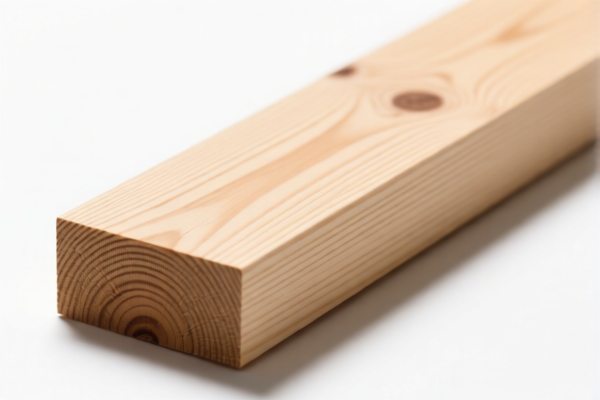
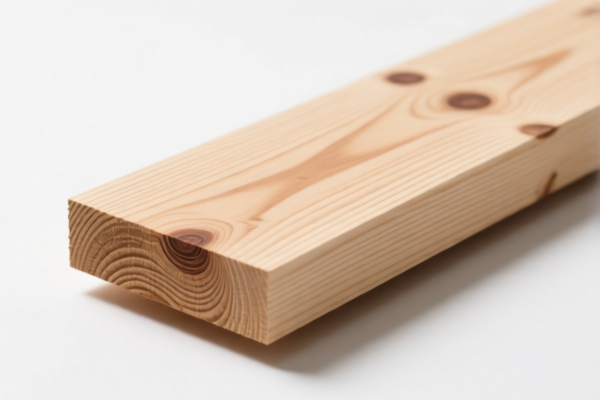
- Sawn Wood (Semi-finished): Planks, beams, squared timber, processed for structural use. → Usually Chapter 4407.
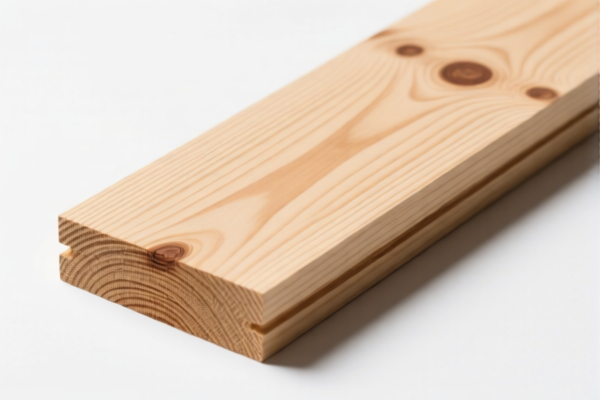
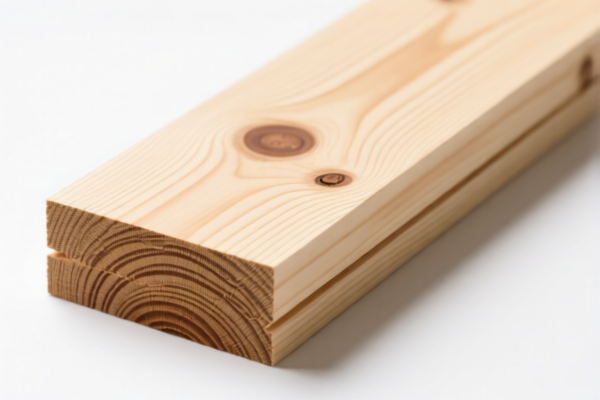
- Profiled Wood (Finished/Semi-finished): Tongue-and-groove, molded, or shaped edges for carpentry/flooring. → Usually Chapter 4409.
⚠️ Critical Differentiator:
- If the wood is squared off and used for construction/beams → 4407 or 4403.
- If the wood has special profiles (grooves, tongues) for assembly → 4409.
- If it is raw logs (cylindrical/rough) → 4403.
📦 II. HS Code Classification Details (2026 Latest Tariff Authoritative Comparison)
| HS Code | Product Description | Applicable Scenario | Processing Level | Wood Type |
|---|---|---|---|---|
4407.11.00.53 |
Wood sawed or chipped lengthwise, sliced or peeled, whether or not planed, sanded or finger-jointed, of a thickness exceeding 6 mm | Coniferous Pines (e.g., Southern Yellow Pine, Spruce) used in construction framing, pallets, or basic carpentry. | Semi-finished (Sawed) | Coniferous |
4407.99.02.95 |
Other wood sawed or chipped lengthwise, sliced or peeled... | Non-Coniferous Hardwoods (e.g., Oak, Maple, Walnut) for furniture, flooring, or veneers. | Semi-finished (Sawed) | Non-Coniferous |
4409.10.90.40 |
Wood continuously shaped (tongued, grooved, etc.) along any of its edges... | Profiled Coniferous Wood (e.g., Pine tongue-and-groove paneling, molding). | Finished/Semi-finished (Profiled) | Coniferous |
4403.21.01.30 |
Wood treated with paint, stain, creosote, or other preservatives; coniferous species | Treated Logs/Timbers (e.g., Pressure-treated pine posts, railroad ties). | Raw/Treated | Coniferous |
4403.26.01.64 |
Other wood, impregnated, coated, or covered with paint, stain, creosote, or other preservatives; non-coniferous | Treated Hardwoods (e.g., Pressure-treated oak beams). | Raw/Treated | Non-Coniferous |
4409.29.91.00 |
Wood continuously shaped along any of its edges... of non-coniferous wood | Profiled Hardwoods (e.g., Walnut or Oak flooring with tongue-and-groove). | Finished/Semi-finished (Profiled) | Non-Coniferous |
🔍 Key Reminder:
- Chapter 4403 is for Logs/Raw Timber (often treated).
- Chapter 4407 is for Sawn Wood (planks/beams).
- Chapter 4409 is for Profiled Wood (moldings/flooring).
- Coniferous (Softwood) vs. Non-Coniferous (Hardwood) determines the specific subheading.
💰 III. 2026 Latest Tariff Rate Breakdown (Including Additional Duties & Policy Surcharges)
✅ Applicable Country: United States (US)
✅ Country of Origin: China (CN)
✅ Effective Date: 2025 November 10 onwards (including subsequent imports)
🎯 1. General Tariff Structure for Wood Products (All HS Codes Above)
| Item | Content |
|---|---|
| Base Tariff Rate | 0% (Most wood products from China enter with 0% MFN base rate) |
| Section 301 Additional Duty | +25% (Imposed by USITC under Trade Act Section 301) |
| IEEPA Additional Duty | +10% (Imposed under International Emergency Economic Powers Act, targeting specific Chinese goods) |
| Total Effective Tax Rate | 35.0% |
| Tax Calculation | CIF Value × 35% |
| De Minimis Exemption Eligible | ❌ NO (deny_de_minimis) |
| Legal Authority Path | IEEPA:9903.01.25 → USITC:440x.xx.xx.xx → FOOTNOTE:9903.88.01 |
📌 Explanation:
- "Base 0%": Standard MFN (Most Favored Nation) tariff for wood products is typically low or zero.
- "25% Section 301 Duty": This is the heavy hitter. It applies to almost all wood products originating from China due to trade war tariffs.
- "10% IEEPA Duty": An additional surcharge specifically targeting Chinese goods under emergency economic powers.
- "Total 35%": The combined burden is extremely high. Profit margins must account for this 35% cost immediately.
- No De Minimis: Packages under $800 (Section 321) do NOT apply. All wood imports are scrutinized and taxed fully.
🛠️ IV. Customs Clearance Practical Advice (Battle-Tested Pitfall Avoidance Guide)
✅ 1. Required Documentation List (Mandatory)
| Document | Must Provide | Explanation |
|---|---|---|
| ✅ Commercial Invoice | ✔️ | Must clearly state "Wood/Lumber," species (e.g., Pine/Oak), dimensions, and treatment status. |
| ✅ Packing List | ✔️ | Detailed breakdown of pallets, crates, and units. |
| ✅ Phytosanitary Certificate | ✔️ | Crucial for wood! Issued by origin country’s agricultural authority, certifying pest-free status. |
| ✅ Fumigation Certificate | ✔️ | Proof that wood has been treated against pests (ISPM 15 standard). |
| ✅ Species Declaration | ✔️ | Legal requirement to specify tree species (Coniferous vs. Non-Coniferous). |
| ✅ Treatment Records | ✔️ | If treated (4403.2x), provide proof of preservative use (e.g., Creosote, CCA). |
✅ 2. Declaration Tips (Key Mantra)
🔥 “Species First, Treatment Clear, Profile Defined, Code Accurate!”
| Scenario | Correct Declaration | Wrong Practice |
|---|---|---|
| Untreated Pine Planks | 4407.11.00.53 (Sawed, Coniferous) |
Declaring as "Logs" (4403) → Inspection Delay |
| Treated Railroad Ties | 4403.21.01.30 (Treated Coniferous) |
Forgetting to declare "Treated" → Quarantine/Rejection |
| Oak Flooring (Tongue & Groove) | 4409.29.91.00 (Profiled Non-Coniferous) |
Declaring as "Sawed Wood" (4407) → Wrong Code |
| Pallets (ISPM 15) | Declare separately or as "Wood Packaging" | Ignoring phytosanitary rules → Whole Shipment Quarantined |
✅ 3. Special Case Handling
| Scenario | Handling Advice |
|---|---|
| Wood Packaging (Pallets/Crates) | Must bear IPPC Stamp (ISPM 15). If missing, entire shipment may be rejected or re-exported. |
| Treated Wood (Pressure-Treated) | Must declare the type of preservative (e.g., CCA, ACQ). Some chemicals have additional environmental restrictions. |
| Mixed Species Loads | If a single container contains both Pine and Oak, split the HS codes and declare separately to avoid penalties. |
| Raw Logs vs. Sawn | Ensure the physical product matches the description. "Logs" that are actually "Sawn" will be reclassified and penalized. |
🌍 V. Global Market Comparison for Lumber (2026 Latest)
| Country/Region | Recommended HS Code | Base Tariff | Additional Duty (China Origin) | Notes |
|---|---|---|---|---|
| 🇺🇸 USA | 4407.11.00.53 etc. |
0% | 35% (25% + 10%) | Highest cost. Strict Phytosanitary rules. |
| 🇨🇳 China | 4407.11.00.53 |
5-15% | None | Import duty applies, but no US-style surcharges. |
| 🇪🇺 EU | 4407.11.00.53 |
2-4% | None (unless EU Carbon Border Tax applies) | Strict EUTR (EU Timber Regulation) due diligence required. |
| 🇨🇦 Canada | 4407.11.00.53 |
0% (CUSMA) | None | CUSMA preference if North American origin. |
| 🇯🇵 Japan | 4407.11.00.53 |
3.2% | None | JAS (Japanese Agricultural Standard) certification helpful. |
📌 Conclusion:
- USA is the most expensive and regulated market for Chinese lumber due to the 35% combined tariff.
- EU requires strict legal sourcing documentation (EUTR).
- Canada offers tariff advantages under CUSMA for North American wood.
📌 VI. Common Errors & Pitfall Guide (Lessons Learned the Hard Way)
❌ Error 1: Failing to declare Treatment (e.g., Creosote)
👉 Consequence: Customs cannot determine environmental safety → Shipment Held for Chemical Inspection → Delays + Storage Fees.
❌ Error 2: Missing Phytosanitary Certificate or IPPC Stamp on pallets
👉 Consequence: Immediate Quarantine. The entire container may be fumigated at your expense or returned.
❌ Error 3: Misclassifying Profiled Wood as Sawed Wood
👉 Consequence: Wrong HS Code → Incorrect Duty Payment → Audit Risk + Penalties.
❌ Error 4: Assuming De Minimis ($800) applies to wood
👉 Consequence: No Exemption. All wood imports, regardless of value, are subject to the 35% tariff and full inspection.
✅ Correct Approach:
"Southern Yellow Pine Lumber, 2x4x8, Unfinished, Sawn Lengthwise, for Construction Use. Origin: China. Treated: Yes/No."
🎯 VII. Conclusion: Professional Clearance Saves Money!
🎯 Remember the Mantra:
🔹 "35% Tax is Real (25% + 10%), No De Minimis!"
🔹 "Phytosanitary Certificate is Mandatory, No Stamp = No Entry!"
🔹 "Coniferous vs. Non-Coniferous Determines the Code, Mistake = Audit!"
📌 Pro Tip:
- For large volumes, consider Advance Rulings from US CBP to confirm HS Code stability.
- Ensure your supplier provides ISPM 15 marked pallets – this is non-negotiable for US entry.
- If possible, explore third-country manufacturing (e.g., Vietnam, Thailand) for lower tariff exposure (0-5%), though Rules of Origin must be strictly met.
📣 Immediate Action:
📞 Contact a licensed customs broker specialized in wood products.
📋 Prepare Phytosanitary Certificates and Treatment Records before shipping.
🚀 Clear Customs Smoothly, Avoid Quarantine, Protect Your Margins!
✨ Professional Classification, Starting with Accuracy!
💼 Your Wood Products Are Valuable; Don’t Let 35% Tax and Quarantine Ruin Them!
用户评价
关于 HS 编码归类
协调制度(HS)是由世界海关组织(WCO)制定的国际贸易商品分类标准。全球 200 多个国家采用 HS 系统作为海关关税、贸易统计和进出口监管的基础。
每个 HS 编码遵循以下层级结构:
- 章(2 位)——商品大类(例如:第 84 章:机器和机械设备)
- 品目(4 位)——章内的更具体分类
- 子目(6 位)——国际通用细分,所有 WCO 成员国统一使用
- 本国细分(8-10 位)——各国自行扩展的细分编码,如美国 HTSUS 10 位编码
正确的 HS 编码归类对于顺利通关、准确缴纳关税和遵守贸易法规至关重要。错误归类可能导致海关延误、多缴关税或罚款。
从CN进口到US时,适用的关税税率可能包括:
- 最惠国(MFN)税率——适用于 WTO 成员国的标准关税税率
- 普通税率——适用于无贸易协定国家
- 贸易救济关税——附加关税,如 301 条款(反倾销)、232 条款(国家安全)或反补贴税
本页内容仅供参考。如需正式归类,请咨询当地海关或持牌报关代理。