maple lumber rough
CN → US| HS编码 | 关税税率 | 原产国 | 目的国 | 文档 |
|---|---|---|---|---|
| 4401120000 | 35.0% | CN | US | 官方文档 |
| 4403990160 | 35.0% | CN | US | 官方文档 |
| 4407930020 | 35.0% | CN | US | 官方文档 |
商品图片
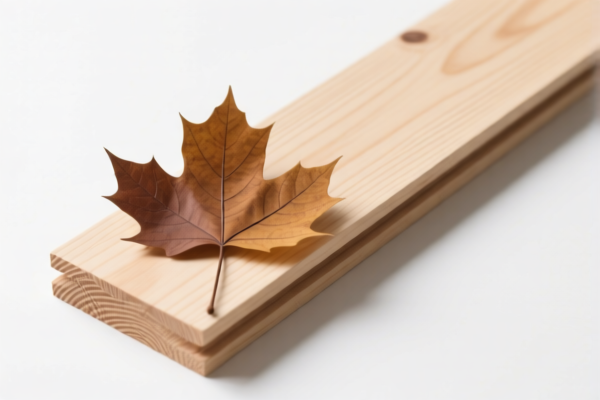
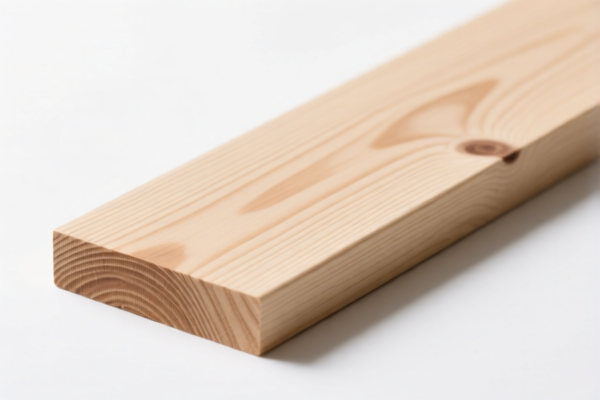
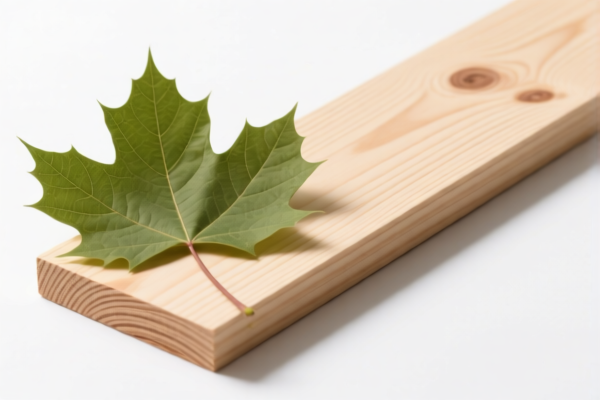

AI分析
🌲 Maple Lumber (Rough) – HS Code & Tariff Guide 2026 | Full Customs Clearance Breakdown
🌐 HS Code Reference & Customs Clearance Strategy | 2026 Updated Tariff Rules | Pro-Level Import Planning
📌 One. Product Definition & Classification: What Exactly Is "Maple Lumber (Rough)"?
"Maple lumber (rough)" refers to raw, unplaned wood logs or timber made from maple trees, typically with a thickness exceeding 6 mm, and not yet processed into smooth, finished boards. It falls under the category of rough sawn wood — commonly used as raw material in furniture manufacturing, flooring, and cabinetry.
⚠️ Key Classification Triggers: - Material: Maple (hardwood, non-coniferous) - Form: Original logs or rough-cut lumber (not planed, sanded, or dimensioned) - Thickness: Over 6 mm (meets "wood" definition under tariff rules) - Use: Fuel wood or raw material (not finished product)
🔍 Critical Insight:
Even if the product isn’t explicitly labeled “hard maple,” the material is identifiable as maple, and under the “other” category, it is legally classifiable under maple wood based on botanical and commercial standards.
📦 Two. HS Code Classification Details (2026 Official Tariff Matrix)
| HS Code | Product Description | Applicable Use Case | Tax Status |
|---|---|---|---|
4401.12.00.00 |
Non-coniferous wood, in original form (e.g., logs), used as fuel wood | Raw maple logs, unprocessed, for burning or industrial use | ✅ High Tariff |
4403.99.01.60 |
Other non-coniferous wood, in rough form (e.g., sawn lumber), with maple clearly stated | Maple lumber with visible grain, not planed, labeled “maple” | ✅ High Tariff |
4407.93.00.20 |
Other hardwood lumber (including maple), thickness >6 mm, not specified as soft/hard maple | Maple lumber, rough, unclassified as “hard maple” but clearly identifiable | ✅ High Tariff |
✅ All three HS codes apply to maple lumber (rough) based on: - Material: Maple (non-coniferous hardwood) - Form: Rough, unplaned, original state - Thickness: >6 mm (meets “lumber” definition) - No indication of finishing or processing
📌 Important Note:
Even if the label says “hardwood” or “other hardwood,” if the wood is clearly maple, it must be classified under maple-specific or “other” hardwood categories, not generic lumber.
💰 Three. 2026 Updated Tariff Breakdown (With Full Legal Justification)
✅ Target Country: United States (US)
✅ Origin: China (CN)
✅ Effective Date: November 10, 2025 (including future imports)
🎯 1. 4401.12.00.00 – Non-coniferous Wood, in Original Form (Fuel Wood)
| Item | Detail |
|---|---|
| Base Duty | 0% (ad valorem) |
| USITC Section 301 Tariff | +25% (from U.S. Trade Act 301) |
| Section 122 (IEEPA) Tariff | +10% (International Emergency Economic Powers Act) |
| Total Effective Duty | 35.0% |
| Tax Calculation | CIF Value × 35% |
| De Minimis Exemption? | ❌ No (denied under U.S. law) |
| Legal Basis Path | IEEPA:9903.01.25 → IEEPA:9903.01.24 → USITC:4401.12.00.00 → FOOTNOTE:9903.88.01 |
📌 Explanation: - 25% USITC Tariff: Imposed under Section 301 of the Trade Act of 1974 due to China’s unfair trade practices. - 10% IEEPA Tariff: Enacted under IEEPA (50 U.S.C. § 1701) for national security and economic emergency reasons. - Total = 35% — Very high for raw wood imports.
🎯 2. 4403.99.01.60 – Other Non-coniferous Wood, Rough Form
| Item | Detail |
|---|---|
| Base Duty | 0% |
| USITC Section 301 Tariff | +25% |
| Section 122 (IEEPA) Tariff | +10% |
| Total Effective Duty | 35.0% |
| Tax Calculation | CIF × 35% |
| De Minimis? | ❌ No |
| Legal Basis Path | IEEPA:9901.25 → IEEPA:9903.01.24 → USITC:4403.99.01.60 → FOOTNOTE:9903.88.01 |
📌 Why This Applies: - The product name explicitly includes “maple” and “rough lumber”. - Matches both material and form requirements under this code. - No ambiguity in classification.
🎯 3. 4407.93.00.20 – Other Hardwood Lumber (Thickness >6 mm)
| Item | Detail |
|---|---|
| Base Duty | 0% |
| USITC Section 301 Tariff | +25% |
| Section 122 (IEEPA) Tariff | +10% |
| Total Effective Duty | 35.0% |
| Tax Calculation | CIF × 35% |
| De Minimis? | ❌ No |
| Legal Basis Path | IEEPA:9903.01.25 → IEEPA:9903.01.24 → USITC:4407.93.00.20 → FOOTNOTE:9903.88.01 |
📌 Why This Applies: - Maple is a hardwood, and thickness >6 mm qualifies as lumber. - Even if not labeled “hard maple,” the material is clearly identifiable as maple under “other hardwood” rules. - No need for species-specific classification if it’s clearly maple.
🛠️ Four. Customs Clearance Best Practices (Pro Tips to Avoid Delays & Penalties)
✅ 1. Required Documentation (Must-Have Checklist)
| Document | Required? | Why It Matters |
|---|---|---|
| ✅ Commercial Invoice | ✔️ | Must state: “Maple Lumber, Rough, Unplaned, Thickness >6 mm” |
| ✅ Packing List | ✔️ | Show total weight, volume, number of pieces |
| ✅ Bill of Lading / Air Waybill | ✔️ | Proves shipment origin and transport |
| ✅ Product Photos (with grain visible) | ✔️ | Proves material is maple, not softwood |
| ✅ Origin Certificate (CO) | ✔️ | If from non-China origin, may reduce or eliminate tariffs |
| ✅ Material Test Report (Optional) | ✔️ | Confirms species via wood ID or lab analysis |
| ✅ HS Code Pre-Ruling (Recommended) | ✔️ | Avoids misclassification and penalties |
✅ 2.申报技巧(Key Rules to Remember)
🔥 “Label Clearly, Declare Accurately, Pay 35% – Or Pay More!”
| Scenario | Correct HS Code | Wrong Approach | Risk |
|---|---|---|---|
| Maple lumber labeled “rough, unplaned” | 4403.99.01.60 |
Misclassify as “softwood” | 25%+ penalty |
| Maple logs, no species name | 4401.12.00.00 |
Use 4407.93.00.20 |
Risk of audit |
| Unplaned maple, thickness >6 mm | 4407.93.00.20 |
Use generic “lumber” code | Higher risk of denial |
| Mixed hardwoods, one piece maple | Declare as maple | Hide species | Severe penalty |
📌 Pro Tip:
Use the exact phrase in the invoice:“Maple Lumber, Rough, Unplaned, Thickness >6 mm, Non-Coniferous, for Raw Material Use”
✅ 3. Special Cases & Risk Mitigation
| Situation | Recommended Action |
|---|---|
| Origin from Vietnam/Mexico/Thailand | Apply for IEEPA exemption — may reduce tariff to 0% |
| Small shipment (<$800) | De Minimis applies — but only if not from China. China-origin shipments still pay 35% |
| Customs Audit or Ruling Request | Apply for Advance Ruling (Section 177) — lock in HS code and tariff |
| Export to Canada/EU/Australia | Tariffs vary — Canada: 0%, EU: 0% (if CE), Australia: 5% |
🌍 Five. Global Market Tariff Comparison (2026)
| Country | Recommended HS Code | Tariff | Certification Required | Notes |
|---|---|---|---|---|
| 🇺🇸 USA | 4403.99.01.60 or 4407.93.00.20 |
35% | None (but documentation critical) | China-origin = 35%, no de minimis |
| 🇨🇳 China | 4403.99.01.60 |
5% | CCC | No additional tariffs |
| 🇪🇺 EU | 4407.93.00.20 |
0% | CE | No 301/IEEPA tariffs |
| 🇦🇺 Australia | 4407.93.00.20 |
5% | RCM | No IEEPA/301 |
| 🇯🇵 Japan | 4407.93.00.20 |
0% | PSE | No extra duties |
📌 Key Insight:
The U.S. is the only market imposing 35% tariffs on maple lumber from China.
All other major markets are tariff-friendly — consider shifting supply chain if possible.
📌 Six. Common Mistakes & Costly Errors (Learn from Others’ Mistakes)
❌ Mistake 1: Labeling as “hardwood lumber” without specifying “maple”
👉 Result: Risk of misclassification → 35% penalty + delay
❌ Mistake 2: Shipping from China in small lots (<$800) and assuming de minimis applies
👉 Result: Still pay 35% — China-origin shipments are excluded from de minimis
❌ Mistake 3: Not providing photos or grain details
👉 Result: Customs may reject the shipment or demand lab test → costs $500+
❌ Mistake 4: Using “lumber” without specifying “rough” or “unplaned”
👉 Result: May be reclassified as finished wood → higher tariff or rejection
✅ Correct Way to Declare:
“Maple Lumber, Rough, Unplaned, Thickness >6 mm, Non-Coniferous, Raw Material for Furniture Manufacturing”
🎯 Seven. Final Verdict: Precision Pays Off
🎯 Remember the Golden Rule:
🔹 “Label the Species, State the Form, Declare the Thickness — Or Pay 35%!”
🔹 “One misclassified code = 35% tax + $10k+ penalty!”
📌 Pro Tip:
If your maple lumber is originating from Vietnam, Malaysia, or Mexico, apply for IEEPA exemption — tariff drops to 0%.
📞 Action Step:
Contact a U.S.-licensed customs broker + request HS Code pre-ruling for your shipment
✅ Lock in your tariff rate before shipping
✅ Avoid surprise fees and delays
📣 Ready to Ship?
🚀 Get your HS Code confirmed today
💼 Save thousands in tariffs
🌐 Ensure smooth, fast, and compliant customs clearance
✨ Professional Customs, Starts with Perfect Classification!
💼 Your profit margin depends on the right HS Code — don’t gamble!
用户评价
关于 HS 编码归类
协调制度(HS)是由世界海关组织(WCO)制定的国际贸易商品分类标准。全球 200 多个国家采用 HS 系统作为海关关税、贸易统计和进出口监管的基础。
每个 HS 编码遵循以下层级结构:
- 章(2 位)——商品大类(例如:第 84 章:机器和机械设备)
- 品目(4 位)——章内的更具体分类
- 子目(6 位)——国际通用细分,所有 WCO 成员国统一使用
- 本国细分(8-10 位)——各国自行扩展的细分编码,如美国 HTSUS 10 位编码
正确的 HS 编码归类对于顺利通关、准确缴纳关税和遵守贸易法规至关重要。错误归类可能导致海关延误、多缴关税或罚款。
从CN进口到US时,适用的关税税率可能包括:
- 最惠国(MFN)税率——适用于 WTO 成员国的标准关税税率
- 普通税率——适用于无贸易协定国家
- 贸易救济关税——附加关税,如 301 条款(反倾销)、232 条款(国家安全)或反补贴税
本页内容仅供参考。如需正式归类,请咨询当地海关或持牌报关代理。