meeting notebook
CN → US| HS编码 | 关税税率 | 原产国 | 目的国 | 文档 |
|---|---|---|---|---|
| 4820102010 | 35.0% | CN | US | 官方文档 |
| 4820102060 | 35.0% | CN | US | 官方文档 |
商品图片
AI分析
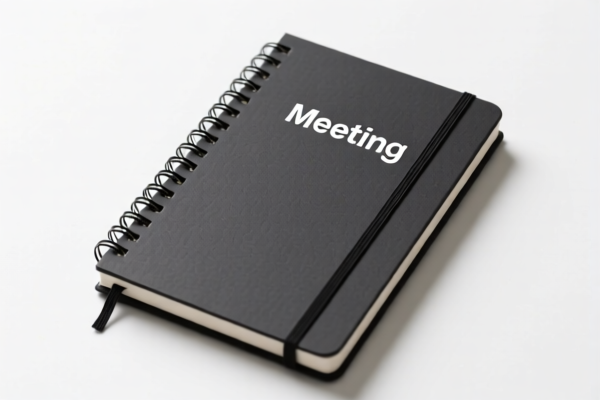
📓 Meeting Notebook (Registers, Account Books, Diaries & Similar Articles of Paper)
🌐 HS Code Reference & Customs Clearance Guide | 2026 Latest Tariff Analysis | Professional Entry Strategy
📌 I. Product Definition & Classification: Are You Sure It’s Just a "Notebook"?
A Meeting Notebook in international trade is not a single generic item. It falls under the broad chapter of "Articles of Stationery, of Paper or Paperboard." The specific classification depends entirely on its binding method, specific use, and physical structure.
In the context of the provided data, these items are strictly categorized into two sub-groups based on their form:
- Bound Diaries/Notebooks/Address Books: Items that are permanently bound (sewn, glued, stapled) where pages cannot be easily removed without damaging the binding.
- Memorandum Pads/Letter Pads & Similar: Items that are often loose-leaf, spiral-bound (sometimes), or pad-bound, designed for quick writing and tearing.
⚠️ Critical Distinction Point:
- If the notebook has a hard or soft cover and is permanently bound (pages fixed in place) → It is a "Diary/Notebook" → HS Code 4820.10.20.10.
- If the notebook is a loose pad, unbound stack, or memorandum pad (often without a sturdy cover, or designed for single-side use) → It is "Other" → HS Code 4820.10.20.60.
📦 II. HS Code Classification Details (2026 Latest Tariff Authority Cross-Reference)
Based on the provided data, there are exactly two applicable HS Codes for "Meeting Notebooks" depending on the manufacturing style:
| HS Code | Product Description | Applicable Scenario | Binding Type |
|---|---|---|---|
4820.10.20.10 |
Diaries, notebooks and address books, bound; memorandum pads, letter pads and similar articles Diaries and address books | Hardcover meeting books, stitched bound journals, address books with fixed pages | ✅ Bound (Fixed pages) |
4820.10.20.60 |
Diaries, notebooks and address books, bound; memorandum pads, letter pads and similar articles Other | Spiral-bound notebooks (if not considered "bound" in local interpretation), loose-leaf pads, memo pads, tear-off notepads | ❌ Other (Loose/Spiral/Pad) |
🔍 Key Reminder:
- The phrase "Bound" in4820.10.20.10usually refers to sewn or glued bindings (like a traditional diary).
- The phrase "Other" in4820.10.20.60captures everything else, including spiral coils, wire combs, or simple stapled pads.
- Do not mix these up. A spiral-bound "Meeting Notebook" typically falls under "Other" (...60) unless local customs explicitly classify spiral as "bound" (rare for this specific subheading distinction).
💰 III. 2026 Latest Tariff Rate Breakdown (Including Surtaxes & Policy Add-ons)
✅ Applicable Country: United States (US)
✅ Origin: China (CN)
✅ Effective Time: Ongoing (Subject to current trade policies)
🎯 1. 4820.10.20.10 —— Diaries and Address Books (Bound)
| Item | Content |
|---|---|
| Base Tariff | 0.0% (ad valorem) |
| Additional Tariff (Section 301/Retaliatory) | +25.0% |
| Total Tax Rate | 25.0% |
| Tax Calculation | CIF Value × 25% |
| De Minimis Eligibility | ❌ No (De minimis generally does not apply to goods subject to Section 301 tariffs) |
| Legal Basis Path | HTSUS: 4820.10.20.10 → Section 301 List 4B (or applicable list for paper products) |
📌 Explanation:
- The base duty is 0%, meaning the product itself is not inherently taxed high.
- However, the +25% surcharge is significant. This is typically due to trade remedies or Section 301 tariffs on Chinese imports.
- Total Cost Impact: For every $1,000 CIF value, you pay $250 in duties.
🎯 2. 4820.10.20.60 —— Other (Memorandum Pads, etc.)
| Item | Content |
|---|---|
| Base Tariff | 0.0% (ad valorem) |
| Additional Tariff (Section 301/Retaliatory) | +25.0% |
| Total Tax Rate | 25.0% |
| Tax Calculation | CIF Value × 25% |
| De Minimis Eligibility | ❌ No |
| Legal Basis Path | HTSUS: 4820.10.20.60 → Section 301 List 4B (or applicable list for paper products) |
📌 Note:
- Interestingly, both categories have the SAME total tax rate of 25%.
- The distinction matters for inventory classification, anti-dumping checks, or specific trade agreement preferences (though none seem to apply here given the 25% add-on).
- Ensure your Commercial Invoice description matches the HS Code:
- For...10: Use terms like "Bound Diary," "Stitched Notebook," "Hardcover Journal."
- For...60: Use terms like "Memo Pad," "Spiral Notebook," "Loose-leaf Pad," "Letter Pad."
🛠️ IV. Customs Clearance Practical Advice (Battle-Tested Pitfall Guide)
✅ 1. Documentation Checklist (Missing Any = Delay)
| Document | Required? | Notes |
|---|---|---|
| ✅ Commercial Invoice | ✔️ | Must clearly state "Paper Notebooks" and specify if "Bound" or "Pad". |
| ✅ Packing List | ✔️ | Detail net/gross weight. Paper products are heavy; ensure weight matches. |
| ✅ Product Photos | ✔️ | Show the binding method (stitched vs. spiral vs. stapled) to prove HS code. |
| ✅ Composition Analysis | ✔️ | Confirm >50% paper content (standard for this HS). |
| ✅ Labeling | ✔️ | Must include "Made in China" (mandatory for US entry). |
✅ 2. Declaration Tips (Key Mantras)
🔥 "Bind Type Dictates Code, 'Other' for Spirals, 'Bound' for Stitched!"
| Scenario | Correct Declaration | Incorrect Approach |
|---|---|---|
| Stitched/Glued Cover Notebook | 4820.10.20.10 (Diary/Notebook, Bound) |
Mislabeling as "Memo Pad" → Risk of audit. |
| Spiral/Wire Coil Notebook | 4820.10.20.60 (Other) |
Mislabeling as "Bound Diary" → Wrong subheading. |
| Simple Stapled Pad (Tear-off) | 4820.10.20.60 (Other) |
Correctly classified as "Other". |
| Digital Tablet | ❌ Not Paper | If it has an e-ink screen, it’s not 4820! It may be 8471 or 9013. |
✅ 3. Special Handling Cases
| Case | Handling Advice |
|---|---|
| OEM Printed Notebooks | Ensure the design is not copyrighted. Customs may request proof of IP clearance. |
| Gift Sets (Notebook + Pen) | If packed together, the principal character (notebook) usually determines the HS code. Ensure the notebook is the dominant item. |
| Sample vs. Commercial | Even samples are subject to the 25% tariff. Do not declare as "Sample with no commercial value" to avoid duty if they are being sold. |
| Origin Marking | "Made in China" must be permanently affixed. If missing, goods may be refused entry. |
🌍 V. Global Market Comparison (2026 Overview)
| Country/Region | Recommended HS Code | Base Duty | Surtax (China) | Total Rate | Notes |
|---|---|---|---|---|---|
| 🇺🇸 USA | 4820.10.20.10 / ...60 |
0% | +25% | 25% | High impact of trade war tariffs. |
| 🇨🇳 China (Import) | Same | 5-8% | 0% | 5-8% | Lower tariff if importing INTO China. |
| 🇪🇺 EU | 4820.10 | 3.2% | 0% | 3.2% | No extra surtax. Much cheaper for EU market. |
| 🇬🇧 UK | 4820.10 | 4% | 0% | 4% | Post-Brexit tariffs apply. |
| 🇯🇵 Japan | 4820.10 | 0-8% | 0% | 0-8% | Usually low or zero depending on specific type. |
📌 Conclusion:
- The USA is the most expensive market for these items due to the 25% surcharge.
- For EU/UK/Japan, the cost is significantly lower. Consider final assembly or packaging in those regions to potentially alter origin status (if rules of origin are met).
📌 VI. Common Errors & Pitfalls (Lessons Learned)
❌ Error 1: Declaring Spiral Notebooks as "Bound Diaries" (...10)
👉 Consequence: Incorrect subheading. While tax rate is same here, it triggers manual examination, leading to delays.
❌ Error 2: Ignoring "Made in China" labeling
👉 Consequence: Refusal of Entry by US Customs and Border Protection (CBP). Must be returned or destroyed.
❌ Error 3: Mixing Digital Planners with Paper Notebooks
👉 Consequence: Digital devices (e-readers/tablets) have different HS codes and often lower or zero tariffs. Misdeclaration is fraud.
❌ Error 4: Under-Valuing to Avoid Duty
👉 Consequence: CBP aggressively audits paper products. Penalties can be 3x the duty evaded.
✅ Correct Practice:
"Paper Notebook, Spiral Bound, A5 Size, 100 Sheets, 'Made in China', for Business Use"
➡️ Declare as4820.10.20.60with 25% duty.
🎯 VII. Conclusion: Precise Classification Saves Money & Time
🎯 Remember the Mantra:
🔹 "Spiral is 'Other', Stitched is 'Bound', Both Pay 25% in US!"
🔹 "Label Clearly, Bind Type Matters, Don't Mix Digital with Paper!"
📌 Pro Tip:
If you are shipping to the USA, calculate the Landed Cost including the 25% duty into your pricing model.
For non-US markets, you can price more competitively as the tariff burden is much lower (e.g., 3-8% in EU).
📣 Immediate Action:
📞 Consult your freight forwarder to confirm the binding style classification.
📄 Ensure all packages bear "Made in China".
🚀 Optimize supply chain: Consider final packaging in Vietnam/Mexico for US entry to avoid Section 301 tariffs (if OFAC rules allow).
✨ Professional Clearance Starts with Accurate Classification!
💼 Your margin depends on the decimal point in the HS Code!
用户评价
关于 HS 编码归类
协调制度(HS)是由世界海关组织(WCO)制定的国际贸易商品分类标准。全球 200 多个国家采用 HS 系统作为海关关税、贸易统计和进出口监管的基础。
每个 HS 编码遵循以下层级结构:
- 章(2 位)——商品大类(例如:第 84 章:机器和机械设备)
- 品目(4 位)——章内的更具体分类
- 子目(6 位)——国际通用细分,所有 WCO 成员国统一使用
- 本国细分(8-10 位)——各国自行扩展的细分编码,如美国 HTSUS 10 位编码
正确的 HS 编码归类对于顺利通关、准确缴纳关税和遵守贸易法规至关重要。错误归类可能导致海关延误、多缴关税或罚款。
从CN进口到US时,适用的关税税率可能包括:
- 最惠国(MFN)税率——适用于 WTO 成员国的标准关税税率
- 普通税率——适用于无贸易协定国家
- 贸易救济关税——附加关税,如 301 条款(反倾销)、232 条款(国家安全)或反补贴税
本页内容仅供参考。如需正式归类,请咨询当地海关或持牌报关代理。