mercury based oxidation reaction catalyst
CN → US| HS编码 | 关税税率 | 原产国 | 目的国 | 文档 |
|---|---|---|---|---|
| 2852109000 | 38.0% | CN | US | 官方文档 |
| 3815905000 | 40.0% | CN | US | 官方文档 |
| 3815902000 | 37.8% | CN | US | 官方文档 |
| 2852909000 | 38.0% | CN | US | 官方文档 |
| 2852909000 | 38.0% | CN | US | 官方文档 |
商品图片
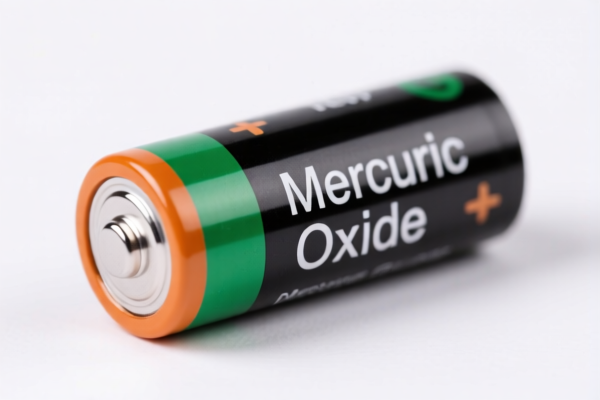
AI分析
🧪 Mercury-Based Oxidation Reaction Catalyst (Mercury-Based Catalysts)
🌐 HS Code Reference & Customs Clearance Guide | 2026 Latest Tariff Analysis | Professional Entry Strategy
📌 I. Product Definition & Classification: What Exactly Is This Catalyst?
Mercury-based oxidation reaction catalysts are specialized chemical agents used to facilitate oxidation processes, often in industrial chemical synthesis or environmental remediation. These products typically contain mercury (Hg) in either inorganic or organic compounds, combined with catalytic properties.
In international trade, classification depends on whether the product is primarily defined by its chemical composition (mercury compound) or its function (catalytic制剂). This distinction is critical for determining the correct HS Code and associated tariff rates.
⚠️ Key Distinction Point:
- If the product is primarily valued as a mercury compound (inorganic/organic), it falls under Chapter 28 (Inorganic/ Organic Chemicals).
- If the product is primarily valued as a catalytic preparation containing mercury, it falls under Chapter 38 (Catalysts).
📦 II. HS Code Classification Details (2026 Latest Tariff Authority Reference)
| HS Code | Product Description | Application Scenario | Chemical Nature |
|---|---|---|---|
2852.10.90.00 |
Other inorganic or organic compounds of mercury | Mercury compounds used in specific catalytic contexts | ✅ Mercury Compound |
3815.90.50.00 |
Other catalysts | Catalysts prepared for oxidation reactions, mercury-based | ✅ Catalytic Agent |
3815.90.20.00 |
Other catalysts (Mercury-containing) | Catalysts specifically noted for mercury content | ✅ Mercury + Catalyst |
2852.90.90.00 |
Other inorganic or organic compounds of mercury (Miscellaneous) | Mercury compounds not specified elsewhere | ✅ Mercury Compound |
🔍 Important Note:
-2852codes classify based on chemical identity (Mercury Compounds).
-3815codes classify based on functional utility (Catalysts).
- Customs authorities may challenge classification if the primary characteristic is ambiguous. Documentation must clearly define whether the mercury content is the primary value driver or if the catalytic activity is.
💰 III. 2026 Latest Tariff Rate Breakdown (Including Surtaxes & Policy Add-ons)
✅ Applicable Country: United States (US)
✅ Country of Origin: China (CN)
✅ Effective Date: From November 10, 2025 (and subsequent imports)
🎯 1. 2852.10.90.00 & 2852.90.90.00 —— Mercury Compounds (Inorganic/Organic)
| Item | Content |
|---|---|
| Base Duty Rate | 3.0% (ad valorem) |
| Section 301 Surcharge | +25.0% |
| Section 122 Tariff | +10.0% |
| Total Effective Rate | 38.0% |
| Tax Calculation | CIF Value × 38.0% |
| De Minimis Exemption | ❌ Not Applicable (High-risk category) |
| Legal Basis Path | USITC:2852.10.90.00 → Section 301: 25% → Section 122: 10% |
📌 Explanation:
- These codes treat the product as a chemical commodity first.
- The 38% total rate is heavily influenced by the Section 301 tariffs on Chinese chemicals.
- Section 122 applies additional tariffs for national security or trade balance reasons, adding another 10%.
🎯 2. 3815.90.50.00 —— Other Catalysts
| Item | Content |
|---|---|
| Base Duty Rate | 5.0% (ad valorem) |
| Section 301 Surcharge | +25.0% |
| Section 122 Tariff | +10.0% |
| Total Effective Rate | 40.0% |
| Tax Calculation | CIF Value × 40.0% |
| De Minimis Exemption | ❌ Not Applicable |
| Legal Basis Path | USITC:3815.90.50.00 → Section 301: 25% → Section 122: 10% |
📌 Explanation:
- Classified as a catalytic preparation.
- Slightly higher total rate (40%) due to a higher base duty (5% vs 3%).
- Regulatory scrutiny is often higher for catalysts due to environmental and safety concerns.
🎯 3. 3815.90.20.00 —— Mercury-Containing Catalysts
| Item | Content |
|---|---|
| Base Duty Rate | 2.8% (ad valorem) |
| Section 301 Surcharge | +25.0% |
| Section 122 Tariff | +10.0% |
| Total Effective Rate | 37.8% |
| Tax Calculation | CIF Value × 37.8% |
| De Minimis Exemption | ❌ Not Applicable |
| Legal Basis Path | USITC:3815.90.20.00 → Section 301: 25% → Section 122: 10% |
📌 Explanation:
- A narrower subheading for catalysts with specific mercury characteristics.
- Offers the lowest base duty (2.8%), resulting in the lowest total rate (37.8%) among the options.
- Requires precise documentation proving the mercury content is integral to the catalytic function to qualify for this specific code.
🛠️ IV. Customs Clearance Practical Advice (Battle-Tested Pitfall Avoidance)
✅ 1. Required Documentation Checklist (Non-Negotiable)
| Document | Must Provide | Description |
|---|---|---|
| ✅ Technical Data Sheet (TDS) | ✔️ | Must explicitly state Mercury (Hg) content %, oxidation reaction type, and catalyst formulation. |
| ✅ Certificate of Composition | ✔️ | Detailed chemical breakdown. Crucial for distinguishing between 2852 (Chemical) and 3815 (Catalyst). |
| ✅ Safety Data Sheet (SDS) | ✔️ | Must comply with OSHA/GHS standards. Mercury is a hazardous material; SDS is mandatory. |
| ✅ Commercial Invoice | ✔️ | Must accurately describe the item as "Mercury-Based Oxidation Catalyst" with HS Code. |
| ✅ Packaging Declaration | ✔️ | Mercury is hazardous; packaging must meet DOT/UN standards for dangerous goods. |
| ✅ EPA/Environmental Permits | ✔️ | If applicable, provide proof of handling permits for mercury-containing substances. |
✅ 2. Declaration Strategy (Key Mnemonic)
🔥 "Composition Determines Chapter, Function Determines Subheading. Mercury is High-Risk, Document Everything!"
| Scenario | Correct Declaration | Incorrect Practice |
|---|---|---|
| Primary value is Mercury Content | 2852.10.90.00 / 2852.90.90.00 |
Misdeclaring as catalyst → Risk of misclassification penalty |
| Primary value is Catalytic Action | 3815.90.50.00 |
Misdeclaring as chemical → Higher scrutiny, potential delay |
| Specific Mercury Catalyst | 3815.90.20.00 |
Using generic catalyst code → Missed opportunity for lower base rate |
| Mixed/Complex Formulation | Provide Expert Opinion | Ambiguous description → Customs audit & delay |
✅ 3. Special Handling Considerations
| Situation | Handling Advice |
|---|---|
| Hazardous Material (Hazmat) | Mercury is toxic. Ensure Hazmat declaration is filed. Packaging must be leak-proof and labeled. |
| Environmental Regulations | Mercury is heavily regulated. Provide EPA compliance documents if requested. |
| Origin Marking | Clearly mark "Made in China" to trigger Section 301 & 122 tariffs correctly. Avoiding this leads to fraud penalties. |
| Valuation | Ensure CIF value is accurate. High tariffs mean any undervaluation is highly visible to CBP. |
🌍 V. Global Market Comparison (2026 Latest)
| Country/Region | Recommended HS Code | Estimated Tariff | Certification | Remarks |
|---|---|---|---|---|
| 🇺🇸 USA | 2852.10.90.00 / 3815.90.50.00 |
38% - 40% | SDS, Hazmat, EPA | High regulatory burden |
| 🇨🇳 China | 2852.10.90.00 / 3815.90.50.00 |
~5-10% | CNCA, RoHS | Lower barriers for export |
| 🇪🇺 EU | 2852.10.90.00 / 3815.90.50.00 |
~3-5% | REACH, CLP | Strict mercury restrictions under REACH |
| 🇯🇵 Japan | 2852.10.90.00 / 3815.90.50.00 |
~3-5% | JIS, METI | High safety standards |
| 🇮🇳 India | 2852.10.90.00 / 3815.90.50.00 |
~7.5-10% | BIS, WPC | Increasing scrutiny on hazardous goods |
📌 Conclusion:
- USA imposes punitive tariffs (38-40%) due to trade policies.
- EU and Asia have lower tariffs but stricter environmental compliance (REACH, etc.).
- Mercury-based products face global regulatory headwinds regardless of tariff rates.
📌 VI. Common Errors & Pitfall Avoidance (Lessons from Experience)
❌ Error 1: Declaring "Chemical Catalyst" without specifying Mercury content
👉 Consequence: CBP may reclassify, assess higher duties, or seize goods for non-disclosure of hazardous materials.
❌ Error 2: Using "Miscellaneous Chemicals" (e.g., 29XX) for mercury compounds
👉 Consequence: Misclassification. Mercury has its own specific chapter (2852). Penalties for misdeclaration can reach 40% of duty owed.
❌ Error 3: Ignoring Section 122 Tariffs
👉 Consequence: Underpayment. Section 122 adds 10% on top of Section 301. Total 38-40% must be calculated.
❌ Error 4: Poor Packaging for Hazmat
👉 Consequence: Shipment rejected or destroyed by US Customs and Border Protection (CBP) or EPA.
✅ Correct Approach:
"Mercury-Based Oxidation Catalyst, Contains X% Hg, Inorganic Compound, For Industrial Use, Model XYZ, SDS Attached, Hazmat Certified"
🎯 VII. Conclusion: Precision in Classification, Safety in Handling
🎯 Remember the Mantra:
🔹 "Mercury is Chapter 28 or 38, Base Duty 2.8-5%, Plus 35% Surtaxes."
🔹 "Document the Mercury, Declare the Hazmat, Avoid the Penalties."
📌 Pro Tip:
If your catalyst is sourced from Vietnam, Malaysia, or Thailand, you may exempt from Section 301 & 122 tariffs, reducing the effective rate to ~2.8-5%.
Consider supply chain diversification to mitigate high US tariff costs.
Always apply for an Advance Ruling from CBP to lock in the HS Code classification before shipment.
📣 Immediate Action:
📞 Consult a licensed customs broker.
📄 Prepare full SDS and Technical Specifications.
🚀 Clear customs smoothly, ensure safety, and protect margins!
✨ Professional Customs Clearance Starts with Precise Classification!
💼 Your Bottom Line Depends on Accurate HS Codes!
用户评价
关于 HS 编码归类
协调制度(HS)是由世界海关组织(WCO)制定的国际贸易商品分类标准。全球 200 多个国家采用 HS 系统作为海关关税、贸易统计和进出口监管的基础。
每个 HS 编码遵循以下层级结构:
- 章(2 位)——商品大类(例如:第 84 章:机器和机械设备)
- 品目(4 位)——章内的更具体分类
- 子目(6 位)——国际通用细分,所有 WCO 成员国统一使用
- 本国细分(8-10 位)——各国自行扩展的细分编码,如美国 HTSUS 10 位编码
正确的 HS 编码归类对于顺利通关、准确缴纳关税和遵守贸易法规至关重要。错误归类可能导致海关延误、多缴关税或罚款。
从CN进口到US时,适用的关税税率可能包括:
- 最惠国(MFN)税率——适用于 WTO 成员国的标准关税税率
- 普通税率——适用于无贸易协定国家
- 贸易救济关税——附加关税,如 301 条款(反倾销)、232 条款(国家安全)或反补贴税
本页内容仅供参考。如需正式归类,请咨询当地海关或持牌报关代理。