mercury based selective catalyst
CN → US| HS编码 | 关税税率 | 原产国 | 目的国 | 文档 |
|---|---|---|---|---|
| 2852109000 | 38.0% | CN | US | 官方文档 |
| 3815905000 | 40.0% | CN | US | 官方文档 |
| 2852909000 | 38.0% | CN | US | 官方文档 |
| 3815902000 | 37.8% | CN | US | 官方文档 |
| 3815902000 | 37.8% | CN | US | 官方文档 |
商品图片
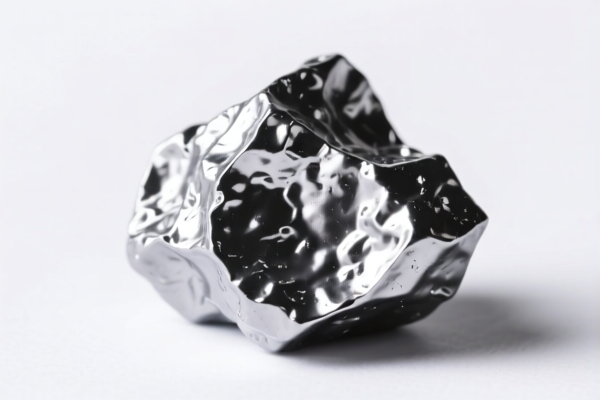
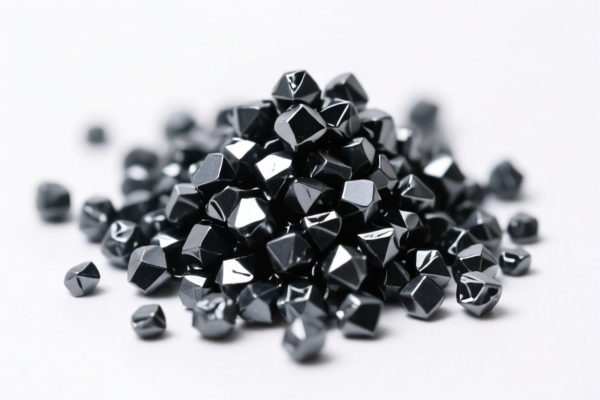

AI分析
⚗️ Mercury-Based Selective Catalysts (Mercury Catalysts)
🌐 HS Code Reference & Customs Clearance Guide | 2026 Latest Tariff Analysis | Professional Level Entry Strategy
📌 I. Product Definition & Classification: What are "Mercury-Based Catalysts"?
Mercury-based selective catalysts are specialized chemical agents primarily used in industrial processes such as the production of vinyl chloride monomer (VCM), acetaldehyde, and other organic compounds. Due to the high toxicity and environmental hazards of mercury, these products are strictly regulated in international trade.
In customs classification, they are generally divided into two main categories based on their physical form and primary function:
- Chemical Compounds: Mercuric chloride or other mercury salts/compounds acting as the active ingredient.
- Catalytic Preparations: Pre-formulated catalysts where mercury is supported on a carrier (e.g., activated carbon, silica gel) specifically designed for catalytic reactions.
⚠️ Key Distinction Point:
- If the product is a pure chemical compound or a mixture defined by its chemical composition (Hg compounds) → Classified under Chapter 28 (Inorganic/Organic Chemicals).
- If the product is a formulated mixture designed specifically for catalytic use, regardless of chemical purity → Classified under Chapter 38 (Miscellaneous Chemical Products).
📦 II. HS Code Classification Details (2026 Latest Tariff Authority Reference)
| HS Code | Product Description | Application Scenario | Classification Logic |
|---|---|---|---|
2852.10.90.00 |
Other organic compounds of mercury | Pure mercury-based organic compounds used as catalysts | ✅ Chemical Composition (Hg Organic) |
2852.90.90.00 |
Other organic/mercury compounds | Mercury inorganic compounds or unclassified mercury chemicals | ✅ Chemical Composition (Hg Inorganic/Other) |
3815.90.50.00 |
Catalysts, prepared, not elsewhere specified | General mercury-based catalytic preparations | ✅ Function: Catalyst (Not specific to metals) |
3815.90.20.00 |
Catalysts, prepared, based on mercury or molybdenum | Specific mercury/molybdenum-based catalysts for esterification or other reactions | ✅ Function: Catalyst + Specific Material (Hg/Mo) |
🔍 Important Reminder:
- Chapter 28 (2852): Focuses on the material itself. If the customs authority views the product primarily as a chemical reagent (mercury compound), it falls here.
- Chapter 38 (3815): Focuses on the function. If the product is a complex mixture (e.g., mercury on a support matrix) and primarily sold as a "catalyst," it falls here.
- Misclassification Risk: Declaring a formulated catalyst as a pure chemical (2852) may lead to audits if the composition shows it is a prepared mixture. Conversely, declaring a pure salt as a catalyst (3815) may be rejected if it lacks catalytic supports.
💰 III. 2026 Latest Tariff Rate Details (Including Surtaxes & Policy Add-ons)
✅ Applicable Country: United States (US)
✅ Country of Origin: China (CN)
✅ Effective Date: 2025/2026 (Subject to current Trade Act provisions)
🎯 1. 2852.10.90.00 & 2852.90.90.00 —— Mercury Compounds (Chemicals)
| Item | Content |
|---|---|
| Base Tariff | 3.0% (Ad Valorem) |
| Section 301 Surcharge | +25% (From USITC Footnote) |
| Section 122 Tariff | +10% (Specific Trade Act Provision) |
| Total Rate | 38.0% |
| Tax Calculation | CIF Value × 38% |
| De Minimis Exemption | ❌ Not Applicable |
| Legal Basis Path | Section 301 → Section 122 → 2852.xxxx |
📌 Explanation:
- Mercury compounds are considered sensitive chemicals. The 38% total rate reflects the base tariff plus significant trade remedies.
- These codes are used when the product is classified based on its chemical identity.
🎯 2. 3815.90.50.00 —— Prepared Catalysts (General)
| Item | Content |
|---|---|
| Base Tariff | 5.0% (Ad Valorem) |
| Section 301 Surcharge | +25% |
| Section 122 Tariff | +10% |
| Total Rate | 40.0% |
| Tax Calculation | CIF Value × 40% |
| De Minimis Exemption | ❌ Not Applicable |
| Legal Basis Path | Section 301 → Section 122 → 3815.90.50 |
📌 Explanation:
- Prepared catalysts often have a slightly higher base tariff (5%) but are still subject to the same high surcharges.
- The total rate is 40%, making it one of the highest-cost categories.
🎯 3. 3815.90.20.00 —— Catalysts Based on Mercury or Molybdenum
| Item | Content |
|---|---|
| Base Tariff | 2.8% (Ad Valorem) |
| Section 301 Surcharge | +25% |
| Section 122 Tariff | +10% |
| Total Rate | 37.8% |
| Tax Calculation | CIF Value × 37.8% |
| De Minimis Exemption | ❌ Not Applicable |
| Legal Basis Path | Section 301 → Section 122 → 3815.90.20 |
📌 Explanation:
- This is a specialized subheading for catalysts explicitly containing mercury or molybdenum.
- It has the lowest total tariff (37.8%) among all listed codes, primarily due to a lower base rate (2.8%).
- Crucial: This code applies specifically when the product is a prepared catalyst with mercury or molybdenum as the key active material.
🛠️ IV. Customs Clearance Practical Advice (Combat Avoidance Guide)
✅ 1. Required Document Checklist (No Exceptions)
| Document | Mandatory | Description |
|---|---|---|
| ✅ Certificate of Analysis (COA) | ✔️ | Must specify mercury content, chemical formula, and form (solid/liquid/paste). |
| ✅ MSDS (Safety Data Sheet) | ✔️ | Critical for hazardous material declaration. Must show UN Number and Proper Shipping Name. |
| ✅ Product Specification Sheet | ✔️ | Details the support material (e.g., activated carbon) and mercury loading percentage. |
| ✅ Commercial Invoice | ✔️ | Must clearly state "Mercury-Based Catalyst" and HS Code. Do not use vague terms like "Chemical." |
| ✅ Letter of Guarantee | ✔️ | Some ports may require a bond due to the hazardous nature of mercury. |
| ✅ Origin Certificate | ✔️ | To determine applicability of Section 301 and Section 122 tariffs. |
✅ 2. Declaration Tips (Key Mantra)
🔥 "Define Function, Declare Content, Avoid Ambiguity!"
| Scenario | Correct Declaration | Incorrect Practice |
|---|---|---|
| Pure Mercuric Chloride | 2852.10.90.00 |
Declaring as "Catalyst" → May be reclassified with higher scrutiny |
| Mercury on Carbon Catalyst | 3815.90.20.00 |
Declaring as 2852 → Wrong chapter; may delay clearance |
| Molybdenum-Mercury Mix Catalyst | 3815.90.20.00 |
Using general catalyst code 3815.90.50 → Misses the specific 2.8% base rate benefit |
| Any Mercury Compound | Hazardous Goods Declaration | Ignoring hazmat labels → Shipment Rejection/Return |
📌 Note:
- For3815.90.20.00, ensure the product description explicitly mentions "Mercury-based" or "Molybdenum-based" to justify the specific subheading.
- For2852codes, emphasize the chemical name (e.g., Mercuric Chloride) over the function.
✅ 3. Special Circumstances Handling
| Situation | Handling Advice |
|---|---|
| High Mercury Content (>1%) | May trigger EPA/State environmental regulations. Pre-clearance with environmental agencies may be needed. |
| Used/Spent Catalysts | Often classified differently (e.g., waste). Check if it’s "spent" or "fresh." Spent catalysts may have different HS codes and higher disposal/tax implications. |
| Mixed Containers | If mixed with other non-mercury chemicals, the entire shipment may be inspected. Do not mix. |
| OEM Custom Catalysts | Provide the formulation sheet from the manufacturer to prove the specific mercury/molybdenum composition for 3815.90.20.00. |
🌍 V. Global Market Customs Comparison (2026 Latest)
| Country/Region | Recommended HS Code | Tariff Rate (China Origin) | Certification Requirement | Notes |
|---|---|---|---|---|
| 🇺🇸 USA | 3815.90.20.00 |
37.8% | SDS, Hazmat Declaration | High scrutiny due to mercury |
| 🇺🇸 USA | 2852.10.90.00 |
38.0% | SDS, Hazmat Declaration | If classified as chemical |
| 🇪🇺 EU | 3815.10.00 |
Varies (0-5%) + REACH | REACH Registration | Mercury restrictions under REACH |
| 🇨🇳 China | 3815.10.00 |
5-7% | Chemical Import License | Strict control on mercury import |
| 🇯🇵 Japan | 3815.10.00 |
3-5% | Chemical Substances Control Law | Mercury handling permits required |
📌 Conclusion:
- USA: Tariffs are uniformly high (37.8%-40%) due to trade wars.3815.90.20.00is the most cost-effective if the product qualifies as a specific mercury/molybdenum catalyst.
- EU/China/Japan: Environmental regulations (REACH, etc.) are the bigger barrier than tariffs. Ensure full compliance with hazardous substance declarations.
📌 VI. Common Errors & Pitfalls (Blood Lessons)
❌ Error 1: Declaring a formulated mercury catalyst as 2852 (Chemical)
👉 Consequence: Customs may reject it for misclassification, or classify it as 3815 with a higher base rate, leading to unexpected 40% tariff.
❌ Error 2: Using 3815.90.50.00 when 3815.90.20.00 is applicable
👉 Consequence: Paying 40% instead of 37.8%. Overpaying by 2.2% on high-value cargo is significant.
❌ Error 3: Missing Hazmat Declaration for Mercury
👉 Consequence: Shipment held at port, fines, and potential return to origin. Mercury is strictly controlled.
❌ Error 4: Vague Product Name ("Chemical Catalyst")
👉 Consequence: Customs audit request, delay of 2-4 weeks, and possible revaluation.
✅ Correct Practice:
"Mercury-Based Selective Catalyst, 3% Hg on Activated Carbon Support, for VCM Production, UN3077, Hazardous Material, Model XYZ, HS Code 3815.90.20.00"
🎯 VII. Conclusion: Precision Classification Saves Money!
🎯 Remember the Mantra:
🔹 "Function First: Catalyst? Go to 3815."
🔹 "Material First: Chemical? Go to 2852."
🔹 "Mercury/Molybdenum Catalyst? Use 3815.90.20.00 for 37.8% (Lowest)."
🔹 "Pure Mercury Compound? Use 2852 for 38.0%."
📌 Pro Tip:
Given the strict environmental regulations on mercury, pre-consult with a licensed customs broker and prepare REACH/OSHA-compliant documentation well in advance. Mercury shipments are frequently audited.
📣 Immediate Action:
📞 Contact a Specialized Hazmat Broker + Prepare Detailed COA + Apply for Advance Ruling
🚀 Ensure Your Mercury Catalysts clear customs smoothly, safely, and at the lowest possible tax burden!
✨ Professional Customs Clearance Starts with Accurate Classification!
💼 Every Cent Saved is Pure Profit!
用户评价
关于 HS 编码归类
协调制度(HS)是由世界海关组织(WCO)制定的国际贸易商品分类标准。全球 200 多个国家采用 HS 系统作为海关关税、贸易统计和进出口监管的基础。
每个 HS 编码遵循以下层级结构:
- 章(2 位)——商品大类(例如:第 84 章:机器和机械设备)
- 品目(4 位)——章内的更具体分类
- 子目(6 位)——国际通用细分,所有 WCO 成员国统一使用
- 本国细分(8-10 位)——各国自行扩展的细分编码,如美国 HTSUS 10 位编码
正确的 HS 编码归类对于顺利通关、准确缴纳关税和遵守贸易法规至关重要。错误归类可能导致海关延误、多缴关税或罚款。
从CN进口到US时,适用的关税税率可能包括:
- 最惠国(MFN)税率——适用于 WTO 成员国的标准关税税率
- 普通税率——适用于无贸易协定国家
- 贸易救济关税——附加关税,如 301 条款(反倾销)、232 条款(国家安全)或反补贴税
本页内容仅供参考。如需正式归类,请咨询当地海关或持牌报关代理。