microcrystalline cellulose
CN → US| HS编码 | 关税税率 | 原产国 | 目的国 | 文档 |
|---|---|---|---|---|
| 3913902090 | 40.8% | CN | US | 官方文档 |
| 3913905000 | 41.5% | CN | US | 官方文档 |
| 3926909989 | 22.8% | CN | US | 官方文档 |
商品图片


AI分析
🧬 Microcrystalline Cellulose (MCC) | Chemical Excipients & Polymers
🌐 HS Code Reference & Customs Clearance Guide | 2026 Tax Regulations Deep Dive | Professional Clearance Strategy
📌 I. Product Definition & Classification: What Exactly is "Microcrystalline Cellulose"?
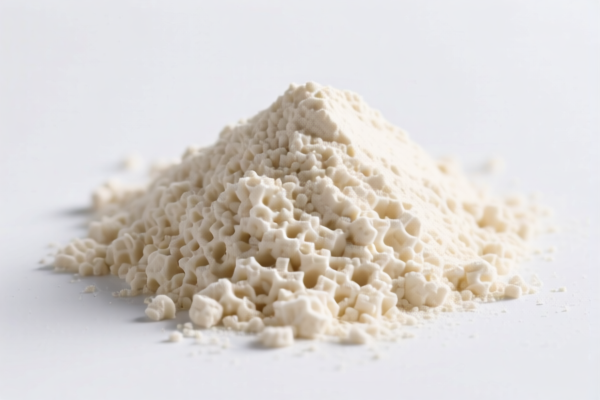
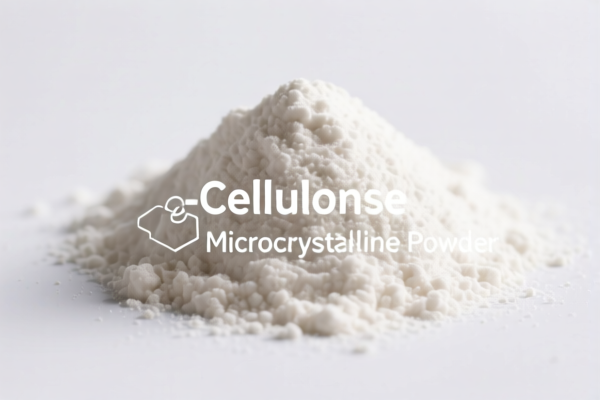
Microcrystalline Cellulose (MCC) is a refined, partially depolymerized cellulose derived from alpha-cellulose, primarily sourced from wood pulp. In international trade, it serves as a critical bulk material, widely used as a binder and filler in pharmaceutical tablet formulations, as well as in food and cosmetic industries.
Because MCC is a derivative of a natural polymer (cellulose), its classification depends heavily on its physical form (primary shape vs. manufactured article) and its chemical nature (sugar derivative vs. plastic material).
⚠️ Key Distinction Point:
- If it is viewed as a polysaccharide derivative in its primary polymeric form, it falls under Chapter 39 (Plastics and Articles Thereof), specifically subheading 3913 (Products of celluloses and their chemical derivatives).
- If it is treated as a plastic material in a non-specific form for general manufacturing, it may fall under 3926.
- Crucial Note: The classification significantly impacts the Total Tax Rate due to differing base duties and Section 301/122 surcharges.
📦 II. HS Code Classification Details (2026 Latest Customs Data)
Based on the provided data, there are three potential HS Codes for Microcrystalline Cellulose, each reflecting a different regulatory interpretation of the material's nature.
| HS Code | Product Description | Applicable Scenario | Key Justification |
|---|---|---|---|
| 3913.90.20.90 | Other polysaccharides and their derivatives (Primary Form) | MCC classified as a sugar derivative in primary polymeric form. | "MCC belongs to polysaccharide derivatives, in the form of primary form polymers, consistent with the classification of other polysaccharides and their derivatives." |
| 3913.90.50.00 | Other products of celluloses and their chemical derivatives (Primary Form) | MCC classified as a natural polymer (cellulose derivative) in raw/material form. | "MCC belongs to natural polymers (cellulose derivatives), in the form of raw materials, consistent with other natural polymers." |
| 3926.90.99.89 | Other articles of plastics (Unclassified Items) | MCC classified as a plastic material for general use (e.g., capsule ingredients) as an unclassified item. | "MCC belongs to cellulose, fits the category of plastics and other materials; as capsule ingredient, it is an unclassified article." |
🔍 Critical Reminder:
- 3913 Series (20.90 & 50.00): Higher tax burden due to higher base duties (5.8% vs 5.3%) and higher Section 301 surcharge (25% vs 7.5%).
- 3926 Series (99.89): Lower tax burden, treated as a general plastic article.
- Selection Strategy: The choice depends on how the customs authority interprets the primary function and form of the MCC at the time of import. Primary polymeric form usually favors 3913, while manufactured/utilitarian form might lean towards 3926.
💰 III. 2026 Latest Tariff Rate Breakdown (Including Surcharges & Policy Add-ons)
✅ Applicable Country: United States (US)
✅ Origin: China (CN)
✅ Effective Date: Includes subsequent imports subject to current trade policies.
🎯 1. 3913.90.20.90 – Polysaccharide Derivatives (Primary Form)
| Item | Content |
|---|---|
| Base Duty Rate | 5.8% (ad valorem) |
| Section 301 Surcharge | +25.0% (China-origin goods under USITC Footnote 9903.88) |
| Section 122 Surcharge | +10.0% (Specific trade policy addition) |
| Total Tax Rate | 40.8% |
| Tax Calculation | CIF Value × 40.8% |
| De Minimis Exemption | ❌ Not Applicable (High duty rate exceeds threshold for de minimis relief) |
| Legal Basis Path | HTSUS:3913.90.20.90 → USITC:Section 301 (25%) → Section 122 (10%) |
📌 Explanation:
- This classification treats MCC strictly as a chemical derivative of polysaccharides.
- The 25% Section 301 tariff is the primary driver of cost, added to the 5.8% base.
- The 10% Section 122 tariff further increases the burden, making this the second-highest cost option.
🎯 2. 3913.90.50.00 – Cellulose Derivatives (Raw Material Form)
| Item | Content |
|---|---|
| Base Duty Rate | 6.5% (ad valorem) |
| Section 301 Surcharge | +25.0% (China-origin goods under USITC Footnote 9903.88) |
| Section 122 Surcharge | +10.0% (Specific trade policy addition) |
| Total Tax Rate | 41.5% |
| Tax Calculation | CIF Value × 41.5% |
| De Minimis Exemption | ❌ Not Applicable |
| Legal Basis Path | HTSUS:3913.90.50.00 → USITC:Section 301 (25%) → Section 122 (10%) |
📌 Explanation:
- This classification emphasizes MCC as a natural polymer in its raw state.
- Interestingly, the base duty (6.5%) is higher than 3913.90.20.90 (5.8%), leading to the highest total tax rate (41.5%).
- Strategic Implication: If the goods are clearly raw, unprocessed cellulose derivatives, this classification applies, but it is the most expensive option.
🎯 3. 3926.90.99.89 – Other Plastic Articles (Unclassified)
| Item | Content |
|---|---|
| Base Duty Rate | 5.3% (ad valorem) |
| Section 301 Surcharge | +7.5% (Reduced Section 301 applicability for certain plastics/articles) |
| Section 122 Surcharge | +10.0% (Specific trade policy addition) |
| Total Tax Rate | 22.8% |
| Tax Calculation | CIF Value × 22.8% |
| De Minimis Exemption | ❌ Not Applicable |
| Legal Basis Path | HTSUS:3926.90.99.89 → USITC:Section 301 (7.5%) → Section 122 (10%) |
📌 Explanation:
- This classification views MCC as a general plastic article or unclassified material (e.g., for capsule use).
- The Section 301 surcharge is significantly lower (7.5% vs 25%), resulting in the lowest total tax rate (22.8%).
- Strategic Advantage: This is the most cost-effective classification. However, it requires robust justification that MCC is being used as a finished plastic article or non-specific material, rather than a raw chemical derivative.
🛠️ IV. Customs Clearance Practical Advice (Avoiding Pitfalls)
✅ 1. Documentation Checklist (Essential for Clearance)
| Document | Required | Notes |
|---|---|---|
| ✅ Product Specification Sheet | ✔️ | Must detail particle size, moisture content, and viscosity. |
| ✅ Certificate of Analysis (COA) | ✔️ | Proves it is "Microcrystalline Cellulose" and not a different polymer. |
| ✅ Material Safety Data Sheet (MSDS) | ✔️ | For safety handling; confirms non-hazardous nature. |
| ✅ Commercial Invoice | ✔️ | Clearly state: "Microcrystalline Cellulose, for Pharmaceutical/Food Use." |
| ✅ Packing List | ✔️ | Include net/gross weight, number of bags, and material composition. |
| ✅ Proof of Use | ✔️ | If claiming 3926.90.99.89, provide documentation showing end-use as a capsule ingredient or plastic article to justify lower duty. |
✅ 2. Declaration Strategy (Key Tips)
🔥 "Form Defines Code, Use Defines Duty!"
| Scenario | Recommended HS Code | Reasoning |
|---|---|---|
| Raw Powder for Pharma | 3913.90.50.00 |
If strictly "raw polymer," this is the most accurate, but highest tax. |
| Primary Polymer Form | 3913.90.20.90 |
If described as "polysaccharide derivative," this is a strong alternative with slightly lower tax. |
| Capsule Ingredient / Plastic Use | 3926.90.99.89 |
Lowest Tax (22.8%). Justify by emphasizing it is a "plastic material" or "unclassified article" used in manufacturing, not a raw chemical intermediate. |
⚠️ Warning:
- Do not arbitrarily choose3926.90.99.89without proper justification. If customs verifies the product is a raw chemical derivative, they may reclassify it to3913, leading to back taxes and penalties.
- Consistency is Key: Ensure the HS Code on the invoice, packing list, and customs entry matches the product description and supporting documents.
✅ 3. Special Cases & Mitigation
| Situation | Advice |
|---|---|
| High-Value Pharma Grade | If used in high-end pharmaceuticals, consider Advance Ruling from US Customs to lock in 3926.90.99.89 or 3913.90.20.90 for 5 years. |
| Mixed Shipments | If MCC is mixed with other plastics, declare separately. Do not lump MCC into general plastic bags to avoid misdeclaration. |
| Section 122 Impact | Note that the 10% Section 122 tariff applies to all three codes. Focus on minimizing the Section 301 portion by choosing 3926 if defensible. |
🌍 V. Global Market Comparison (2026)
| Country/Region | Recommended HS Code | Total Tax (China Origin) | Notes |
|---|---|---|---|
| 🇺🇸 USA | 3926.90.99.89 |
22.8% | Best Option if defensible. 3913 codes hit ~41%. |
| 🇨🇳 China | 3913.90.90.00 |
~5-6% | Standard import duty for cellulose derivatives. |
| 🇪🇺 EU | 3913.90.00.00 |
0% (GSP if applicable) | No Section 301 surcharge. Check for EORI and REACH compliance. |
| 🇬🇧 UK | 3913.90.00.00 |
0% | Post-Brexit trade terms may offer duty-free access for certain goods. |
📌 Conclusion:
- The USA is the most challenging market due to Section 301 and 122 tariffs.
- Canada and Mexico (under USMCA) may offer 0% duty if MCC is wholly obtained or undergoes sufficient transformation in North America. Verify Rules of Origin!
📌 VI. Common Errors & Pitfalls (Lessons Learned)
❌ Error 1: Declaring MCC under 3913.90.50.00 when it can be justified as 3926.90.99.89.
👉 Result: Paying 41.5% instead of 22.8% → 18.7% extra cost per unit!
❌ Error 2: Declaring MCC under 3926.90.99.89 without justification.
👉 Result: Customs reclassification to 3913.90.20.90 → Back taxes, interest, and potential fines.
❌ Error 3: Ignoring Section 122 tariffs.
👉 Result: Unexpected 10% surcharge applies to all codes, reducing savings from lower Section 301 rates.
❌ Error 4: Incorrectly describing the product as "Cellulose" instead of "Microcrystalline Cellulose."
👉 Result: Misleading description may lead to audits or rejection of entry.
✅ Correct Practice:
"Microcrystalline Cellulose, Pharmaceutical Grade, 50kg bags, for use as tablet binder. HS Code: 3926.90.99.89 (Justified as unclassified plastic article)."
(Note: Ensure legal defensibility for 3926.)
🎯 VII. Conclusion: Professional Declaration, Cost Optimization!
🎯 Remember the Golden Rule:
🔹 "Primary Form = High Duty (3913), Finished Article = Lower Duty (3926)."
🔹 "Section 301 is the Killer: 25% vs 7.5% makes a huge difference!"
🔹 "Section 122 is the Silent Taxer: 10% applies to all!"
📌 Pro Tip:
If your MCC is sourced from non-China origins (e.g., Canada, Brazil, or EU), you may avoid Section 301 and 122 tariffs entirely, resulting in 0-5% duty.
Recommendation:
📞 Contact a Customs Broker to apply for a Pre-Ruling (Advance Ruling) from US Customs and Border Protection (CBP).
🚀 Optimize Your Supply Chain: Source from USMCA countries if possible to eliminate surcharges entirely.
📣 Immediate Action:
📄 Prepare a Strong Justification Dossier for
3926.90.99.89if cost is the priority.
📊 Calculate the Tax Differential:
-3913.90.50.00: 41.5%
-3913.90.20.90: 40.8%
-3926.90.99.89: 22.8%
Savings: Up to 18.7% on CIF value!
✨ Professional Clearance, Started with Accurate Classification!
💼 Every Percent of Tax Saved is Directly Added to Your Bottom Line!
用户评价
关于 HS 编码归类
协调制度(HS)是由世界海关组织(WCO)制定的国际贸易商品分类标准。全球 200 多个国家采用 HS 系统作为海关关税、贸易统计和进出口监管的基础。
每个 HS 编码遵循以下层级结构:
- 章(2 位)——商品大类(例如:第 84 章:机器和机械设备)
- 品目(4 位)——章内的更具体分类
- 子目(6 位)——国际通用细分,所有 WCO 成员国统一使用
- 本国细分(8-10 位)——各国自行扩展的细分编码,如美国 HTSUS 10 位编码
正确的 HS 编码归类对于顺利通关、准确缴纳关税和遵守贸易法规至关重要。错误归类可能导致海关延误、多缴关税或罚款。
从CN进口到US时,适用的关税税率可能包括:
- 最惠国(MFN)税率——适用于 WTO 成员国的标准关税税率
- 普通税率——适用于无贸易协定国家
- 贸易救济关税——附加关税,如 301 条款(反倾销)、232 条款(国家安全)或反补贴税
本页内容仅供参考。如需正式归类,请咨询当地海关或持牌报关代理。