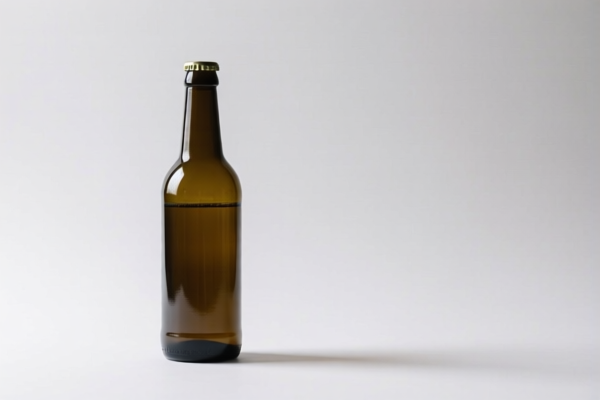
milk bottle
CN → US| HS编码 | 关税税率 | 原产国 | 目的国 | 文档 |
|---|---|---|---|---|
| 7013993000 | 26.5% | CN | US | 官方文档 |
| 7013492090 | 32.5% | CN | US | 官方文档 |
| 3924900500 | 20.6% | CN | US | 官方文档 |
| 3924104000 | 13.4% | CN | US | 官方文档 |
| 3923300010 | 38.0% | CN | US | 官方文档 |
商品图片
AI分析
🍼 Milk Bottle (Infant Feeding & Kitchen Utensils)
🌐 HS Code Reference & Customs Clearance Guide | 2026 Latest Tariff Analysis | Professional Clearance Strategy
📌 1. Product Definition & Classification: What is a "Milk Bottle"?
A "Milk Bottle" typically refers to containers used for infant feeding or general kitchen/dining purposes. In international trade, the classification heavily depends on Material and Intended Use.
Two Primary Categories: * Plastic Infant Feeding Bottles: Specifically designed for babies, usually made of PP (Polypropylene) or Tritan. * Glass Dining/Kitchen Ware: Used for serving milk or other liquids on the table, often made of glass.
⚠️ Critical Distinction:
- If it is Plastic and labeled/marketed for Infants → Likely3924.10or3924.90.
- If it is Glass and used for Table/Kitchen purposes → Likely7013.99.
- If it is Plastic but acts as a Packaging Container (not direct feeding) → Likely3923.30.
📦 2. HS Code Classification Details (2026 Latest Tariff Authority Cross-Reference)
| HS Code | Product Description | Applicable Scenario | Material | Total Tax Rate* |
|---|---|---|---|---|
7013.99.30.00 |
Other glass table/kitchen ware | Glass milk bottles for dining/table use | Glass | 26.5% |
7013.49.20.90 |
Glass table/kitchen ware (other) | Glass or mixed material dining vessels | Glass/Plastic | 32.5% |
3924.90.05.00 |
Other plastic table/kitchen ware | Plastic bottles matching infant feeding use | Plastic | 20.6% |
3924.10.40.00 |
Plastic table/kitchen ware for infants | Plastic tableware/kitchenware for babies | Plastic | 13.4% |
3923.30.00.10 |
Plastic articles for transport/packing | Plastic bottles used as packaging (not direct feeding) | Plastic | 38.0% |
🔍 Key Insight:
-3924.10.40.00offers the lowest tax (13.4%) if the product is strictly plastic and clearly marketed as infant tableware.
-3924.90.05.00applies to general plastic feeding items (20.6%).
-7013.99.30.00is the standard for glass tableware (26.5%).
-3923.30.00.10is for packaging bottles, which incurs the highest tax (38.0%) due to Section 122 tariffs.
💰 3. 2026 Latest Tariff Rate Breakdown (Including Surtaxes & Policy Add-ons)
✅ Applicable Country: United States (US)
✅ Origin: China (CN)
✅ Effective Date: Post-November 10, 2025
🎯 1. 3924.10.40.00 – Plastic Tableware for Infants (Lowest Tax Strategy)
| Item | Content |
|---|---|
| Base Tariff | 3.4% (ad valorem) |
| Surtax (Section 301) | 0.0% |
| Section 122 Tariff | 10% |
| Total Tax Rate | 13.4% |
| Tax Calculation | CIF Value × 13.4% |
| De Minimis Eligibility | ❌ No (Subject to scrutiny) |
| Legal Basis Path | Section 122: 10% → USITC: 3924.10.40.00 |
📌 Explanation:
- This is the most cost-effective classification for plastic baby bottles.
- Section 122 Tariff (10%) applies to specific consumer goods from China.
- No Section 301 Surcharge makes this significantly cheaper than other plastic categories.
🎯 2. 3924.90.05.00 – Other Plastic Tableware (General Feeding)
| Item | Content |
|---|---|
| Base Tariff | 3.1% (ad valorem) |
| Surtax (Section 301) | 7.5% |
| Section 122 Tariff | 10% |
| Total Tax Rate | 20.6% |
| Tax Calculation | CIF Value × 20.6% |
| De Minimis Eligibility | ❌ No |
| Legal Basis Path | Section 122: 10% → Section 301: 7.5% → USITC: 3924.90.05.00 |
📌 Note:
- If the bottle is not explicitly "infant tableware" but still for feeding, it falls here.
- The 7.5% Section 301 surcharge increases the cost compared to3924.10.
🎯 3. 7013.99.30.00 – Glass Tableware
| Item | Content |
|---|---|
| Base Tariff | 9.0% (ad valorem) |
| Surtax (Section 301) | 7.5% |
| Section 122 Tariff | 10% |
| Total Tax Rate | 26.5% |
| Tax Calculation | CIF Value × 26.5% |
| De Minimis Eligibility | ❌ No |
| Legal Basis Path | Section 122: 10% → Section 301: 7.5% → USITC: 7013.99.30.00 |
📌 Note:
- Glass bottles are subject to higher base tariffs.
- Still eligible for Section 122 (10%).
🎯 4. 3923.30.00.10 – Plastic Packaging Bottles (Highest Tax Risk)
| Item | Content |
|---|---|
| Base Tariff | 3.0% (ad valorem) |
| Surtax (Section 301) | 25.0% |
| Section 122 Tariff | 10% |
| Total Tax Rate | 38.0% |
| Tax Calculation | CIF Value × 38.0% |
| De Minimis Eligibility | ❌ No |
| Legal Basis Path | Section 122: 10% → Section 301: 25% → USITC: 3923.30.00.10 |
⚠️ Critical Warning:
- If your "Milk Bottle" is classified as packaging rather than tableware, you pay 38%.
- This is a high-risk classification for feeding products. Do not use this if the product is for direct feeding.
🎯 5. 7013.49.20.90 – Glass Tableware (Other)
| Item | Content |
|---|---|
| Base Tariff | 22.5% (ad valorem) |
| Surtax (Section 301) | 0.0% |
| Section 122 Tariff | 10% |
| Total Tax Rate | 32.5% |
| Tax Calculation | CIF Value × 32.5% |
| De Minimis Eligibility | ❌ No |
| Legal Basis Path | Section 122: 10% → USITC: 7013.49.20.90 |
📌 Note:
- Higher base tariff (22.5%) makes this less competitive than7013.99.30.00.
- No Section 301 surcharge, but still expensive overall.
🛠️ 4. Customs Clearance Practical Advice (Battle-Tested Pitfall Avoidance)
✅ 1. Documentation Checklist (Essential)
| Document | Required | Description |
|---|---|---|
| ✅ Product Specification Sheet | ✔️ | Must specify Material (Glass/Plastic), Use (Infant Feeding/Tableware), and Composition. |
| ✅ Product Photos (with Label) | ✔️ | Clear images showing "For Babies", "BPA-Free", or "Dining Use". |
| ✅ Commercial Invoice | ✔️ | Describe as "Plastic Infant Feeding Bottle" or "Glass Tableware", NOT "Packaging". |
| ✅ Material Declaration | ✔️ | Confirm if BPA-Free, Food Grade, etc. |
| ✅ Packing List | ✔️ | Ensure no mixed shipments of packaging and tableware. |
✅ 2. Declaration Tips (Key Mantras)
🔥 "Infant Feeding = 3924.10 (13.4%)! Packaging = 3923.30 (38%)! Choose Wisely!"
| Scenario | Correct Declaration | Wrong Practice |
|---|---|---|
| Plastic Bottle for Babies | HS: 3924.10.40.00 Description: "Plastic Infant Feeding Bottle" |
Declaring as "Packaging Bottle" → 38% tax |
| Glass Bottle for Table | HS: 7013.99.30.00 Description: "Glass Tableware" |
Declaring as "Kitchen Container" without clarity |
| Plastic Bottle for General Use | HS: 3924.90.05.00 Description: "Plastic Feeding Bottle" |
Missing "Infant" keyword when eligible |
| Mixed Material Bottle | HS: 7013.49.20.90 or 3924.90.05.00 |
Inconsistent material declaration |
✅ 3. Special Case Handling
| Scenario | Handling Advice |
|---|---|
| OEM Custom Bottles | Provide design drawings and customer contracts to prove intended use (Infant vs. Packaging). |
| BPA-Free Certification | Provide Lab Reports to support food-grade claim, aiding clearance under 3924.10. |
| Gift Sets (Bottle + Brush) | Declare as Tableware Set under 3924.10.40.00 or 3924.90.05.00, not separate components. |
| Glass vs. Plastic | Plastic infant bottles are cheaper in tax. If possible, switch to PP/Tritan for cost savings. |
🌍 5. Global Market Comparison (2026 Latest)
| Country/Region | Recommended HS Code | Tariff | Certification | Remarks |
|---|---|---|---|---|
| 🇺🇸 USA | 3924.10.40.00 |
13.4% (Lowest) | FDA, BPA-Free | Avoid 3923.30 (38%) |
| 🇨🇳 China | 3924.10.40.00 |
5% | CCC | No surtax |
| 🇪🇺 EU | 3924.10.40.00 |
0% (if compliant) | CE, LFGB | Strict BPA rules |
| 🇦🇺 Australia | 3924.10.40.00 |
5% | SAA | No surtax |
| 🇯🇵 Japan | 3924.10.40.00 |
0% | JIS | No surtax |
📌 Conclusion:
- USA imposes Section 122 (10%) on these goods.
- Plastic Infant Bottles (3924.10) are the most tax-efficient option (13.4%).
- Glass bottles are more expensive (26.5%+) due to higher base tariffs.
📌 6. Common Errors & Pitfall Guide (Blood-Taught Lessons)
❌ Error 1: Declaring "Milk Bottle" as "Plastic Packaging" (3923.30.00.10)
👉 Consequence: 38% Tax vs. 13.4%. Massive cost increase!
❌ Error 2: Missing "Infant" keyword on invoice for plastic bottles
👉 Consequence: Customs may downgrade to 3924.90 (20.6%) or 3923.30 (38%).
❌ Error 3: Mixing Glass and Plastic bottles in one shipment
👉 Consequence: Separate declarations required. Incorrect mixing leads to delays & penalties.
❌ Error 4: Not declaring "BPA-Free"
👉 Consequence: Customs may flag for food safety compliance, causing hold-ups.
✅ Correct Practice:
"Plastic Infant Feeding Bottle, BPA-Free, PP Material, Model XYZ, for Baby Use Only"
🎯 7. Conclusion: Precision Classification Saves Money!
🎯 Remember the Mantra:
🔹 "Infant Plastic = 13.4% (3924.10)! Glass = 26.5% (7013.99)! Packaging = 38% (3923.30)! Avoid the 38% Trap!"
🔹 "HS Code determines profit margin. A 24.6% difference can make or break your deal!"
📌 Pro Tip:
If your bottles are manufactured in Vietnam, Mexico, or Thailand, you may qualify for IEEPA Exemptions or zero Section 122 tariffs, reducing rates to 0-5%.
Recommend applying for Pre-Ruling to confirm classification.
📣 Immediate Action:
📞 Contact a professional customs broker + Provide Product Photos + Apply for HS Code Pre-Ruling
🚀 Ensure your Milk Bottles clear customs smoothly, reduce costs, and maximize profits!
✨ Professional Customs Clearance Starts with Accurate Classification!
💼 Every Cent of Cost Deserves Precise Calculation!
用户评价
关于 HS 编码归类
协调制度(HS)是由世界海关组织(WCO)制定的国际贸易商品分类标准。全球 200 多个国家采用 HS 系统作为海关关税、贸易统计和进出口监管的基础。
每个 HS 编码遵循以下层级结构:
- 章(2 位)——商品大类(例如:第 84 章:机器和机械设备)
- 品目(4 位)——章内的更具体分类
- 子目(6 位)——国际通用细分,所有 WCO 成员国统一使用
- 本国细分(8-10 位)——各国自行扩展的细分编码,如美国 HTSUS 10 位编码
正确的 HS 编码归类对于顺利通关、准确缴纳关税和遵守贸易法规至关重要。错误归类可能导致海关延误、多缴关税或罚款。
从CN进口到US时,适用的关税税率可能包括:
- 最惠国(MFN)税率——适用于 WTO 成员国的标准关税税率
- 普通税率——适用于无贸易协定国家
- 贸易救济关税——附加关税,如 301 条款(反倾销)、232 条款(国家安全)或反补贴税
本页内容仅供参考。如需正式归类,请咨询当地海关或持牌报关代理。