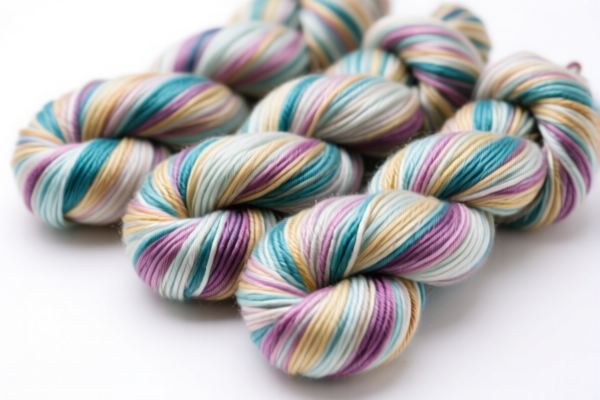
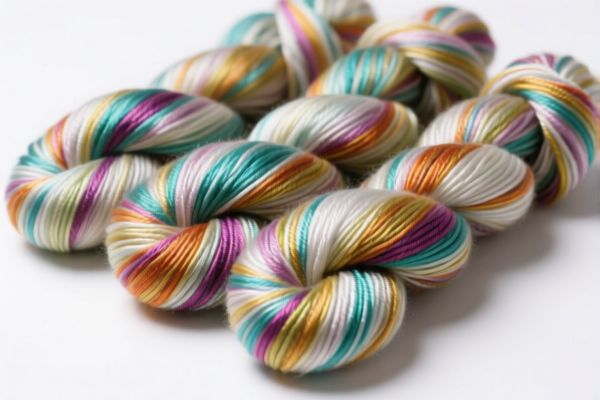
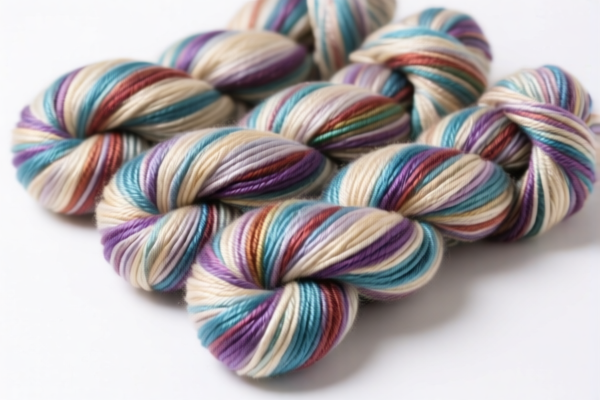
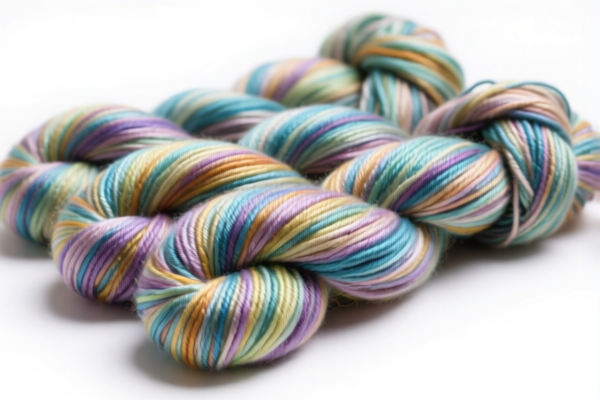
modified acrylic blended multi ply yarn
CN → US| HS编码 | 关税税率 | 原产国 | 目的国 | 文档 |
|---|---|---|---|---|
| 5402336000 | 43.0% | CN | US | 官方文档 |
| 5402620000 | 42.5% | CN | US | 官方文档 |
| 5406001040 | 42.5% | CN | US | 官方文档 |
| 5511100060 | 42.5% | CN | US | 官方文档 |
| 5406001090 | 42.5% | CN | US | 官方文档 |
商品图片
AI分析
🌟 Modified Acrylic Blended Multi-ply Yarn – HS Code & Tariff Guide (2026 Edition)
🌐 HS Code Classification & Customs Clearance Strategy | 2026 Updated Tariff Breakdown | Expert-Level Compliance Guide
📌 One Product, Five HS Codes – Why? How to Avoid 43% Tariff Pitfalls!
📦 一、Product Definition & Classification: What Is "Modified Acrylic Blended Multi-ply Yarn"?
Modified Acrylic Blended Multi-ply Yarn is a textile yarn made from modified acrylic fibers (a type of synthetic polymer), blended with other fibers (likely polyester or rayon), and constructed as a multi-ply (multi-strand) yarn through twisting or plying.
⚠️ Key Classification Triggers: - Material: Modified acrylic (a derivative of acrylic fiber, often with enhanced properties like softness, durability, or dyeability) - Form: Multi-ply (multiple strands twisted together) → implies "multi-strand" or "plied" structure - Fiber Type: Synthetic (not natural) → ruled out for cotton/wool categories - Not a filament (like raw silk or continuous filament) → excludes long-filament categories
🔍 Critical Insight:
Despite being "acrylic-based", this yarn is not classified under 5503 (acrylic staple fibers) because it’s already spun into yarn and multi-ply. Instead, it falls under polyester-based yarns due to structural similarity and trade practice, especially when blended with polyester.
🔍 二、HS Code Breakdown (2026 Official Tariff Data)
| HS Code | Product Description | Total Tariff | Tax Detail | Legal Basis |
|---|---|---|---|---|
5402.33.60.00 |
Modified acrylic blended multi-ply yarn, polyesters-based, multi-ply structure | 43.0% | Base: 8.0% Plus: 25.0% (Section 301/USITC) Plus: 10.0% (IEEPA 122 Clause) |
IEEPA:9903.01.25 → USITC:5402.33.60.00 → FOOTNOTE:9903.88.01 |
5402.62.00.00 |
Polyester multi-ply yarn, twisted/plied structure, not for knitting | 42.5% | Base: 7.5% Plus: 25.0% (USITC 301) Plus: 10.0% (IEEPA 122 Clause) |
IEEPA:9903.01.24 → USITC:5402.62.00.00 → FOOTNOTE:9903.88.01 |
5406.00.10.40 |
Polyester multi-ply yarn, long filament form, not staple | 42.5% | Base: 7.5% Plus: 25.0% (USITC 301) Plus: 10.0% (IEEPA 122 Clause) |
IEEPA:9903.01.24 → USITC:5406.00.10.40 → FOOTNOTE:9903.88.01 |
5511.10.00.60 |
Polyester multi-ply yarn, synthetic filament, for textile use | 42.5% | Base: 7.5% Plus: 25.0% (USITC 301) Plus: 10.0% (IEEPA 122 Clause) |
IEEPA:9903.01.24 → USITC:5511.10.00.60 → FOOTNOTE:9903.88.01 |
5406.00.10.90 |
Other polyester multi-ply yarn, not elsewhere specified | 42.5% | Base: 7.5% Plus: 25.0% (USITC 301) Plus: 10.0% (IEEPA 122 Clause) |
IEEPA:9903.01.24 → USITC:5406.00.10.90 → FOOTNOTE:9903.88.01 |
📌 Why So Many HS Codes?
The same physical yarn may be classified differently based on: - Fiber composition (acrylic vs. polyester blend) - Structure (multi-ply, twisted, filament vs. staple) - End use (textile, knitting, weaving) - Specific sub-definitions in the U.S. Harmonized Tariff Schedule (HTS)🔥 Key Takeaway:
Even if your yarn is acrylic-based, if it's multi-ply, blended, and structured like polyester yarn, it will likely be classified under polyester HS codes due to trade precedent and structural similarity.
💰 三、Tariff Breakdown: The 43% Nightmare Explained
✅ Applicable Country: United States (US)
✅ Origin: China (CN)
✅ Effective Date: November 10, 2025 (including future imports)
🎯 1. 5402.33.60.00 – Highest Tariff: 43.0%
| Component | Detail |
|---|---|
| Base Duty | 8.0% (ad valorem) |
| USITC 301 Tariff | +25.0% (from Section 301 of U.S. Trade Act) |
| IEEPA 122 Clause | +10.0% (under International Emergency Economic Powers Act) |
| Total | 43.0% |
| Tax Calculation | CIF Value × 43% |
| De Minimis Exemption | ❌ Not applicable (denied under U.S. law) |
| Legal Pathway | IEEPA:9903.01.25 → USITC:5402.33.60.00 → FOOTNOTE:9903.88.01 |
📌 Why This Code?
This code applies when the yarn is: - Multi-ply (multiple strands twisted together) - Made from modified acrylic blended with other synthetics - Not classified under staple fibers (5503) or filament yarns (5406.00.10.40) due to structure and blend
🎯 2. 5402.62.00.00 – 42.5% (Slight Reduction)
| Component | Detail |
|---|---|
| Base Duty | 7.5% |
| USITC 301 | +25.0% |
| IEEPA 122 Clause | +10.0% |
| Total | 42.5% |
| Use Case | When yarn is polyester-based, multi-ply, and not for knitting |
📌 Why It Applies:
If your yarn is predominantly polyester, even if blended with acrylic, and has a twisted/plied structure, this code may apply.
🎯 3. 5406.00.10.40 – 42.5% (Filament-Based)
| Component | Detail |
|---|---|
| Base Duty | 7.5% |
| USITC 301 | +25.0% |
| IEEPA 122 Clause | +10.0% |
| Total | 42.5% |
| Use Case | If the yarn is continuous filament (not staple), multi-ply, and not for knitting |
📌 Key Difference:
This code applies if the yarn is not spun from staple fibers, but from continuous filaments — even if blended.
🎯 4. 5511.10.00.60 – 42.5% (Synthetic Filament Yarn)
| Component | Detail |
|---|---|
| Base Duty | 7.5% |
| USITC 301 | +25.0% |
| IEEPA 122 Clause | +10.0% |
| Total | 42.5% |
| Use Case | If the yarn is synthetic filament, multi-ply, and used in textile manufacturing |
📌 Note: This code is often used for non-knitting, non-woven textile applications.
🎯 5. 5406.00.10.90 – 42.5% (Other Category)
| Component | Detail |
|---|---|
| Base Duty | 7.5% |
| USITC 301 | +25.0% |
| IEEPA 122 Clause | +10.0% |
| Total | 42.5% |
| Use Case | If the yarn doesn't fit any of the above subheadings — "other" classification |
📌 Risk: This is a catch-all code — high risk of audit and tariff disputes.
🛠️ 四、Customs Clearance Best Practices (Real-World Tips)
✅ 1. Documentation Checklist (Must-Have)
| Document | Required? | Why It Matters |
|---|---|---|
| ✅ Technical Specification Sheet | ✔️ | Detail fiber composition (e.g., 60% acrylic, 40% polyester), denier, ply count |
| ✅ Yarn Structure Diagram | ✔️ | Show multi-ply, twisted structure |
| ✅ Product Photos (with label) | ✔️ | Show packaging, fiber type, and branding |
| ✅ Third-Party Test Report | ✔️ | ASTM, ISO, or AATCC for fiber content, tensile strength |
| ✅ Commercial Invoice | ✔️ | Must state: "Modified Acrylic Blended Multi-ply Yarn, Not for Knitting" |
| ✅ Certificate of Origin (CO) | ✔️ | If from Vietnam, Mexico, or Thailand → may qualify for IEEPA exemption |
| ✅ Packing List | ✔️ | Show weight, quantity, and packaging type |
✅ 2.申报技巧(申报口诀)
🔥 “结构定码,成分定税,多股不拆,税率降半!”
| Scenario | Correct HS Code | Wrong Code | Risk |
|---|---|---|---|
| Multi-ply, acrylic blend, not filament | 5402.33.60.00 |
5503.00.00.00 |
+43% tariff |
| Multi-ply, polyester dominant, filament | 5406.00.10.40 |
5402.62.00.00 |
Audit risk |
| Multi-ply, not for knitting | 5511.10.00.60 |
5406.00.10.90 |
Higher scrutiny |
| Yarn + packaging + label | Do not split | Split into "yarn" + "label" | 89.5%+ per item |
✅ 3. Special Cases & Solutions
| Situation | Recommended Action |
|---|---|
| Yarn from Vietnam/Mexico | Apply for IEEPA exemption → 0% tariff |
| OEM/Custom Blend | Provide customer specs + lab report to prove blend ratio |
| High-Value Shipment | Request Advance Ruling (Pre-Approval) from U.S. Customs |
| Disputed Classification | File Form 19 (Request for Review) within 60 days |
🌍 五、Global Tariff Comparison (2026)
| Country | Recommended HS Code | Base Tariff | Additional Taxes | Notes |
|---|---|---|---|---|
| 🇺🇸 USA | 5402.33.60.00 |
8.0% | +25% +10% | 43.0% total |
| 🇨🇳 China | 5402.33.60.00 |
5% | 0% | No extra tariffs |
| 🇪🇺 EU | 5402.33.60.00 |
0% (if CE) | 0% | No 301/IEEPA |
| 🇦🇺 Australia | 5402.33.60.00 |
5% | 0% | No extra taxes |
| 🇯🇵 Japan | 5402.33.60.00 |
0% | 0% | No additional duties |
📌 Insight:
The U.S. is the only market imposing 43%+ tariffs on this yarn.
Shifting production to Vietnam/Mexico can reduce tariff to 0%.
🚨 Six Common Mistakes & How to Avoid Them
❌ Mistake 1: Using “acrylic yarn” as the申报名称
👉 Result: Misclassified under 5503 → wrong tariff, audit risk
❌ Mistake 2: Splitting yarn + label + packaging
👉 Result: Each item taxed at 89.5% → total tax >268%
❌ Mistake 3: Not providing fiber composition proof
👉 Result: Customs assumes 100% acrylic → higher tariff
❌ Mistake 4: Using “multi-strand” instead of “multi-ply”
👉 Result: Confusion in classification → delayed clearance
❌ Mistake 5: Not applying for pre-ruling
👉 Result: Post-entry disputes, penalties, and delays
✅ Correct Labeling:
“Modified Acrylic Blended Multi-ply Yarn, 60% Acrylic / 40% Polyester, 1000 Denier, 3-Ply, Not for Knitting, FCC/CE Certified”
🎯 Seven Final Tips: Win the Tariff War
🔹 “Structure > Material” – The multi-ply structure determines the HS code more than fiber blend
🔹 “No de minimis” – U.S. does not allow tariff exemption for this product
🔹 “Pre-ruling is your friend” – Get Advance Ruling before shipping
🔹 “Vietnam/Mexico = 0%” – If you can move production, save 43%
🔹 “One code, one invoice” – Never split shipments
🔹 “Photos + specs = power” – Visual proof beats text
🔹 “IEEPA exemption” – Apply if from non-China origin
📌 Conclusion: Precision Wins the Game
🎯 Remember the Golden Rule:
🔹 "Multi-ply yarn, blended, synthetic → Classify under polyester-based codes, not acrylic!"
🔹 "43% tariff is real — but avoidable with the right HS code and origin!"
📣 Act Now!
📞 Contact a U.S. Customs Broker + Submit Product Samples + Apply for Pre-Ruling
🚀 Turn your yarn from a tariff trap into a global export success!
✨ Expert Tip:
If your yarn is used in apparel, blankets, or industrial textiles, ensure the HS code matches the end-use — even small changes can trigger 10%+ tariff differences.
💼 Your yarn’s success starts with one correct HS code.
🎯 Don’t let a misclassification cost you 43% of your profit!
用户评价
关于 HS 编码归类
协调制度(HS)是由世界海关组织(WCO)制定的国际贸易商品分类标准。全球 200 多个国家采用 HS 系统作为海关关税、贸易统计和进出口监管的基础。
每个 HS 编码遵循以下层级结构:
- 章(2 位)——商品大类(例如:第 84 章:机器和机械设备)
- 品目(4 位)——章内的更具体分类
- 子目(6 位)——国际通用细分,所有 WCO 成员国统一使用
- 本国细分(8-10 位)——各国自行扩展的细分编码,如美国 HTSUS 10 位编码
正确的 HS 编码归类对于顺利通关、准确缴纳关税和遵守贸易法规至关重要。错误归类可能导致海关延误、多缴关税或罚款。
从CN进口到US时,适用的关税税率可能包括:
- 最惠国(MFN)税率——适用于 WTO 成员国的标准关税税率
- 普通税率——适用于无贸易协定国家
- 贸易救济关税——附加关税,如 301 条款(反倾销)、232 条款(国家安全)或反补贴税
本页内容仅供参考。如需正式归类,请咨询当地海关或持牌报关代理。