multi card slot silk wallet
CN → US| HS编码 | 关税税率 | 原产国 | 目的国 | 文档 |
|---|---|---|---|---|
| 4202328500 | 35.0% | CN | US | 官方文档 |
| 4202329900 | 52.6% | CN | US | 官方文档 |
| 6211495090 | 18.7% | CN | US | 官方文档 |
| 6211498090 | 24.8% | CN | US | 官方文档 |
| 6307909891 | 24.5% | CN | US | 官方文档 |
| 6307903020 | 25.4% | CN | US | 官方文档 |
商品图片
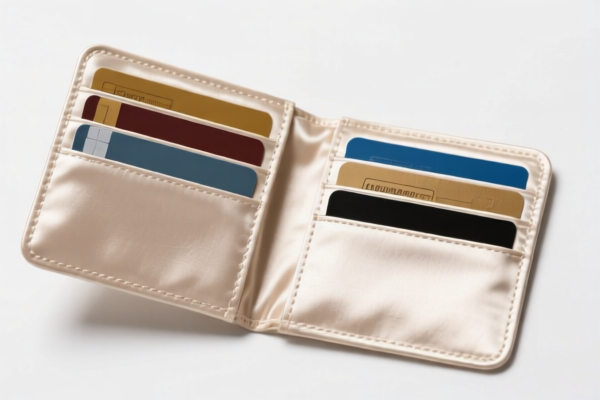
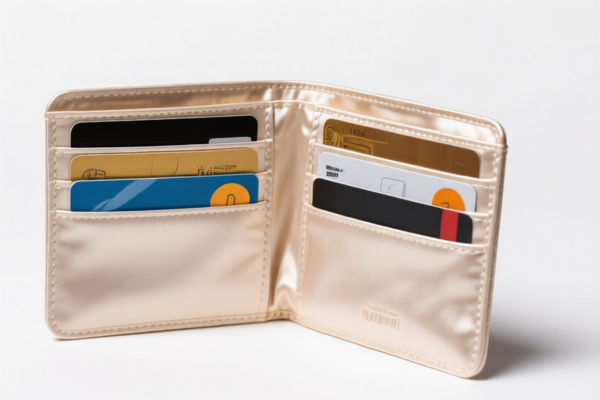
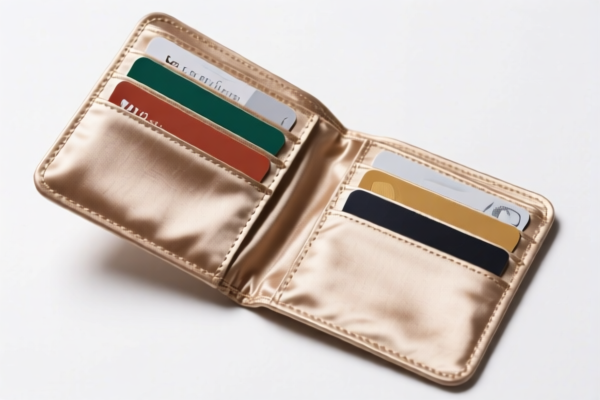

AI分析
👜 Multi-Card Slot Silk Wallet
🌐 HS Code Reference & Customs Clearance Guide | 2026 Latest Tariff Analysis | Professional Level Strategy
📌 I. Product Definition & Classification: Do You Truly Understand "Silk Wallets"?
A "Multi-Card Slot Silk Wallet" is a compact accessory designed for storing identification cards, credit cards, and small cash. In international trade, the classification depends strictly on two critical factors: 1. Outer Surface Material: Is it primarily textile (silk) or plastic/laminate? 2. Silk Content: Does it contain ≥85% by weight of silk?
⚠️ Key Distinction Point:
- If the outer surface is textile (silk fabric) and contains ≥85% silk → It falls under 4202.32.85.00.
- If the outer surface is textile but contains <85% silk or is not primarily silk → It falls under 4202.32.99.00.
- If the outer surface is plastic sheeting (e.g., laminated silk, PVC-coated) → It falls under a different heading (not in ), but if it is textile, it stays in Chapter 42.
📦 II. HS Code Classification Details (2026 Latest Tariff Authority Comparison)
| HS Code | Product Description | Key Criteria | Silk Content Requirement |
|---|---|---|---|
4202.32.85.00 |
Articles of a kind normally carried in the pocket or in the handbag; With outer surface of textile materials; Other: Containing 85 percent or more by weight of silk or silk waste | Small leather goods (wallets, card holders) with silk outer surface | ≥85% by weight of silk |
4202.32.99.00 |
Articles of a kind normally carried in the pocket or in the handbag; With outer surface of textile materials; Other: Other | Small leather goods (wallets, card holders) with textile outer surface | <85% silk or not specified as high-silk content |
🔍 Important Note:
- The phrase "Articles of a kind normally carried in the pocket or in the handbag" is crucial. Wallets, card slots, and clutches fit this description. - The distinction between85and99is purely based on the percentage of silk in the outer textile material.
💰 III. 2026 Latest Tariff Rate Details (Including Additional Taxes, Policy Surcharges)
✅ Applicable Country: United States (US)
✅ Origin: China (CN)
✅ Effective Date: November 10, 2025 onwards
🎯 1. 4202.32.85.00 —— Silk Wallets (High Silk Content)
| Item | Content |
|---|---|
| Base Tariff | 0.0% (ad valorem) |
| Section 301 Additional Tariff | +25.0% |
| Total Tariff Rate | 25.0% |
| Tax Calculation | CIF Value × 25% |
| De Minimis Eligibility | ❌ No (denied for Section 301 goods from China) |
| Legal Basis Path | USITC:4202.32.85.00 → FOOTNOTE:301 |
📌 Explanation:
- Although the base tariff is 0%, the Section 301 additional tariff of 25% applies to all Chinese-origin goods in this category. - This is a high-cost item for importers. The 25% surcharge is non-negotiable unless a specific exclusion applies (which are rare for consumer accessories like wallets). - Crucial: You must prove the ≥85% silk content to avoid misclassification. If misclassified as4202.32.99.00, the tax is 0%, but if audited, you will face back taxes, penalties, and interest for the 25% difference.
🎯 2. 4202.32.99.00 —— Non-High-Silk Textile Wallets
| Item | Content |
|---|---|
| Base Tariff | 0.0% (ad valorem) |
| Section 301 Additional Tariff | 0.0% |
| Total Tariff Rate | 0.0% |
| Tax Calculation | CIF Value × 0% = $0 |
| De Minimis Eligibility | ✅ Yes (if shipped under de minimis value, e.g., < $800 per person per day) |
| Legal Basis Path | USITC:4202.32.99.00 |
📌 Explanation:
- If the wallet is made of a textile material but contains less than 85% silk (e.g., polyester-silk blend with low silk content), it falls under99. - Zero Duty! This is a significant cost advantage. - Risk: If the product is marketed as "Silk Wallet" but contains <85% silk, you must declare the correct fiber content. Misrepresentation can lead to fraud charges. However, if it is genuinely <85% silk, the 0% rate is fully applicable.
🛠️ IV. Customs Clearance Practical Advice (Pitfall Avoidance Guide)
✅ 1. Required Documentation Checklist (Non-negotiable)
| Document | Must Provide | Purpose |
|---|---|---|
| ✅ Fiber Content Certificate | ✔️ | Third-party lab report proving % of silk in the outer textile. Critical for distinguishing 85 vs 99. |
| ✅ Product Photos | ✔️ | Clear images showing the outer material texture, stitching, and any labels. |
| ✅ Commercial Invoice | ✔️ | Must state: "Wallet, Multi-Card Slot, Outer Surface: Textile, Silk Content: [X]%". |
| ✅ Packing List | ✔️ | Item count, net/gross weight. |
| ✅ Origin Certificate | ✔️ | If claiming benefits or verifying origin (China). |
✅ 2. Declaration Tips (Key Mnemonics)
🔥 “Silk >85% is 25%, Silk <85% is Free! Textile outer, Chapter 42, don’t be lazy!”
| Scenario | Correct HS Code | Mistake to Avoid |
|---|---|---|
| 100% Silk Outer | 4202.32.85.00 |
Misreporting as 4202.32.99.00 (Underpaying tax) |
| 50% Silk / 50% Poly | 4202.32.99.00 |
Overpaying tax (301 does not apply to <85% silk) |
| Plastic-coated Silk | Not in | Do not force into textile category if outer is plastic |
| Leather Wallet with Silk Lining | Different Chapter (42.02.21/22) | Do not use 4202.32 if outer is leather |
✅ 3. Special Case Handling
| Situation | Handling Advice |
|---|---|
| "Silk-Looking" Synthetic | If made of polyester printed to look like silk, declare as polyester. It will fall under 4202.32.99.00 (0% tax). Do not falsely claim silk. |
| Mixed Materials | If the outer surface is 70% silk, 30% cotton → <85%. Use 4202.32.99.00. |
| De Minimis (e.g., Shein/Temu) | If shipping under $800 per recipient, 4202.32.99.00 is duty-free. 4202.32.85.00 still incurs 25% tax unless de minimis exemption is extended (currently not for Section 301 goods). |
| High-Value Wholesale | Always calculate the 25% cost for 85%+ silk items. Factor it into pricing. |
🌍 V. Global Market Comparison (2026 Latest)
| Country/Region | Recommended HS Code | Tariff | Notes |
|---|---|---|---|
| 🇺🇸 USA | 4202.32.85.00 |
25% | Heavy Section 301 tax. |
| 🇺🇸 USA | 4202.32.99.00 |
0% | Low silk content = No tax. |
| 🇪🇺 EU | 4202.32.00 |
~4-6% | No Section 301. Standard EU duty. |
| 🇨🇳 China | 4202.32.00 |
~6-10% | Import duty into China. |
| 🇬🇧 UK | 4202.32.00 |
~6% | Post-Brexit tariffs. |
📌 Conclusion:
- The US market is the most challenging due to the 25% Section 301 tariff on high-silk content wallets. - Strategy: If possible, design wallets with <85% silk content (e.g., silk-cotton blend) to benefit from the 0% tariff under4202.32.99.00.
📌 VI. Common Errors & Pitfall Guide (Lessons Learned)
❌ Error 1: Assuming all "Silk" products are 100% silk
👉 Consequence: Misclassification. If actual silk content is 60%, but declared as 85%+, you may be flagged for audit. Conversely, if declared as <85% but is 90%, you evade 25% tax → Penalties!
❌ Error 2: Confusing "Silk Lining" with "Silk Outer Surface"
👉 Consequence: If the outer material is leather or textile, but the lining is silk, the silk content of the outer surface is 0%. Therefore, it falls under 4202.32.99.00 (if outer is textile) or leather headings. Do not apply 85% rule to lining.
❌ Error 3: Using "Wallet" without specifying "Textile Outer"
👉 Consequence: Customs may classify as leather or plastic, leading to different duties. Always specify: "Outer Surface: Textile".
✅ Correct Declaration Example:
"Women's Wallet, Multi-Card Slot, Outer Material: 100% Silk Textile, Silk Content ≥85%, Model XYZ"
🎯 VII. Conclusion: Precise Classification Saves Money!
🎯 Remember the Mantra:
🔹 "Silk ≥85%? Pay 25%. Silk <85%? Pay 0%. Textile Outer? Chapter 42. Plastic? Think Again."
🔹 "HS Code determines tax, 25% is the killer, declare fiber content true, avoid the bill!"
📌 Pro Tip:
For high-volume imports of 100% silk wallets, consider:
1. Design Adjustment: Blend silk with other fibers (e.g., 50% silk, 50% viscose) to drop below the 85% threshold, saving 25% in tariffs.
2. Advance Ruling: Apply for a US Customs and Border Protection (CBP) Binding Ruling if your silk content is borderline (e.g., 84% or 86%) to get legal certainty.
3. Supplier Verification: Require a third-party lab test report (e.g., SGS, BV) for every batch to prove silk content.
📣 Take Action Now:
📞 Contact a licensed customs broker
📄 Get fiber content analysis
🚀 Optimize your product design for tax efficiency!
✨ Professional clearance starts with accurate classification!
💼 Every percentage point matters in global trade!
用户评价
关于 HS 编码归类
协调制度(HS)是由世界海关组织(WCO)制定的国际贸易商品分类标准。全球 200 多个国家采用 HS 系统作为海关关税、贸易统计和进出口监管的基础。
每个 HS 编码遵循以下层级结构:
- 章(2 位)——商品大类(例如:第 84 章:机器和机械设备)
- 品目(4 位)——章内的更具体分类
- 子目(6 位)——国际通用细分,所有 WCO 成员国统一使用
- 本国细分(8-10 位)——各国自行扩展的细分编码,如美国 HTSUS 10 位编码
正确的 HS 编码归类对于顺利通关、准确缴纳关税和遵守贸易法规至关重要。错误归类可能导致海关延误、多缴关税或罚款。
从CN进口到US时,适用的关税税率可能包括:
- 最惠国(MFN)税率——适用于 WTO 成员国的标准关税税率
- 普通税率——适用于无贸易协定国家
- 贸易救济关税——附加关税,如 301 条款(反倾销)、232 条款(国家安全)或反补贴税
本页内容仅供参考。如需正式归类,请咨询当地海关或持牌报关代理。