natural polymer biodegradable additive
CN → US| HS编码 | 关税税率 | 原产国 | 目的国 | 文档 |
|---|---|---|---|---|
| 3824405000 | 40.0% | CN | US | 官方文档 |
| 3824999397 | 40.0% | CN | US | 官方文档 |
| 3907700000 | 41.5% | CN | US | 官方文档 |
| 3907290000 | 41.5% | CN | US | 官方文档 |
| 1302390090 | 20.7% | CN | US | 官方文档 |
| 1302390010 | 20.7% | CN | US | 官方文档 |
商品图片
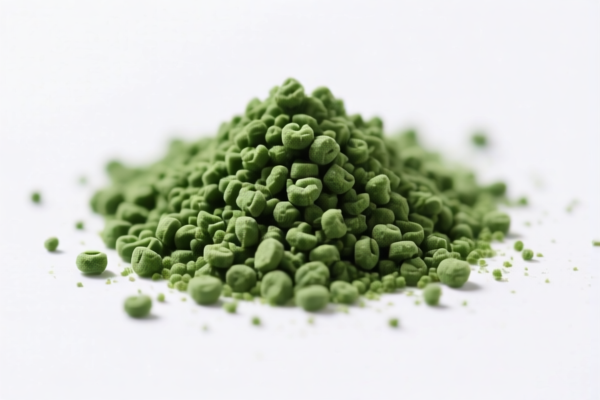
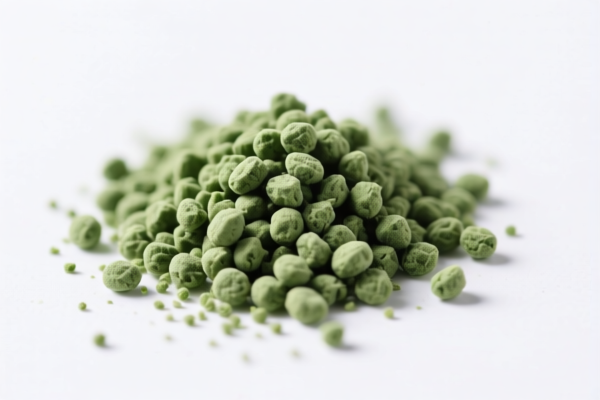
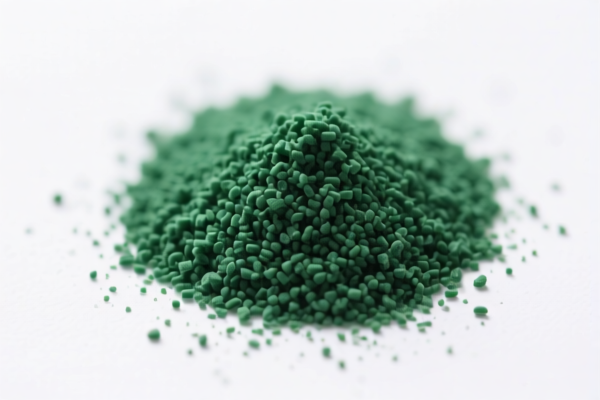
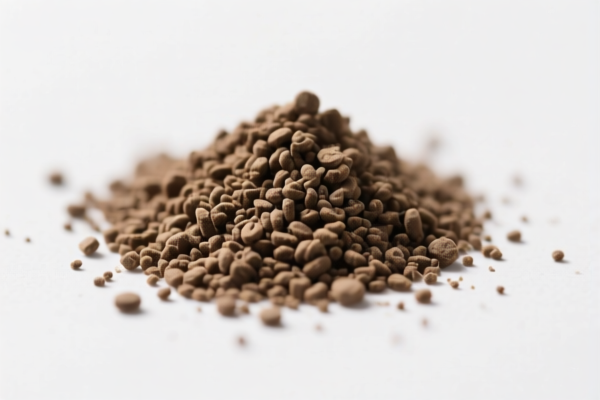
AI分析
🌿 Natural Polymer Biodegradable Additive
🌐 HS Code Reference & Customs Clearance Guide | 2026 Latest Tariff Analysis | Professional Compliance Strategy
📌 I. Product Definition and Classification: What is a "Natural Polymer Biodegradable Additive"?
A "Natural Polymer Biodegradable Additive" is a broad commercial term that typically refers to substances derived from vegetable sources, used as thickening agents, gelling agents, binders, or processing aids in various industries (food, pharmaceuticals, foundry, construction, etc.). In international trade, this single term is not a precise customs classification. It must be broken down by chemical nature, source, and application.
⚠️ Critical Distinction:
- If it is a vegetable-derived mucilage or thickener (e.g., agar, carrageenan, pectin, modified starches) → It falls under Chapter 13 or 38.
- If it is a synthetic or semi-synthetic polymer in primary forms (e.g., Poly(lactic acid) - PLA, or other polyethers) → It falls under Chapter 39.
- If it is a prepared chemical mixture for specific industrial use (e.g., cement additives, foundry binders) → It falls under Chapter 38.
Misclassification leads to significant tariff risks. The following analysis strictly adheres to the provided <DATA> and <TAX> context (US Import from China).
📦 II. HS Code Classification Details (2026 Latest Tariff Authority Comparison)
Based on the specific definitions in your provided data, we categorize potential "Natural Polymer Biodegradable Additives" into three distinct groups:
| HS Code | Product Description | Key Characteristics | Source/Nature |
|--------|----------|--------------------------|
| 1302.39.00.90 | Mucilages and thickeners, whether or not modified, derived from vegetable products: Other | Includes natural gums, modified starches, and other vegetable-derived thickeners NOT specifically listed (like Carrageenan). | Vegetable Origin
(Natural/Semi-synthetic) |
| 1302.39.00.10 | Mucilages and thickeners, whether or not modified, derived from vegetable products: Carrageenan | Specifically for Carrageenan (extracted from red seaweed). A premium natural thickener/gelling agent. | Vegetable/Algal Origin
(Natural) |
| 3907.70.00.00 | Polyacetals, other polyethers and epoxide resins...: Poly(lactic acid) (PLA) | PLA is a biodegradable polymer. Though derived from corn starch/sugarcane, it is chemically processed into a polymer resin in primary form. | Bio-based Polymer
(Processed/Synthetic nature) |
| 3907.29.00.00 | Polyacetals, other polyethers and epoxide resins...: Other polyethers: Other | Includes other polyether-based biodegradable or bio-based resins not specified elsewhere. | Chemical Polymer |
| 3824.40.50.00 | Prepared binders for foundry molds or cores; chemical products...: Prepared additives for cements, mortars or concretes: Other | Additives used in construction materials (cement/concrete) to improve workability or binding, often containing natural polymers. | Industrial Chemical Mixture |
| 3824.99.93.97 | Prepared binders...: Other: Other: Other...: Other Other | A "catch-all" for prepared chemical preparations, including various natural polymer-based industrial additives not classified elsewhere. | Mixed Chemical Preparation |
🔍 Key Classification Logic:
- Chapter 13 (1302): For raw or simply processed vegetable saps, extracts, mucilages, and thickeners (e.g., Agar, Carrageenan, Pectin, Gelatinous substances).
- Chapter 39 (3907): For polymers in primary forms (plates, sheets, liquid, powders) like PLA. Even if "bio-based," once polymerized, it is a plastic/resin.
- Chapter 38 (3824): For prepared chemical mixtures or specific industrial preparations (like cement additives or foundry binders), even if they contain natural polymers.
💰 III. 2026 Latest Tariff Rate Breakdown (Detailed Tax Clauses)
✅ Applicable Country: United States (US)
✅ Country of Origin: China (CN)
✅ Effective Date: Current rates apply (Note: Data reflects specific tax details provided)
🎯 1. Vegetable Mucilages & Thickeners (Chapter 13)
| HS Code | Product | Base Tariff | Section 301 Tariff | Total Tariff | Tax Calculation | Legal Basis |
|---|---|---|---|---|---|---|
| 1302.39.00.90 | Other Vegetable Mucilages/Thickeners | 3.2% | 7.5% | 10.7% | CIF × 10.7% | Base: HTS 1302.39.00.90 Add-on: 301 List 4 |
| 1302.39.00.10 | Carrageenan | 3.2% | 7.5% | 10.7% | CIF × 10.7% | Base: HTS 1302.39.00.10 Add-on: 301 List 4 |
📌 Explanation:
- Base Tariff (3.2%): Standard Most Favored Nation (MFN) rate for vegetable products.
- Section 301 Tariff (7.5%): Additional tariff imposed on specific Chinese goods under the U.S. Trade Act of 1974, Section 301.
- Total (10.7%): This is the final duty rate for these items. It is relatively moderate compared to other categories.
- Exemption? No mention of de minimis exemption in the data; assume full duty applies.
🎯 2. Polymer Resins (Chapter 39)
| HS Code | Product | Base Tariff | Section 301 Tariff | Total Tariff | Tax Calculation | Legal Basis |
|---|---|---|---|---|---|---|
| 3907.70.00.00 | Poly(lactic acid) (PLA) | 6.5% | 25.0% | 31.5% | CIF × 31.5% | Base: HTS 3907.70.00.00 Add-on: 301 List 3 (High) |
| 3907.29.00.00 | Other Polyethers | 6.5% | 25.0% | 31.5% | CIF × 31.5% | Base: HTS 3907.29.00.00 Add-on: 301 List 3 (High) |
📌 Explanation:
- Base Tariff (6.5%): Standard rate for primary forms of plastics/polyethers.
- Section 301 Tariff (25.0%): High additional tariff applied to Chinese chemical products and plastics.
- Total (31.5%): This is a very high tariff. Even if PLA is "biodegradable" and "bio-based," it is classified as a polymer resin, triggering the higher 25% penalty.
- Risk: High cost impact. Must be carefully budgeted.
🎯 3. Prepared Chemical Additives (Chapter 38)
| HS Code | Product | Base Tariff | Section 301 Tariff | Total Tariff | Tax Calculation | Legal Basis |
|---|---|---|---|---|---|---|
| 3824.40.50.00 | Prepared Additives for Cement/Mortar | 5.0% | 25.0% | 30.0% | CIF × 30.0% | Base: HTS 3824.40.50.00 Add-on: 301 List 3 (High) |
| 3824.99.93.97 | Other Prepared Chemicals | 5.0% | 25.0% | 30.0% | CIF × 30.0% | Base: HTS 3824.99.93.97 Add-on: 301 List 3 (High) |
📌 Explanation:
- Base Tariff (5.0%): Standard rate for prepared chemical products.
- Section 301 Tariff (25.0%): High additional tariff.
- Total (30.0%): Also a high tariff. Note that if the additive is a pure vegetable mucilage (Chapter 13), the rate is only 10.7%. But if it is prepared with other chemicals for a specific industrial use (e.g., cement), it jumps to Chapter 38 and 30.0%.
🛠️ IV. Customs Clearance Practical Advice (Pitfall Avoidance Guide)
✅ 1. Documentation Checklist (Must-Haves)
| Document | Required? | Purpose |
|---|---|---|
| ✅ Product Specification Sheet | ✔️ | Must detail: Chemical composition, source (vegetable/polymer), physical form (powder/liquid), and intended use. |
| ✅ Certificate of Origin (CO) | ✔️ | To confirm China origin (triggers 301 tariffs). If shipped from Vietnam/Mexico, may qualify for lower rates. |
| ✅ Safety Data Sheet (SDS) | ✔️ | Required by CBP and DOT. Must indicate if flammable, corrosive, or toxic. |
| ✅ Ingredient List | ✔️ | Critical for distinguishing Chapter 13 (pure extracts) vs. Chapter 38 (prepared mixtures). |
| ✅ Commercial Invoice | ✔️ | Must clearly describe goods: e.g., "Carrageenan, Grade X, for Food Use" vs. "PLA Pellets, Grade Y, for 3D Printing." |
| ✅ Bio-based Certification (Optional) | ✔️ | May help in marketing but does not change HS Code or tariff rates under current US law. |
✅ 2. Declaration Tips (Key Mantras)
🔥 "Pure Extract = Ch13 (10.7%) | Polymer Resin = Ch39 (31.5%) | Prepared Mix = Ch38 (30.0%)"
| Scenario | Correct Declaration | Incorrect Declaration | Risk |
|---|---|---|---|
| Pure Carrageenan Powder | 1302.39.00.10 - "Carrageenan, Natural Thickener" |
"Biodegradable Additive" | If misdeclared as Ch39, duty jumps from 10.7% to 31.5%. |
| PLA Pellets (3D Printing) | 3907.70.00.00 - "Poly(lactic acid) in Primary Form" |
"Natural Polymer Additive" | If misdeclared as Ch13, duty drops from 31.5% to 10.7%, but CBP may penalize for under-declaration. |
| Cement Additive (Contains Gum) | 3824.40.50.00 - "Prepared Additive for Cement" |
"Vegetable Mucilage" | If it's a prepared mix, Ch38 is correct. Ch13 is for pure substances. |
| Modified Starch (Food Grade) | 1302.39.00.90 - "Modified Starch, Vegetable Origin" |
"Chemical Polymer" | Keep it in Ch13 for lower duty (10.7%) if it fits the definition. |
✅ 3. Special Case Handling
| Situation | Handling Advice |
|---|---|
| "Bio-based" Claims | Do not rely on "biodegradable" or "bio-based" labels for tariff reduction. US CBP classifies by chemical form and origin, not environmental impact. |
| Mixed Shipments | If one container contains both Carrageenan (Ch13) and PLA (Ch39), separate HS Codes must be used on the entry summary. Do not average the duty. |
| OEM/Private Label | Ensure the manufacturer provides the correct HS Code based on the technical specification, not the product name. |
| Small Sample Shipments | If value is under $800 (de minimis), no duty may apply. But for commercial bulk, full duty applies. |
🌍 V. Global Market Comparison (2026 Update)
| Country/Region | Recommended HS Code | Duty Rate (China Origin) | Notes |
|---|---|---|---|
| 🇺🇸 USA | Varies (See Above) | 10.7% - 31.5% | High 301 tariffs on Ch39/Ch38. |
| 🇨🇳 China (Import) | Varies | Low/Zero | China has lower duties for many polymer additives. |
| 🇪🇺 EU | Similar HS Codes | ~0-5% (DAP/TARIC) | EU does not apply Section 301-like tariffs. Much more competitive for Ch39/Ch38. |
| 🇬🇧 UK | Similar HS Codes | ~0-5% | Post-Brexit, rates similar to EU for most chemicals. |
📌 Strategic Insight:
- If you are exporting to the US, classify Pure Vegetable Extracts (Ch13) carefully to benefit from the lower 10.7% rate if applicable.
- For PLA (Ch39), the 31.5% duty is a major cost driver. Consider sourcing from non-China origins if possible, or factor this into pricing.
- The EU is a more favorable market for "Polymer Biodegradable Additives" due to the absence of punitive 301 tariffs.
📌 VI. Common Errors & Pitfalls (Lessons Learned)
❌ Error 1: Declaring PLA as "Vegetable Mucilage" to get 10.7% instead of 31.5%.
👉 Consequence: CBP audit, back-tariff of 20.8%, penalties, and potential seizure.
👉 Correction: PLA is a polymer in primary form → 3907.70.00.00.
❌ Error 2: Declaring Carrageenan as "Prepared Chemical" (Ch38) paying 30%.
👉 Consequence: Overpayment of 19.3%.
👉 Correction: Carrageenan is a specific vegetable extract → 1302.39.00.10.
❌ Error 3: Using vague descriptions like "Natural Additive" on the commercial invoice.
👉 Consequence: Customs delay, request for additional info, possible reclassification to highest duty rate.
👉 Correction: Use precise chemical names and HS Code-specific descriptions.
✅ Correct Declaration Example:
"Carrageenan, Food Grade, extracted from Irish Moss, Powder, HS Code 1302.39.00.10"
"Poly(lactic acid) (PLA) Resin Pellets, Primary Form, for Injection Molding, HS Code 3907.70.00.00"
🎯 VII. Conclusion: Precision in Classification, Savings in Cost
🎯 Remember the Mantra:
🔹 "Pure Veg Extract = 10.7% | PLA Polymer = 31.5% | Cement Additive = 30.0%"
🔹 "Don't let 'Biodegradable' confuse you. Let 'Chemical Form' dictate your HS Code."
📌 Pro Tip:
If your product is a modified starch or modified gum, ensure it meets the definition of "Modified" under Chapter 13. If it is heavily chemically altered to form a new polymer, it may shift to Chapter 39. Get an Advance Ruling from CBP if the boundary is unclear.
📣 Immediate Action:
📞 Consult with a licensed customs broker.
📄 Provide detailed ingredient lists and technical datasheets.
🚀 Accurate HS Code classification is your best defense against unexpected tariffs.
✨ Professional clearance starts with accurate classification!
💼 Every percentage point saved is profit earned!
用户评价
关于 HS 编码归类
协调制度(HS)是由世界海关组织(WCO)制定的国际贸易商品分类标准。全球 200 多个国家采用 HS 系统作为海关关税、贸易统计和进出口监管的基础。
每个 HS 编码遵循以下层级结构:
- 章(2 位)——商品大类(例如:第 84 章:机器和机械设备)
- 品目(4 位)——章内的更具体分类
- 子目(6 位)——国际通用细分,所有 WCO 成员国统一使用
- 本国细分(8-10 位)——各国自行扩展的细分编码,如美国 HTSUS 10 位编码
正确的 HS 编码归类对于顺利通关、准确缴纳关税和遵守贸易法规至关重要。错误归类可能导致海关延误、多缴关税或罚款。
从CN进口到US时,适用的关税税率可能包括:
- 最惠国(MFN)税率——适用于 WTO 成员国的标准关税税率
- 普通税率——适用于无贸易协定国家
- 贸易救济关税——附加关税,如 301 条款(反倾销)、232 条款(国家安全)或反补贴税
本页内容仅供参考。如需正式归类,请咨询当地海关或持牌报关代理。