natural rubber buffer tubes
CN → US| HS编码 | 关税税率 | 原产国 | 目的国 | 文档 |
|---|---|---|---|---|
| 4008210000 | 35.0% | CN | US | 官方文档 |
| 4016995500 | 37.5% | CN | US | 官方文档 |
| 4008111000 | 35.0% | CN | US | 官方文档 |
| 4016993000 | 35.0% | CN | US | 官方文档 |
商品图片
AI分析
🚀 Natural Rubber Buffer Tubes: The Ultimate Clearance Guide (2026 Tax Rules)
🌐 HS Code Reference & Clearance Strategy | 2026 Latest Tariff Analysis | Professional Transit Protocol
📌 I. Product Definition & Classification: What Exactly is a "Buffer Tube"?
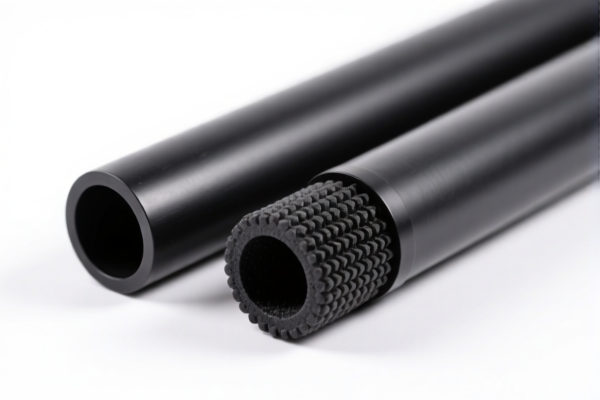
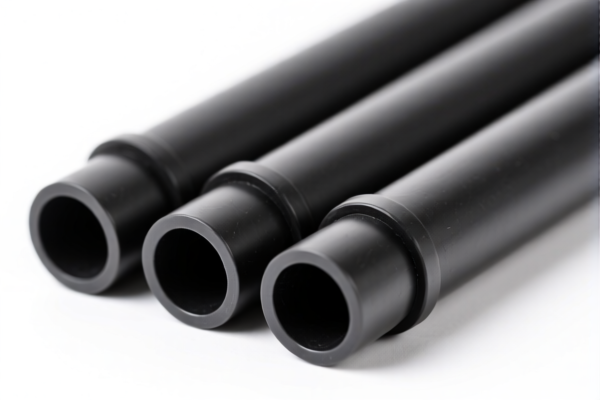
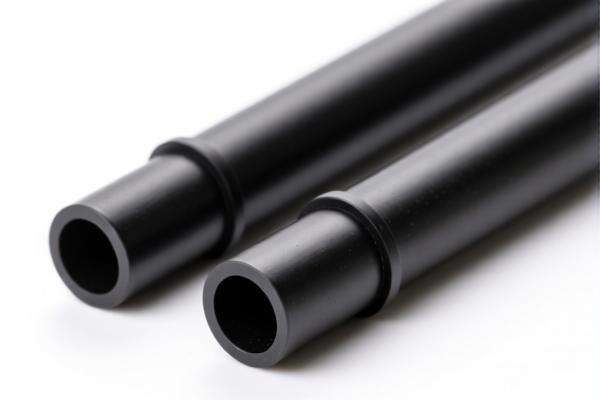
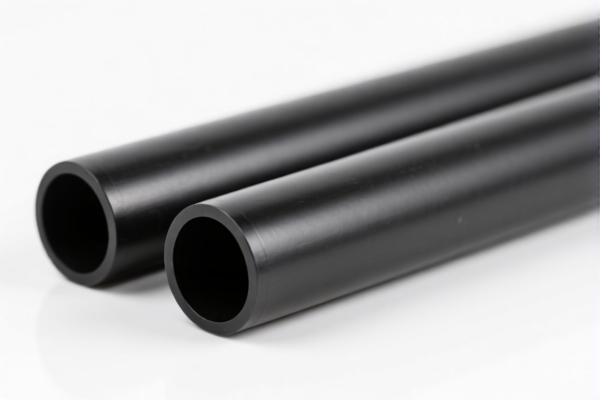
Natural Rubber Buffer Tubes are elastomeric components designed for shock absorption, vibration control, and load bearing in industrial, automotive, and construction applications. Unlike solid cylinders, "tubes" or "shims/sheets" (as described in the data) imply a specific geometric form used for cushioning.
In international trade, the classification hinges on physical form and specific usage:
- Raw Rubber Sheets/Slabs/Plates (4008 Series): If the product is processed into flat or semi-finished forms (shims, sheets) specifically for buffering, it often falls under Chapter 40.08.
- Other Rubber Articles (4016 Series): If the product is considered a distinct finished article for "damped controls" or specialized buffering equipment, it may fall under Chapter 40.16.
⚠️ Critical Distinction:
- If the item is essentially a sheet, plate, or shim made of natural rubber →归类 to 4008.21.00.00 or 4008.11.10.00.
- If the item is a finished buffering component/article for vibration control →归类 to 4016.99.55.00 or 4016.99.30.00.
📦 II. HS Code Classification Matrix (2026 Latest Tariff Data)
| HS Code | Product Description | Form & Usage | Total Tax Rate (China Origin) | Key Tax Components |
|---|---|---|---|---|
4008.21.00.00 |
Natural Rubber Buffer Sheets/Plates | Form: Sheet; Use: Buffering | 35.0% | Base: 0%, Section 301: 25%, Section 122: 10% |
4008.11.10.00 |
Natural Rubber Sheets/Slabs | Form: Sheet; Generic | 35.0% | Base: 0%, Section 301: 25%, Section 122: 10% |
4016.99.30.00 |
Other Rubber Articles (Buffering) | Form: Buffering Article; Use: Shock/Vibration Absorption | 35.0% | Base: 0%, Section 301: 25%, Section 122: 10% |
4016.99.55.00 |
Other Rubber Articles (Damped Controls) | Form: Buffering Sheet; Use: Vibration Control Category | 37.5% | Base: 2.5%, Section 301: 25%, Section 122: 10% |
🔍 Key Insight:
- The majority of "Natural Rubber Buffer" items face a 35.0% total tariff burden.
- One specific sub-category (4016.99.55.00) carries a higher rate of 37.5% due to a 2.5% base tariff, in addition to the punitive tariffs.
- All entries include Section 301 (25%) and Section 122 (10%) surcharges, totaling 35-37.5% for Chinese origin goods.
💰 III. 2026 Tariff Rate Breakdown (Detailed Policy Analysis)
✅ Applicable Country: United States (US)
✅ Origin: China (CN)
✅ Effective Date: Current 2026 Tariff Regime
🎯 1. The "35% Bracket" (HS Codes: 4008.21.00.00, 4008.11.10.00, 4016.99.30.00)
| Item | Detail |
|---|---|
| Base MFN Rate | 0.0% (Most items in these subheadings have a 0% base duty) |
| Section 301 Tariff | +25.0% (Trade War Tariff on Chinese Goods) |
| Section 122 Tariff | +10.0% (Specific surcharge on certain rubber/articles) |
| Total Effective Rate | 35.0% |
| Calculation Basis | CIF Value × 35% |
| De Minimis Exemption | ❌ NOT APPLICABLE (High tariff items are generally excluded from Section 321 de minimis benefits) |
| Legal Authority | USITC:4008.21.00.00 / 4016.99.30.00 → Section 301 Footnote → Section 122 Provision |
📌 Explanation:
- The 0% base rate is misleading; the punitive tariffs dominate the cost structure.
- Section 301 (25%) is applied to all natural rubber articles from China under these HTS codes.
- Section 122 (10%) is an additional surcharge specifically targeting this category, ensuring the total hits 35%.
🎯 2. The "37.5% Bracket" (HS Code: 4016.99.55.00)
| Item | Detail |
|---|---|
| Base MFN Rate | 2.5% (Specific base duty applies here) |
| Section 301 Tariff | +25.0% |
| Section 122 Tariff | +10.0% |
| Total Effective Rate | 37.5% |
| Calculation Basis | CIF Value × 37.5% |
| De Minimis Exemption | ❌ NOT APPLICABLE |
| Legal Authority | USITC:4016.99.55.00 → Section 301 Footnote → Section 122 Provision |
📌 Note:
- This is the most expensive classification for natural rubber buffers.
- The 2.5% base rate makes this category strictly more costly than the 0% base categories.
- Avoid this code if your product can be reasonably classified under4016.99.30.00or4008series to save 2.5% on the CIF value.
🛠️ IV. Clearance Practical Advice (Real-World Pitfall Avoidance)
✅ 1. Documentation Checklist (Non-Negotiable)
| Document | Requirement | Reason |
|---|---|---|
| ✅ Product Specification | ✔️ Must specify "Natural Rubber," form (Tube/Sheet), hardness (Shore A), and dimensions. | To prove material composition (Natural vs. Synthetic). Synthetic rubber has different duties. |
| ✅ Composition Certificate | ✔️ 100% Natural Rubber confirmation. | Distinguish from 4016.99.99 (Synthetic) which may have different base rates. |
| ✅ Commercial Invoice | ✔️ Clear description: "Natural Rubber Buffering Component/Shim." | Vague terms like "Rubber Parts" lead to customs delays and misclassification. |
| ✅ Packing List | ✔️ Item-by-item weight and value. | Required for CIF calculation. |
| ✅ Origin Certificate | ✔️ If claiming non-China origin (e.g., Vietnam), provide COO. | Critical for avoiding Section 301/122 tariffs. |
✅ 2. Classification Strategy (The "35% vs 37.5%" Dilemma)
| Scenario | Recommended HS Code | Total Tax | Why? |
|---|---|---|---|
| Flat Buffer Shims/Sheets | 4008.21.00.00 |
35.0% | Lowest risk, clear "Sheet" form, 0% base. |
| Tube-shaped Buffers (General) | 4016.99.30.00 |
35.0% | "Other rubber articles" for buffering. Avoid "Damped Control" language if possible. |
| Specific Vibration Control Units | 4016.99.55.00 |
37.5% | Only use if explicitly designed for "Damped Controls" per HTS notes. Higher tax risk. |
| Synthetic Rubber Buffers | Not in Data | Varies | Do not use these codes if the rubber is SBR/Neoprene. Misdeclaration leads to penalties. |
🔥 Golden Rule:
"Don't call it 'Damped Control' unless you must!"
Using4016.99.55.00triggers the 2.5% base tax. Classifying as general buffering (4016.99.30.00) or sheets (4008) saves you 2.5% on the entire shipment value.
✅ 3. Special Circumstances
| Situation | Handling Advice |
|---|---|
| Mixed Materials | If the buffer has a metal core, it may be classified under Chapter 73 or 76, not rubber. Check if the rubber is essential character. |
| OEM Parts | Provide buyer's design drawings to prove "Buffering" purpose, avoiding generic "Rubber Articles" scrutiny. |
| Samples | Even samples are subject to these duties if declared as commercial samples. De minimis does NOT apply due to >10% tax rate. |
| Transshipment | Shipping from Vietnam or Malaysia with proper transformation rules can bypass Section 301/122. Verify Country of Origin carefully. |
🌍 V. Global Market Comparison (2026 Overview)
| Market | Recommended HS Code | Est. Tariff (China Origin) | Notes |
|---|---|---|---|
| 🇺🇸 USA | 4008.21.00.00 / 4016.99.30.00 |
35.0% | High punitive tariffs. No de minimis. |
| 🇺🇸 USA | 4016.99.55.00 |
37.5% | Avoid if possible due to higher base. |
| 🇨🇳 China | 4008.11.10.00 |
5-10% | Import into China is cheap. |
| 🇪🇺 EU | 4008.21.00 / 4016.99 |
0-6.5% | No Section 301/122. Standard MFN applies. |
| 🇨🇦 Canada | 4008.21.00 |
0% | CUSMA preferential rates may apply if Canadian origin. |
📌 Conclusion:
The US market is the most hostile for Natural Rubber Buffers from China due to the 35-37.5% effective tariff.
EU and China markets are significantly cheaper for imports.
📌 VI. Common Errors & Pitfalls (Blood Lessons)
❌ Error 1: Declaring as "Synthetic Rubber" when it is Natural.
👉 Consequence: Customs Seizure + Fraud Penalties. Natural Rubber has different base rates and policy treatments.
❌ Error 2: Using "Rubber Hose" classification (4009).
👉 Consequence: Buffer tubes are not hoses for fluid transport. Misclassification leads to 35%+ audit risks.
❌ Error 3: Ignoring Section 122.
👉 Consequence: Underpaying 10% on CIF value. Back taxes + Interest + Penalties.
✅ Correct Declaration Example:
"Natural Rubber Buffering Shims, Flat Plate Form, 100% Natural Rubber, Not Containing Plastic, For Industrial Shock Absorption, Model BR-100"
🎯 VII. Conclusion: Professional Clearance for Cost Efficiency
🎯 Remember the Strategy:
🔹 "Base 0% is your friend, Base 2.5% is your enemy."
🔹 "35% is the floor, 37.5% is the trap."
🔹 "De Minimis is DEAD for rubber buffers from China."
📌 Pro Tip:
If your buffer tubes can be described as "Sheets" or "Shims" (4008.21.00.00 or 4008.11.10.00), they carry the same 35% rate as 4016.99.30.00 but are often easier to justify as raw/semi-finished goods. Avoid 4016.99.55.00 unless explicitly required by technical specs.
📣 Immediate Action:
📞 Verify Material Composition (Natural vs. Synthetic)
📄 Confirm Form (Tube vs. Sheet vs. Article)
🧮 Calculate 35% vs 37.5% Impact on your CIF price
🚀 Optimize Supply Chain if US tariffs make the product uncompetitive!
✨ Precision in Classification, Profit in Clearance!
💼 Your 2.5% savings could be your entire margin!
用户评价
关于 HS 编码归类
协调制度(HS)是由世界海关组织(WCO)制定的国际贸易商品分类标准。全球 200 多个国家采用 HS 系统作为海关关税、贸易统计和进出口监管的基础。
每个 HS 编码遵循以下层级结构:
- 章(2 位)——商品大类(例如:第 84 章:机器和机械设备)
- 品目(4 位)——章内的更具体分类
- 子目(6 位)——国际通用细分,所有 WCO 成员国统一使用
- 本国细分(8-10 位)——各国自行扩展的细分编码,如美国 HTSUS 10 位编码
正确的 HS 编码归类对于顺利通关、准确缴纳关税和遵守贸易法规至关重要。错误归类可能导致海关延误、多缴关税或罚款。
从CN进口到US时,适用的关税税率可能包括:
- 最惠国(MFN)税率——适用于 WTO 成员国的标准关税税率
- 普通税率——适用于无贸易协定国家
- 贸易救济关税——附加关税,如 301 条款(反倾销)、232 条款(国家安全)或反补贴税
本页内容仅供参考。如需正式归类,请咨询当地海关或持牌报关代理。