navigation instruments
CN → US| HS编码 | 关税税率 | 原产国 | 目的国 | 文档 |
|---|---|---|---|---|
| 8526910020 | 35.0% | CN | US | 官方文档 |
| 8526910040 | 35.0% | CN | US | 官方文档 |
| 9014208080 | 35.0% | CN | US | 官方文档 |
| 9014208040 | 35.0% | CN | US | 官方文档 |
商品图片
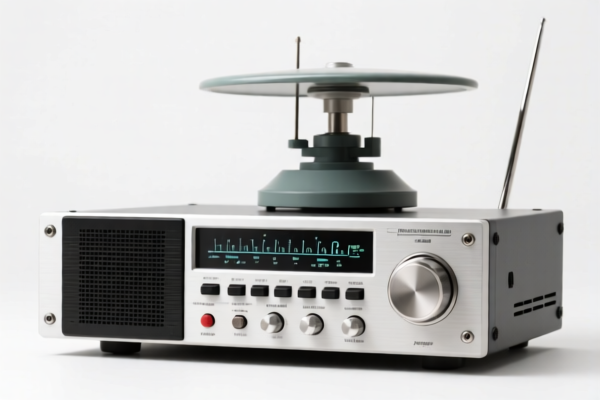
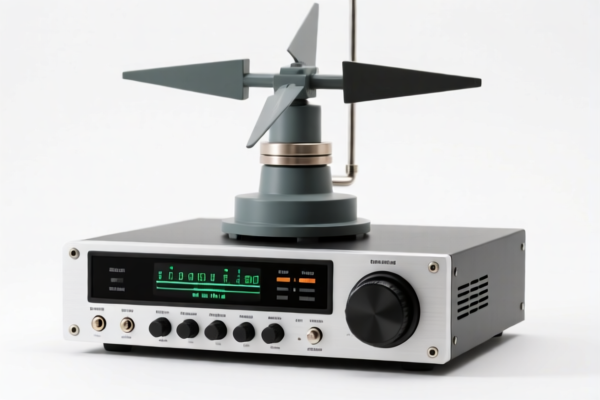
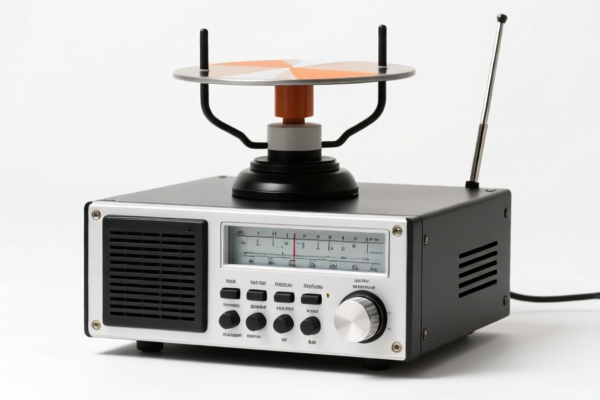
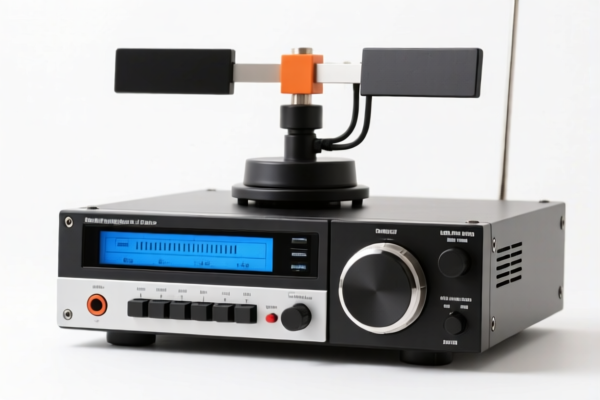
AI分析
🧭 Navigation Instruments (Navigational Devices)
🌐 HS Code Reference & Customs Clearance Guide | 2026 Latest Tariff Analysis | Professional Clearance Strategy
📌 I. Product Definition & Classification: Do You Truly Understand "Navigation Instruments"?
Navigation instruments are critical devices used to determine position, direction, and speed in maritime, aerial, and terrestrial transport. In international trade, these devices are broadly categorized based on their underlying technology:
- Radio Navigation Aids: Devices that rely on radio signals (e.g., GPS receivers, radar, compasses) to determine position. These generally fall under Chapter 85 (Electrical machinery).
- Optical/Mechanical Navigation Instruments: Devices that use lenses, mirrors, gyroscopes, or magnetic fields without primary electronic processing (e.g., sextants, gyrocompasses). These generally fall under Chapter 90 (Optical, photographic, medical instruments).
⚠️ Key Distinction Point:
- If the device primarily uses radio frequency signals (like GPS/GNSS modules) for positioning → Classified under 8526.91 or 9014.20 depending on integration.
- If the device is a standalone navigational instrument (non-radio) or a hybrid system → Classified under 9014.20.
- Crucial Note: Many modern "GPS Navigators" are classified as Radio Navigation Aids because their core function is receiving radio signals. However, specific subheadings may vary based on whether they are integrated into a specific machine (like a car) or standalone.
📦 II. HS Code Classification Details (2026 Latest Tariff Authority Comparison)
Based on the provided data for "Navigation Instruments", here are the four specific HS Codes analyzed. All four codes share the same tax structure due to their similar functional nature in the current tariff schedule.
| HS Code | Product Description & Rationale | Summary from Data |
|---|---|---|
| 8526.91.00.20 | Radio Navigation Aids: Devices functionally consistent with radio navigation aids. No conflict in function or material found. | "Navigation devices are consistent in use with radio navigation aids; no functional or material conflict found." |
| 8526.91.00.40 | Radio Navigation Aids (General): Highly compatible with radio navigation aids. No explicit material conflicts; fits the "other" residual category. | "Navigation devices match radio navigation aid usage highly; no explicit material and no conflict, fitting the residual category." |
| 9014.20.80.80 | Navigational Instruments (Other): Fully matches the use of navigational instruments and apparatus. Belongs to the "other" residual category with no obvious conflicts. | "Navigation devices completely match the use of navigational instruments; belongs to other residual categories, no obvious conflict." |
| 9014.20.80.40 | Navigational Instruments (Specific Other): Functions are consistent with classification explanations. No material or form conflict, inclined to be compliant. | "Navigation device functions are consistent with usage in classification explanations; no material or form conflict, inclined to judge as compliant." |
🔍 Key Reminder:
- HS 8526.91 series typically covers radio navigation aids (like GPS, GLONASS receivers) that are not specifically designed for aircraft or vehicles (which might fall under other subheadings if integrated).
- HS 9014.20 series covers other navigational instruments (e.g., compasses, sextants, or hybrid systems) and their parts.
- Crucial Distinction: The difference often lies in whether the device is primarily defined by its electronic radio signal processing (8526) or its general navigational purpose/mechanical/optical nature (9014). Customs may scrutinize the primary function.
💰 III. 2026 Latest Tariff Rate Detail (Including Surcharges, Policy Add-ons)
✅ Applicable Country: United States (US)
✅ Country of Origin: China (CN)
✅ Effective Date: From November 10, 2025 (including subsequent imports)
🎯 1. All Four HS Codes: 8526.91.00.20, 8526.91.00.40, 9014.20.80.80, 9014.20.80.40
| Item | Content |
|---|---|
| Base Tariff Rate | 0.0% (Ad Valorem) |
| Section 301 Surcharge | +25.0% (From USITC Footnote, Section 301 Action) |
| Section 122 Surcharge | +10.0% (Specific surcharge clause, often related to emergency powers or specific bilateral actions) |
| Total Effective Tax Rate | 35.0% |
| Tax Calculation | CIF Value × 35% |
| De Minimis Exemption | ❌ Not Applicable (High-risk category for low-value shipments) |
| Legal Basis Path | USITC:8526.91 / 9014.20 → Section 301 Footnote → Section 122 Clause |
📌 Explanation:
- "Base Tariff 0%": Standard Most-Favored-Nation (MFN) rate for these navigational devices is low or zero.
- "Section 301 Surcharge 25%": This is the major penalty for Chinese-origin goods under the Trump-era Section 301 tariffs, which remain largely in effect in 2026 for strategic sectors including electronics and navigation tech.
- "Section 122 Surcharge 10%": This additional layer brings the total punitive tariff to 35%.
- Combined Impact: Despite the base rate being 0%, the effective duty is 35%, significantly impacting cost structures.
🛠️ IV. Customs Clearance Practical Advice (Battle-Tested Pitfall Guide)
✅ 1. Required Documentation Checklist (Non-Negotiable)
| Document | Required? | Explanation |
|---|---|---|
| ✅ Product Specification Sheet | ✔️ | Must detail frequency ranges, accuracy, power source, and navigation protocols (GPS/GLONASS/etc.). |
| ✅ Technical Manual | ✔️ | Proves the device is a "navigation instrument" and not a simple consumer electronic (which might have different rules). |
| ✅ Product Photos (Including Label) | ✔️ | Clear view of model number, FCC ID (if US market), and input/output ports. |
| ✅ Declaration of Origin | ✔️ | Must explicitly state "Made in China" to avoid misdeclaration penalties. |
| ✅ Commercial Invoice | ✔️ | Must describe item as "Navigation Instrument" or "Radio Navigation Aid," NOT just "GPS Device" (too vague). |
| ✅ FCC Certification | ✔️ | For US import, electronic navigation devices must have FCC ID to prove electromagnetic compatibility. |
| ✅ Packing List | ✔️ | Details contents, ensuring no separation of parts that could be reclassified individually. |
✅ 2. Declaration Tips (Key Mantra)
🔥 "Define Function, Cite Code, Avoid Vague Terms!"
| Scenario | Correct Declaration | Incorrect Practice |
|---|---|---|
| Standalone GPS Receiver | HS 8526.91.00.20 as "Radio Navigation Aid" | Calling it "Electronics" or "Gadget" → Risk of rejection |
| Marine Compass/Gyro | HS 9014.20.80.80 as "Navigational Instrument" | Misclassifying as "Metal Product" → Higher scrutiny |
| Integrated Car GPS | Check Chapter 85/8512 (if integrated) | Using 8526/9014 for integrated units → Wrong classification |
| Parts/Accessories | Separate HS Codes (e.g., brackets, antennas) | Bundling parts with main unit → Complex duty calculation |
⚠️ Critical Note on 8526 vs 9014:
If your device uses radio waves (GPS, Radar, Radio Compass) to determine position, 8526 is more likely correct. If it uses magnetic fields (standard compass) or mechanical/optical means (sextant), 9014 is correct. Misclassification here can lead to audits.
✅ 3. Special Circumstances Handling
| Scenario | Handling Advice |
|---|---|
| OEM Navigation Devices | Provide end-user contract + technical specs to prove function. |
| Hybrid Devices (Radio + Optical) | Declare based on primary function. If radio is primary, use 8526. |
| Military/Aerospace Use | May require ITAR/EAR compliance checks in addition to customs. Ensure export licenses are valid. |
| Software-Defined Navigation | If the device is just a receiver with no display/interface, it may still be 8526.91. |
🌍 V. Global Market Comparison (2026 Latest)
| Country/Region | Recommended HS Code | Effective Duty (China Origin) | Certification Requirements | Notes |
|---|---|---|---|---|
| 🇺🇸 USA | 8526.91.00.20 / 9014.20.80.80 |
35% (0% Base + 25% Sec 301 + 10% Sec 122) | FCC ID + RoHS | High barrier due to layered tariffs. |
| 🇨🇳 China | 8526.91.00.20 / 9014.20.80.80 |
~5-7% (MFN) | CCC (if applicable) | No US-style surcharges. |
| 🇪🇺 EU | 8526.91 / 9014.20 |
0-2% | CE Mark + GPS Directive | Generally favorable; no extra punitive tariffs. |
| 🇯🇵 Japan | 8526.91 / 9014.20 |
0% (under EPA/JEPA) | G-Mark (if radio) | Zero tariffs under trade agreements. |
| 🇦🇺 Australia | 8526.91 / 9014.20 |
0-5% | RCM | ACMA registration for radio devices. |
📌 Conclusion:
- USA is the most challenging market for Chinese navigation instruments due to the 35% effective tariff.
- EU and Asia-Pacific remain more open with 0-5% tariffs.
- Consider supply chain diversification (e.g., assembling in Vietnam or Mexico) to mitigate US tariffs if exporting to North America.
📌 VI. Common Mistakes & Pitfall Guide (Lessons Learned)
❌ Mistake 1: Declaring "GPS Receiver" as "Electronics Accessory"
👉 Consequence: Customs may reclassify it, leading to 35% duty + penalties for incorrect declaration.
❌ Mistake 2: Confusing 8526 (Radio) with 9014 (Non-Radio)
👉 Consequence: If the device uses GPS (radio), 9014 is wrong. If it uses a magnetic compass, 8526 is wrong. Audit risk!
❌ Mistake 3: Ignoring FCC Certification for US Imports
👉 Consequence: Devices will be seized at the border if they emit radio frequencies without FCC ID.
❌ Mistake 4: Under-declaring Value
👉 Consequence: With a 35% duty, under-declaration is high-risk. Penalties are severe.
✅ Correct Approach:
"Radio Navigation Aid, GPS Receiver, Model XYZ, FCC ID: ABC123, CIF Value: $10,000, HS Code: 8526.91.00.20"
🎯 VII. Conclusion: Professional Declaration Saves Money!
🎯 Remember the Mantra:
🔹 "Function First, Code Precise, Tariff 35% for US, Avoid Seizure!"
🔹 "HS Code defines your cost; 35% is steep, declare correctly to avoid fines!"
📌 Pro Tip:
If your navigation instruments are originating from Vietnam, Mexico, or Malaysia, you may qualify for IEEPA exemptions or lower tariffs under USMCA, potentially reducing the effective duty to 0-5%.
Recommend applying for a Pre-Ruling (Advance Ruling) from US Customs to confirm the correct HS code (8526 vs 9014) before shipment.
📣 Immediate Action:
📞 Contact a licensed customs broker + Provide FCC ID + Apply for HS Code Pre-Ruling
🚀 Ensure your navigation instruments clear US customs smoothly, minimize duty costs, and maximize profits!
✨ Professional Clearance Begins with Accurate Classification!
💼 Every dollar of duty is worth calculating precisely!
用户评价
关于 HS 编码归类
协调制度(HS)是由世界海关组织(WCO)制定的国际贸易商品分类标准。全球 200 多个国家采用 HS 系统作为海关关税、贸易统计和进出口监管的基础。
每个 HS 编码遵循以下层级结构:
- 章(2 位)——商品大类(例如:第 84 章:机器和机械设备)
- 品目(4 位)——章内的更具体分类
- 子目(6 位)——国际通用细分,所有 WCO 成员国统一使用
- 本国细分(8-10 位)——各国自行扩展的细分编码,如美国 HTSUS 10 位编码
正确的 HS 编码归类对于顺利通关、准确缴纳关税和遵守贸易法规至关重要。错误归类可能导致海关延误、多缴关税或罚款。
从CN进口到US时,适用的关税税率可能包括:
- 最惠国(MFN)税率——适用于 WTO 成员国的标准关税税率
- 普通税率——适用于无贸易协定国家
- 贸易救济关税——附加关税,如 301 条款(反倾销)、232 条款(国家安全)或反补贴税
本页内容仅供参考。如需正式归类,请咨询当地海关或持牌报关代理。