non coniferous wood stain
CN → US| HS编码 | 关税税率 | 原产国 | 目的国 | 文档 |
|---|---|---|---|---|
| 3209100000 | 40.1% | CN | US | 官方文档 |
| 3209900000 | 40.9% | CN | US | 官方文档 |
| 3210000000 | 36.8% | CN | US | 官方文档 |
商品图片
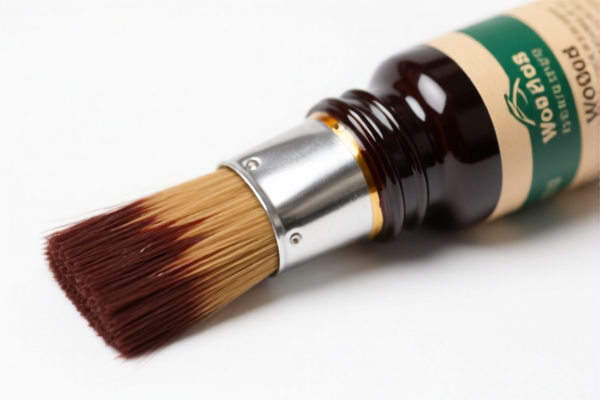
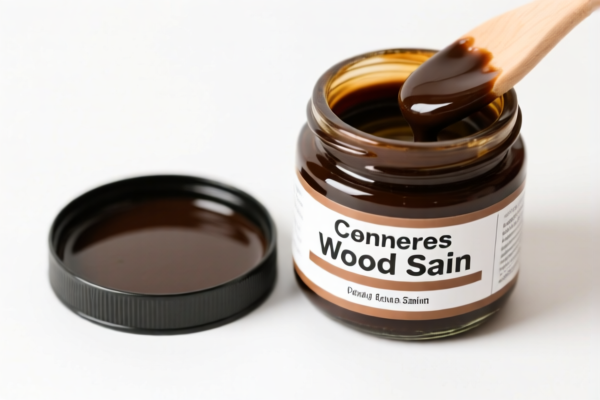
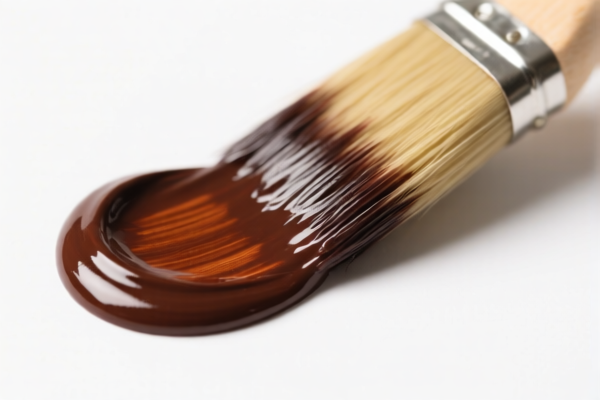
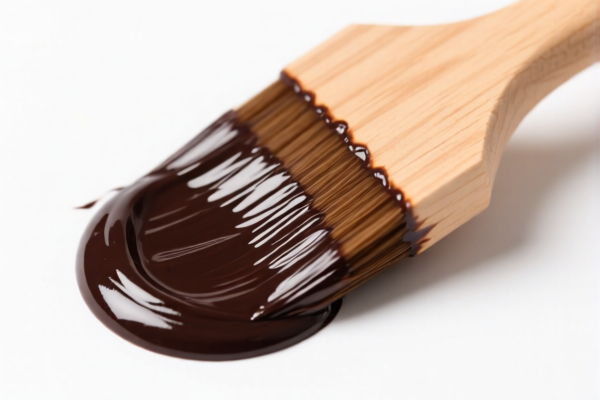
AI分析
🪵 Non Coniferous Wood Stain (Anti-Corrosive/Preservative Coatings)
🌐 HS Code Reference & Customs Clearance Guide | 2026 Latest Tariff Analysis | Professional Strategy for US-China Trade
📌 I. Product Definition & Classification: What is "Non-Coniferous Wood Stain"?
In international trade, Non-Coniferous Wood Stain generally refers to liquid coating products used for preserving, coloring, or protecting wood made from broad-leaved trees (hardwoods like oak, maple, birch, etc.). These products fall primarily under Chapter 32 (Tanning or Dyeing Extracts; Tannins and Their Derivatives; Dyes, Pigments and Other Coloring Matter; Paints and Varnishes; Putty and Other Mastics; Inks).
The classification depends heavily on the base resin and chemical composition: 1. Synthetic Polymer-Based: If the paint/varnish is based on synthetic polymers (e.g., acrylic, alkyd, polyurethane), it typically falls under 3209. 2. Other Paints/Varnishes: If it does not fit the specific definition of 3209 (e.g., certain chemical-modified resins or non-polymer-based coatings), it may fall under 3210.
⚠️ Critical Distinction:
- If the product is a paint or varnish containing synthetic polymers → HS 3209
- If it is an other paint/varnish (not covered by 3209/3208/3207/3208) → HS 3210
- Note: "Non-coniferous" implies the substrate, but the HS code is determined by the chemical formulation of the coating itself.
📦 II. HS Code Classification Details (2026 Authoritative Data)
Based on the provided data, here are the three possible HS Codes for this product, with their corresponding tax structures.
| HS Code | Product Description (Summary) | Key Characteristic | Total Tax Rate (US Imports from CN) |
|---|---|---|---|
| 3209.10.00.00 | Non-coniferous preservative stain; matching form/usage; belongs to paint/varnish category; contains synthetic polymer components. | Synthetic Polymer Based | 40.1% |
| 3209.90.00.00 | Non-coniferous preservative stain; matching material/usage; contains synthetic or chemically modified polymers; other paint category. | Chemically Modified Polymer | 40.9% |
| 3210.00.00.00 | Non-coniferous preservative stain; belongs to other paints and varnishes; no material conflict. | Other Paints/Varnishes | 36.8% |
🔍 Analysis of Tax Differences:
- 3210.00.00.00 has the lowest total tax rate (36.8%), primarily due to a lower base tariff (1.8%).
- 3209.10.00.00 and 3209.90.00.00 have higher base tariffs (5.1% and 5.9%) but similar additional taxes, resulting in higher total rates (40.1% and 40.9%).
- The choice depends on the exact chemical composition of the stain. If it strictly contains synthetic polymers, 3209 is mandatory. If it is a different type of varnish/paint not covered by 3209, 3210 is the correct code.
💰 III. 2026 Latest Tariff Rate Breakdown (Detailed Policy Add-ons)
✅ Applicable Country: United States (US)
✅ Country of Origin: China (CN)
✅ Effective Time: Includes imports after November 10, 2025 (Section 122 & Section 301 policies)
🎯 1. 3209.10.00.00 – Paints/Varnishes based on Synthetic Polymers
| Item | Detail |
|---|---|
| Base Tariff | 5.1% (ad valorem) |
| Section 301 Tariff | +25.0% (USITC Footnote for Chapter 32) |
| Section 122 Tariff | +10.0% (Specific additional duty) |
| Total Tax Rate | 40.1% |
| Tax Calculation | CIF Value × 40.1% |
| De Minimis Exemption | ❌ Not Eligible (Denied under current policies for this category) |
| Legal Basis Path | USITC:3209.10.00.00 → Section 301: +25% → Section 122: +10% |
📌 Explanation:
- This code is for stains where the binder is a synthetic polymer (e.g., acrylic latex).
- The 25% Section 301 tariff applies to most Chinese chemical products.
- The 10% Section 122 tariff is an additional layer, bringing the total added burden to 35% on top of the base rate.
🎯 2. 3209.90.00.00 – Other Paints/Varnishes with Synthetic/Chemically Modified Polymers
| Item | Detail |
|---|---|
| Base Tariff | 5.9% (ad valorem) |
| Section 301 Tariff | +25.0% |
| Section 122 Tariff | +10.0% |
| Total Tax Rate | 40.9% |
| Tax Calculation | CIF Value × 40.9% |
| De Minimis Exemption | ❌ Not Eligible |
| Legal Basis Path | USITC:3209.90.00.00 → Section 301: +25% → Section 122: +10% |
📌 Note:
- Use this code if the product contains chemically modified polymers that do not fit the standard definition of 3209.10.
- The 0.8% difference in base tariff (5.9% vs 5.1%) makes this the most expensive option among the three. Avoid this code unless the chemical composition strictly requires it.
🎯 3. 3210.00.00.00 – Other Paints and Varnishes
| Item | Detail |
|---|---|
| Base Tariff | 1.8% (ad valorem) |
| Section 301 Tariff | +25.0% |
| Section 122 Tariff | +10.0% |
| Total Tax Rate | 36.8% |
| Tax Calculation | CIF Value × 36.8% |
| De Minimis Exemption | ❌ Not Eligible |
| Legal Basis Path | USITC:3210.00.00.00 → Section 301: +25% → Section 122: +10% |
📌 Advantage:
- This code has the lowest base tariff (1.8%).
- If your stain does not primarily rely on synthetic polymers (e.g., it might be a specialized oil-based or chemical-modified varnish that falls outside 3209), this is the most cost-effective classification.
- However, misclassifying a synthetic polymer-based stain as "Other Paints" is a high-risk violation. Only use if legally justified.
🛠️ IV. Customs Clearance Practical Advice (Pitfall Avoidance Guide)
✅ 1. Required Documentation Checklist
| Document | Mandatory | Description |
|---|---|---|
| ✅ Product Specification Sheet | ✔️ | Must clearly state: Base Resin Type (Synthetic Polymer vs. Other), Active Ingredients, VOC content. |
| ✅ SDS (Safety Data Sheet) | ✔️ | Critical for customs to verify chemical composition and hazard class. |
| ✅ Commercial Invoice | ✔️ | Must specify "Wood Stain for Non-Coniferous Wood" and clearly state the HS Code. |
| ✅ Certificate of Origin (CO) | ✔️ | To confirm origin as China (triggering Section 301/122 tariffs). |
| ✅ Packing List | ✔️ | Detailed itemization, net/gross weight. |
| ✅ EPA Registration Number | ✔️ | Crucial! Paints/Stains in the US require EPA approval for VOC content and toxicity. |
✅ 2. Declaration Strategy (Key Rules)
🔥 "Chemical Basis Defines Code, EPA Compliance is Key!"
| Scenario | Correct HS Code | Incorrect Code | Consequence |
|---|---|---|---|
| Stain based on Acrylic/Polyurethane (Synthetic Polymer) | 3209.10.00.00 or 3209.90.00.00 |
3210.00.00.00 |
Penalty for misclassification. |
| Stain based on Other Resins (Not synthetic polymer) | 3210.00.00.00 |
3209.xx.xx.xx |
Overpayment of tax (36.8% vs 40.1%/40.9%). |
| Stain without EPA Registration | Cannot Clear | Any HS Code | Seizure and Destruction by CBP/EPA. |
| Stain for Coniferous Wood | Same Codes | N/A | The HS code does not change based on wood type; only the usage description changes. |
✅ 3. Special Handling Tips
| Situation | Advice |
|---|---|
| High VOC Content | Ensure the product meets US EPA VOC limits. Non-compliant products may be rejected regardless of HS Code. |
| OEM/Private Label | Provide the manufacturer's formula sheet to prove the base resin type. This is essential for distinguishing between 3209 and 3210. |
| Sample vs. Bulk | Both samples and bulk shipments are subject to the same tariffs. Do not attempt to ship samples as "free goods" to avoid Section 122/301 taxes. |
| Origin Marking | Must clearly mark "Made in China" on the container and inner packaging to comply with US Customs regulations. |
🌍 V. Global Market Comparison (2026 Overview)
| Country/Region | Recommended HS Code | Total Tariff (Approx.) | Key Certification | Remarks |
|---|---|---|---|---|
| 🇺🇸 USA | 3209.10.00.00 / 3210.00.00.00 |
36.8% - 40.9% | EPA, FDA (if food-contact) | High Section 301/122 tariffs. |
| 🇨🇳 China | 3209.10.00.00 / 3210.00.00.00 |
~5-7% | GB Standards | Low import tariff for domestic sale. |
| 🇪🇺 EU | 3208.90.00.00 / 3209.90.00.00 |
~0-6.5% | REACH, CLP | No Section 301/122 tariffs. |
| 🇨🇦 Canada | 3209.10.00.00 / 3210.00.00.00 |
~5-6.5% | Canada Pest Management Agency | Similar to US but lower extra tariffs. |
📌 Conclusion:
- The US market is the most challenging due to the 35% additional tariffs (25% + 10%).
- EU and Canada offer significantly lower tariff burdens.
- For US imports, accurate chemical classification is key to avoiding overpayment (3210 vs 3209) or underpayment penalties.
📌 VI. Common Errors & Pitfalls (Lessons Learned)
❌ Error 1: Declaring "Wood Stain" as 3210 when it is actually a synthetic polymer-based paint.
👉 Consequence: Customs audit reveals the error → Back taxes + Penalties + Possible seizure.
✅ Fix: Provide SDS and formula sheet to prove resin type.
❌ Error 2: Ignoring EPA Registration.
👉 Consequence: Product held at border for months → Storage fees + Return shipping.
✅ Fix: Ensure all products have valid EPA Registration Numbers before shipment.
❌ Error 3: Assuming "Non-Coniferous" changes the HS Code.
👉 Consequence: No change in HS Code, but possible miscommunication in description → Delays.
✅ Fix: Use clear descriptions: "Paint for Hardwood" rather than "Non-Coniferous Stain" which is not a standard HS term.
🎯 VII. Conclusion: Professional Classification, Cost Efficiency
🎯 Remember the Mantra:
🔹 "Synthetic Polymer = 3209 (40%+), Other Paint = 3210 (36.8%), EPA is Mandatory."
🔹 "Base Tariff + 25% (301) + 10% (122) = Total Tax."
🔹 "Check the Formula, Not Just the Name."
📌 Pro Tip:
If your product uses chemically modified polymers that are ambiguous, consider applying for a Binding Ruling from US Customs and Border Protection (CBP) before shipment. This provides legal certainty and avoids unexpected duties.
📣 Immediate Action:
📞 Consult with a Customs Broker
📄 Prepare SDS and Formula Sheets
🏷️ Ensure EPA Compliance
🚀 Clear Customs Smoothly, Minimize Taxes, Maximize Profit!
✨ Professional Customs Clearance Starts with Accurate Classification!
💼 Your Profit Margin Depends on the Decimal Points in Your Tariff!
用户评价
关于 HS 编码归类
协调制度(HS)是由世界海关组织(WCO)制定的国际贸易商品分类标准。全球 200 多个国家采用 HS 系统作为海关关税、贸易统计和进出口监管的基础。
每个 HS 编码遵循以下层级结构:
- 章(2 位)——商品大类(例如:第 84 章:机器和机械设备)
- 品目(4 位)——章内的更具体分类
- 子目(6 位)——国际通用细分,所有 WCO 成员国统一使用
- 本国细分(8-10 位)——各国自行扩展的细分编码,如美国 HTSUS 10 位编码
正确的 HS 编码归类对于顺利通关、准确缴纳关税和遵守贸易法规至关重要。错误归类可能导致海关延误、多缴关税或罚款。
从CN进口到US时,适用的关税税率可能包括:
- 最惠国(MFN)税率——适用于 WTO 成员国的标准关税税率
- 普通税率——适用于无贸易协定国家
- 贸易救济关税——附加关税,如 301 条款(反倾销)、232 条款(国家安全)或反补贴税
本页内容仅供参考。如需正式归类,请咨询当地海关或持牌报关代理。