non rigid rubber gloves
CN → US| HS编码 | 关税税率 | 原产国 | 目的国 | 文档 |
|---|---|---|---|---|
| 4005200000 | 35.0% | CN | US | 官方文档 |
| 4005910000 | 35.0% | CN | US | 官方文档 |
| 3926204050 | 16.5% | CN | US | 官方文档 |
| 3926204010 | 16.5% | CN | US | 官方文档 |
商品图片
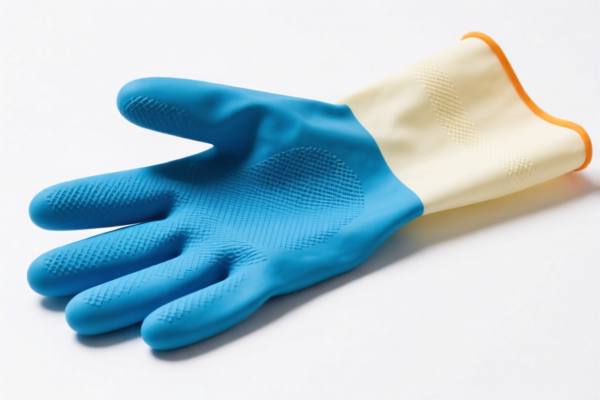


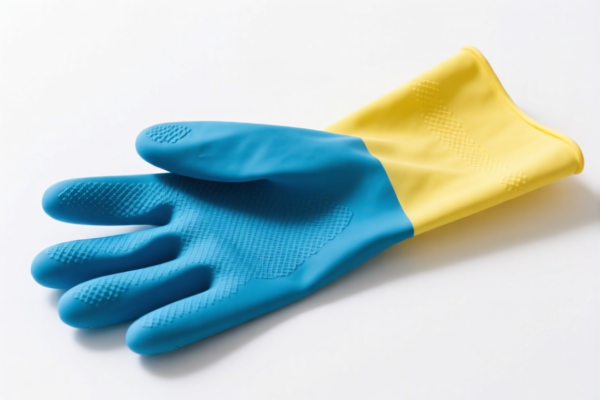
AI分析
🧤 Non-Rigid Rubber Gloves (Unvulcanized Compounded Rubber)
🌐 HS Code Reference & Clearance Guide | 2026 Latest Tariff Analysis | Professional Customs Strategy
📌 I. Product Definition & Classification: Do You Really Know "Non-Rigid Rubber"?
"Non-rigid rubber gloves" in an international trade context typically refers to compounded rubber in primary forms (solutions, dispersions, plates, sheets, or strips) that has not been vulcanized (set/hardened). These are raw or semi-processed materials used to manufacture finished gloves, seals, or hoses, rather than finished wearable items themselves.
Key Distinction:
- Unvulcanized (Raw/Semi-finished): Soft, sticky, or liquid state. Classified under Chapter 40 (Rubber).
- Vulcanized (Finished): Hardened, elastic, ready-to-wear. Classified under Chapter 39 (Plastics) if synthetic/latex blend, or Chapter 40 if natural rubber finished gloves.
⚠️ Critical Classification Point:
- If the product is a liquid solution or dispersion (e.g., latex dipped for manufacturing) → 4005.20.00.00
- If the product is in solid primary forms (plates, sheets, strips) → 4005.91.00.00
- NOT finished gloves for wearing (which would be under HS 4015 or 3926).
📦 II. HS Code Classification Details (2026 Latest Tariff Authority Comparison)
| HS Code | Product Description | Application Scenario | State/Form |
|---|---|---|---|
4005.20.00.00 |
Compounded rubber, unvulcanized: Solutions; dispersions other than those of subheading 4005.10 | Liquid latex, rubber solutions for dipping, adhesive coatings | 🧪 Liquid/Solution |
4005.91.00.00 |
Compounded rubber, unvulcanized: Other: Plates, sheets, and strip | Raw rubber slabs, unvulcanized sheets for cutting, rubber strips for sealing | 🧱 Solid/Sheet/Strip |
3926.20.40.10 |
Articles of plastics: Gloves, mittens... Disposable | Finished disposable plastic/polymer gloves | ✅ Finished |
3926.20.40.50 |
Articles of plastics: Gloves, mittens... Other | Finished non-disposable plastic gloves | ✅ Finished |
🔍 Key Reminder:
- The term "Non-rigid" in your query usually implies unvulcanized material in customs terminology.
- If you are importing finished, wearable gloves made of synthetic rubber/plastic, they fall under 3926.20.xxxx, NOT 4005.
- If you are importing raw rubber material to make gloves, it falls under 4005.
- Do not mix: Raw material (Ch 40) ≠ Finished product (Ch 39/40).
💰 III. 2026 Latest Tariff Rate Breakdown (Including Additional Taxes)
✅ Applicable Country: United States (US)
✅ Origin: China (CN)
✅ Effective Date: Post-2025 November 10 (Current Trade Policies)
🎯 1. 4005.20.00.00 —— Unvulcanized Rubber Solutions/Dispersions
| Item | Content |
|---|---|
| Basic Duty Rate | 0.0% |
| Section 301 Additional Duty | +25.0% |
| Total Tariff Rate | 25.0% |
| Tax Calculation | CIF Value × 25% |
| De Minimis Eligibility | ❌ Not Eligible (High tariff items excluded from Section 321) |
| Legal Basis | USITC:4005.20.00.00 → Footnote:301_Trade_Act |
📌 Explanation:
- Although the basic MFN duty is 0%, Section 301 tariffs add 25% on Chinese-origin unvulcanized rubber compounds.
- This is a high-import cost item. Do not attempt to misdeclare as "free" goods.
🎯 2. 4005.91.00.00 —— Unvulcanized Rubber Plates/Sheets/Strips
| Item | Content |
|---|---|
| Basic Duty Rate | 0.0% |
| Section 301 Additional Duty | +25.0% |
| Total Tariff Rate | 25.0% |
| Tax Calculation | CIF Value × 25% |
| De Minimis Eligibility | ❌ Not Eligible |
| Legal Basis | USITC:4005.91.00.00 → Footnote:301_Trade_Act |
📌 Note:
- Same tariff structure as liquid solutions.
- Applies to raw rubber sheets, slabs, or strips imported for manufacturing.
- Total 25% tax burden must be factored into landed cost.
🎯 3. 3926.20.40.10 / 3926.20.40.50 —— Finished Plastic/Synthetic Gloves
Note: Only if your "Non-rigid gloves" are actually finished disposable or non-disposable synthetic gloves.
| Item | Content |
|---|---|
| Basic Duty Rate | 6.5% |
| Section 301 Additional Duty | 0.0% |
| Total Tariff Rate | 6.5% |
| Tax Calculation | CIF Value × 6.5% |
| De Minimis Eligibility | ✅ Eligible (Under $800, may be duty-free) |
| Legal Basis | USITC:3926.20.40.xx |
📌 Critical Advantage:
- Finished gloves (Ch 39) have a much lower tariff (6.5%) and NO Section 301 surcharge compared to raw rubber materials.
- If possible, import finished gloves, not raw rubber. This saves 18.5% in duties (25% vs 6.5%).
🛠️ IV. Clearance Practical Advice (Combat Pitfalls Guide)
✅ 1. Document Checklist (Missing Items Cause Delays)
| Document | Mandatory? | Description |
|---|---|---|
| ✅ Product Spec Sheet | ✔️ | Must specify: Vulcanized vs. Unvulcanized, Composition, Form (Liquid/Sheet) |
| ✅ HS Code Justification Letter | ✔️ | Explain why it is Ch 40 (Raw) vs. Ch 39 (Finished) |
| ✅ Commercial Invoice | ✔️ | Clearly state: "Unvulcanized Compounded Rubber" or "Finished Synthetic Gloves" |
| ✅ Certificate of Origin (CO) | ✔️ | To prove origin (China vs. Vietnam/etc.) |
| ✅ MSDS (Material Safety Data Sheet) | ✔️ | Required for chemical/rubber solutions |
✅ 2. Declaration Strategy (Key Mantra)
🔥 “Raw Material = High Tax; Finished Glove = Low Tax; Don’t Mix Them!”
| Scenario | Correct HS Code | Error If Mislabeled |
|---|---|---|
| Raw Rubber Solution | 4005.20.00.00 |
Declared as "Gloves" → Smuggling/Fraud Risk |
| Raw Rubber Sheets | 4005.91.00.00 |
Declared as "Gloves" → 6.5% vs 25% Discrepancy |
| Finished Disposable Gloves | 3926.20.40.10 |
Declared as "Raw Rubber" → Overpayment of 18.5% |
| Finished Non-Disposable Gloves | 3926.20.40.50 |
Declared as "Raw Rubber" → Overpayment of 18.5% |
✅ 3. Special Situations Handling
| Situation | Handling Advice |
|---|---|
| OEM Raw Rubber for Glove Factory | Must declare as 4005. Provide end-use statement (for manufacturing). |
| Finished Gloves for Retail | Declare as 3926. Benefit from lower 6.5% rate. |
| Mixed Shipment (Raw + Finished) | Separate declarations! Do not lump together. |
| Origin Non-China | If from Vietnam/Thailand, check FTAs. May reduce or eliminate 25% tariff. |
🌍 V. Global Market Comparison (2026 Latest)
| Country/Region | Recommended HS Code | Tariff (China Origin) | Certification | Remarks |
|---|---|---|---|---|
| 🇺🇸 USA | 4005.91.00.00 |
25% (Section 301) | None | High tariff on raw rubber |
| 🇺🇸 USA | 3926.20.40.10 |
6.5% | None | Lower tariff on finished gloves |
| 🇨🇳 China | 4005.91.00.00 |
0% | None | Import duty-free for raw rubber |
| 🇪🇺 EU | 4005.91.00.00 |
0% | REACH | No additional tariffs |
| 🇬🇧 UK | 4005.91.00.00 |
0% | UKCA | No additional tariffs |
📌 Conclusion:
- USA is the strictest with 25% tariff on unvulcanized rubber.
- Importing finished gloves (Ch 39) into the US is significantly cheaper (6.5% vs 25%) than importing raw rubber (Ch 40).
- Supply Chain Strategy: If possible, manufacture raw rubber products in China and import finished gloves to the US, rather than raw rubber materials, to save 18.5% in duties.
📌 VI. Common Errors & Pitfalls (Lessons Learned)
❌ Error 1: Declaring "Unvulcanized Rubber Sheets" as "Gloves"
👉 Consequence: Customs will reject or reclassify, leading to 25% tariff instead of potential lower rates, plus penalties.
❌ Error 2: Declaring "Finished Gloves" as "Raw Rubber Solutions"
👉 Consequence: Overpayment of 18.5% in duties (25% vs 6.5%). No refund automatically.
❌ Error 3: Ignoring "Vulcanization" Status
👉 Consequence: Customs may require a lab test to prove state. If unvulcanized, 25% applies. If vulcanized, 6.5% may apply. Document the process!
✅ Correct Approach:
"Unvulcanized Compounded Rubber, In Primary Forms, For Glove Manufacturing"
OR
"Disposable Nitrile Gloves, Finished, For Medical Use"
🎯 VII. Conclusion: Professional Declaration, Cost Savings!
🎯 Remember the Mantra:
🔹 “Raw Rubber = 25% Tax; Finished Glove = 6.5% Tax; Choose Wisely!”
🔹 “HS Code Defines Duty, 18.5% Difference is Huge!”
📌 Pro Tip:
If your product is unvulcanized rubber, and you are importing into the US, calculate the 25% tax in your pricing model. If possible, shift supply chain to import finished gloves (Ch 39) to benefit from the lower 6.5% rate.
📣 Immediate Action:
📞 Consult a Customs Broker + Provide Product Photos + Apply for Pre-Ruling if unsure about "Vulcanization" status.
🚀 Clear Customs Smoothly, Maximize Profit!
✨ Professional Clearance Starts with Accurate Classification!
💼 Every Cent of Duty Counts!
用户评价
关于 HS 编码归类
协调制度(HS)是由世界海关组织(WCO)制定的国际贸易商品分类标准。全球 200 多个国家采用 HS 系统作为海关关税、贸易统计和进出口监管的基础。
每个 HS 编码遵循以下层级结构:
- 章(2 位)——商品大类(例如:第 84 章:机器和机械设备)
- 品目(4 位)——章内的更具体分类
- 子目(6 位)——国际通用细分,所有 WCO 成员国统一使用
- 本国细分(8-10 位)——各国自行扩展的细分编码,如美国 HTSUS 10 位编码
正确的 HS 编码归类对于顺利通关、准确缴纳关税和遵守贸易法规至关重要。错误归类可能导致海关延误、多缴关税或罚款。
从CN进口到US时,适用的关税税率可能包括:
- 最惠国(MFN)税率——适用于 WTO 成员国的标准关税税率
- 普通税率——适用于无贸易协定国家
- 贸易救济关税——附加关税,如 301 条款(反倾销)、232 条款(国家安全)或反补贴税
本页内容仅供参考。如需正式归类,请咨询当地海关或持牌报关代理。