non woven thickened shoe covers
CN → US| HS编码 | 关税税率 | 原产国 | 目的国 | 文档 |
|---|---|---|---|---|
| 6307906090 | 17.5% | CN | US | 官方文档 |
| 3926909989 | 22.8% | CN | US | 官方文档 |
| 6307909891 | 24.5% | CN | US | 官方文档 |
| 6115999000 | 27.4% | CN | US | 官方文档 |
| 6115298040 | 26.0% | CN | US | 官方文档 |
商品图片
AI分析
🥿 Non-Woven Thickened Shoe Covers (Protective Footwear Covers)
🌐 HS Code Reference & Customs Clearance Guide | 2026 Latest Tariff Analysis | Professional Clearance Strategy
📌 I. Product Definition & Classification: Do You Really Understand "Shoe Covers"?
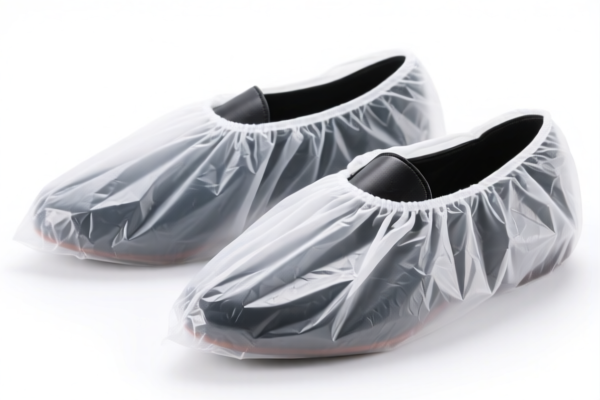
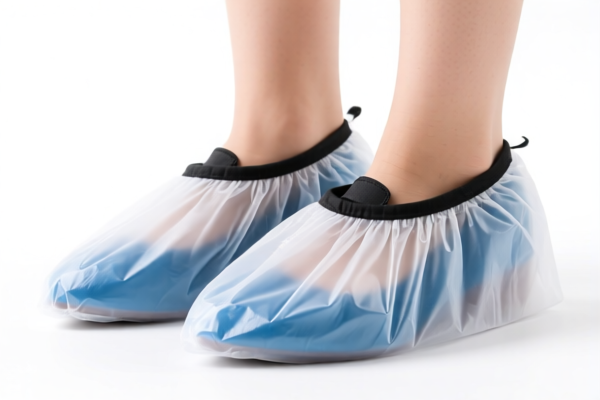
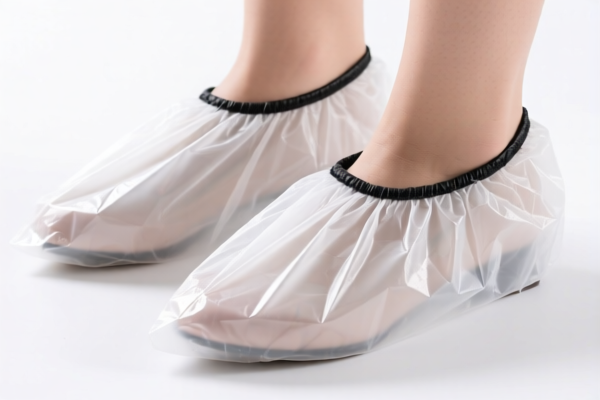
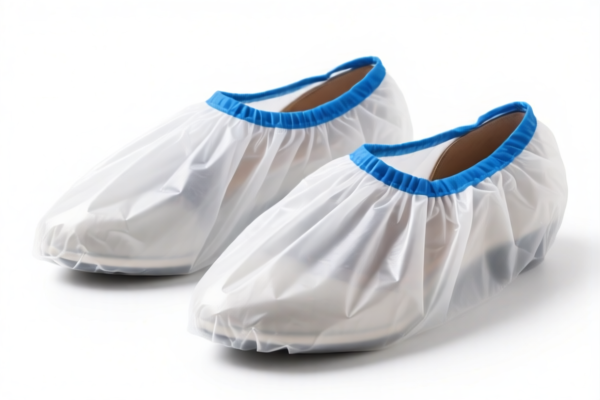
Non-woven thickened shoe covers are disposable protective gear made primarily from non-woven fabric (polypropylene or similar synthetic fibers). They are used in hospitals, cleanrooms, food processing, and construction sites to prevent cross-contamination and protect footwear.
In international trade, their classification depends heavily on material composition and functional description. There is a significant risk of misclassification between "Textile Articles," "Plastic Articles," and "Footwear Accessories."
⚠️ Key Distinction Points:
- Pure Non-Woven (PP): Often classified under 6307 (Other made-up articles) if considered generic textile products.
- Plastic Fiber Composition: If viewed as plastic products, falls under 3926 (Other plastic articles).
- Knitted/Textile Footwear: If deemed "footwear" or "footwear accessories," falls under 6115 (Hosiery/Footwear accessories).
📦 II. HS Code Classification Details (2026 Latest Tariff Authority Comparison)
| HS Code | Product Description | Application Scenario | Material Basis |
|---|---|---|---|
6307.90.60.90 |
Other made-up textile articles; non-woven shoe covers, classified as other finished products | General cleaning, hospital visits, light protection | Non-woven fabric (Textile nature) |
3926.90.99.89 |
Other articles of plastics and articles of other materials of heading 39.00 to 39.14; non-woven shoe covers classified as plastic products | Industrial sites, chemical labs, heavy-duty use | Plastic fibers (Synthetic polymer nature) |
6307.90.98.91 |
Other made-up textile articles; non-woven shoe covers, classified as other textile finished products | Medical facilities, food industry, hygiene-critical zones | Textile materials (Woven/Non-woven textile) |
6115.99.90.00 |
Other fitted hosiery; non-woven shoe covers, classified as knitted or crocheted footwear without soles | Healthcare, cleanrooms, disposable hygiene products | Textile materials (Knitted structure) |
6115.29.80.40 |
Other women's or girls' knee-length stockings; non-woven shoe covers classified as footwear-related accessories | Retail, consumer use, branded protective gear | Non-cotton/non-wool textile materials |
🔍 Key Reminder:
-6307vs3926: If the product is marketed as a "textile article" but composed of synthetic plastic fibers, customs may reclassify it to3926.
-6115Risk: If the product is structured like a "stocking" or "bootie," it may be classified as footwear/hosiery, which often carries higher base tariffs.
- Material Declaration is Critical: You must clearly state whether the primary material is "Non-woven PP" (Textile) or "Plastic Film/Sheet" to avoid disputes.
💰 III. 2026 Latest Tariff Rate Details (Including Additional Taxes & Policy Add-ons)
✅ Applicable Country: United States (US)
✅ Origin: China (CN)
✅ Effective Date: 2025 onwards (including subsequent imports)
🎯 1. 6307.90.60.90 —— Non-woven Shoe Covers (Other Made-up Articles)
| Item | Content |
|---|---|
| Base Tariff | 0.0% |
| Section 301 Additional Tax | +7.5% |
| 122 Clause Tax | +10.0% |
| Total Tax Rate | 17.5% |
| Tax Calculation | CIF Value × 17.5% |
| De Minimis Eligibility | ❌ No (Subject to scrutiny if value is low but high volume) |
| Legal Basis Path | USITC:6307.90.60.90 → 301:7.5% → 122 Clause:10% |
📌 Explanation:
- This is the most favorable classification in terms of base tariff.
- The 7.5% Section 301 tax applies to most textile/plastic cross-category goods.
- The 10% "122 Clause" tax is a specific additional duty often applied to Chinese-origin consumer goods.
- Total 17.5% is the lowest among the provided options.
🎯 2. 3926.90.99.89 —— Non-woven Shoe Covers (Plastic Articles)
| Item | Content |
|---|---|
| Base Tariff | 5.3% |
| Section 301 Additional Tax | +7.5% |
| 122 Clause Tax | +10.0% |
| Total Tax Rate | 22.8% |
| Tax Calculation | CIF Value × 22.8% |
| De Minimis Eligibility | ❌ No |
| Legal Basis Path | USITC:3926.90.99.89 → 301:7.5% → 122 Clause:10% |
📌 Note:
- If customs determine the non-woven fabric is essentially a "plastic product" (due to polymer content), this code applies.
- The 5.3% base tariff significantly increases the total cost compared to6307.
🎯 3. 6307.90.98.91 —— Non-woven Shoe Covers (Other Textile Articles)
| Item | Content |
|---|---|
| Base Tariff | 7.0% |
| Section 301 Additional Tax | +7.5% |
| 122 Clause Tax | +10.0% |
| Total Tax Rate | 24.5% |
| Tax Calculation | CIF Value × 24.5% |
| De Minimis Eligibility | ❌ No |
| Legal Basis Path | USITC:6307.90.98.91 → 301:7.5% → 122 Clause:10% |
📌 Note:
- This code is for "other" textile articles not specifically listed elsewhere.
- Higher base tariff (7.0%) than6307.90.60.90makes this less optimal.
🎯 4. 6115.99.90.00 —— Non-woven Shoe Covers (Knitted Footwear)
| Item | Content |
|---|---|
| Base Tariff | 9.9% |
| Section 301 Additional Tax | +7.5% |
| 122 Clause Tax | +10.0% |
| Total Tax Rate | 27.4% |
| Tax Calculation | CIF Value × 27.4% |
| De Minimis Eligibility | ❌ No |
| Legal Basis Path | USITC:6115.99.90.00 → 301:7.5% → 122 Clause:10% |
📌 Warning:
- Classifying shoe covers as "footwear" (6115) triggers the highest base tariff in this list.
- Even though they are disposable, if the structure resembles socks/stockings, customs may enforce this code.
🎯 5. 6115.29.80.40 —— Non-woven Shoe Covers (Footwear Accessories)
| Item | Content |
|---|---|
| Base Tariff | 16.0% |
| Section 301 Additional Tax | 0.0% |
| 122 Clause Tax | +10.0% |
| Total Tax Rate | 26.0% |
| Tax Calculation | CIF Value × 26.0% |
| De Minimis Eligibility | ❌ No |
| Legal Basis Path | USITC:6115.29.80.40 → 301:0.0% → 122 Clause:10% |
📌 Note:
- While Section 301 tax is 0%, the 16.0% base tariff is very high.
- This might be used if the product is explicitly marketed as an "accessory" rather than a standalone product.
- Total 26.0% is still higher than the preferred6307.90.60.90(17.5%).
🛠️ IV. Customs Clearance Practical Advice (Avoiding Pitfalls)
✅ 1. Preparation Checklist (Mandatory)
| Document | Required | Description |
|---|---|---|
| ✅ Product Specification Sheet | ✔️ | Detail material (e.g., 100% Polypropylene Non-woven), GSM (weight), length, thickness. |
| ✅ Material Composition Statement | ✔️ | Explicitly state: "Non-woven fabric, not plastic film." |
| ✅ Product Photos (Clear) | ✔️ | Show side view, top view, and packaging. Label must be visible. |
| ✅ Commercial Invoice | ✔️ | Use precise description: "Non-woven Polypropylene Disposable Shoe Covers." Avoid vague terms like "Plastic Bags." |
| ✅ Packing List | ✔️ | Include units, weight, and carton dimensions. |
| ✅ Certificate of Origin (CO) | ✔️ | To prove CN origin and apply correct 301/122 duties. |
✅ 2. Declaration Tips (Key Mnemonic)
🔥 "Material First, Function Second, Code
6307Best, Avoid6115Costly!"
| Scenario | Correct Declaration | Wrong Practice |
|---|---|---|
| Standard Non-woven PP Covers | 6307.90.60.90 |
Declaring as "Plastic Bags" → 3926 (Higher base) |
| Thickened/Hydrophilic Coated | 6307.90.60.90 or 6307.90.98.91 |
Declaring as "Footwear" → 6115 (High base) |
| Packaged in Retail Boxes | 6307.90.60.90 |
Splitting packaging as separate item → Complex clearance |
| Bulk Industrial Pack | 6307.90.60.90 |
Using "Textile Waste" code → Illegal/Evasion |
✅ 3. Special Cases Handling
| Scenario | Handling Advice |
|---|---|
| OEM for US Brands | Ensure invoice matches brand’s expected HS Code. Pre-agree with broker on 6307.90.60.90. |
| Hybrid Materials (e.g., PE + Non-woven) | If >50% non-woven by weight, argue for 6307. If PE dominant, expect 3926. |
| Medical vs. Industrial Use | If marketed as "Medical Grade," ensure no false claims. Still classified by material, not just use. |
| High Volume De Minimis (800 USD) | ❌ Not eligible for Section 301/122 exemptions if clearly from China. Plan for full duty. |
🌍 V. Global Market Clearance Comparison (2026 Latest)
| Country/Region | Recommended HS Code | Base Tariff | Additional Taxes | Remarks |
|---|---|---|---|---|
| 🇺🇸 USA | 6307.90.60.90 |
0.0% | 17.5% Total | Lowest duty among options. |
| 🇨🇳 China | 6307.90.60.90 |
0.0% | 0% | No additional taxes. |
| 🇪🇺 EU | 6307.90.98 |
4.5% - 6.5% | 0% | Varies by member state. |
| 🇬🇧 UK | 6307.90.90 |
4.5% | 0% | Post-Brexit rules apply. |
| 🇦🇺 Australia | 6307.90.90 |
5.0% | 0% | GST applies separately. |
📌 Conclusion:
- USA is the most tariff-sensitive market for this product.
-6307.90.60.90is the optimal code for US imports, saving ~5-10% vs. alternative codes.
- Avoid6115codes unless product structure is indistinguishable from stockings.
📌 VI. Common Errors & Pitfall Guide (Lessons Learned)
❌ Error 1: Declaring "Non-woven Shoe Covers" as "Plastic Bags" (3923.20)
👉 Consequence: Customs may reject or reclassify to 3926 (22.8%) or impose penalties for misdeclaration.
❌ Error 2: Using "Textile Shoes" or "Slippers" in description for 6115
👉 Consequence: Triggers 9.9%-16.0% base tariffs. Unnecessary cost increase.
❌ Error 3: Failing to specify "Non-woven" vs. "Woven"
👉 Consequence: Customs may apply higher duty rates for "Woven Fabrics" if not clarified.
❌ Error 4: Ignoring "122 Clause" implications
👉 Consequence: Underestimating total landed cost by 10%. Budget must include this.
✅ Correct Declaration Example:
"Disposable Non-Woven Polypropylene Shoe Covers, For Protective Use, Unbranded, 500pcs/Bale, HS Code: 6307.90.60.90"
🎯 VII. Conclusion: Professional Classification, Cost Optimization!
🎯 Remember the Mantra:
🔹 "Non-woven is Textile, Not Plastic.
6307is Best,6115is Rest. 17.5% is Target, Avoid Extra Charges!"
🔹 "HS Code Determines Tax, 5% Difference Means Big Impact. Declare Accurately, Save Millions!"
📌 Pro Tip:
If your non-woven covers are originating from Vietnam, Thailand, or Malaysia, they may be exempt from Section 301 and 122 Clause taxes, resulting in 0%~4.5% total duty.
Recommend Advance Ruling for large shipments to lock in the 6307.90.60.90 classification.
📣 Immediate Action:
📞 Contact a licensed customs broker + Provide material specs + Request HS Code pre-ruling.
🚀 Ensure your shoe covers clear smoothly, reduce costs, and boost competitiveness!
✨ Professional Clearance Starts with Accurate Classification!
💼 Every cent of duty paid is a cent you could have saved with the right code!
用户评价
关于 HS 编码归类
协调制度(HS)是由世界海关组织(WCO)制定的国际贸易商品分类标准。全球 200 多个国家采用 HS 系统作为海关关税、贸易统计和进出口监管的基础。
每个 HS 编码遵循以下层级结构:
- 章(2 位)——商品大类(例如:第 84 章:机器和机械设备)
- 品目(4 位)——章内的更具体分类
- 子目(6 位)——国际通用细分,所有 WCO 成员国统一使用
- 本国细分(8-10 位)——各国自行扩展的细分编码,如美国 HTSUS 10 位编码
正确的 HS 编码归类对于顺利通关、准确缴纳关税和遵守贸易法规至关重要。错误归类可能导致海关延误、多缴关税或罚款。
从CN进口到US时,适用的关税税率可能包括:
- 最惠国(MFN)税率——适用于 WTO 成员国的标准关税税率
- 普通税率——适用于无贸易协定国家
- 贸易救济关税——附加关税,如 301 条款(反倾销)、232 条款(国家安全)或反补贴税
本页内容仅供参考。如需正式归类,请咨询当地海关或持牌报关代理。