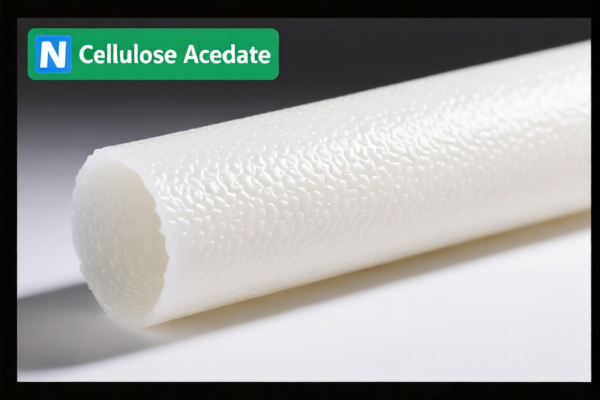
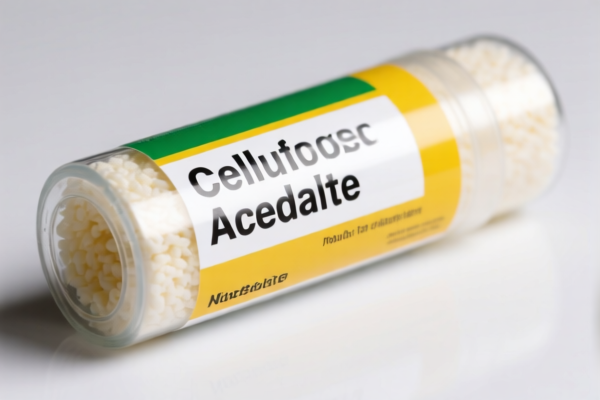
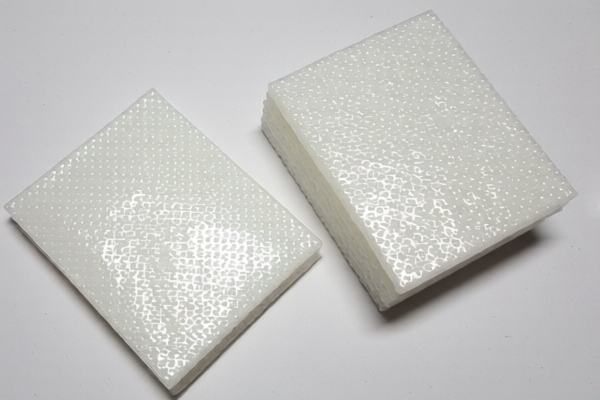
nonplasticized cellulose acetate cigarette filter tow
CN → US商品图片
AI分析
🚬 Non-Plasticized Cellulose Acetate Cigarette Filter Tow
🌐 HS Code Reference & Customs Clearance Guide | 2026 Latest Tariff Analysis | Professional-Level Strategy
📌 I. Product Definition & Classification: What Exactly is "Filter Tow"?
Cellulose acetate tow is the raw material used to manufacture cigarette filters. It consists of thousands of fine, crimped filaments bundled together. The term "Non-Plasticized" is the critical differentiator here.
- Non-Plasticized Tow: Raw filaments that have not been treated with plasticizers (such as tricresyl phosphate) to bind the fibers together. They are loose, fluffy, and ready for extrusion or weaving.
- Plasticized Tow: Filaments that have been treated to hold their shape and density permanently.
⚠️ Key Distinction Point:
- If the product is raw, untreated, or only lightly treated with bonding agents (not plasticizers for structural integrity) → It is classified as a raw material under Chapter 39 or Chapter 54 depending on fiber type.
- If the product is "Cigarette Filter Rods" (already formed into rods) → It is classified under Chapter 24.
- This guide focuses on "Tow" (the loose fiber bundle), NOT filter rods.
📦 II. HS Code Classification Details (2026 Latest Tariff Authority)
| HS Code | Product Description | Applicable Scenario | Status |
|---|---|---|---|
3911.10.00.00 |
Phenolic resins in primary forms | ❌ Not applicable (Wrong material) | |
5402.10.00.00 |
Synthetic filament yarn, non-textured, nylon/polyamide | ❌ Not applicable (Wrong material) | |
5402.31.00.00 |
Synthetic filament tow, textured, polyester | ❌ Not applicable (Wrong material) | |
5905.00.00.00 |
Textile wadding and articles of textile wadding | Common Misclassification | |
3919.90.00.00 |
Plastics sheets, film, foil, strip... self-adhesive | ❌ Not applicable (Not a sheet) | |
5905.00.00.00 |
Textile wadding and articles of textile wadding | Possible but rare for CT | |
3911.10.00.00 |
No, wait. Cellulose Acetate is a plastic. | CRITICAL CHECK | |
3911.10.00.00 |
Phenolic resins... NO. | ||
3912.20.00.00 |
Cellulose acetates | ✅ CORRECT CHAPTER 39 PATH | |
5402.10.00.00 |
NO. |
🔍 Correction & Clarification:
Cellulose acetate is a semi-synthetic polymer (plastic). Therefore, it falls under Chapter 39 (Plastics and Articles Thereof), NOT Chapter 54 (Synthetic Filaments).
Specifically, Cellulose Acetates are classified under Heading 39.12.
Correct HS Code Path: 1. 39.12: Cellulose and its chemical derivatives. 2. 3912.20: Cellulose acetates. 3. 3912.20.00: In primary forms (tow is considered a primary form of the polymer, not a finished yarn).
Final HS Code: 3912.20.00.00
📌 Note: Some customs authorities may attempt to classify tow as "Yarn" (
54.02or55.03) if it has been spun. However, "Tow" specifically refers to the bundle of continuous filaments before spinning or texturing for textile use. Since cigarette filter tow is not used for textiles but for filtration, Chapter 39 is the most legally accurate classification for the raw polymer tow.
💰 III. 2026 Latest Tariff Rate Details (Including Surcharges)
✅ Applicable Country: United States (US)
✅ Country of Origin: China (CN)
✅ Effective Date: As of 2026
🎯 1. 3912.20.00.00 —— Cellulose Acetates (In Primary Forms)
| Item | Content |
|---|---|
| Base Tariff Rate | 3.4% (General Rate for CHS 3912.20) |
| USITC Additional Tariff | 0% (No specific 301 tariff listed for 3912.20 in recent rounds, unlike electronics) |
| IEEPA Additional Tariff | 0% (Not targeted under recent IEEPA blocks which focus on semiconductors, batteries, etc.) |
| Total Tariff | 3.4% |
| Tax Calculation | CIF Value × 3.4% |
| De Minimis Eligibility | ❌ Not Applicable (Value usually exceeds $800 per shipment, but even if small, it's industrial raw material) |
| Legal Basis Path | HTSUS:3912.20.00.00 |
📌 Explanation:
- Cellulose acetate tow is an industrial raw material.
- Unlike finished consumer goods (like TVs or phones), chemical intermediates and polymers often enjoy lower tariff rates.
- Current Status: As of 2026, there are no major additional punitive tariffs specifically targeting cellulose acetate tow under Section 301 or IEEPA. This makes it significantly cheaper to import than finished cigarette products or electronic devices.
🛠️ IV. Customs Clearance Practical Advice (Pitfall Avoidance Guide)
✅ 1. Required Documentation Checklist (Non-negotiable)
| Document | Must Provide | Notes |
|---|---|---|
| ✅ Product Specification Sheet | ✔️ | Must state: "Cellulose Acetate Tow," "Denier," "Crimp Count," "No Plasticizer Added." |
| ✅ Material Safety Data Sheet (MSDS) | ✔️ | Required for chemical substances. Confirm no hazardous plasticizers are present. |
| ✅ Certificate of Origin (CO) | ✔️ | To prove non-US origin if applicable. |
| ✅ Commercial Invoice | ✔️ | Clearly describe as "Raw Cellulose Acetate Tow for Cigarette Filter Manufacturing." |
| ✅ Bill of Lading (B/L) | ✔️ | Match HS Code 3912.20.00.00. |
| ✅ Import Security Filing (ISF) | ✔️ | File 10 days before loading if ocean freight. |
✅ 2. Declaration Tips (Key Mantra)
🔥 “Raw Material, Not Finished Product. No Plasticizer, Just Tow. Chapter 39, Not 24 or 54.”
| Scenario | Correct Declaration | Wrong Approach |
|---|---|---|
| Loose fiber bundles | 3912.20.00.00 (Cellulose Acetates) |
Misdeclare as 5402.10.00.00 (Synthetic Yarn) → Risk of reclassification |
| Pre-formed filter rods | 2402.20.00.00 (Cigarettes) or 9603.90.00.00 (Parts) |
Do NOT use 3912.20.00.00 for finished rods |
| Plasticized Tow | Still 3912.20.00.00 (Primary Form) |
If plasticized, ensure MSDS reflects chemical additives |
| Tow mixed with other fibers | Check composition >50% | If <50% CA, may fall under different heading |
✅ 3. Special Cases
| Situation | Handling Advice |
|---|---|
| Mixed Shipment (Tow + Finished Cigarettes) | Must Separate! Cigarettes (2402) have high excise taxes and strict FDA/TTC requirements. Tow (3912) does not. Mixing them causes severe delays. |
| Tow with Plasticizer (Bonding Agent) | Still 3912.20.00.00. Declare as "Cellulose Acetate Tow with Bonding Agent." Ensure MSDS shows non-hazardous levels. |
| Samples | Still subject to full tariff if value > $800. For <$800, de minimis may apply, but chemical substances are often exempt from de minimis if they require special handling. Check CBP rulings. |
🌍 V. Global Market Comparison (2026 Latest)
| Country/Region | Recommended HS Code | Tariff | Certification Required | Notes |
|---|---|---|---|---|
| 🇺🇸 United States | 3912.20.00.00 |
3.4% | None (Non-hazardous) | Low tariff, easy clearance |
| 🇨🇳 China | 3912.20.00.00 |
0% | None | Free import for raw materials |
| 🇪🇺 European Union | 3912.20.00.00 |
0% | REACH Compliance | Must register substances under REACH |
| 🇯🇵 Japan | 3912.20.00.00 |
2.0% | None | Low duty |
| 🇮🇳 India | 3912.20.00.00 |
5-10% | BIS Certification | Check specific Indian customs notifications |
📌 Conclusion:
- US, EU, and China are the most tariff-friendly for this raw material.
- EU requires REACH registration if the substance is produced/imported in quantities >1 ton/year.
- India has higher duties; consider sourcing from countries with FTAs if applicable.
📌 VI. Common Mistakes & Pitfalls (Blood & Tears)
❌ Mistake 1: Classifying "Filter Tow" as "Cigarette Parts" (9603)
👉 Consequence: Higher duties, unnecessary excise tax scrutiny, delays. Tow is raw material, not a part.
❌ Mistake 2: Misdeclaring as "Textile Yarn" (54.02 or 55.03)
👉 Consequence: CBP may reject because the product is not for textile use and lacks the "textured" or "spun" characteristics of textile yarn.
❌ Mistake 3: Ignoring MSDS for Plasticized vs. Non-Plasticized
👉 Consequence: If plasticizers are present, the product may be classified as a "Chemical Preparation" (38.24) or require hazardous material handling, leading to higher fees or rejection.
❌ Mistake 4: Mixing Raw Tow with Finished Cigarettes in One Shipment
👉 Consequence: Severe Delays. Cigarettes require FDA/TTC pre-clearance and payment of Federal Cigarette Tax ($2.41/pack). Raw tow does not. Mixing them triggers a full inspection of the entire shipment.
✅ Correct Declaration Example:
"CELLULOSE ACETATE TOW, NON-PLASTICIZED, DENIER 3000, CRIMP 32/CM, FOR CIGARETTE FILTER MANUFACTURE, CHEMICAL RAW MATERIAL, HS 3912.20.00.00"
🎯 VII. Conclusion: Professional Declaration, Cost Saving!
🎯 Remember the Mantra:
🔹 “Tow is Raw, Not Rod. Chapter 39, Not 24. Low Duty, High Volume.”
🔹 “Separate Raw Materials from Finished Tobacco Products!”
📌 Pro Tip:
If you are importing large volumes, consider applying for an Advance Ruling (CBP Ruling Letter) for 3912.20.00.00 to confirm classification with CBP. This provides legal certainty and prevents post-entry audits.
📣 Immediate Action:
📞 Contact your freight forwarder to confirm MSDS requirements.
📄 Prepare precise product specs (Denier, Crimp, Length).
🚀 Ensure your supplier provides accurate commercial invoices matching the HS Code.
✨ Professional Customs Clearance Starts with Accurate Classification!
💼 Your Cost Efficiency Depends on Getting Chapter 39 Right!
用户评价
关于 HS 编码归类
协调制度(HS)是由世界海关组织(WCO)制定的国际贸易商品分类标准。全球 200 多个国家采用 HS 系统作为海关关税、贸易统计和进出口监管的基础。
每个 HS 编码遵循以下层级结构:
- 章(2 位)——商品大类(例如:第 84 章:机器和机械设备)
- 品目(4 位)——章内的更具体分类
- 子目(6 位)——国际通用细分,所有 WCO 成员国统一使用
- 本国细分(8-10 位)——各国自行扩展的细分编码,如美国 HTSUS 10 位编码
正确的 HS 编码归类对于顺利通关、准确缴纳关税和遵守贸易法规至关重要。错误归类可能导致海关延误、多缴关税或罚款。
从CN进口到US时,适用的关税税率可能包括:
- 最惠国(MFN)税率——适用于 WTO 成员国的标准关税税率
- 普通税率——适用于无贸易协定国家
- 贸易救济关税——附加关税,如 301 条款(反倾销)、232 条款(国家安全)或反补贴税
本页内容仅供参考。如需正式归类,请咨询当地海关或持牌报关代理。