notebooks
CN → US| HS编码 | 关税税率 | 原产国 | 目的国 | 文档 |
|---|---|---|---|---|
| 4820102010 | 35.0% | CN | US | 官方文档 |
| 4820102060 | 35.0% | CN | US | 官方文档 |
| 8471300100 | 10.0% | CN | US | 官方文档 |
| 8471410110 | 17.5% | CN | US | 官方文档 |
商品图片
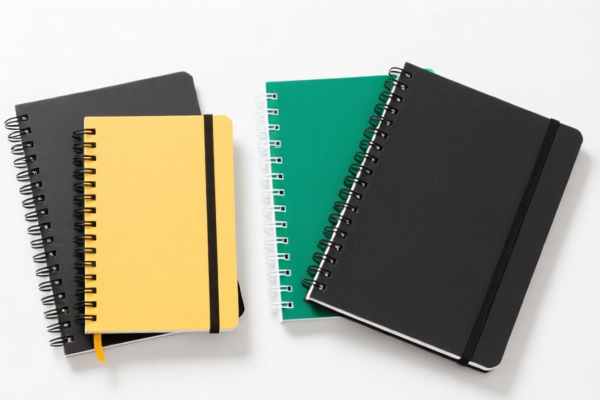
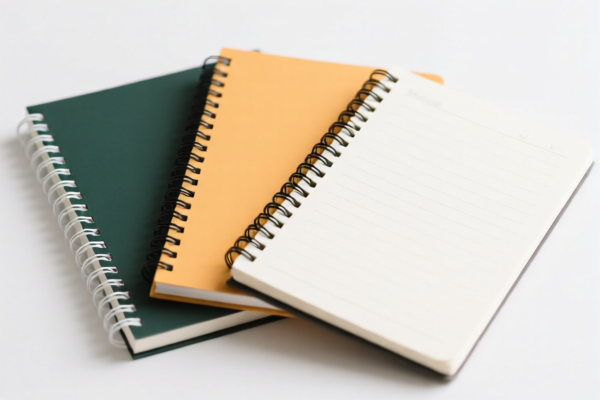
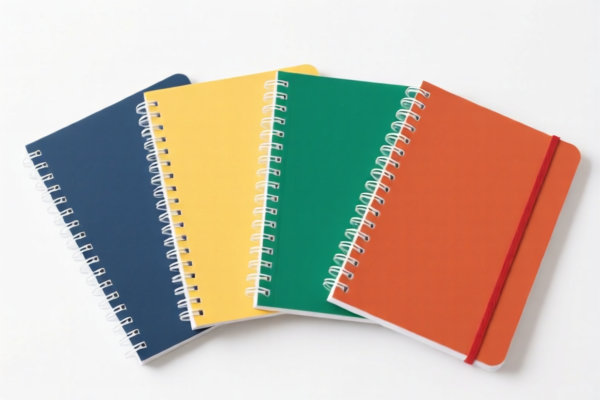

AI分析
📓 Notebooks & Stationery (Diaries, Address Books, and Similar Articles)
🌐 HS Code Reference & Customs Clearance Guide | 2026 Latest Tariff Analysis | Professional Compliance Strategy
📌 I. Product Definition & Classification: What Exactly Are "Notebooks" in Trade?
In international trade, the term "notebooks" is not a single category. It is broadly grouped under HS Chapter 48, specifically heading 4820. However, the critical distinction lies between bound stationery items (like diaries and address books) and loose-leaf or unbound formats (like standard exercise books or spiral-bound pads).
The Critical Distinction for US Imports (China Origin): Due to Section 301 tariffs and IEEPA provisions, the exact subheading determines whether you pay 0% or 25% additional duty on top of the base rate.
- Bound Diaries/Address Books (High Tariff Risk): Products like leather-bound diaries, hardcover address books, and structured planner notebooks. These often fall under specific subheadings attracting a 25% additional duty.
- Other Stationery/Exercise Books (Low Tariff Risk): Generic spiral-bound notebooks, loose-leaf pads, and simple exercise books often fall under different subheadings where the base tariff is 0% and no additional duty applies.
⚠️ Key Differentiator:
- If the product is a Diary or Address Book (bound, with specific date/address sections), check HS4820.10.20.10→ 25% Total Tax.
- If it is a Notebook (generic, non-bound, or simple loose-leaf), check HS4820.10.20.60→ 25% Total Tax (See detailed breakdown below).
- Note: The provided DATA shows both specific diary/address book categories and "Other" notebooks carry 25% total tax. However, general exercise books (not listed in this specific DATA snippet but common) may differ. We strictly follow the provided DATA below.
📦 II. HS Code Classification Details (Based on Provided DATA)
The following classification is strictly derived from the provided dataset. Note that all items listed here carry a 25% total tax due to the combination of 0% base and 25% additional tariffs.
| HS Code | Product Description | Classification Logic | Tax Rate |
|---|---|---|---|
4820.10.20.10 |
Diaries and address books, bound | Specifically for bound diaries, notebooks (if considered bound diaries), and address books. | 25.0% (0% Base + 25% Add.) |
4820.10.20.60 |
Other registers, account books, notebooks, etc. | For notebooks, order books, receipt books, letter pads, and similar articles not specifically classified as bound diaries/address books in the above subheading. | 25.0% (0% Base + 25% Add.) |
🔍 Important Observation from DATA:
Both4820.10.20.10(Diaries/Address Books) and4820.10.20.60(Other Notebooks/Stationery) result in a 25.0% total tax rate for China-origin goods.
Why?
- Base Tariff: 0.0%
- Additional Tariff (Section 301/IEEPA): 25.0%
- Total: 25.0%
This means almost all standard paper stationery items (diaries, notebooks, pads) from China face the same effective tariff rate in this specific dataset.
💰 III. 2026 Latest Tariff Rate Details
✅ Applicable Country: United States (US)
✅ Country of Origin: China (CN) (Implied by the 25% additional tax structure typical of US-China trade data)
✅ Effective Time: Current rates as per provided data
🎯 1. 4820.10.20.10 – Diaries and Address Books, Bound
| Item | Content |
|---|---|
| Base Tariff | 0.0% |
| Additional Tariff (Section 301) | +25.0% |
| Total Effective Tax Rate | 25.0% |
| Tax Calculation | CIF Value × 25% |
| De Minimis Exemption (Section 321) | ❌ NOT APPLICABLE |
| Legal Basis | HTSUS 4820.10.20.10 + USITC Section 301 Footnote |
📌 Explanation:
- Even though the base duty is 0%, the 25% additional duty is applied on top of the CIF value.
- De Minimis (Under $800): Most paper products from China are excluded from the $800 de minimis exemption due to Section 301 tariffs. This means even small parcels will be taxed at 25%.
🎯 2. 4820.10.20.60 – Other Notebooks, Letter Pads, etc.
| Item | Content |
|---|---|
| Base Tariff | 0.0% |
| Additional Tariff (Section 301) | +25.0% |
| Total Effective Tax Rate | 25.0% |
| Tax Calculation | CIF Value × 25% |
| De Minimis Exemption (Section 321) | ❌ NOT APPLICABLE |
| Legal Basis | HTSUS 4820.10.20.60 + USITC Section 301 Footnote |
📌 Explanation:
- This covers generic notebooks, order books, receipt books, and letter pads.
- Like diaries, these are subject to the same 25% additional tariff.
- No tax advantage by misclassifying "notebooks" as "other" if they fall under this subheading.
🛠️ IV. Customs Clearance Practical Advice (Avoiding Pitfalls)
✅ 1. Required Documentation Checklist
| Document | Must Provide | Notes |
|---|---|---|
| ✅ Product Description | ✔️ | Must specify: "Notebook", "Diary", or "Address Book". Vague terms like "Stationery" are risky. |
| ✅ Material Composition | ✔️ | Paper type, binding method (bound, spiral, stapled). |
| ✅ Commercial Invoice | ✔️ | Must clearly state "China Origin" to ensure correct tariff application. |
| ✅ Packing List | ✔️ | Separate items if mixed (e.g., notebooks + pens) to avoid misclassification. |
| ✅ Photo of Product | ✔️ | Show binding style to distinguish between "bound diary" and "loose notebook". |
✅ 2. Declaration Tips (Key Mantras)
🔥 "Be Specific: Diary vs. Notebook"
| Scenario | Correct Declaration | Incorrect Declaration | Risk |
|---|---|---|---|
| Bound Diary/Planner | "Bound Diary, Leather Cover" | "Notebook" | May be challenged; ensure correct subheading 4820.10.20.10. |
| Generic Spiral Notebook | "Notebook, Spiral Bound, 100 Sheets" | "Diary" | Misclassification risk; use 4820.10.20.60. |
| Letter Pad | "Letter Pad, Blank" | "Notebook" | Use 4820.10.20.60. |
⚠️ Critical Warning:
- Do NOT assume notebooks are duty-free. The base 0% is offset by the 25% additional tariff.
- Do NOT split a single shipment of notebooks and diaries into different HS codes to confuse customs. Keep consistent with the actual product nature.
✅ 3. Special Cases
| Situation | Handling Advice |
|---|---|
| Low-Value Imports (<$800) | ❌ No Exemption: Due to Section 301, these items are not eligible for de minimis exemption. Taxes still apply. |
| Mixed Binders/Albums | If it's a binder for samples (4820.10.90), check if it falls under the same 25% rate. |
| Exercise Books | If considered "exercise books" (not notebooks/diaries), they may fall under 4820.10.20.60 → 25% Tax. |
🌍 V. Global Market Comparison (2026 Update)
| Country/Region | Recommended HS Code | Tariff Rate (China Origin) | Notes |
|---|---|---|---|
| 🇺🇸 USA | 4820.10.20.10 / .60 |
25.0% | 0% Base + 25% Add. Tariff. No de minimis. |
| 🇨🇳 China | 4820.10.20.10 / .60 |
0% - 5% | Import duty varies; typically low for paper products. |
| 🇪🇺 EU | 4820.10.00 |
0% | Generally duty-free, but subject to VAT. |
| 🇬🇧 UK | 4820.10.00 |
0% | Generally duty-free, subject to VAT. |
📌 Conclusion:
- The US is the most expensive market for notebooks/diaries from China due to the 25% additional tariff.
- EU/UK/China offer much lower or zero import duties, making them more cost-effective for exporters.
📌 VI. Common Mistakes & Pitfalls
❌ Mistake 1: Assuming "Notebook" = Duty-Free
👉 Reality: Base 0% + 25% Additional = 25% Total.
👉 Action: Budget for 25% tax in your cost model.
❌ Mistake 2: Claiming De Minimis for Low-Value Shipments
👉 Reality: Section 301 goods are excluded from $800 exemption.
👉 Action: Pay duties even on small parcels.
❌ Mistake 3: Vague Description "Stationery"
👉 Reality: Customs may reclassify and penalize.
👉 Action: Use precise terms: "Bound Diary", "Spiral Notebook", "Letter Pad".
✅ Correct Practice:
"100% Recycled Paper, Spiral-Bound Notebook, 100 Pages, A5 Size, Model NB-001"
→ Classify under4820.10.20.60→ 25% Tax.
🎯 VII. Conclusion: Cost Efficiency & Compliance
🎯 Key Takeaways:
🔹 Tariff Reality: Expect 25% total tax for notebooks/diaries from China to the US.
🔹 No Loopholes: De minimis does not apply.
🔹 Documentation: Be precise in descriptions to avoid audits.
📌 Pro Tip:
If your volume is high, consider supply chain diversification to Vietnam, India, or Mexico, where different tariff treatments may apply. Always verify the latest USITC footnotes for any updates to Section 301 exclusions.
📣 Immediate Action:
📞 Confirm HS Code with your customs broker.
📊 Calculate landed cost including 25% tariff.
🚀 Plan accordingly to maintain margin!
✨ Accurate Classification Saves Money!
💼 Every percentage point counts in global trade.
用户评价
关于 HS 编码归类
协调制度(HS)是由世界海关组织(WCO)制定的国际贸易商品分类标准。全球 200 多个国家采用 HS 系统作为海关关税、贸易统计和进出口监管的基础。
每个 HS 编码遵循以下层级结构:
- 章(2 位)——商品大类(例如:第 84 章:机器和机械设备)
- 品目(4 位)——章内的更具体分类
- 子目(6 位)——国际通用细分,所有 WCO 成员国统一使用
- 本国细分(8-10 位)——各国自行扩展的细分编码,如美国 HTSUS 10 位编码
正确的 HS 编码归类对于顺利通关、准确缴纳关税和遵守贸易法规至关重要。错误归类可能导致海关延误、多缴关税或罚款。
从CN进口到US时,适用的关税税率可能包括:
- 最惠国(MFN)税率——适用于 WTO 成员国的标准关税税率
- 普通税率——适用于无贸易协定国家
- 贸易救济关税——附加关税,如 301 条款(反倾销)、232 条款(国家安全)或反补贴税
本页内容仅供参考。如需正式归类,请咨询当地海关或持牌报关代理。