oak wood for barrel making
CN → US| HS编码 | 关税税率 | 原产国 | 目的国 | 文档 |
|---|---|---|---|---|
| 4407910022 | 35.0% | CN | US | 官方文档 |
| 4407910063 | 35.0% | CN | US | 官方文档 |
商品图片
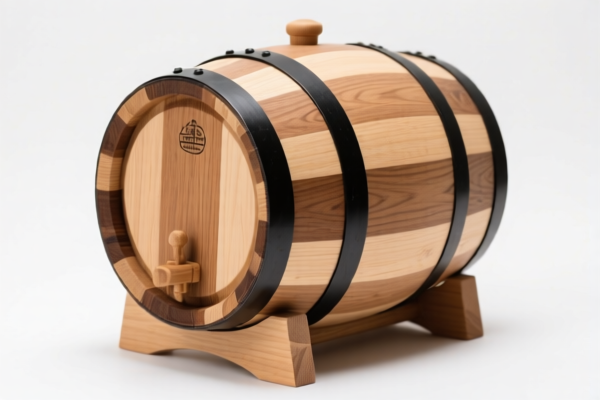
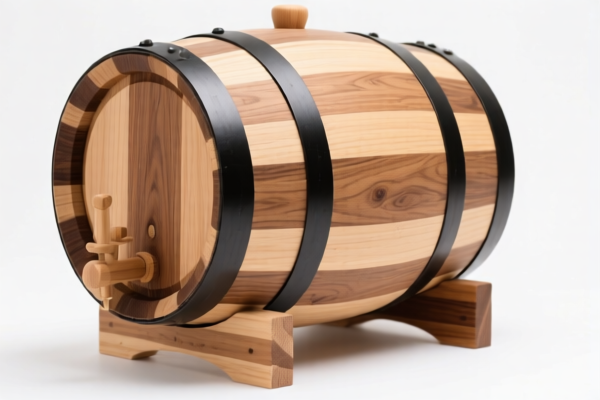
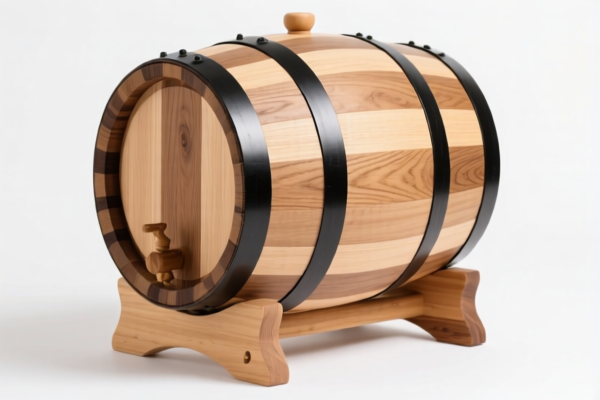
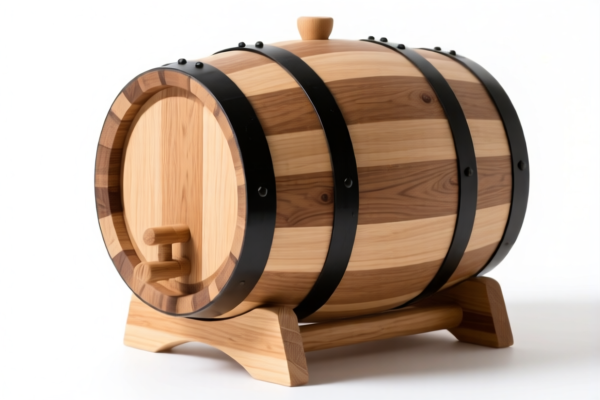
AI分析
🪵 Oak Wood for Barrel Making (Quercus spp.)
🌐 HS Code Reference & Customs Clearance Guide | 2026 Latest Tariff Analysis | Professional Customs Strategy
📌 I. Product Definition & Classification: Do You Truly Understand "Oak Wood"?
Oak wood, specifically intended for barrel making (wine, whiskey, spirits), is a high-value raw material in the global trade of timber and agricultural products. In international trade, it is classified under Chapter 44 (Wood and articles of wood; wood charcoal), specifically as sawn wood of a certain thickness.
Key Distinction:
- Red Oak (Quercus rubra etc.): Often used for barrels, furniture, and flooring. Has specific chemical properties suitable for aging spirits.
- Other Oak (Quercus spp.): Includes White Oak, English Oak, etc. White oak is preferred for whiskey/wine barrels due to tighter grain and tannin content.
⚠️ Critical Classification Point:
- If the wood is sawn, chipped, sliced, or peeled and has a thickness > 6mm → It falls under HS Code 4407.
- If the wood is merely unworked logs (not sawn) → It may fall under HS Code 4403 (Wood in the rough).
- If the wood is already shaped into barrel staves or hoops → It may fall under HS Code 4421 (Other articles of wood).Based on your input, we are focusing on Sawn Wood (planks/boards) destined for barrel manufacturing, falling under HS Code 4407.
📦 II. HS Code Classification Details (2026 Latest Tariff Authority Comparison)
| HS Code | Product Description | Applicable Scenario | Tax Rate (US Imports from China) |
|---|---|---|---|
4407.91.00.22 |
Other: Of oak (Quercus spp.) Red oak | Sawn red oak planks/board, thickness > 6mm, planed/sanded/end-jointed | 25.0% |
4407.91.00.63 |
Other: Of oak (Quercus spp.) Other | Sawn white oak, European oak, or other oak species, thickness > 6mm, planed/sanded/end-jointed | 25.0% |
🔍 Key Reminder:
- Both codes apply to sawn wood (not logs, not finished barrels).
- The key differentiator is the species:
- Red Oak →4407.91.00.22
- Other Oaks (e.g., White Oak) →4407.91.00.63
- Both incur a 25% total tariff under current US trade policies against Chinese goods.
💰 III. 2026 Latest Tariff Rate Details (Including Supplementary Taxes)
✅ Applicable Country: United States (US)
✅ Country of Origin: China (CN)
✅ Effective Date: Current rates apply as of 2026
🎯 1. 4407.91.00.22 — Red Oak (Sawn Wood)
| Item | Content |
|---|---|
| Base Tariff | 0% (ad valorem) |
| Section 301 Supplementary Tariff | +25% (USITC Footnote 9903.88.01 / Trade Act Section 301) |
| Total Tax Rate | 25.0% |
| Tax Calculation | CIF Value × 25% |
| De Minimis Exemption | ❌ Not Applicable (Section 301 goods are excluded from Section 321 de minimis) |
| Legal Basis Path | HTSUS:4407.91.00.22 → USITC:301 → FOOTNOTE:9903.88.01 |
📌 Explanation:
- The 25% additional duty is imposed under Section 301 of the Trade Act of 1974, targeting specific Chinese imports.
- There is no base tariff (0%) for this category under normal trade relations, but the 301 duty dominates, resulting in a flat 25%.
- No IEEPA 10% applies here because Section 301 duties already cover the primary risk; however, always verify if any new executive orders add叠加 taxes. As per provided data, total is 25%.
🎯 2. 4407.91.00.63 — Other Oak (Sawn Wood)
| Item | Content |
|---|---|
| Base Tariff | 0% (ad valorem) |
| Section 301 Supplementary Tariff | +25% |
| Total Tax Rate | 25.0% |
| Tax Calculation | CIF Value × 25% |
| De Minimis Exemption | ❌ Not Applicable |
| Legal Basis Path | HTSUS:4407.91.00.63 → USITC:301 → FOOTNOTE:9903.88.01 |
📌 Note:
- Same tax treatment as Red Oak.
- Whether it’s White Oak (common for bourbon barrels) or French Oak (for wine), if sourced from China and classified as "Other Oak," it falls under4407.91.00.63.
🛠️ IV. Customs Clearance Practical Advice (Real-World Pitfall Avoidance Guide)
✅ 1. Required Documentation Checklist (Non-negotiable)
| Document | Must Provide | Explanation |
|---|---|---|
| ✅ Commercial Invoice | ✔️ | Must clearly state: "Sawn Oak Wood, Thickness > 6mm, Species: Red Oak/White Oak" |
| ✅ Packing List | ✔️ | Specify dimensions, weight, number of boards/pallets |
| ✅ Phytosanitary Certificate | ✔️ | Mandatory for all wood products to confirm no pests/diseases (ISPM 15 compliance) |
| ✅ Fumigation Certificate | ✔️ | If wood was not heat-treated, fumigation proof is required |
| ✅ Species Declaration Letter | ✔️ | From supplier confirming scientific name (e.g., Quercus alba for White Oak) |
| ✅ Bill of Lading/Air Waybill | ✔️ | Standard shipping documents |
✅ 2. Declaration Tips (Key Mantra)
🔥 “Species Matters, Thickness Defines, Phytosanitary is Key!”
| Situation | Correct Declaration | Common Mistake |
|---|---|---|
| Red Oak Planks | 4407.91.00.22 |
Mislabel as "Lumber" or "Timber" → Delay for species verification |
| White Oak Boards | 4407.91.00.63 |
Same as above |
| Wood < 6mm thick | Different HS Code (e.g., 4407.91.00.11) | Assuming all oak is 4407.91.00.22/63 |
| Unprocessed Logs | 4403 |
Classifying logs as "sawn wood" → Higher scrutiny, potential fines |
| Finished Barrel Staves | 4421.99 |
Incorrectly declaring as raw wood → Misclassification penalty |
✅ 3. Special Considerations
| Situation | Handling Advice |
|---|---|
| ISPM 15 Compliance | All wood packaging must be marked with the IPPC logo. If the wood itself is treated, provide treatment certificate. |
| Anti-Dumping Duties | Check if there are additional AD/CVD duties on Chinese wood products. Currently, general 301 duty applies. |
| Origin Fraud | Do not misdeclare Chinese origin as Vietnam/Malaysia to avoid 25%. CBP actively audits wood imports. Penalties include seizure and fines. |
| Barrel Staves vs. Planks | If the wood is already cut into stave blanks (for barrel making), ensure it’s still classified under 4407 (sawn wood) if not further processed into finished staves. |
🌍 V. Global Market Comparison (2026 Latest)
| Country/Region | Recommended HS Code | Tariff (China Origin) | Certification Requirement | Remarks |
|---|---|---|---|---|
| 🇺🇸 USA | 4407.91.00.22 / .63 |
25% | Phytosanitary + ISPM 15 | Highest cost due to 301 tariff |
| 🇨🇳 China | 4407.91.00.22 / .63 |
5-8% | N/A | Domestic trade, lower tax |
| 🇪🇺 EU | 4407.91.00.90 |
0-8% | FSC/PEFC Certification | Strong preference for certified sustainable wood |
| 🇬🇧 UK | 4407.91.00.90 |
0-8% | UKCA + FSC | Post-Brexit, similar to EU rules |
| 🇯🇵 Japan | 4407.91.00.00 |
5-10% | Phytosanitary | Strict quarantine on wood imports |
📌 Conclusion:
- USA imposes the highest barrier (25% flat rate) due to geopolitical trade tensions.
- EU/UK favor sustainability certification (FSC/PEFC) over pure tariff cost.
- If exporting to US, cost-benefit analysis is critical: Is the margin worth the 25% tax?
📌 VI. Common Errors & Pitfalls (Blood-Learning Lessons)
❌ Mistake 1: Declaring "Oak Wood" without specifying species
👉 Consequence: Customs may default to a higher tax code or hold cargo for species verification → Delay & Storage Fees
❌ Mistake 2: Ignoring Phytosanitary Requirements
👉 Consequence: Rejection at port, forced fumigation at importer’s expense, or destruction of cargo
❌ Mistake 3: Misclassifying Thickness
👉 Consequence: Wood > 6mm vs < 6mm has different HS codes. Misclassification leads to underpayment penalties
❌ Mistake 4: Assuming All Oak is "White Oak"
👉 Consequence: Red Oak and White Oak have different market values and uses. Mislabeling can lead to fraud allegations
✅ Correct Practice:
"Sawn Oak Wood, Thickness 25mm, Species: Quercus alba (White Oak), Heat-Treated per ISPM 15, FSC Certified, for Barrel Manufacturing"
🎯 VII. Conclusion: Precise Classification Saves Money!
🎯 Remember the Mantra:
🔹 "Species Matters: Red Oak vs. Other Oak"
🔹 "Thickness > 6mm = Sawn Wood"
🔹 "Phytosanitary is Non-Negotiable"
🔹 "25% Tariff for US Imports from China"
📌 Pro Tip:
If your oak wood is sourced from France, Germany, or Romania, you can avoid the 25% US tariff entirely.
If sourced from China, consider cost-sharing with customers or exploring tariff engineering (if applicable, e.g., exporting partially processed staves if they fall under a different duty rate — though unlikely for 4407).
📣 Immediate Action:
📞 Engage a licensed customs broker + Provide Phytosanitary Certificate + Confirm Species Declaration
🚀 Ensure smooth customs clearance, avoid delays, and protect your profit margins!
✨ Professional clearance starts with accurate classification!
💼 Your every dollar of tariff is worth optimizing!
用户评价
关于 HS 编码归类
协调制度(HS)是由世界海关组织(WCO)制定的国际贸易商品分类标准。全球 200 多个国家采用 HS 系统作为海关关税、贸易统计和进出口监管的基础。
每个 HS 编码遵循以下层级结构:
- 章(2 位)——商品大类(例如:第 84 章:机器和机械设备)
- 品目(4 位)——章内的更具体分类
- 子目(6 位)——国际通用细分,所有 WCO 成员国统一使用
- 本国细分(8-10 位)——各国自行扩展的细分编码,如美国 HTSUS 10 位编码
正确的 HS 编码归类对于顺利通关、准确缴纳关税和遵守贸易法规至关重要。错误归类可能导致海关延误、多缴关税或罚款。
从CN进口到US时,适用的关税税率可能包括:
- 最惠国(MFN)税率——适用于 WTO 成员国的标准关税税率
- 普通税率——适用于无贸易协定国家
- 贸易救济关税——附加关税,如 301 条款(反倾销)、232 条款(国家安全)或反补贴税
本页内容仅供参考。如需正式归类,请咨询当地海关或持牌报关代理。