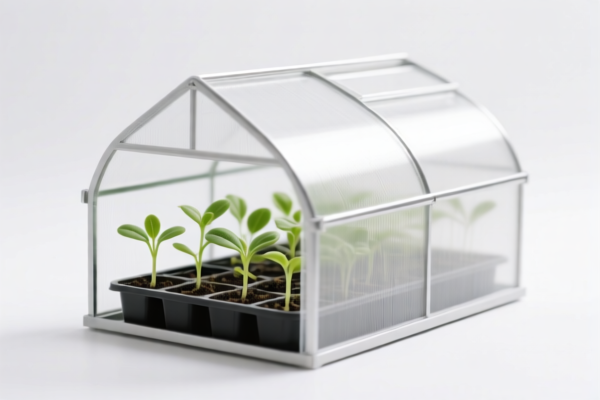
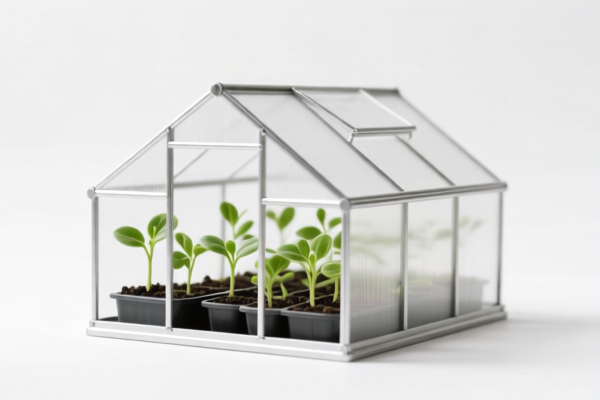
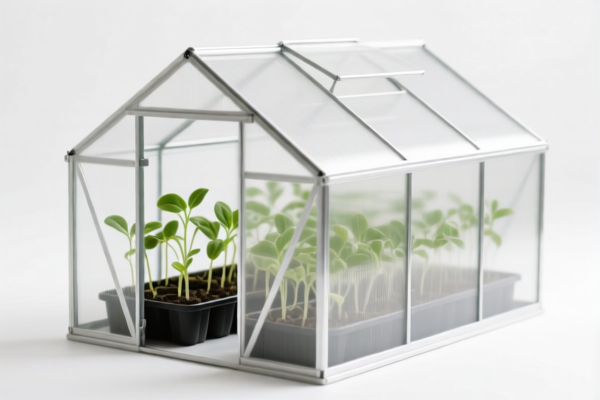
onion seedlings
CN → US商品图片

AI分析
🧅 Onion Seedlings (Allium cepa Seedlings/Transplants)
🌐 HS Code Reference & Customs Clearance Guide | 2026 Latest Tariff Analysis | Professional Strategy for Fresh Produce
📌 I. Product Definition & Classification: Do You Really Know "Onion Seedlings"?
Onion seedlings, also known as onion transplants or onions for planting, are young Allium cepa plants cultivated specifically for agricultural re-planting rather than immediate consumption. In international trade, they fall under the category of live plants used for propagation.
Crucial Distinction: Onion Seedlings/Transplants 🌱: Young plants with roots, typically sold in trays or bundles, intended for growing into mature onion bulbs. Dried Onion Seeds 🥄: Small, dry, dormant propagating parts. Fresh Onion Bulbs 🧅: Mature harvests for consumption.
⚠️ Key Classification Point:
- If the product is a living plant (with roots, green leaves, grown in soil/trays) intended for planting → Classified under 0602 (Live trees, shrubs, other plants...).
- If the product is dry seeds → Classified under 1209 (Seeds, fruit and spores...).
- If the product is fresh bulbs for eating → Classified under 0703 (Onions, shallots...).
⚠️ Critical Warning: Misdeclaring live seedlings as dried seeds or fresh vegetables leads to severe phytosanitary rejections and high tariff penalties.
📦 II. HS Code Classification Details (2026 Latest Tariff Authority Comparison)
| HS Code | Product Description | Application Scenario | Is it Live Plant? |
|---|---|---|---|
0602.90.46.00 |
Other live plants (including their roots) and cuttings and slips; mushroom spawn | Onion seedlings/transplants for agricultural planting | ✅ Yes |
1209.91.00.00 |
Other seeds, fruit and spores, of vegetables, not being fodder | Onion seeds (dry, for sowing) | ❌ No (Dry) |
0703.20.00.00 |
Shallots | Shallots (bulbs) | ❌ No (Harvested Vegetable) |
0703.10.00.00 |
Onions and shallots, fresh or chilled | Fresh Onion Bulbs for consumption | ❌ No (Harvested Vegetable) |
0601.10.00.00 |
Bulbs, tubers, tuberous roots, corms and crowns, flowering, flowering buds and flower shoots | Ornamental bulbs (e.g., Tulip bulbs) | ❌ No (Ornamental Bulb, not seedling) |
🔍 Key Reminder:
- Onion Seedlings must be declared as0602.90.46.00(Live plants).
- Do NOT declare them as1209(Seeds) even if they are "for planting." The physical form (live vs. dry) dictates the HS code.
- Customs will inspect for pests (Onion Maggot, Thrips, etc.). Live plants require strict Phytosanitary Certificates.
💰 III. 2026 Latest Tariff Rate Details (Including Surcharges & Policy Add-ons)
✅ Applicable Country: United States (US)
✅ Country of Origin: China (CN)
✅ Effective Date: November 10, 2025 onwards (for subsequent imports)
🎯 1. 0602.90.46.00 —— Other Live Plants (Including Onion Seedlings)
| Item | Content |
|---|---|
| Base MFN Rate | 0% (ad valorem) |
| USITC Section 301 Surcharge | +25% (from USITC Footnote 9903.88.01) |
| IEEPA Surcharge | +10% (for China/HK products, from Nov 10, 2025) |
| Total Effective Rate | 35% |
| Tax Calculation | CIF Value × 35% |
| De Minimis Exemption | ❌ Not Eligible (deny_de_minimis) |
| Legal Path | IEEPA:9903.01.25 → IEEPA:9903.01.24 → USITC:0602.90.46.00 → FOOTNOTE:9903.88.01 |
📌 Explanation:
- Section 301 (25%): Applied to "Other Live Plants" from China.
- IEEPA (10%): Additional tariff on agricultural/botanical imports from China effective Nov 2025.
- Total 35%: This is a high cost factor. Compared to fresh onions (often 0% or low), live seedlings face significant trade barriers.
- Note: Some agricultural exemptions may apply if specific conditions are met, but generally, live plants from China are heavily taxed.
🎯 2. Comparison: Dried Onion Seeds (1209.91.00.00)
| Item | Content |
|---|---|
| Base MFN Rate | 0% |
| USITC Section 301 Surcharge | +25% |
| IEEPA Surcharge | +10% |
| Total Effective Rate | 35% |
📌 Note:
- Interestingly, dried seeds face similar tariff structures if from China.
- However, Logistics & Phytosanitary requirements are much easier for dried seeds (no cold chain, no live pest risk) compared to seedlings.
🛠️ IV. Customs Clearance Practical Advice (Field Pitfall Avoidance Guide)
✅ 1. Required Documentation List (Non-Negotiable)
| Document | Must Provide | Notes |
|---|---|---|
| ✅ Phytosanitary Certificate | ✔️ Mandatory | Issued by the exporting country's NPPO (National Plant Protection Organization). Must certify no pests (Onion Maggot, Thrips, Downy Mildew). |
| ✅ Commercial Invoice | ✔️ | Clearly state "Onion Seedlings (Live Plants)" NOT "Onion Seeds" or "Onions." |
| ✅ Packing List | ✔️ | Detail tray count, number of plants per tray, net/gross weight. |
| ✅ Heat Treatment Certificate (if applicable) | ✔️ | Some US states require heat treatment for live plants to kill pests. |
| ✅ USDA APHIS Permit | ✔️ | May be required for import of live plants into the US. Check 7 CFR Part 319. |
| ✅ Country of Origin Certificate | ✔️ | Proof of Chinese origin for tariff calculation. |
✅ 2. Declaration Tips (Key Mantra)
🔥 “Live Plants, Not Seeds; Certify Pest-Free, Or Face Rejection!”
| Scenario | Correct Declaration | Wrong Practice |
|---|---|---|
| Live Onion Seedlings (in trays/soil) | 0602.90.46.00 |
Declare as 1209.91.00.00 (Seeds) → Smuggling/Fraud |
| Dried Onion Seeds | 1209.91.00.00 |
Declare as 0602.90.46.00 (Live) → Unnecessary Phytosanitary Costs |
| Fresh Onion Bulbs | 0703.10.00.00 |
Declare as 0602.90.46.00 → Wrong HS, Delays |
✅ 3. Special Circumstances Handling
| Situation | Handling Advice |
|---|---|
| USDA Inspection at Port | Live plants may be held for inspection. Ensure Phytosanitary Certificate is ready for immediate submission. |
| State-Specific Restrictions | Some US states (e.g., Florida, California) have stricter biosecurity rules for Allium species. Check State Ag Dept requirements. |
| Damaged Seedlings | If >10% plants are dead/diseased, customs may reject the entire lot. Ensure high-quality packing with moisture control. |
| Sample vs. Commercial | Small samples for testing may still require phytosanitary certification. Do not assume "sample" = "exempt." |
🌍 V. Global Market Clearance Comparison (2026 Latest)
| Country/Region | Recommended HS Code | Tariff | Certification Requirements | Notes |
|---|---|---|---|---|
| 🇺🇸 USA | 0602.90.46.00 |
35% (China) | Phytosanitary Cert + USDA APHIS | High biosecurity risk |
| 🇨🇳 China | 0602.90.90.00 |
5% | Phytosanitary Cert (Export) | Import from Vietnam/Thailand common |
| 🇪🇺 EU | 0602.90.41 |
0% (if compliant) | Phytosanitary Cert + Plant Passport | Strict pest lists (ISPM 15) |
| 🇯🇵 Japan | 0602.90.990 |
0% | Phytosanitary Cert + Quarantine | Very strict on soil presence |
📌 Conclusion:
- USA and EU have strict phytosanitary rules for live Allium plants due to pest risks.
- Tariffs are high in the US (35%) due to trade war policies.
- Logistics are complex: Live plants require controlled temperature (not freezing) and humidity during transit.
📌 VI. Common Errors & Pitfall Guide (Blood Lessons)
❌ Error 1: Declaring live seedlings as "Onion Seeds" (1209)
👉 Consequence: Customs Seizure + Fine. Live plants contain soil/water, which is prohibited under seed regulations.
❌ Error 2: No Phytosanitary Certificate
👉 Consequence: Rejection & Return/Destruction. US CBP will not release live plants without it.
❌ Error 3: Including Soil in Packaging
👉 Consequence: Quarantine Violation. Many countries require seedlings to be bare-root or in sterile media.
❌ Error 4: Under-declaring Value
👉 Consequence: Penalty. High tariffs (35%) invite scrutiny. Declare accurately.
✅ Correct Practice:
"Live Onion Seedlings (Allium cepa), Tray-Mounted, Bare-Root, Phytosanitary Certified, Model: AG-ONION-2026, Origin: China"
🎯 VII. Conclusion: Professional Declaration, Save Time & Cost!
🎯 Remember the Mantra:
🔹 “Live Plants = Phytosanitary Cert + HS 0602 + 35% US Tariff”
🔹 “Dry Seeds = HS 1209 + Easier Clearance”
🔹 “Fresh Bulbs = HS 0703 + For Consumption”
📌 Pro Tip:
If you are importing from Vietnam, Thailand, or India, check for FTA (Free Trade Agreement) benefits. Some ASEAN countries may have lower tariffs for live plants under certain conditions.
Consider Bare-Root Shipping vs. Tray-Grown to reduce phytosanitary risks and potential soil-related rejections.
📣 Immediate Action:
📞 Consult with a Plant Quarantine Specialist + Get Phytosanitary Certificate + Confirm USDA APHIS Requirements
🚀 Ensure Smooth Clearance, Avoid Crop Loss, Protect Your Investment!
✨ Professional Clearance Starts with Accurate Classification!
💼 Your Agricultural Import, Our Expert Guidance!
用户评价
关于 HS 编码归类
协调制度(HS)是由世界海关组织(WCO)制定的国际贸易商品分类标准。全球 200 多个国家采用 HS 系统作为海关关税、贸易统计和进出口监管的基础。
每个 HS 编码遵循以下层级结构:
- 章(2 位)——商品大类(例如:第 84 章:机器和机械设备)
- 品目(4 位)——章内的更具体分类
- 子目(6 位)——国际通用细分,所有 WCO 成员国统一使用
- 本国细分(8-10 位)——各国自行扩展的细分编码,如美国 HTSUS 10 位编码
正确的 HS 编码归类对于顺利通关、准确缴纳关税和遵守贸易法规至关重要。错误归类可能导致海关延误、多缴关税或罚款。
从CN进口到US时,适用的关税税率可能包括:
- 最惠国(MFN)税率——适用于 WTO 成员国的标准关税税率
- 普通税率——适用于无贸易协定国家
- 贸易救济关税——附加关税,如 301 条款(反倾销)、232 条款(国家安全)或反补贴税
本页内容仅供参考。如需正式归类,请咨询当地海关或持牌报关代理。